
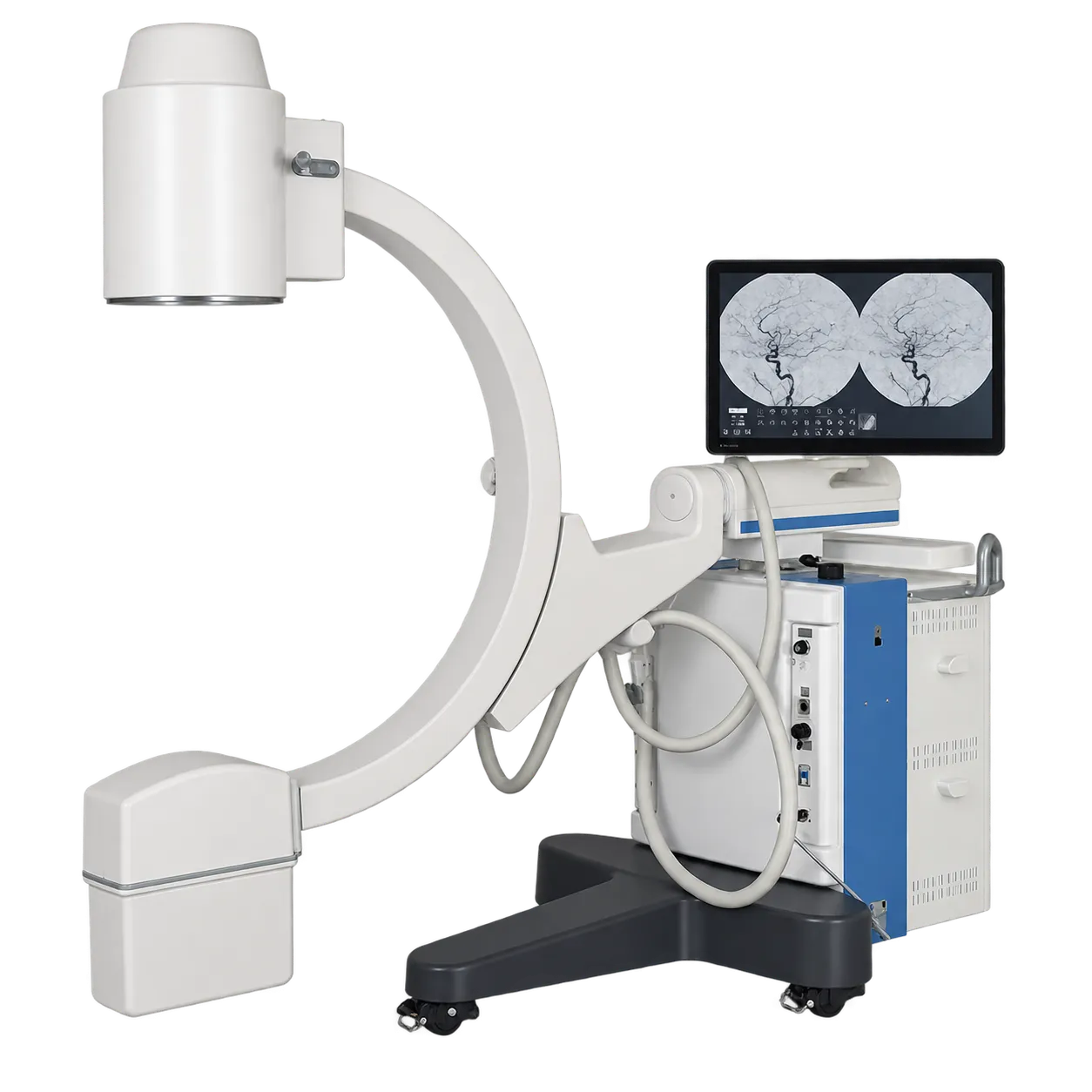
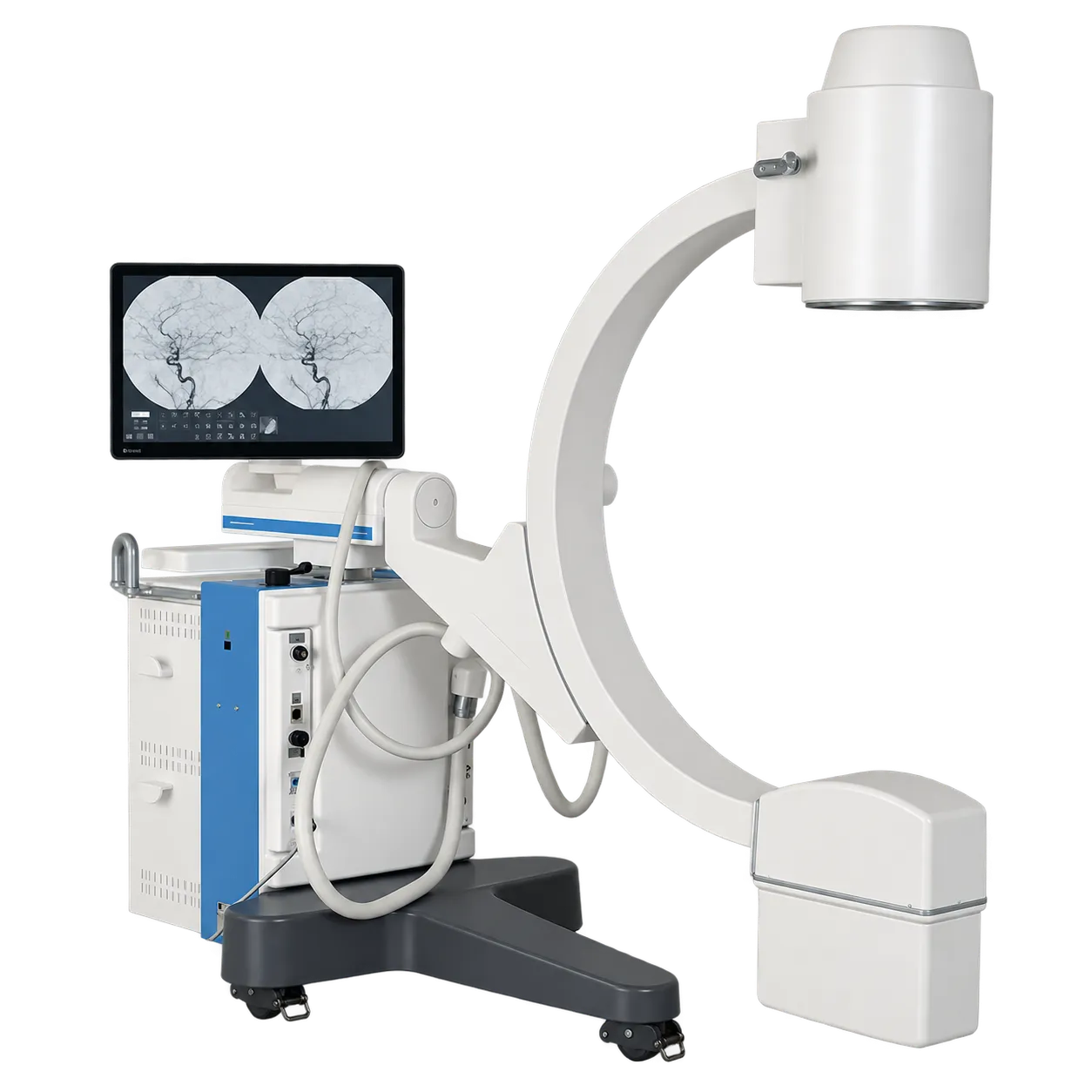
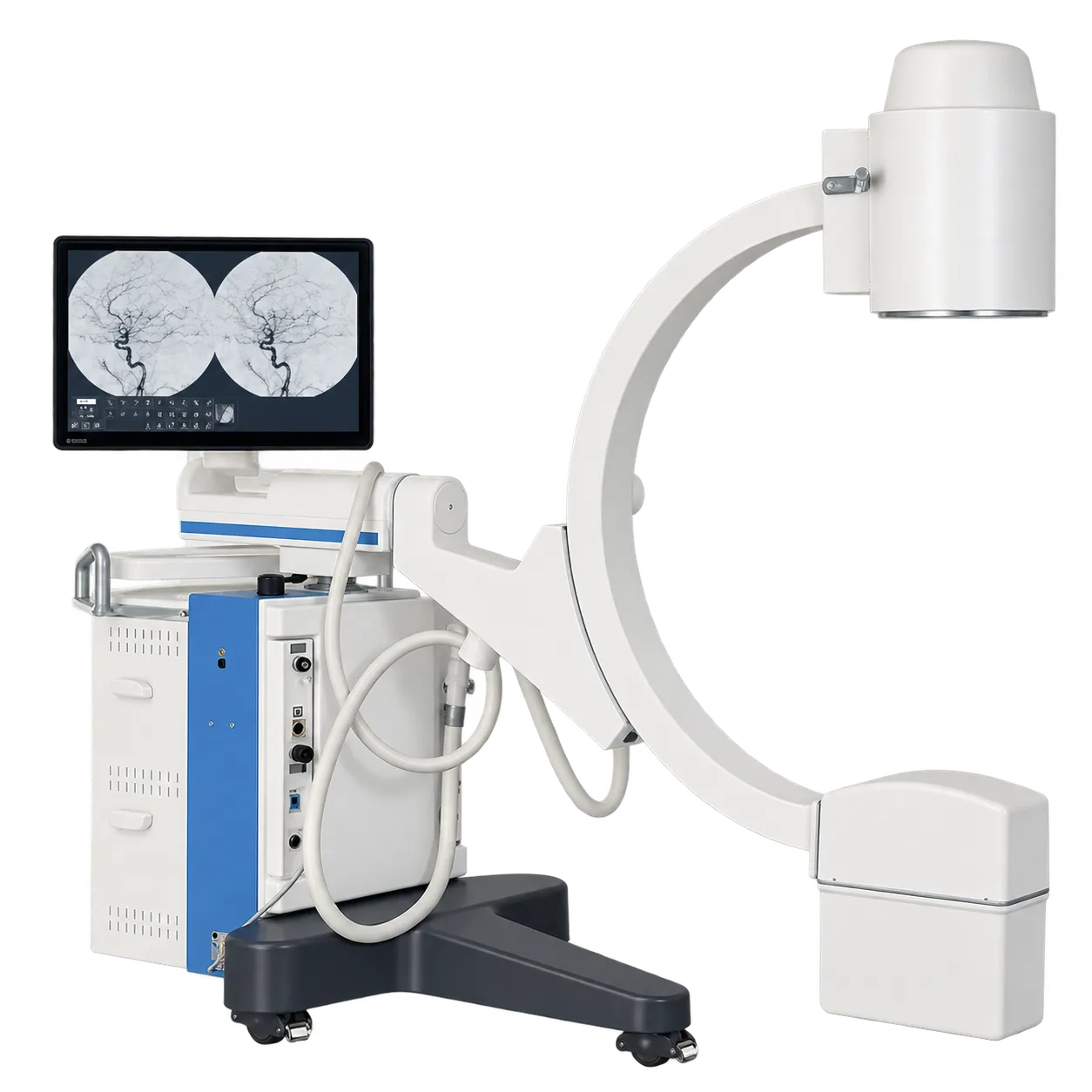
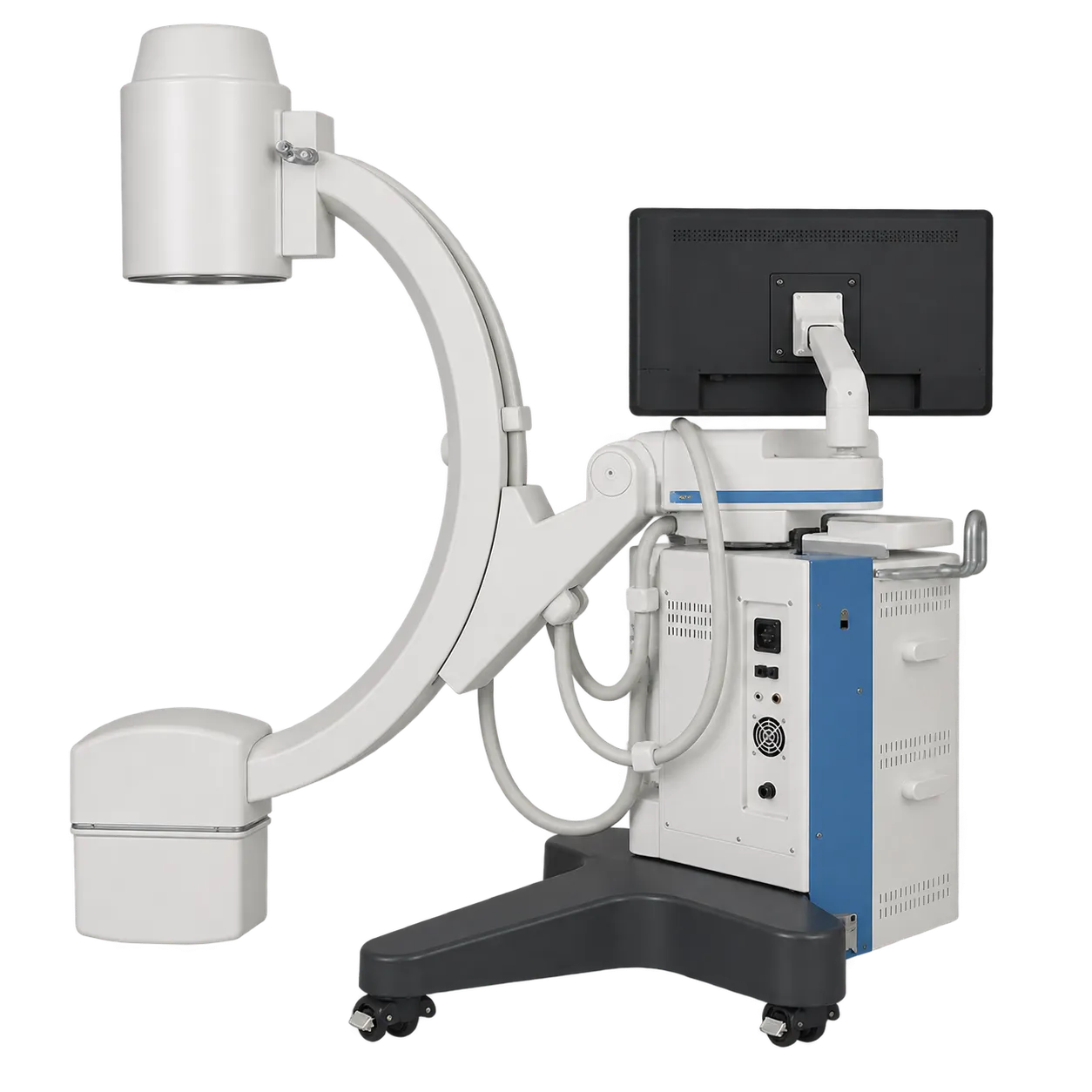
The TCA 6 Compact is designed for smaller surgical rooms. In day-surgery units and older hospital theatres with limited floor space, a single stand carrying the C-arm, workstation, and screen fits alongside the operating table, anaesthetic machine, and instrument trolleys.
Orthopaedic and trauma lists use it for intraoperative imaging during fracture work, with the split screen holding a reference image beside the live view as implants go in. Lateral exposures come from swinging the C-arm horizontally through its wide orbital rotation.
Peripheral vascular surgery relies on the DSA package. Roadmap acquisition at maximum opacity, digital subtraction with auto mask, landmarking, and pixel shifting support guidewire and catheter work, and manual stenosis measurement quantifies narrowing.
Departments that share imaging across several rooms gain from the one-piece design, which moves between rooms in a single trip. DICOM 3.0 sends images to hospital servers over a wireless link, so studies reach the archive from wherever the unit stands. Fast surface cleaning and quick changes of sterile covers keep it ready for the next list.
Day to day, surgeons, radiographers, and theatre nurses run it, with medical physicists checking the dose logs it produces. The optional dose meter logs DAP, RAK, RAKR, and effective time per case, while the laser targeting device and virtual collimator reduce spare exposures during set-up. Across these settings, space is the deciding factor: the TCA 6 Compact brings a 9-inch image intensifier C-arm into rooms with tight floor space.