
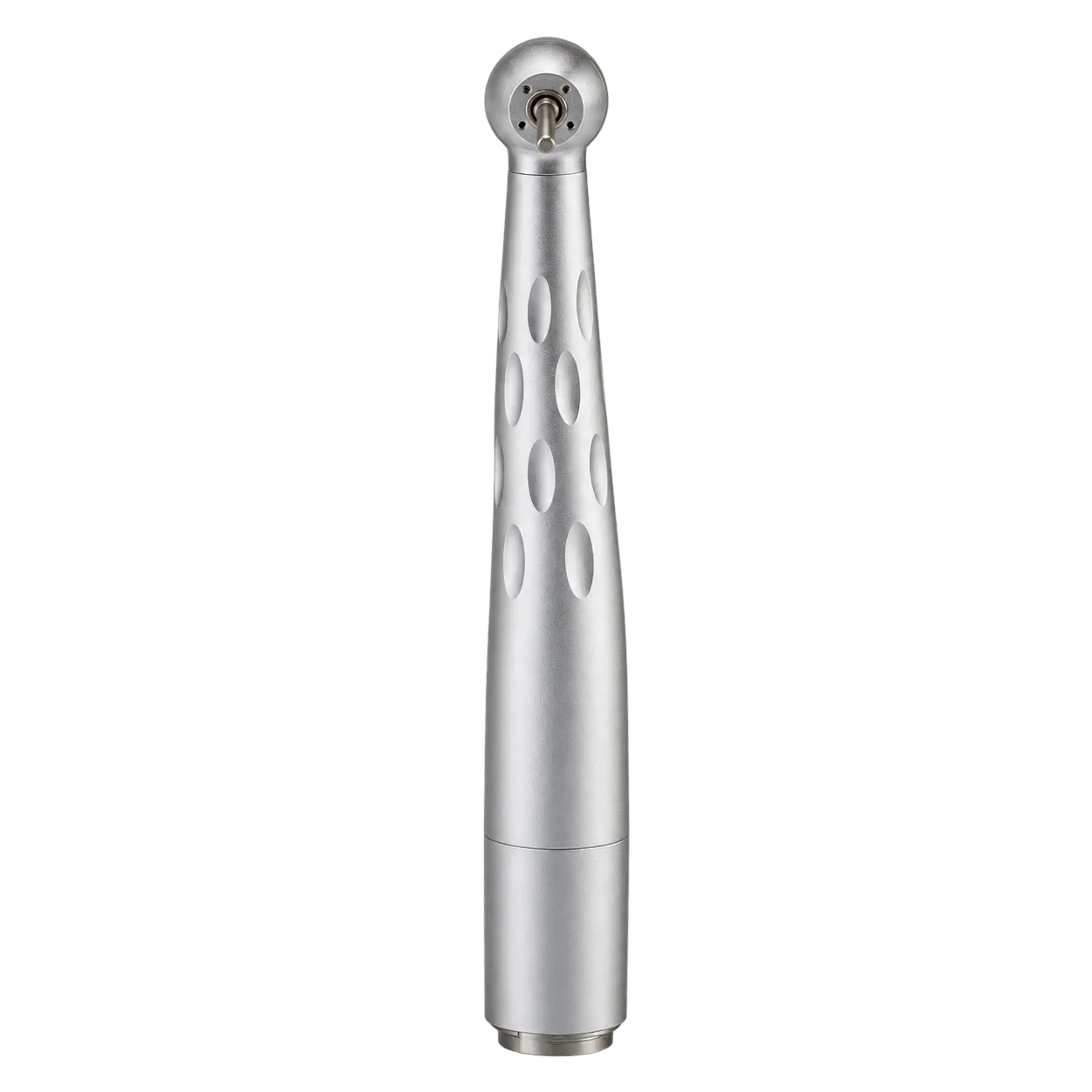
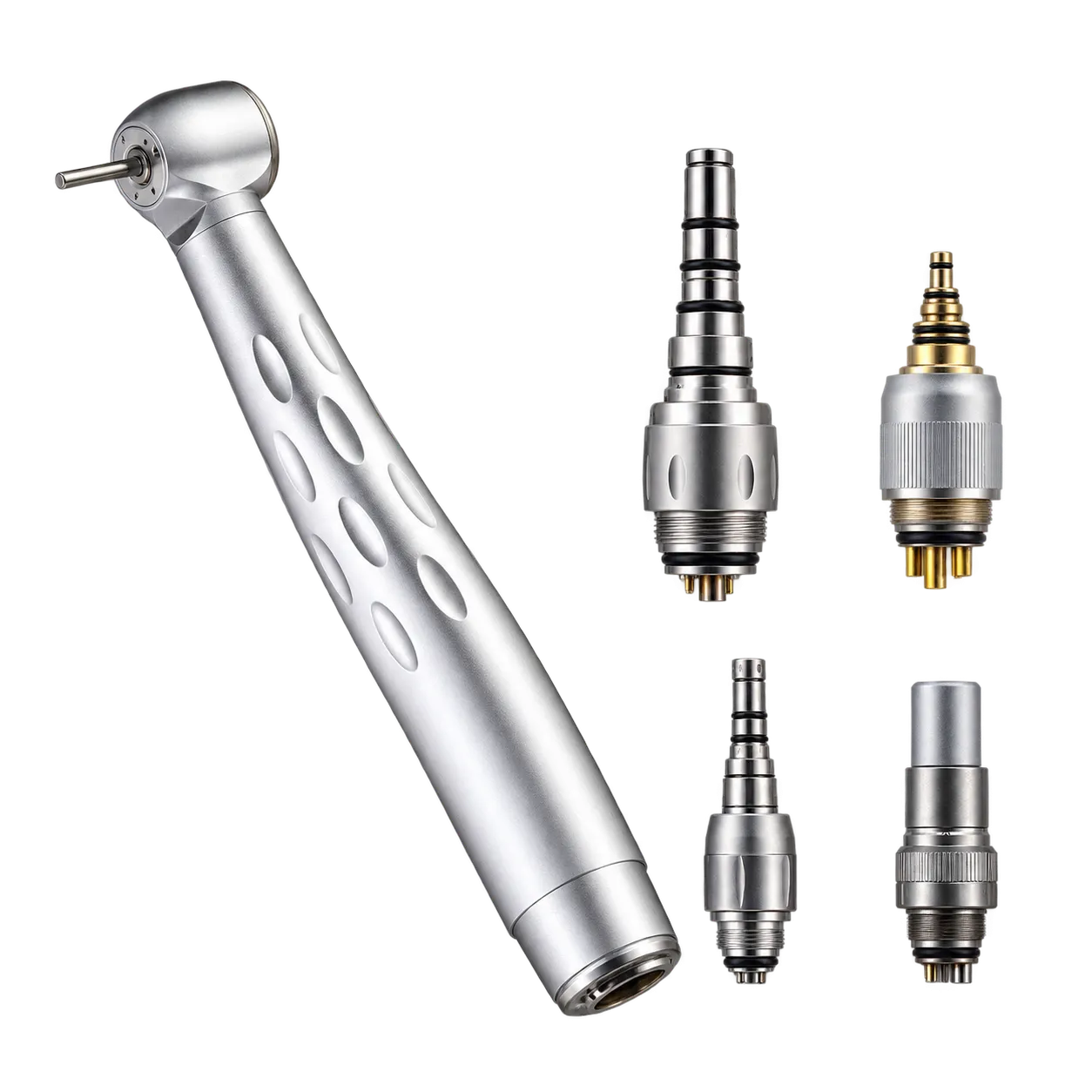
The F19GS-SPQ6 is designed for the rotary work of general dental surgery: opening cavities, shaping teeth for crowns, and removing old restorations. A typical appointment passes through several burs, and the handpiece is organised around that sequence. The push-button chuck frees one bur and takes the next, while the glass optical fibre and the three-way spray stay with the head. Cutting enamel and dentine at speed is the core task, and the lit field and cooled bur support every stage.
Surgeries that run Sirona-pattern units are the natural setting. The SQ-GS coupling joins the handpiece to the hose, and the same coupling lets the instrument leave the chair for reprocessing between appointments. Restorative treatment rooms and hospital dental departments follow that pattern too, with the dentist changing burs at the chair as each preparation stage ends.
Reprocessing is part of the daily routine. The handpiece can be sterilised at 135 °C, and the glass optical fibre is made to keep its function through high-temperature, high-pressure cycles, so the field is lit at the end of the day as it was at the start. Handpieces come back from reprocessing ready for the next patient.
Two supplies reach the head from the unit: air at 0.25 to 0.27 MPa, quoted for a six-hole connection, and water for the three-way spray. A sound level under 68 dB suits a treatment room where the dentist, the assistant and the patient talk through the appointment. The dynamically balanced rotor runs above 300,000 rpm, which is the speed range for cutting enamel and dentine.