
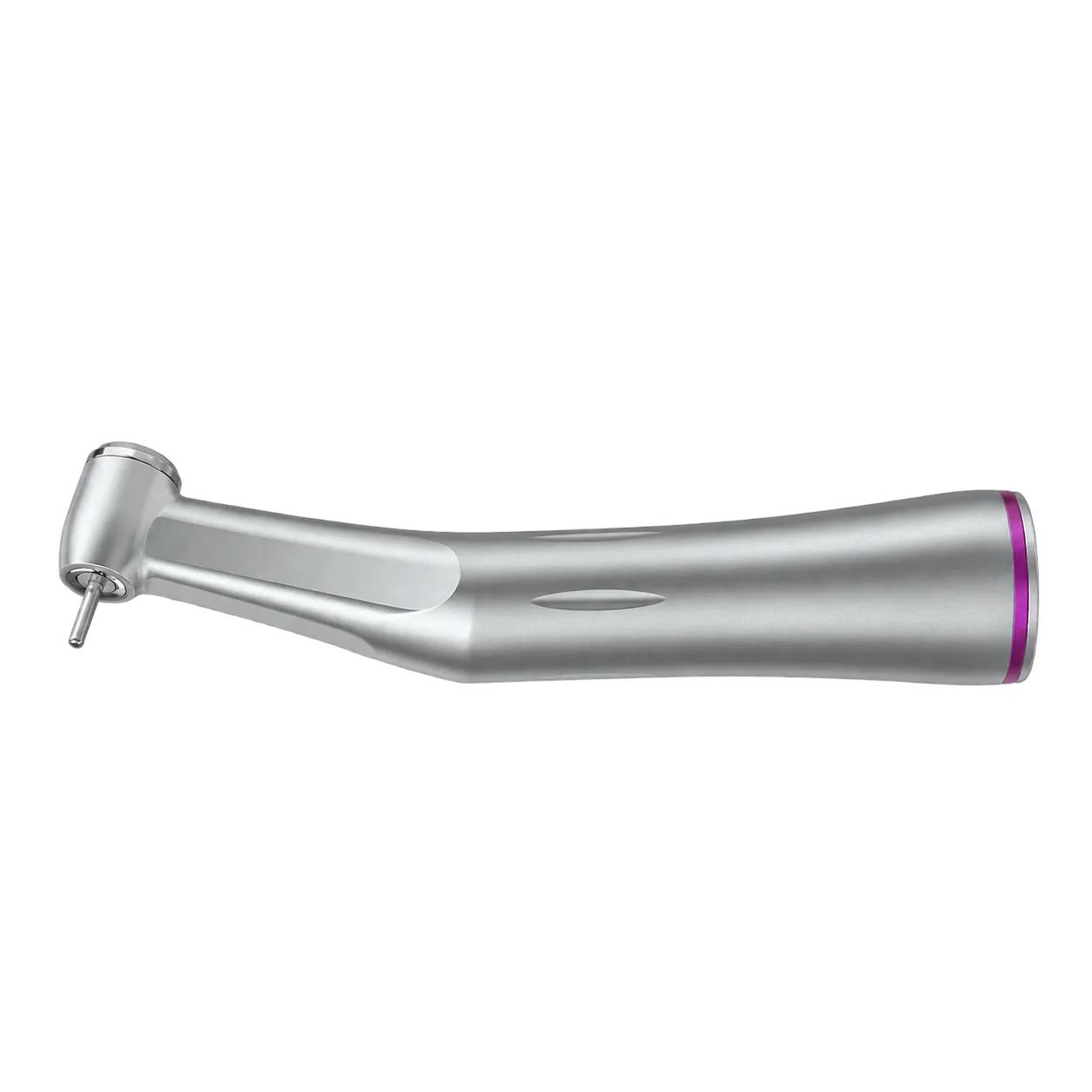
When a dentist approaches a molar with the patient reclined, they must accommodate the length of the handpiece in front of the mouth. The B4-7S gives the bur a different line of approach from the handle. The dentist can hold the body forward while directing the tip towards a surface further back. At the same time, the optical fibre brings light to the head, where the tooth and the bur meet.
In dental surgery, the distinction between head angle and illumination matters most when the dentist moves from one tooth surface to another. The 45° angle determines where the tip can point for a given handle position. The light follows the head through that movement. At the working end, the dentist can see the bur in relation to the tooth while the handle occupies a different part of the field.
For motor-driven cutting, the relationship between the drive and the bur matters as much as the approach. A change at the motor changes the speed at the tooth through the fixed gear ratio. The external line serves a separate purpose during cutting. Its four outlets aim water at the rotating instrument from around the head, keeping the coolant close to the point of use.
When changing cutting profiles, the dental team uses the same chuck and release button. The shank diameter remains 1.6 mm even when the cutting tip shape changes. Once another compatible bur is in place, the head keeps the same angle, and the optical outlet stays in position beside the bur.