
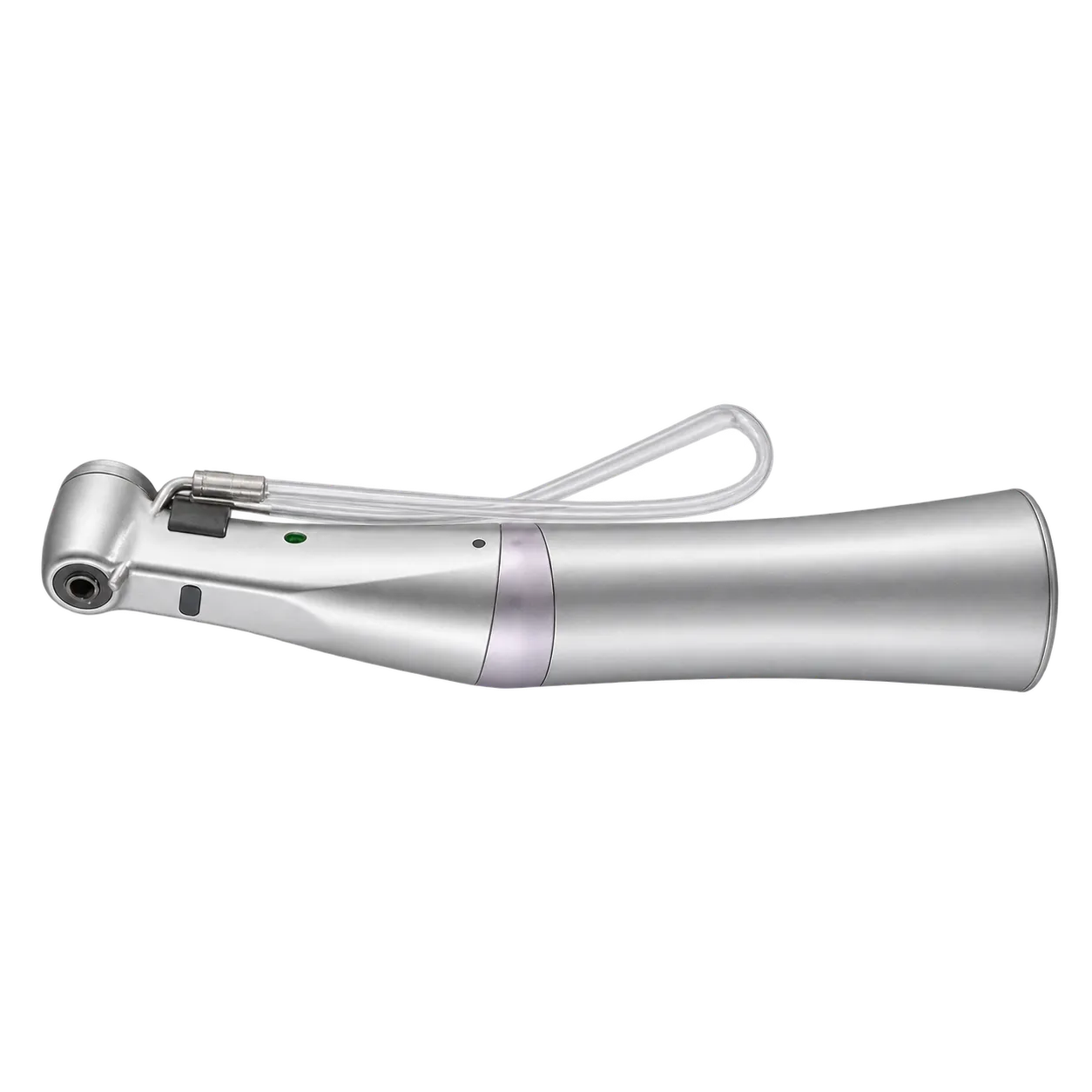
In an implant surgery, the clinician needs to see where the instrument is working even as the angle of approach changes. The B20-7 brings light through the handpiece to the area beneath its head. When the surgeon moves from one site to another, the outlet moves with the bur. This benefit is especially relevant when the instrument body lies between the overhead light and the working area.
During implant site preparation, the surgeon may use several instruments with different cutting profiles. The push-button mechanism releases the shank at the head for each exchange. A compatible replacement drill can have a different cutting diameter and still use the same chuck. Once the new instrument is in place, the optical outlet remains in its established position beside the drill.
The handpiece also accommodates two ways of supplying coolant. For a drill compatible with internal irrigation, the Kirschner/Meyer arrangement provides the inner route. The external spray delivers fluid alongside the instrument. The reduction drive serves a different function during the same procedure. It links instrument speed to motor rotation at a fixed ratio, irrespective of which coolant route is in use.
After a case, the handpiece moves from the surgical team to the staff responsible for instrument care. The body joint stays locked while the attachment mounts to the drive. Off the motor, a twist separates the parts and exposes surfaces inside the housing for cleaning. During the next instrument exchange at the chair, the surgeon operates the chuck button independently of that joint.