
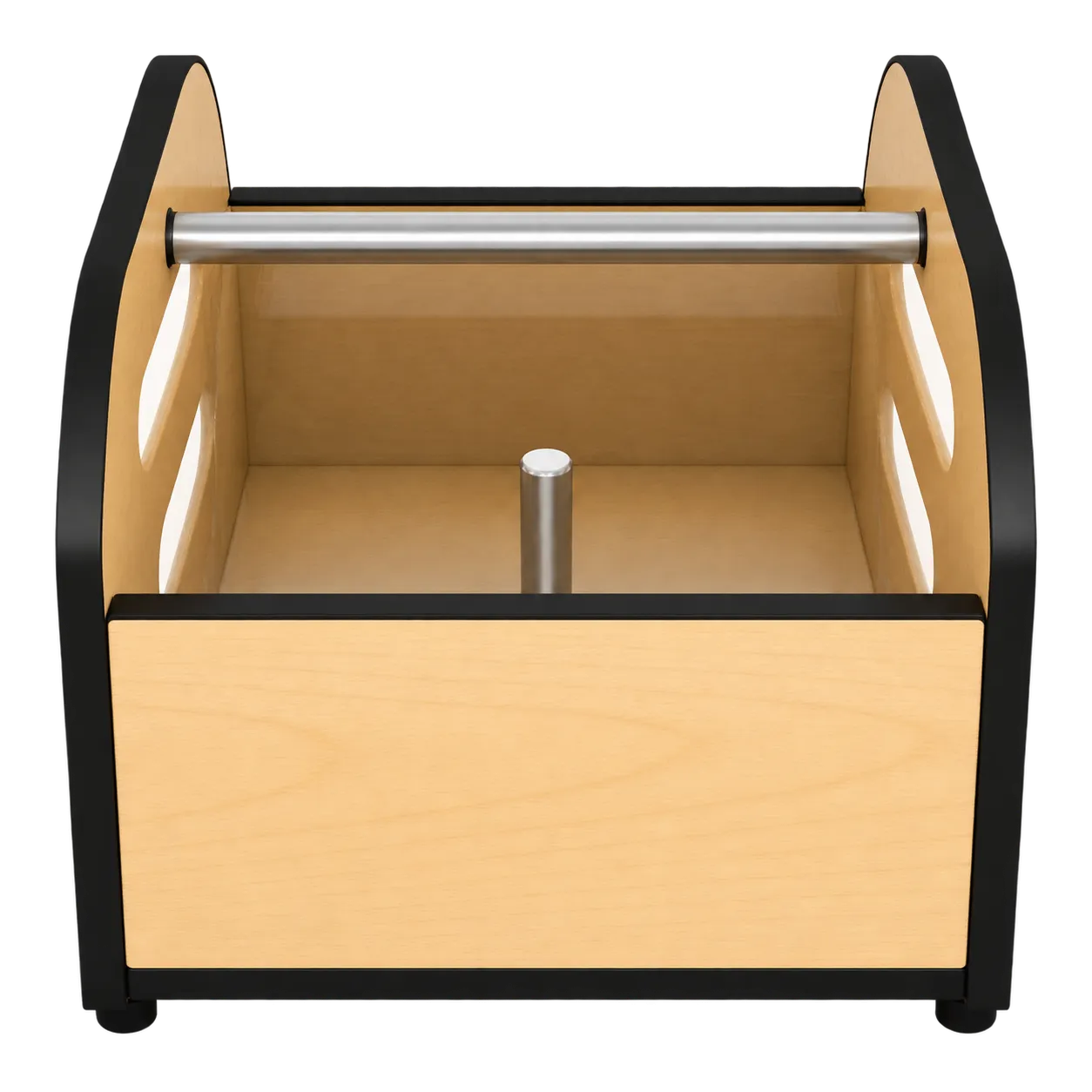
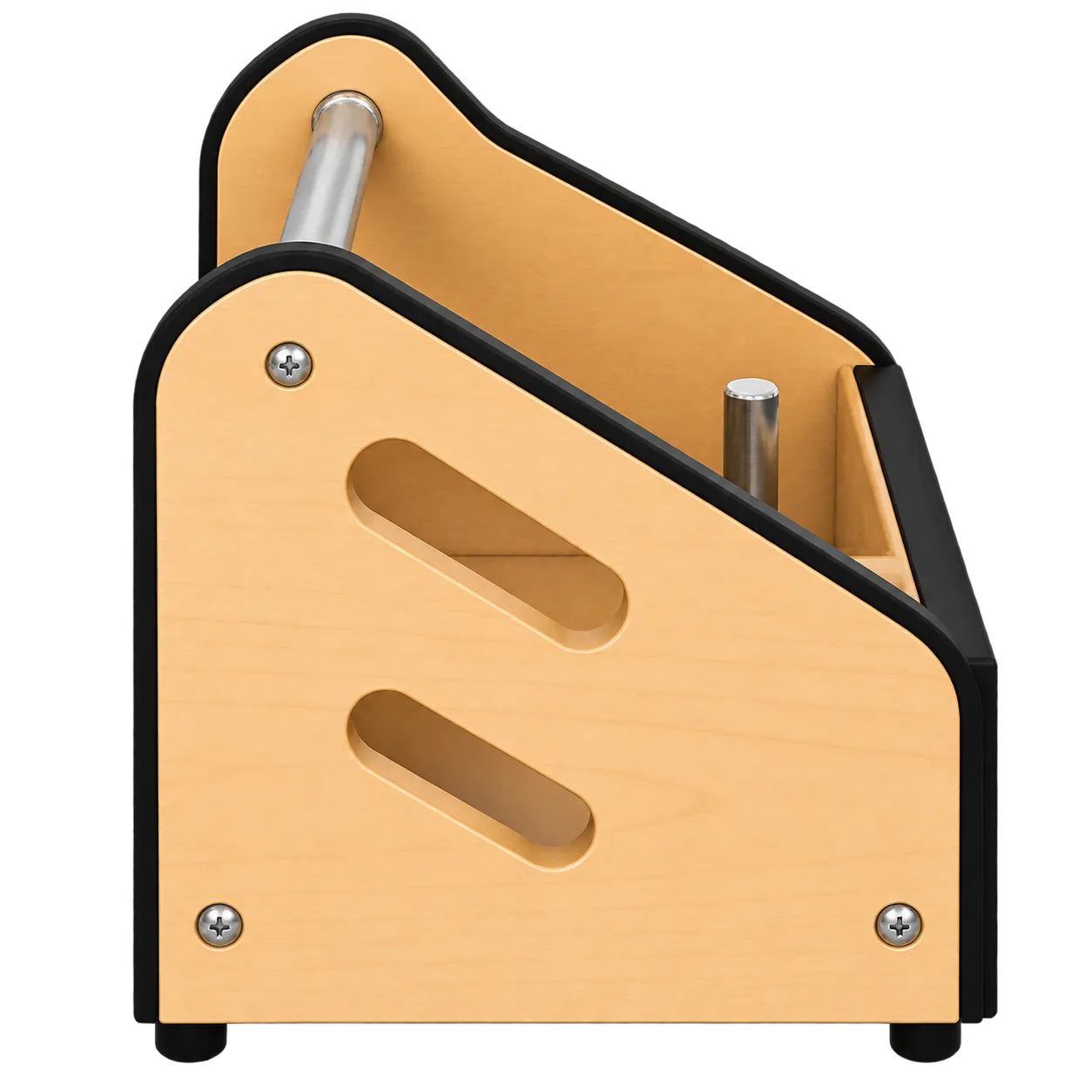
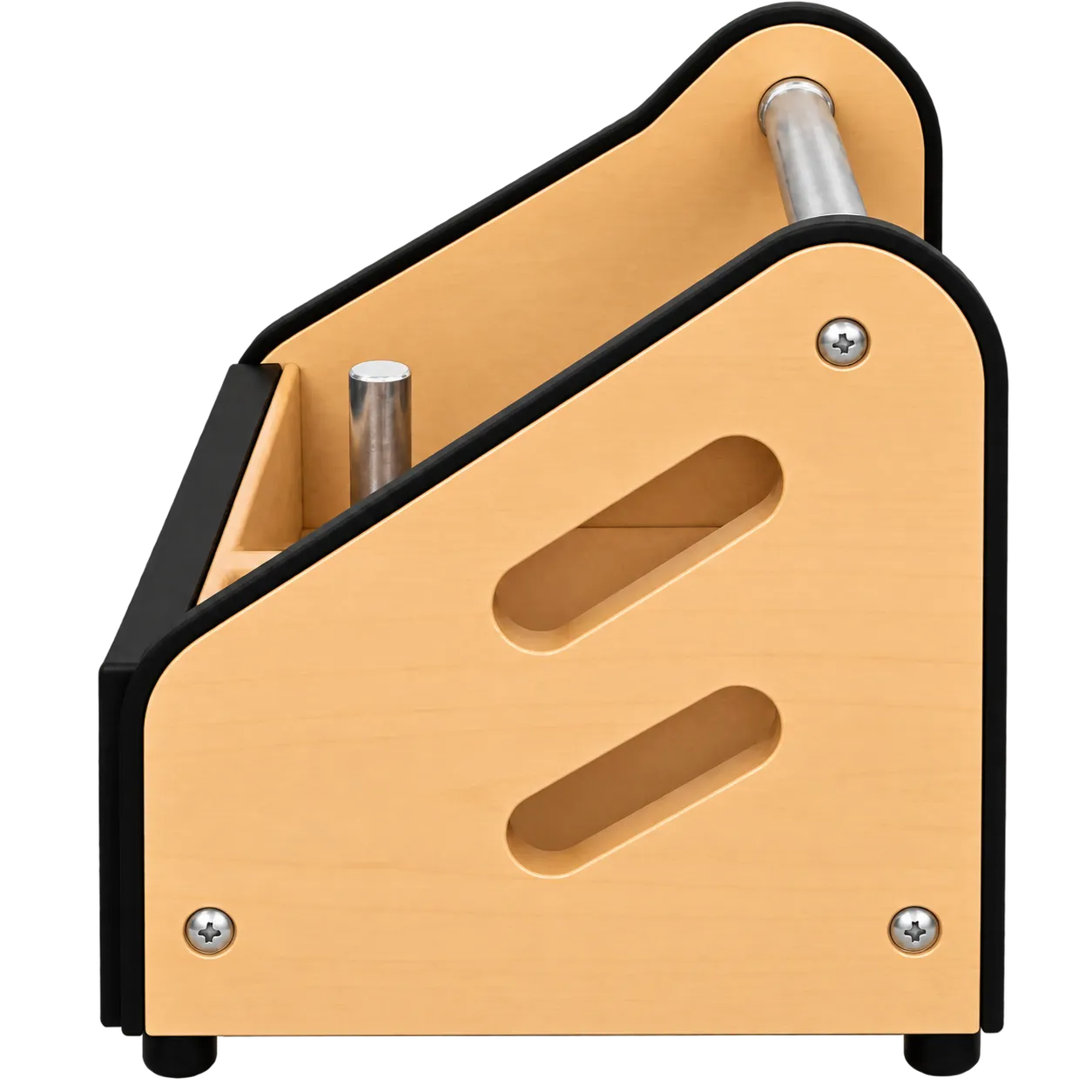
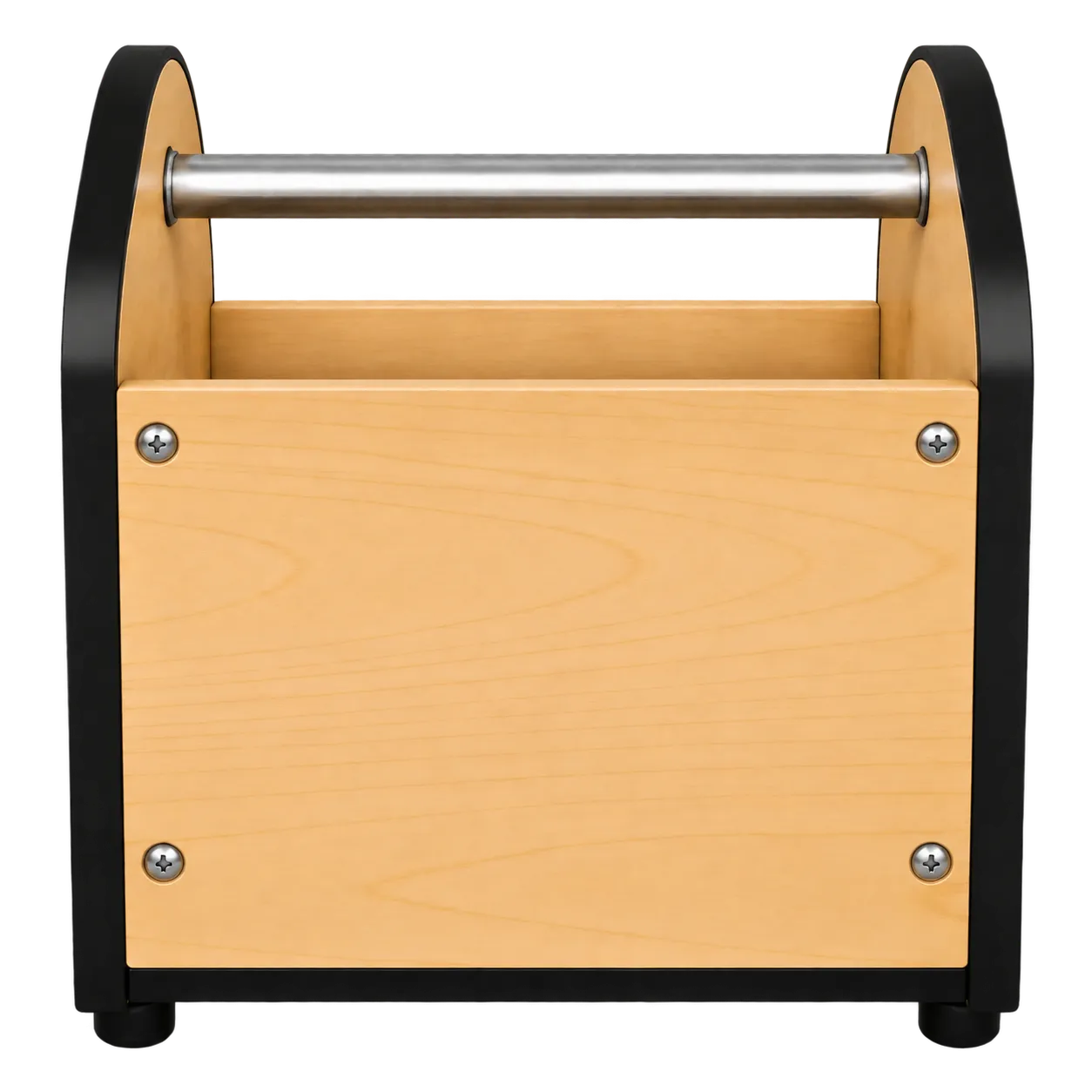
The WB03-1915 belongs in occupational therapy departments, physiotherapy gyms, vocational and work rehabilitation services, occupational health clinics and sports rehabilitation units. Registered occupational therapists and physiotherapists use it to build a patient's capacity for lifting and carrying, and the service answers to the provider regulator for its setting.
The main use is graded lifting practice. A patient returning to a manual job lifts the box from floor to waist, or from waist to shoulder height, while the therapist adds plates in small steps and watches technique at each load. The two slot heights and the top bar let the practice match how the worker will hold loads on the job, whether that means gripping low, lifting at waist level, or carrying by a single handle.
Graded lifting also sits inside functional capacity and work conditioning assessments, where a box of known empty weight is loaded progressively until the patient or the protocol sets a limit. For that, the box's empty weight has to be known, and since it is not published, it should be weighed and recorded on arrival.
The evidence for the programmes this box supports is honest rather than strong. A 2013 Cochrane review of physical conditioning in return-to-work care for back pain found no clear effect on sickness absence in acute pain, conflicting evidence in subacute pain and low-quality evidence of benefit in chronic pain when conditioning was part of integrated care. Services get the most from the box when it is one part of a planned programme with workplace involvement.
Stroke, hand and upper-limb services can also use a lightly loaded box for carrying practice and bilateral tasks, with plates kept small. The conformity documentation required for those procurement routes is issued by the manufacturer and provided by the seller.