


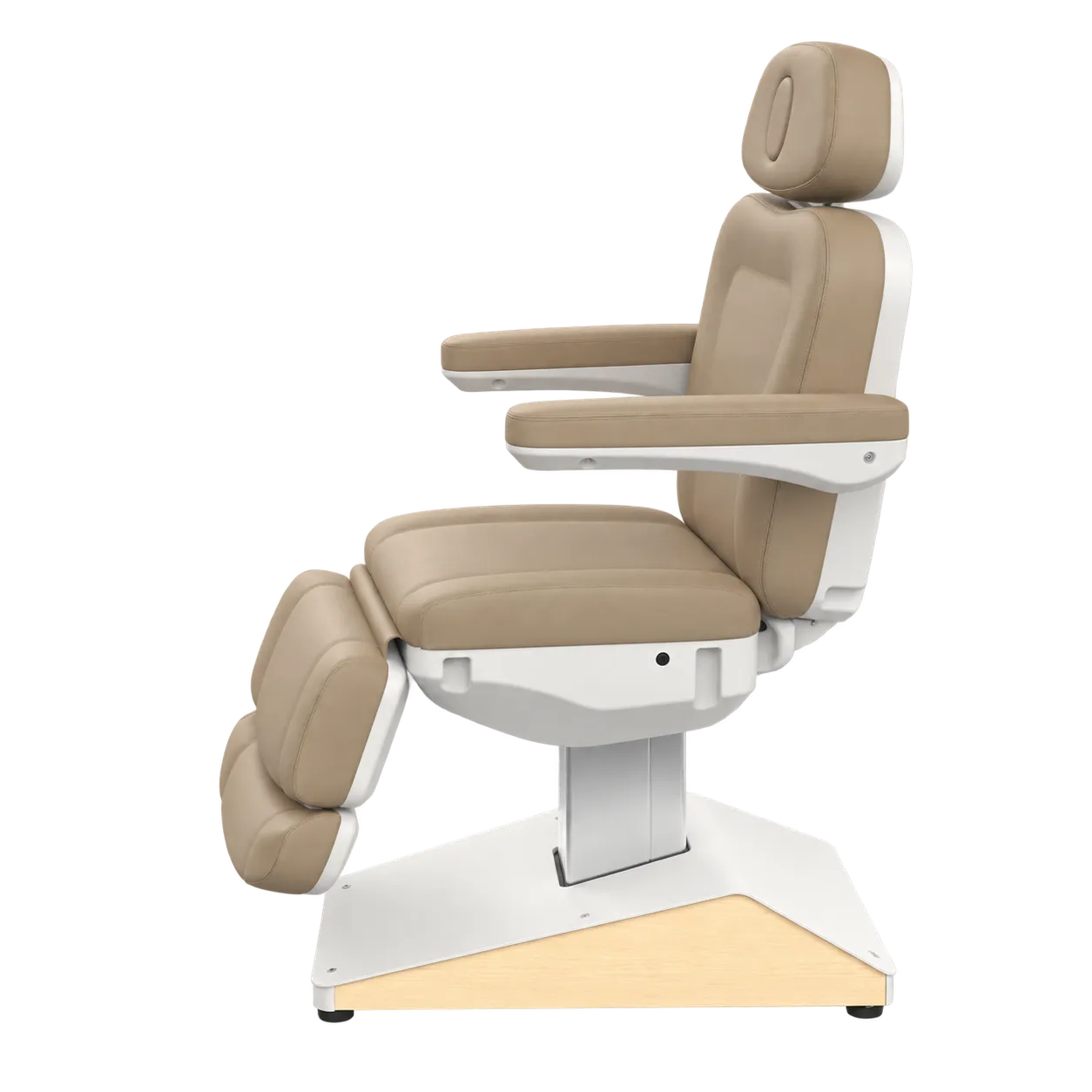
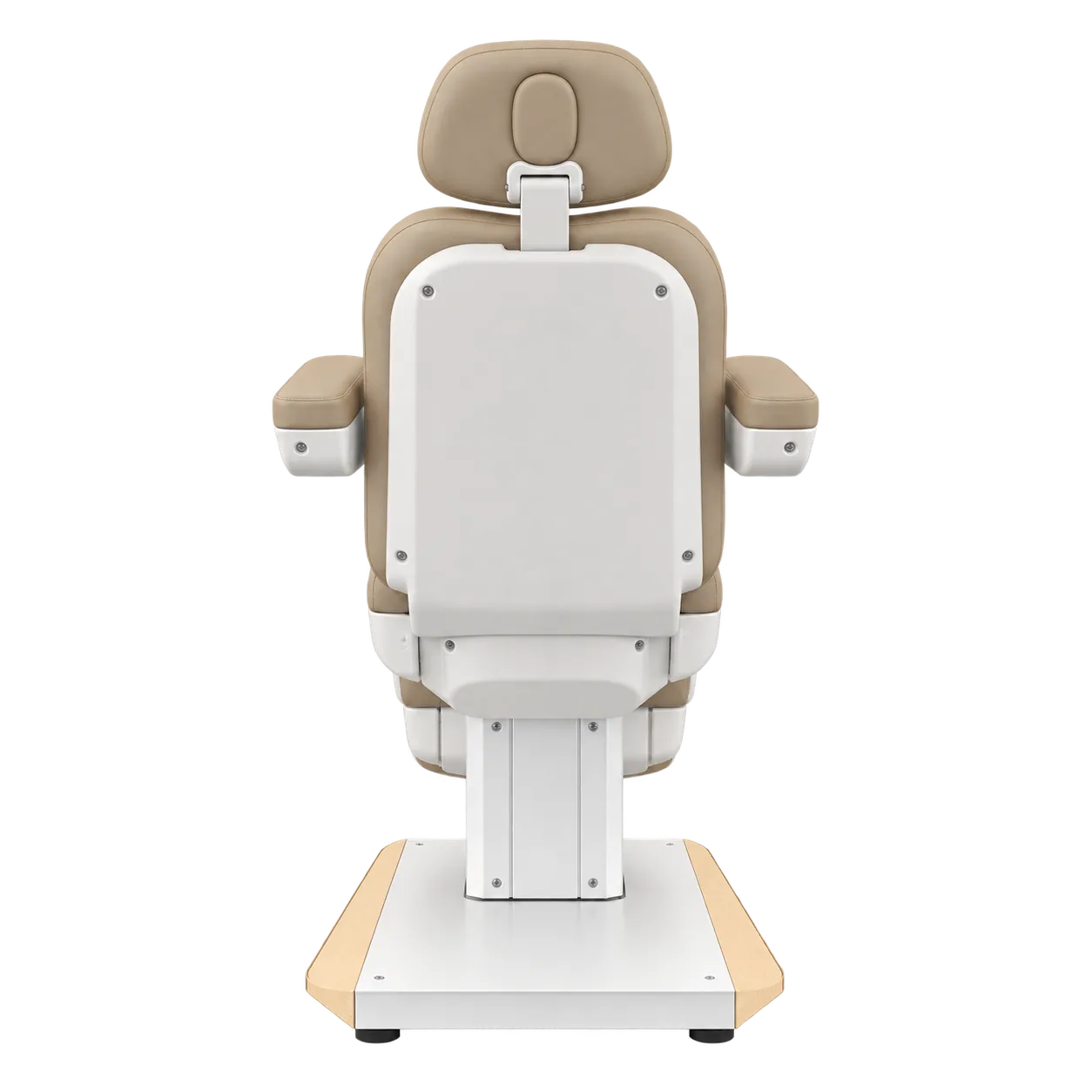
Podiatry and chiropody clinics whose patients walk in, nail and skin clinics, injection and aesthetic medicine rooms, musculoskeletal clinics and GP treatment rooms with mostly ambulant lists suit the Parker-541. A patient with stiff knees can back up to the seat, perch, and swing both legs onto the raised legrest, then slide forward to the floor to leave. Clinicians can work seated at the feet or standing alongside.
Seat height affects how hard it is to stand up. In a 2014 laboratory study of eight healthy young adults, peak hip and knee moments from a 40 cm seat were 1.7 times those from a 60 cm seat. Earlier work cited there found knee moments rising 1.7 to 2.3 times as seats dropped from 115% to 65% of knee height. Among functionally impaired older people, a 1996 study found the knee moment needed to rise from the lowest chair they could manage averaged 97% of their available strength. None of this tested a treatment chair; the seats studied stopped at 60 to 64 cm, and 60 cm was already about 130% of knee height in the 2014 group. From 68 cm, most patients slide down to the floor, so balance on that step matters too. For wheelchair users, a 2005 spinal cord medicine guideline advises level or downhill transfers, since uphill moves load the arms.
UK clinicians using the chair answer to the HCPC, NMC or GMC, and their services to the CQC in England, Healthcare Improvement Scotland, Healthcare Inspectorate Wales or the RQIA.NHS procurement routes usually ask for a declaration of conformity, rated capacity, and electrical safety evidence, and equivalent public procurement routes ask the same. The conformity documentation those procurement routes require is issued by the manufacturer and shared by the enquiry team.