
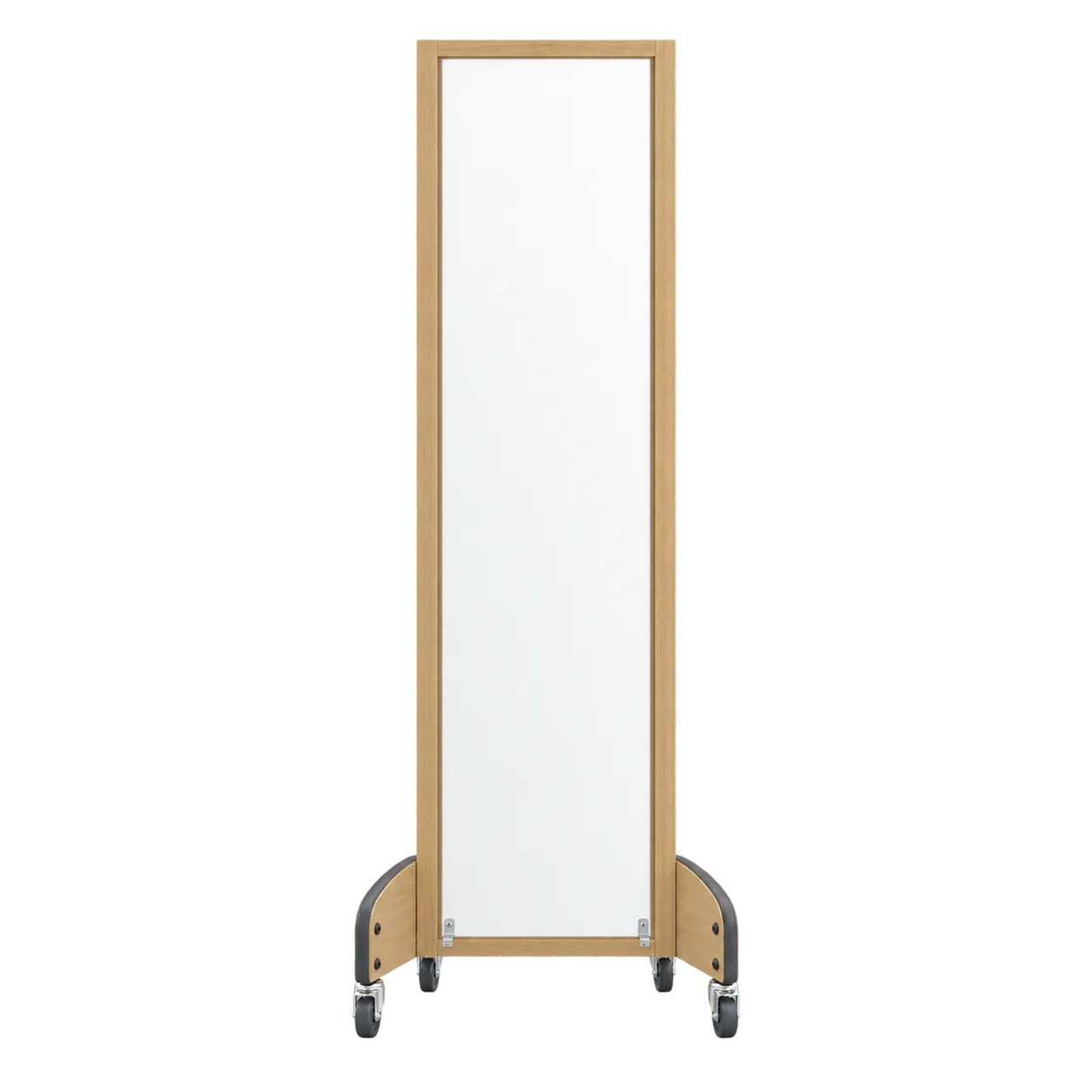

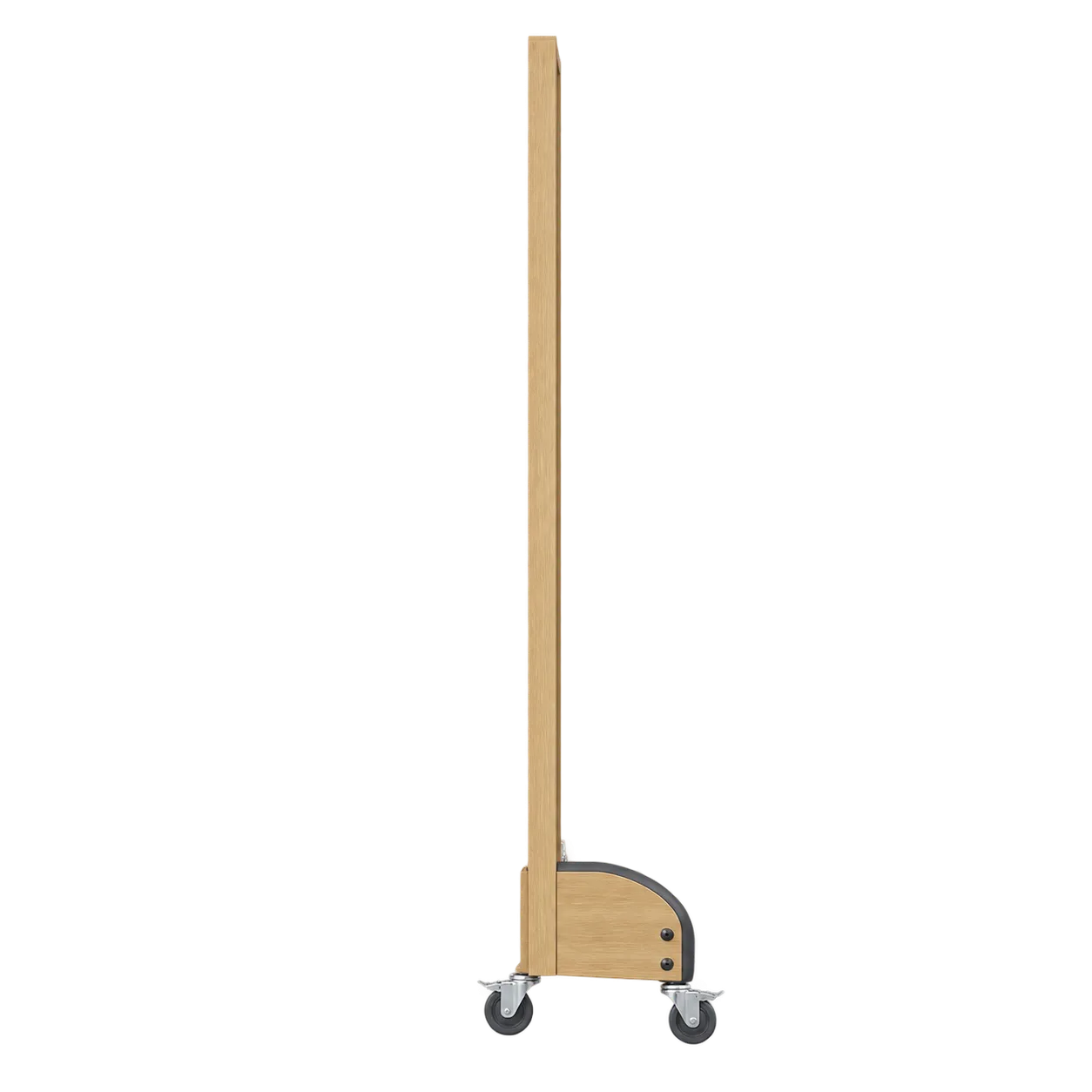
Physiotherapy gyms, stroke and neurological units, amputee and prosthetic services, orthopaedic and sports injury clinics, paediatric therapy and ward-based rehabilitation are where the MTM earns its place. Set at the end of the parallel bars or on a walkway, it lets a patient watch their gait, weight shift, and trunk position while the therapist cues from behind. On wards, it rolls to the bedside for early standing and posture work, then leaves with the therapist.
Most of the trial evidence for mirrors in rehabilitation concerns mirror therapy, where a mirror placed between the limbs hides the affected leg and reflects the unaffected one. A 2023 systematic review found that this approach improved lower-limb motor recovery, balance, and gait after stroke, using a mirror about 40 × 70 cm. A full-length mirror in front of the patient does a different job, giving feedback on posture and alignment, and it has its own, thinner evidence base. Even within mirror therapy, one review found gains in forward reach and coordination without any change in cadence or in stance and swing timing.
In the UK, the HCPC registers the physiotherapists and occupational therapists who use it. Providers in England fall under the CQC, and Scotland, Wales, and Northern Ireland each have their own regulator. NHS procurement routes ask for conformity papers and glazing safety evidence on mirrored equipment, and equivalent public procurement elsewhere asks the same. The conformity documentation those procurement routes require is issued by the manufacturer and shared by the enquiry team.