
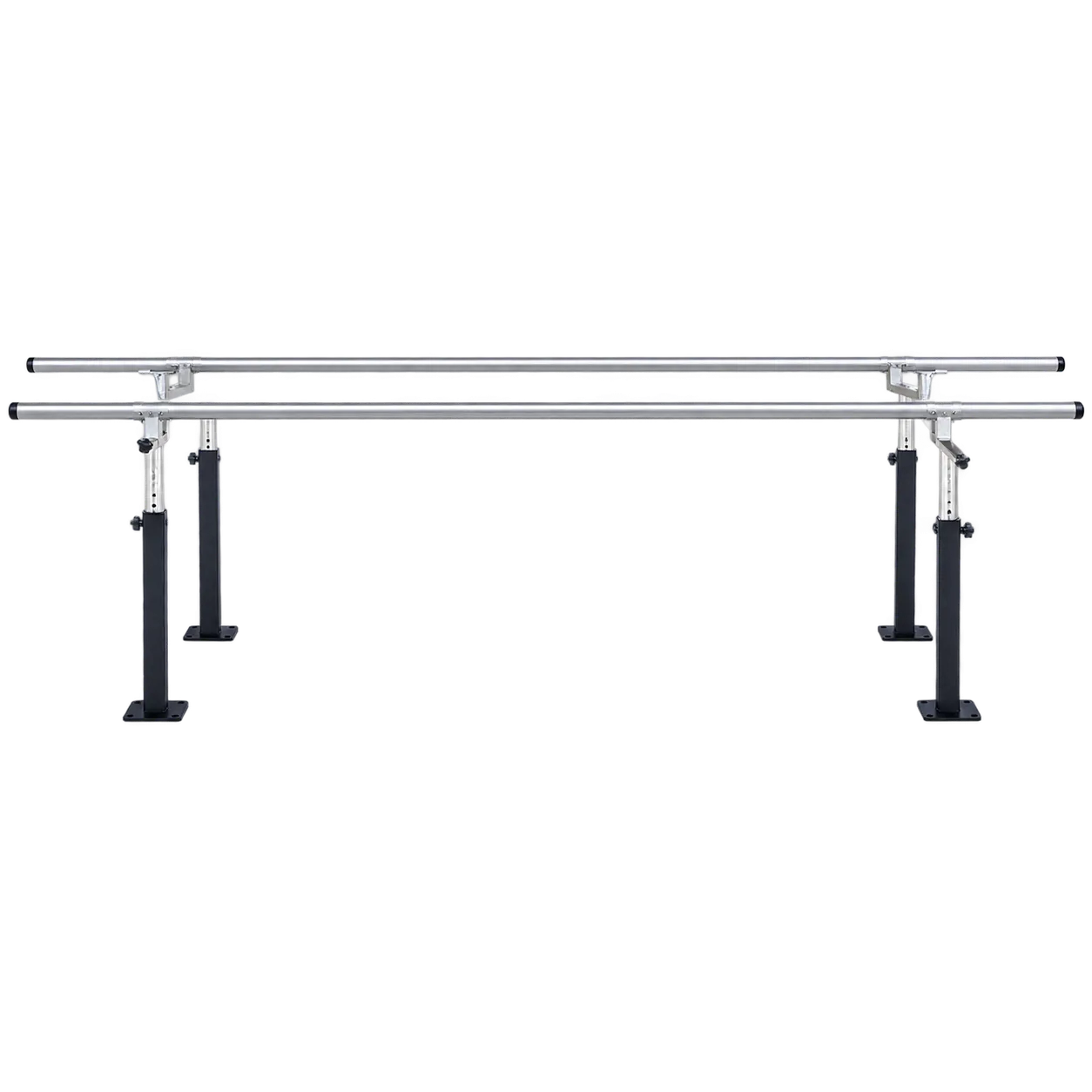
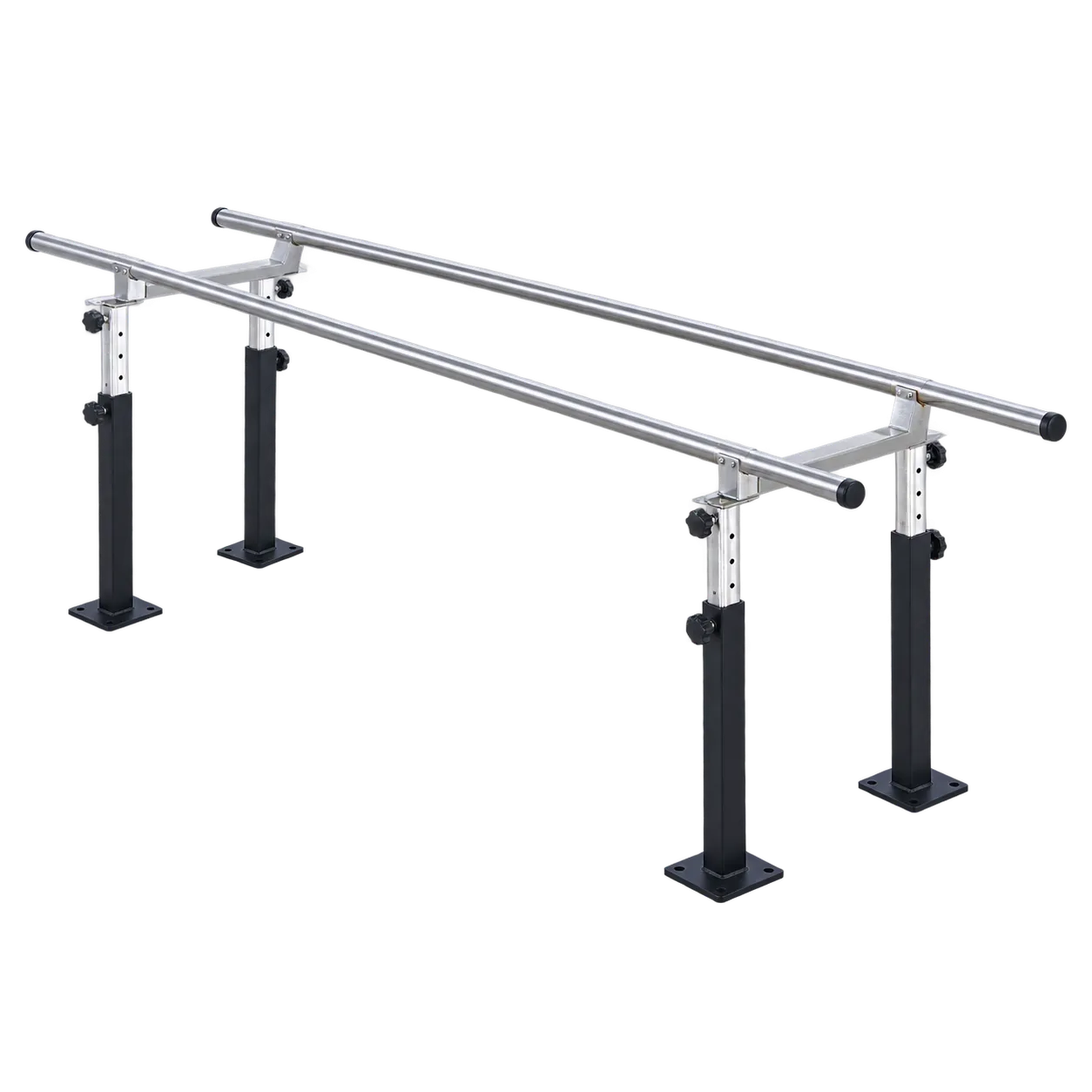
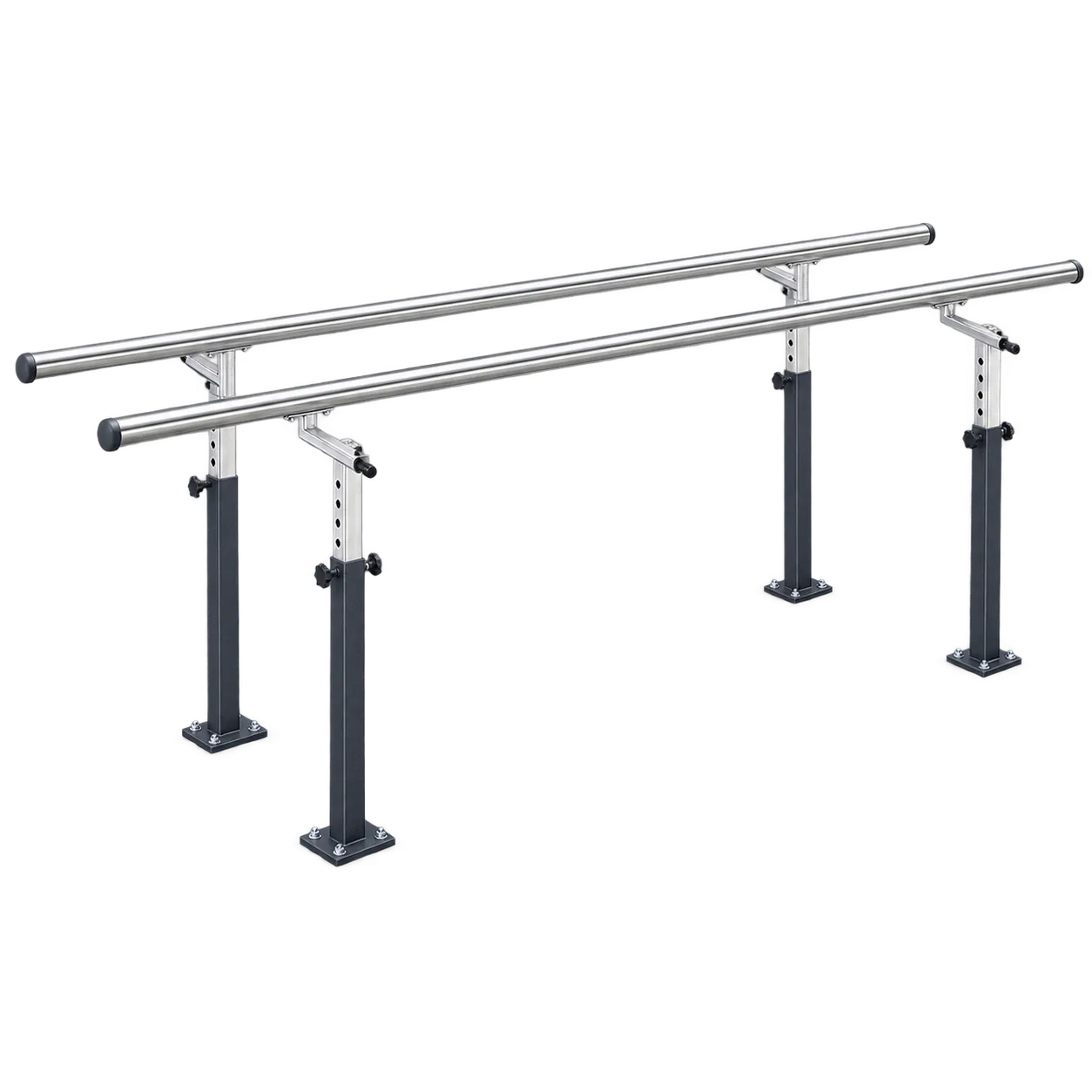
Hospital physiotherapy gyms with a dedicated walking area, orthopaedic and trauma rehabilitation, stroke and neurological units, amputee services and inpatient rehabilitation centres are where the MPB7-FM earns its place. Patients stand from a wheelchair at the end of the bars, take their first steps on the same floor they will walk on later, and practise turning without a raised edge to negotiate. For frail older patients after a hip fracture, a level lane removes one obstacle from the first walks.
Getting patients up early after hip fracture surgery carries strong observational support. An analysis of the National Hip Fracture Database covering 126,897 patients in England and Wales found that mobilising on the day of or day after surgery was linked to better 30-day survival, with a weighted odds ratio of 1.92. A companion analysis linked it to nearly double the odds of discharge within 30 days. These are database studies, and fitter patients tend to mobilise earlier, while the national guideline itself rests on a small, low- to moderate-quality trial. The evidence concerns getting patients moving, not any one piece of equipment.
In the UK, physiotherapists who supervise these first walks are HCPC registered. In England, the CQC regulates treatment providers, and Scotland, Wales, and Northern Ireland each have separate regulators. NHS procurement routes ask for conformity documents and a stated capacity on fixed walking equipment, and estates teams usually approve any drilling into hospital floors. The conformity documentation those procurement routes require is issued by the manufacturer and shared by the enquiry team.