
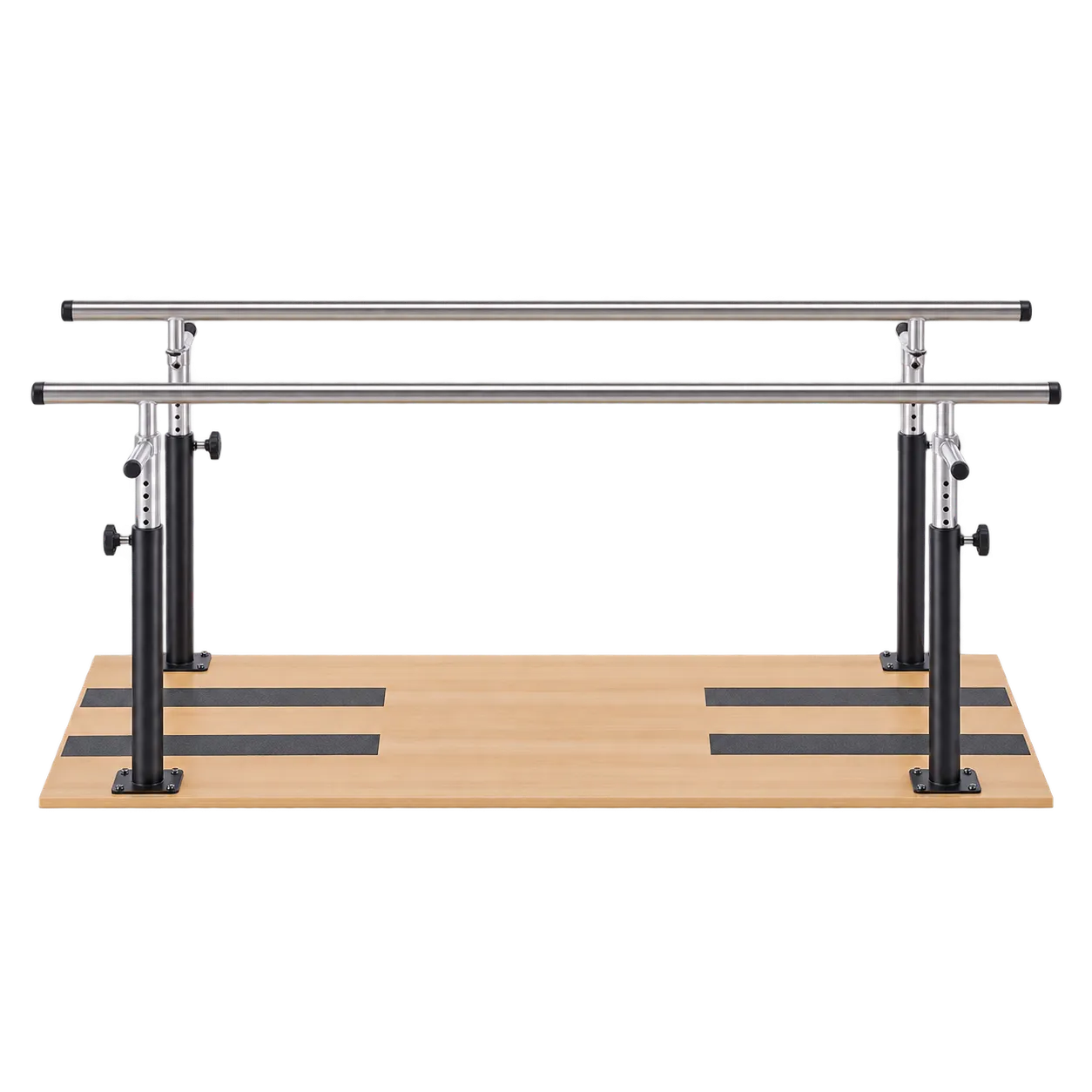
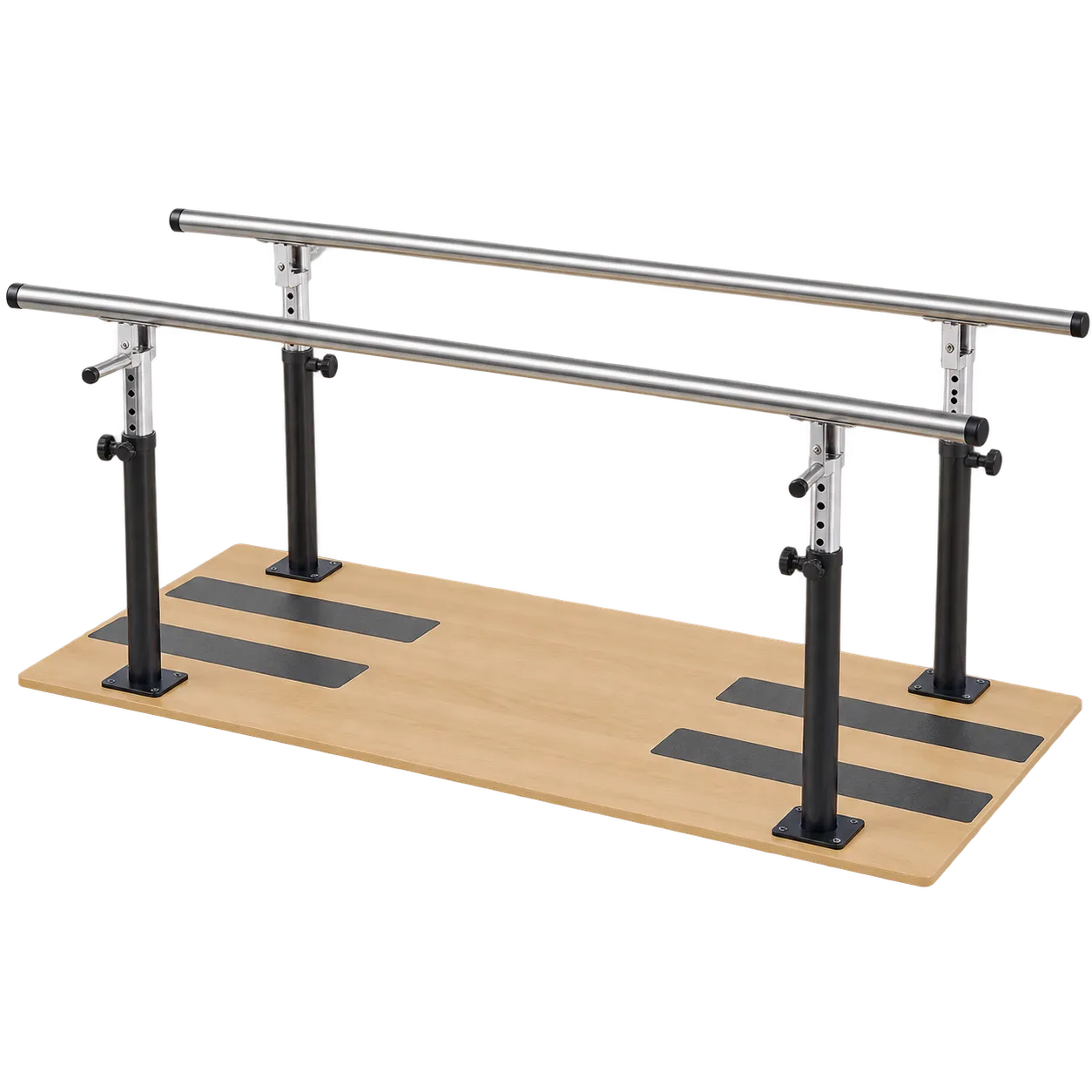
Hospital physiotherapy gyms, stroke and neurological rehabilitation, amputee and prosthetic services, orthopaedic and spinal injury units and community rehabilitation centres are where the MPB7 earns its place. Patients walk the full 2.13 m between the rails, turn at the tapered ends and walk back, building stride length and rhythm with the therapist alongside. The wide range of rail spacing lets the same lane serve a slightly older adult and a broad-hipped patient up to the 158 kg rating. Wheelchair users can transfer at an end and stand straight into the rails.
Stride and cadence work often runs with rhythmic cueing, and that cueing has evidence behind it. A 2017 Cochrane review of music interventions after acquired brain injury found that rhythmic auditory stimulation improved walking speed by about 11 metres per minute and stride length on the affected side by 0.12 metres, both on moderate-quality evidence. Its effect on cadence, about 11 steps per minute, rested on low-quality evidence. That evidence belongs to the cueing, not to the bars; the MPB7 gives the cueing a safe lane of known length to run in.
UK physiotherapists running these walking sessions hold HCPC registration. Providers of treatment in England come under the CQC, with separate regulators in Scotland, Wales and Northern Ireland. NHS procurement routes ask for conformity paperwork and a stated weight capacity on walking equipment, and equivalent public procurement elsewhere asks the same. The conformity documentation those procurement routes require is issued by the manufacturer and shared by the enquiry team.