
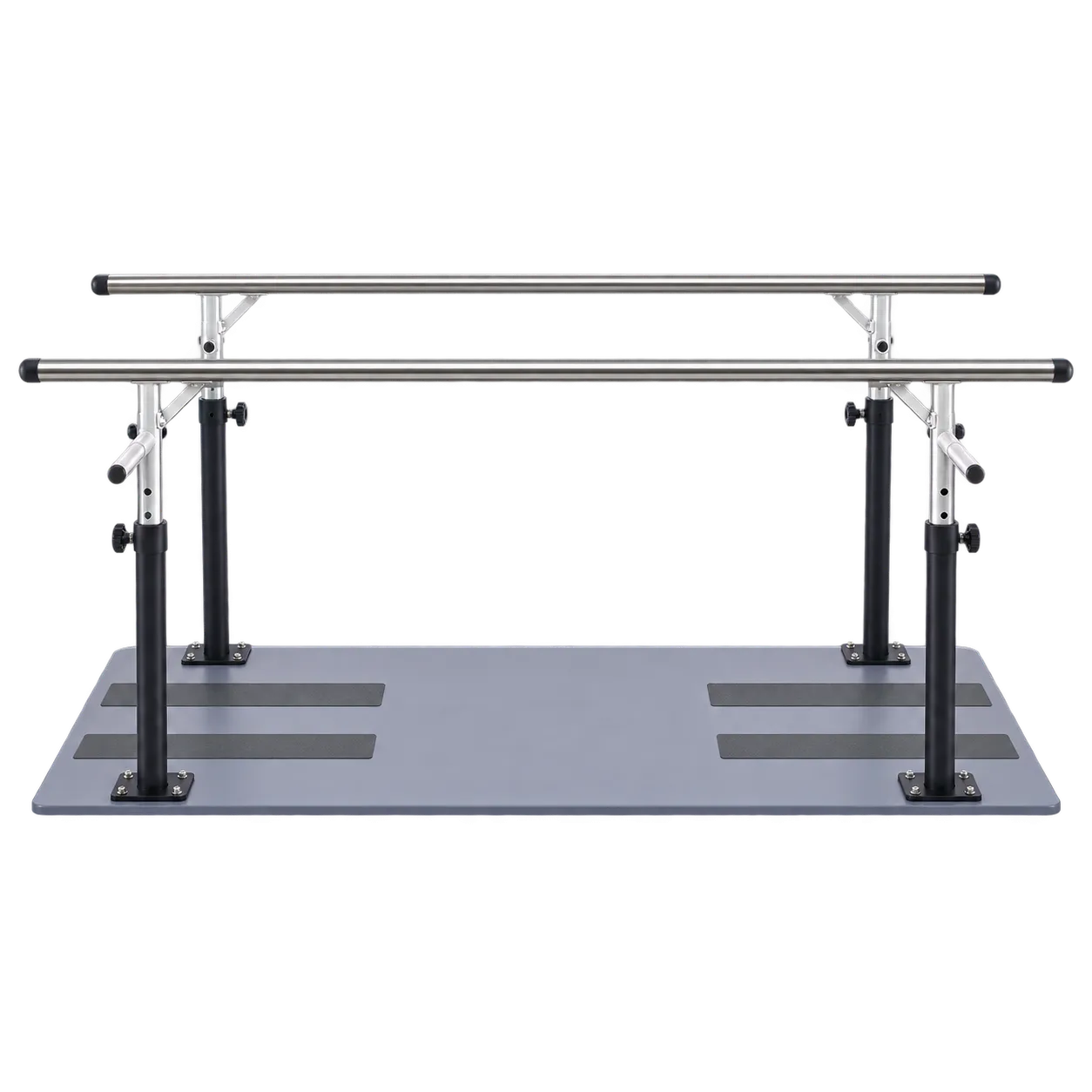
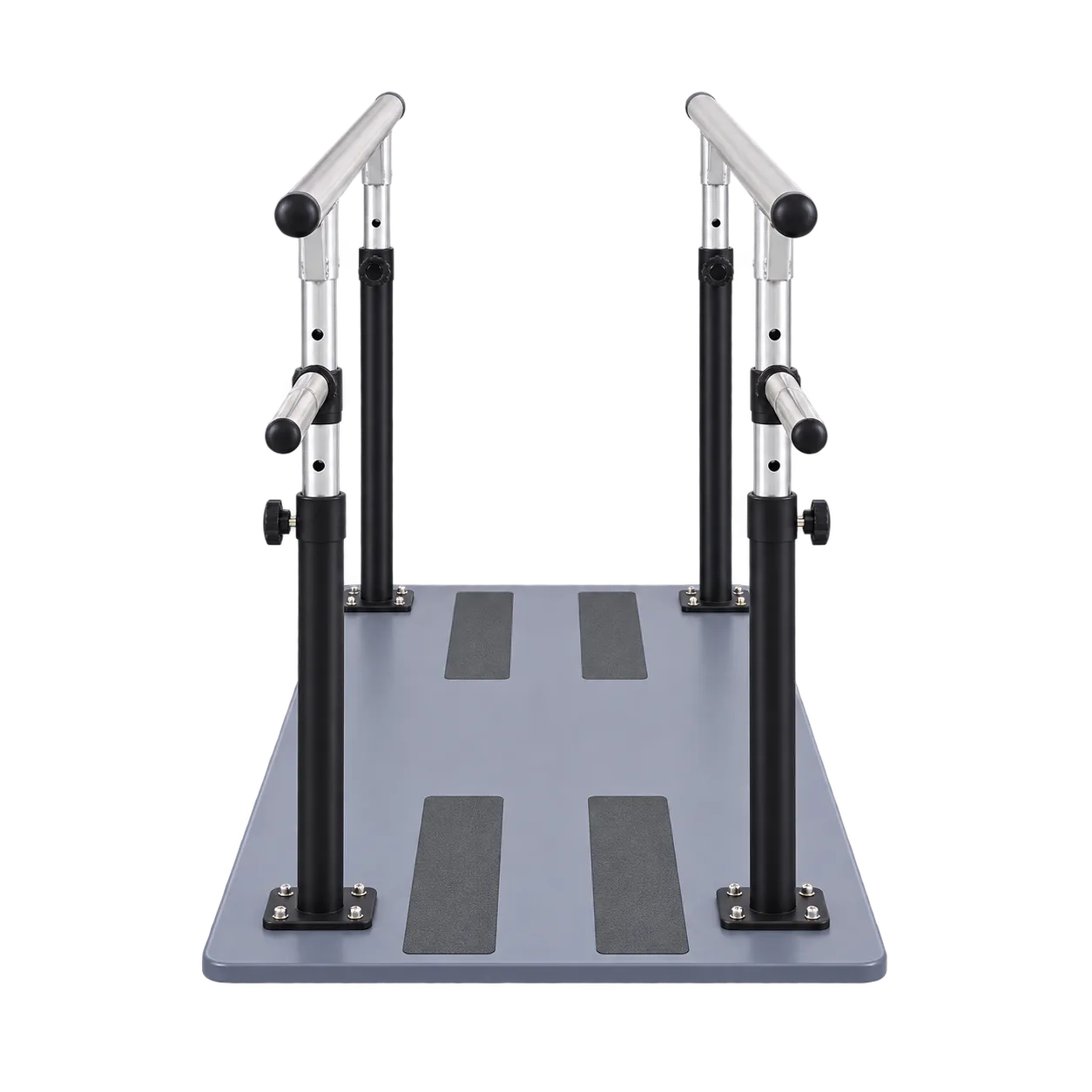
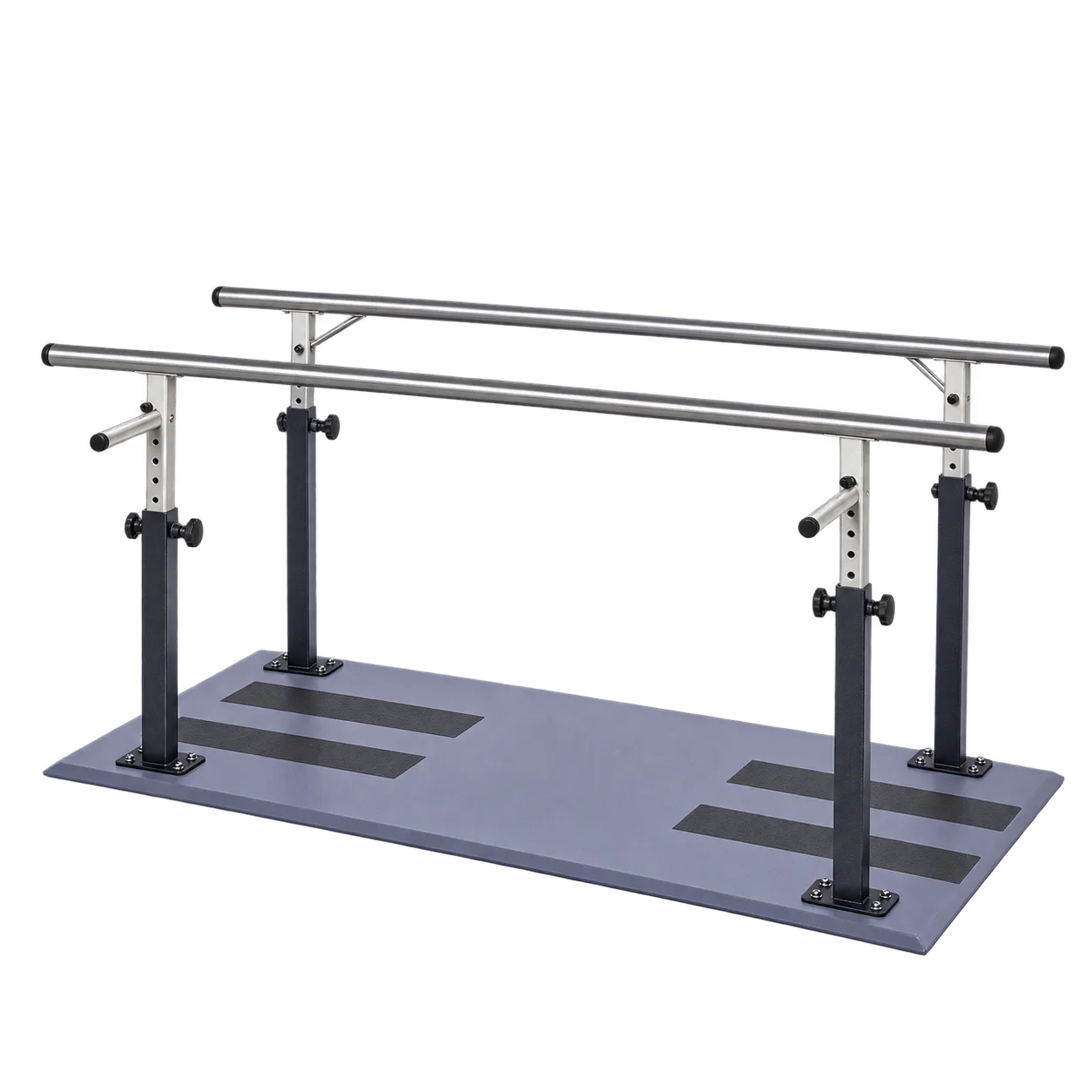
Stroke and neurological units, orthopaedic wards, amputee services, small outpatient and community clinics, care home therapy rooms and falls classes are where the MPB3 earns its place. Patients stand up from a chair at the open end, build standing tolerance, shift weight side to side and forward, and practise a single step before turning back. Because it needs less than a square metre, the bars can stay in a side room, leaving the main gym floor free. Amputees fitted with a first prosthesis can take early weight through it between the rails.
Standing practice is central to rehabilitation, and the evidence on timing and dose deserves attention. The AVERT trial randomised 2,104 patients in 56 acute stroke units. Very early, higher-dose mobilisation, including out-of-bed sitting, standing and walking within 24 hours, reduced the odds of a favourable outcome at three months, with 46% against 50% doing well. A follow-up analysis suggested that shorter, more frequent sessions may be associated with better results. Equipment that sits close to the patient makes short, frequent standing bouts easier to schedule, while still following the stroke team's protocol.
In the UK, physiotherapists who lead standing practice hold HCPC registration. The CQC regulates treatment providers in England, with separate regulators in Scotland, Wales, and Northern Ireland. NHS procurement routes ask for conformity paperwork and a stated user weight on standing and walking aids, and equivalent public procurement elsewhere asks the same. The conformity documentation those procurement routes require is issued by the manufacturer and shared by the enquiry team.