
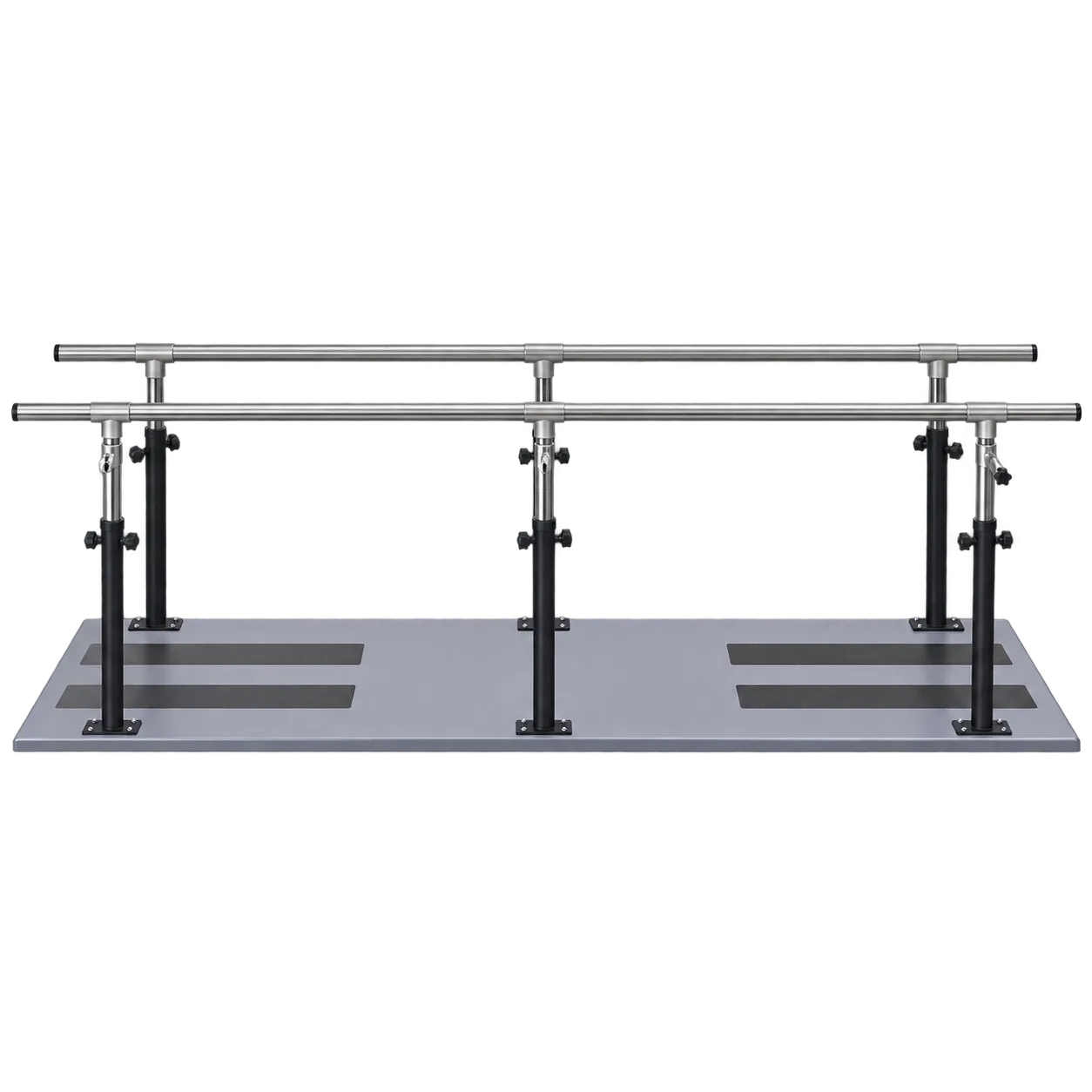
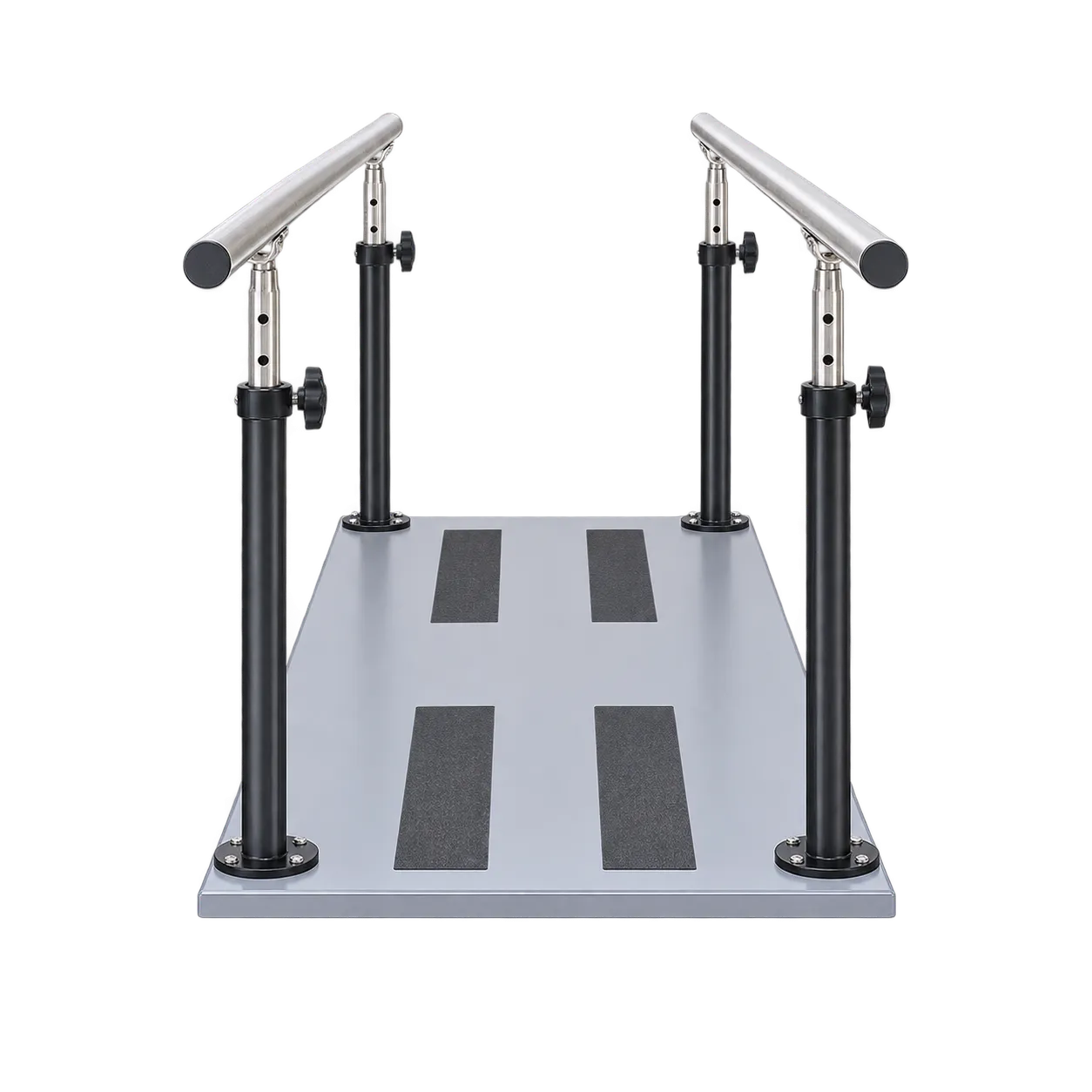
Spinal cord injury centres, neurological and stroke rehabilitation, amputee services, orthopaedic units and community rehabilitation teams are where the MPB10 earns its place. Patients walk the full 3.05 m with orthoses, a frame or the rails alone, turn at the tapered end and come back, while wheelchair users roll in at the wide setting to stand straight into the rails. Spinal injury patients can rehearse walking in orthoses between the rails before moving on to crutches. The platform's width gives the therapist space to guard from behind or alongside at the wider rail settings.
Walking practice on solid ground has its own evidence. A 2017 systematic review in spinal cord injury found that body-weight-supported treadmill training and robotic gait training did not raise walking speed more than overground training and other physiotherapy. However, their effect on walking distance was unclear. An earlier Cochrane review reached a similar view, finding too little trial evidence to favour any one locomotor training approach. Overground walking between parallel bars is one such approach, and its value depends on the dose and progression a therapist builds around it.
In the UK, HCPC registration covers the physiotherapists who run walking programmes on it. Treatment providers in England answer to the CQC, while Scotland, Wales and Northern Ireland have their own regulators. NHS procurement routes ask for conformity paperwork and a stated capacity on long-format walking equipment, and equivalent public procurement elsewhere asks the same. The conformity documentation those procurement routes require is issued by the manufacturer and shared by the enquiry team.