
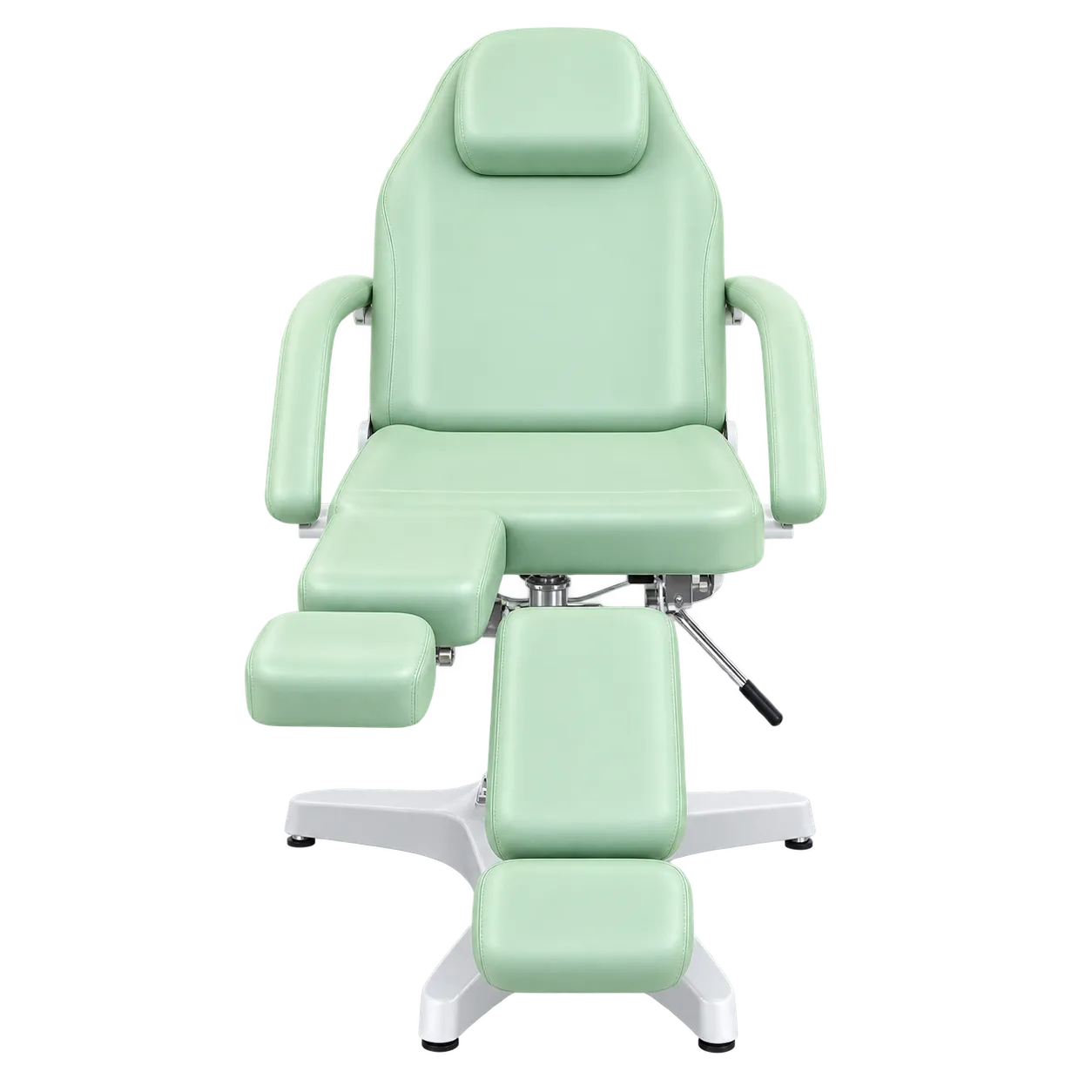
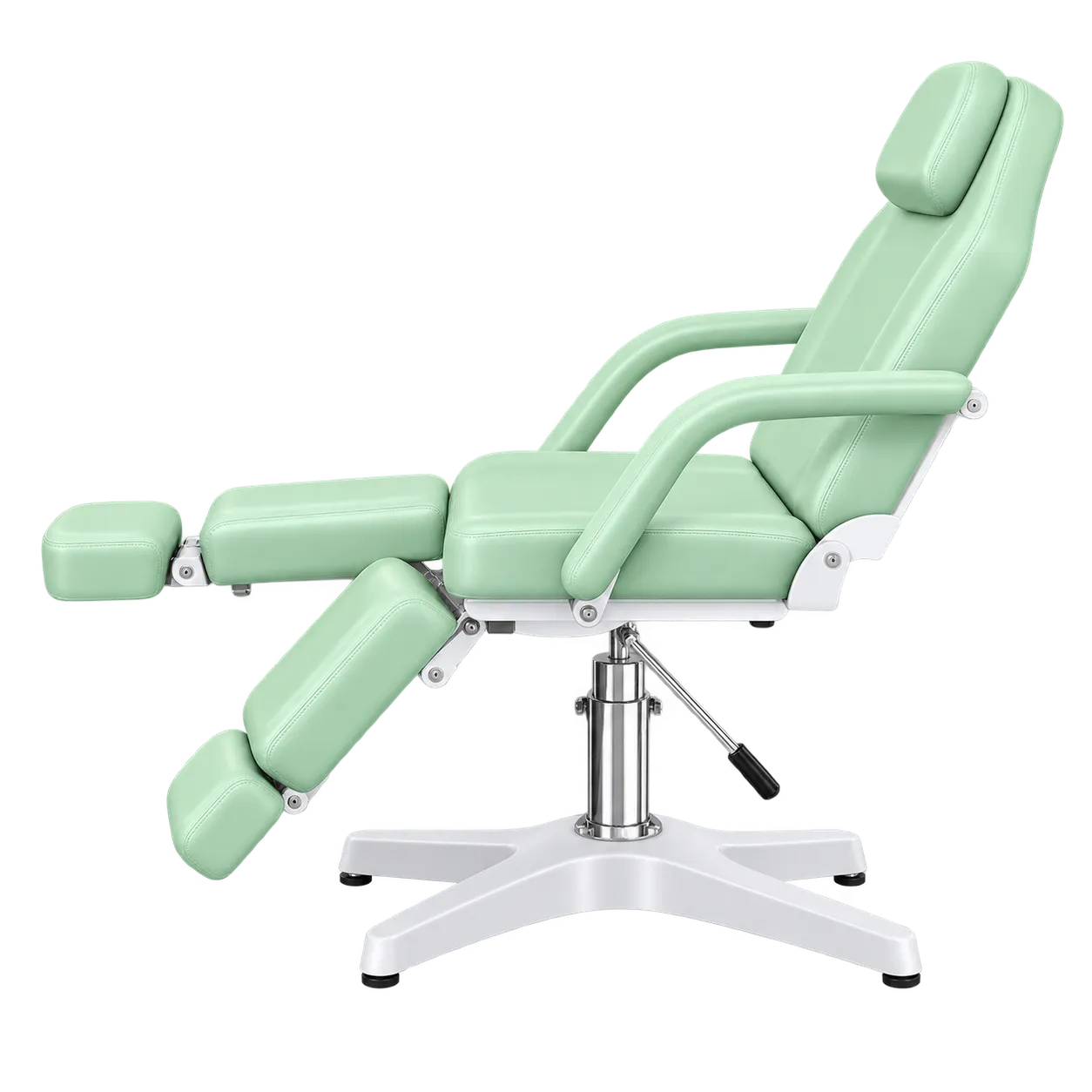
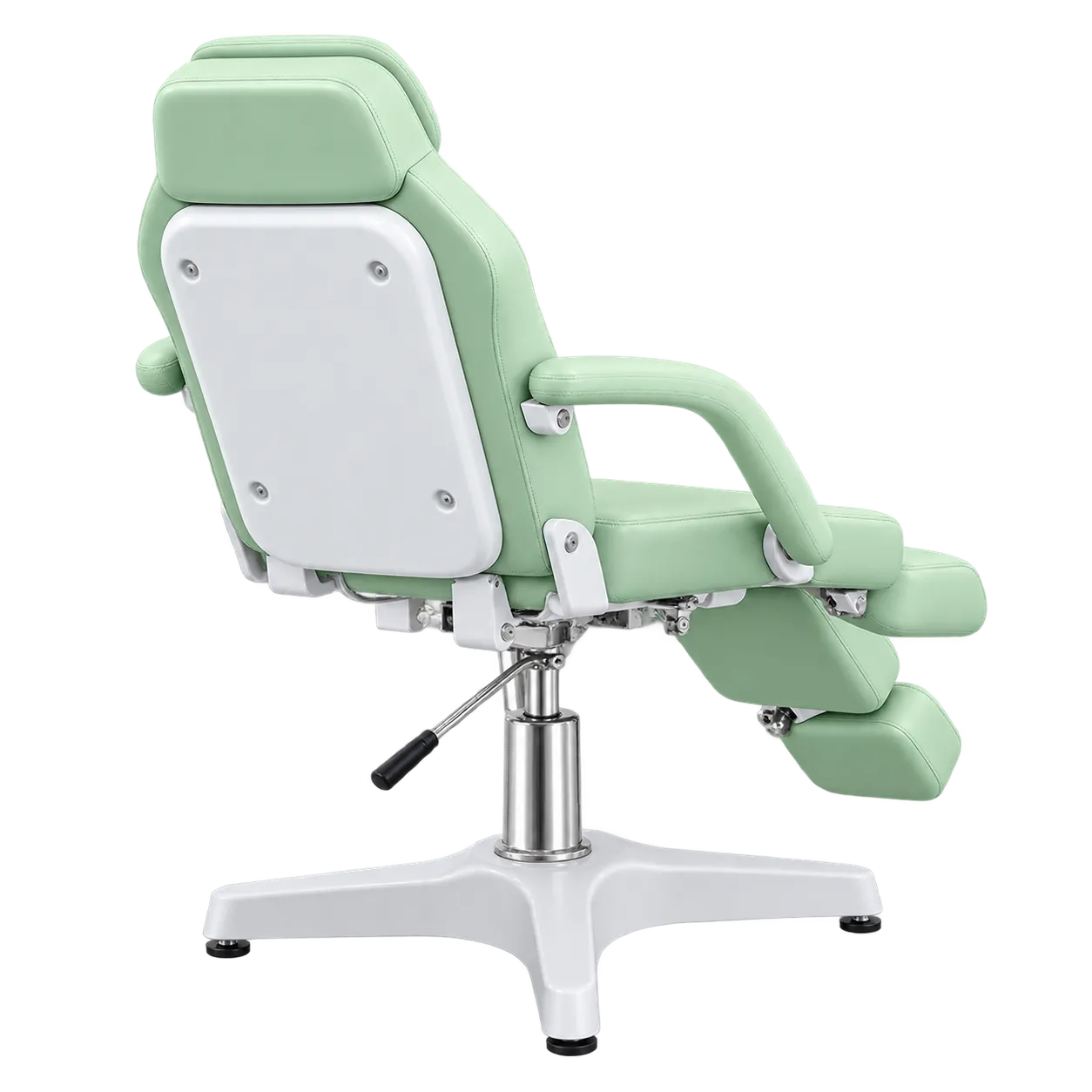
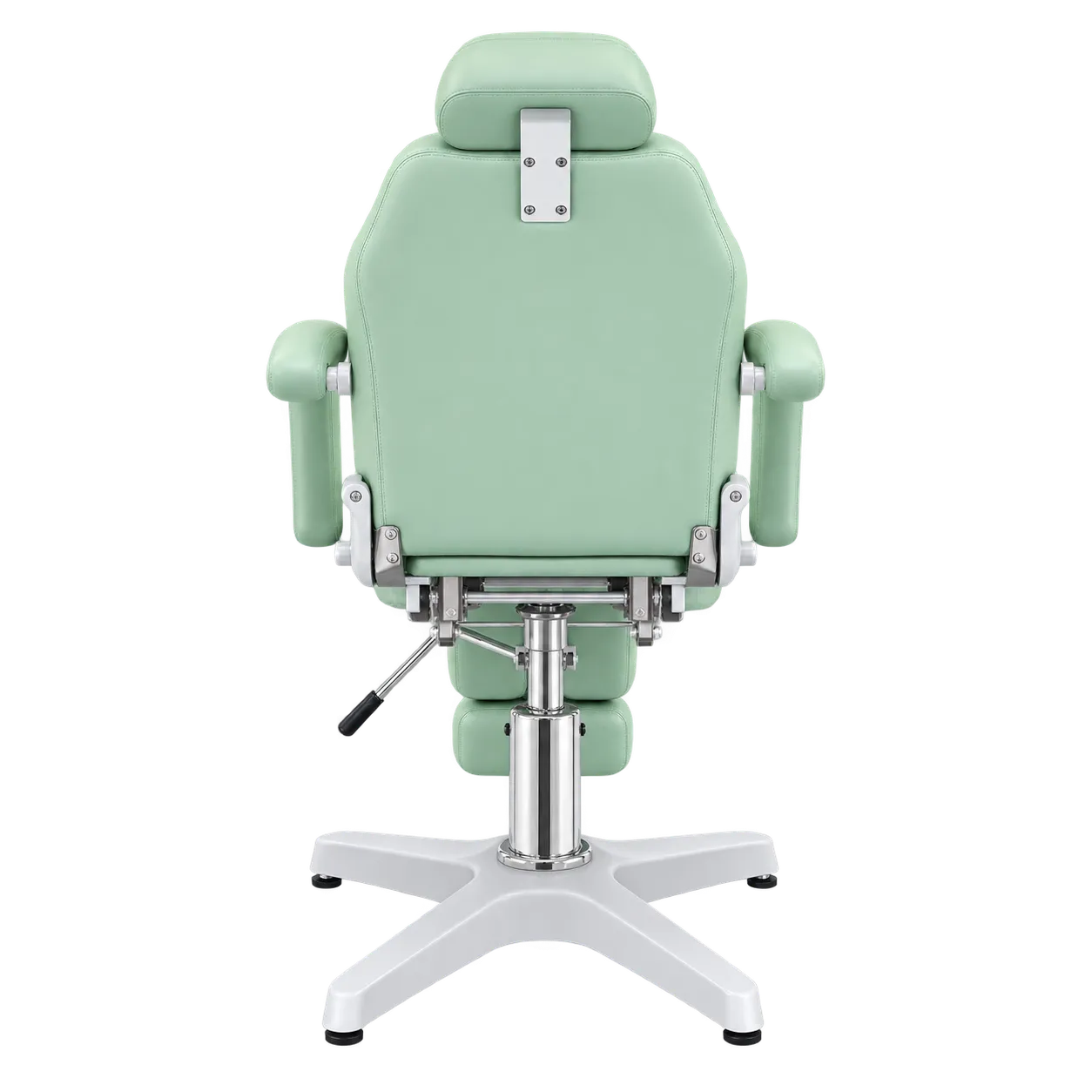
The Katia-B30 is built around the lower limb: community podiatry clinics, private chiropody and podiatry practices, diabetes foot-check appointments, nail surgery under local anaesthetic, and below-the-knee wound care. Patients walk in and perch, and the podiatrist works seated at the foot end with one leg raised and the other lowered.
Nail surgery shows what the procedure evidence can and cannot say. A 2022 Cochrane review of 24 randomised trials with 2,826 participants found one trial of 117 people in which adding phenol to partial nail avulsion with matrix excision cut symptomatic recurrence from 41% to 14% (Eekhof and colleagues). Postoperative measures such as antibiotics and manuka honey made no significant difference to infection, pain or healing time. The phenol result rests on that single trial, with unequal comparison arms and limited blinding, and the authors call for more studies to confirm it. None of that outcome evidence depends on the chair, which holds the foot steady and within reach while the clinician works.
In the UK, the HCPC regulates podiatrists and chiropodists. Where a podiatry service is registered with the CQC in England, Regulation 15 requires its equipment to be clean, fit for purpose, and properly maintained. PUWER 1998 places responsibility for maintaining the pump, gas springs, rotation lock, and leg-section fixings on the employer. Public buyers on NHS procurement routes typically request fire test reports and the device declaration before approving a chair, and equivalent public procurement routes elsewhere ask for the same. The manufacturer issues the conformity documentation those procurement routes require, and the enquiry team shares it.