
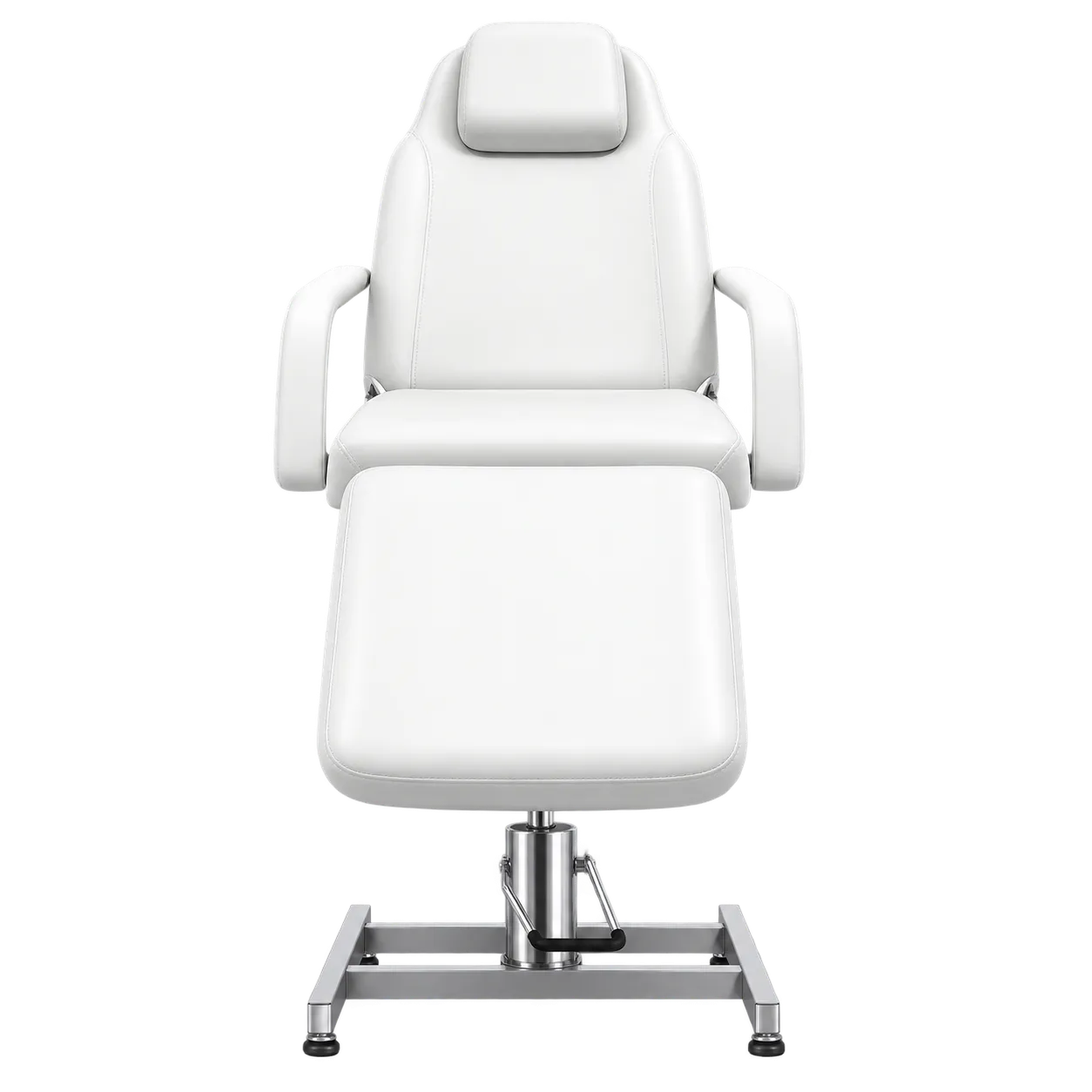
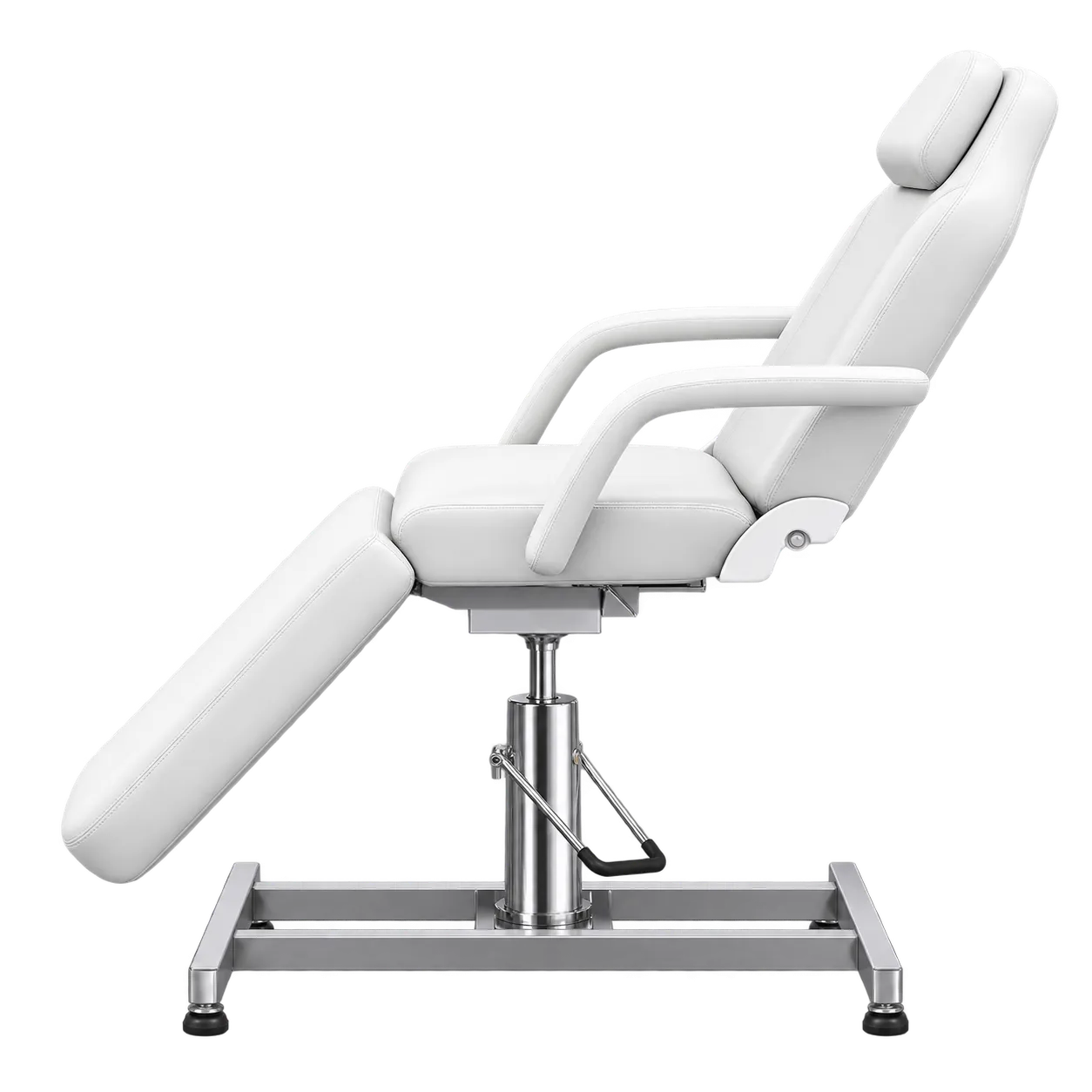
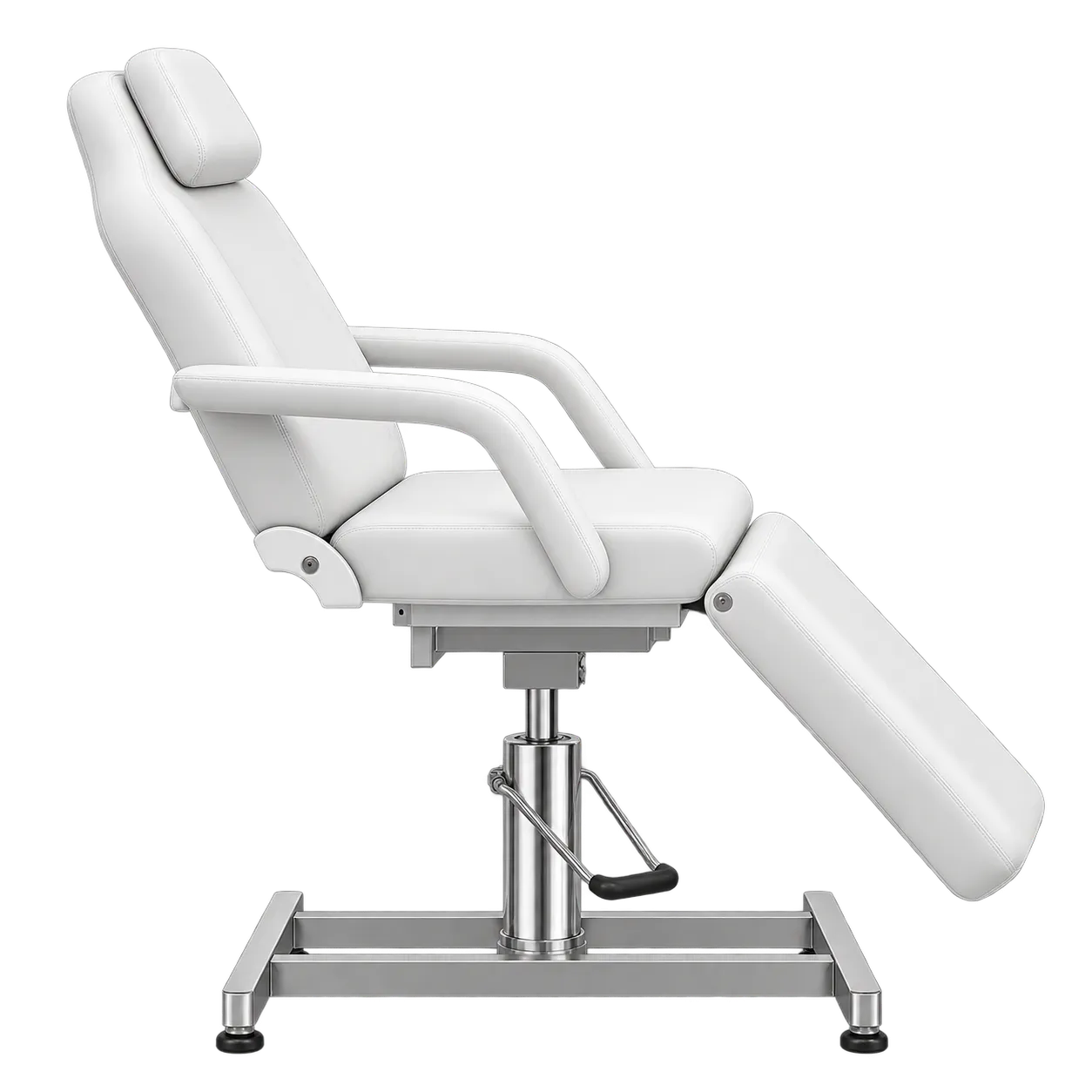
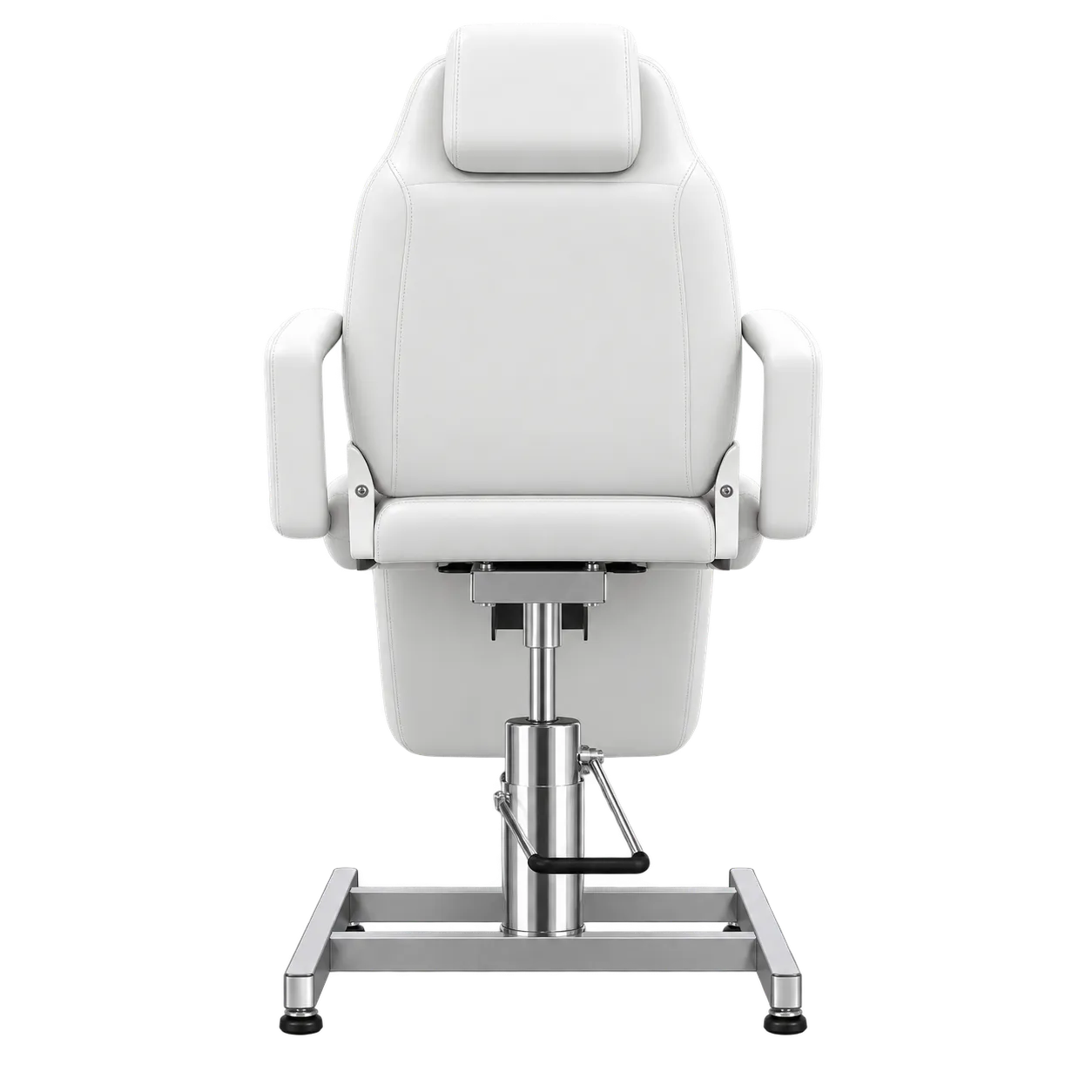
The Katia-B10 suits dermatology, aesthetic medicine, and minor-procedure rooms where patients walk in, sit back, and stay put for injections, skin treatments, or dressings while the clinician works seated. Turning the top lets the clinician switch sides without walking around, and running without mains power suits rooms and satellite sites without a spare socket.
Clinician posture is the main reason chair height matters. A 2018 meta-analysis of 21 studies covering 5,828 surgeons and interventionalists put the pooled prevalence of degenerative cervical spine disease at 17%, degenerative lumbar spine disease at 19% and rotator cuff problems at 18% (Epstein and colleagues, JAMA Surgery). Of those affected, 12% needed leave, restricted practice or early retirement. Among Mohs surgeons surveyed in 2010, 90% reported musculoskeletal symptoms, most often in the neck, lower back and shoulders (Liang and colleagues, 2012). Both rest largely on self-reported surveys, and the review's authors called for an ergonomics programme still to be developed and validated. Neither source tested an intervention, so the case for height adjustment rests on posture, and this chair's 610 to 770 mm range favours a clinician on a stool.
In the UK, PUWER 1998 and, in England, CQC Regulation 15 require the chair to be suitable and properly maintained, and because it has no electrical parts, upkeep is mechanical. HTM 05-03 Part C brings its upholstery into a hospital's fire strategy. NHS procurement routes usually ask for the working weight, fire test evidence, and the medical device declaration, and equivalent public procurement routes ask the same. The manufacturer issues the conformity documentation those procurement routes require, and the enquiry team shares it.