
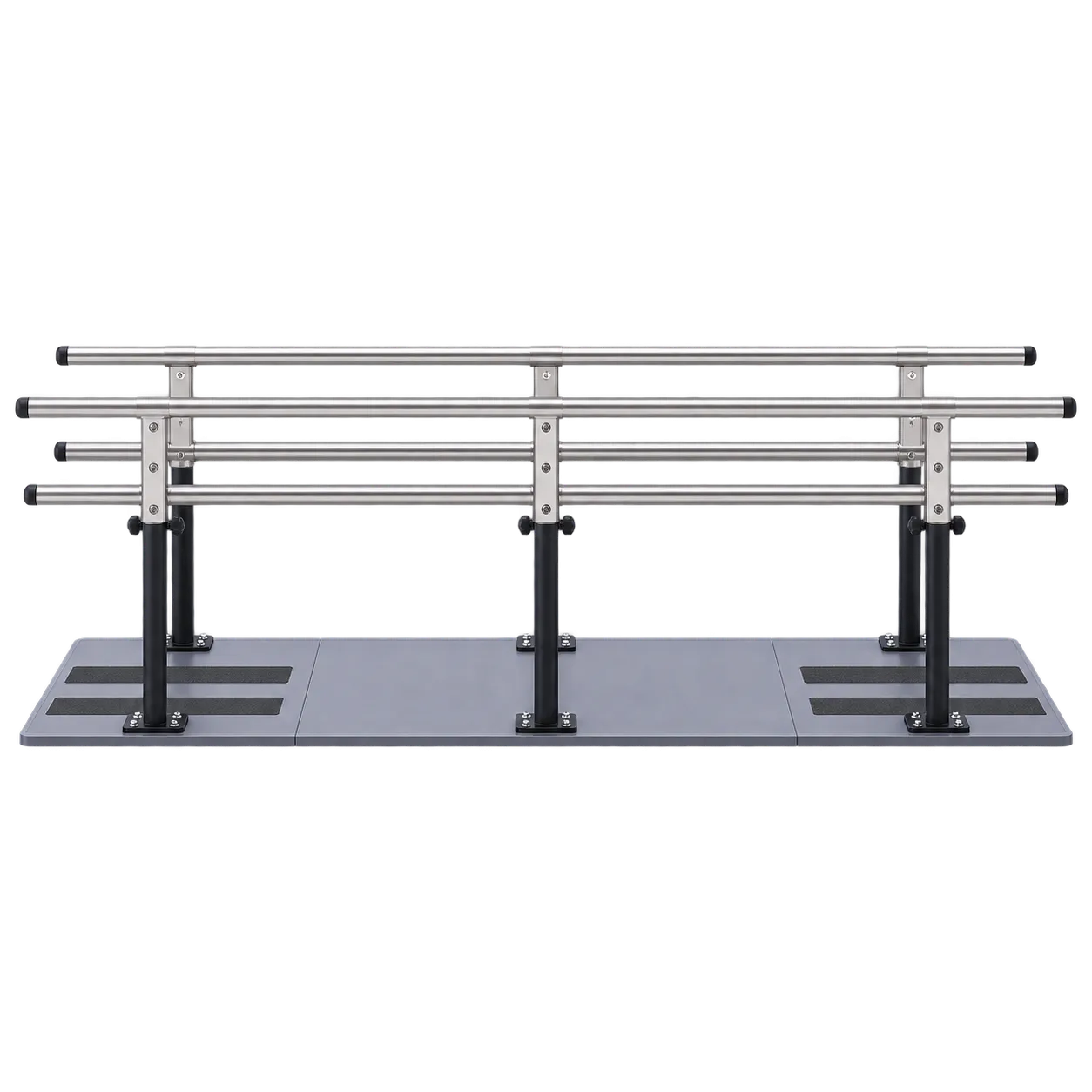
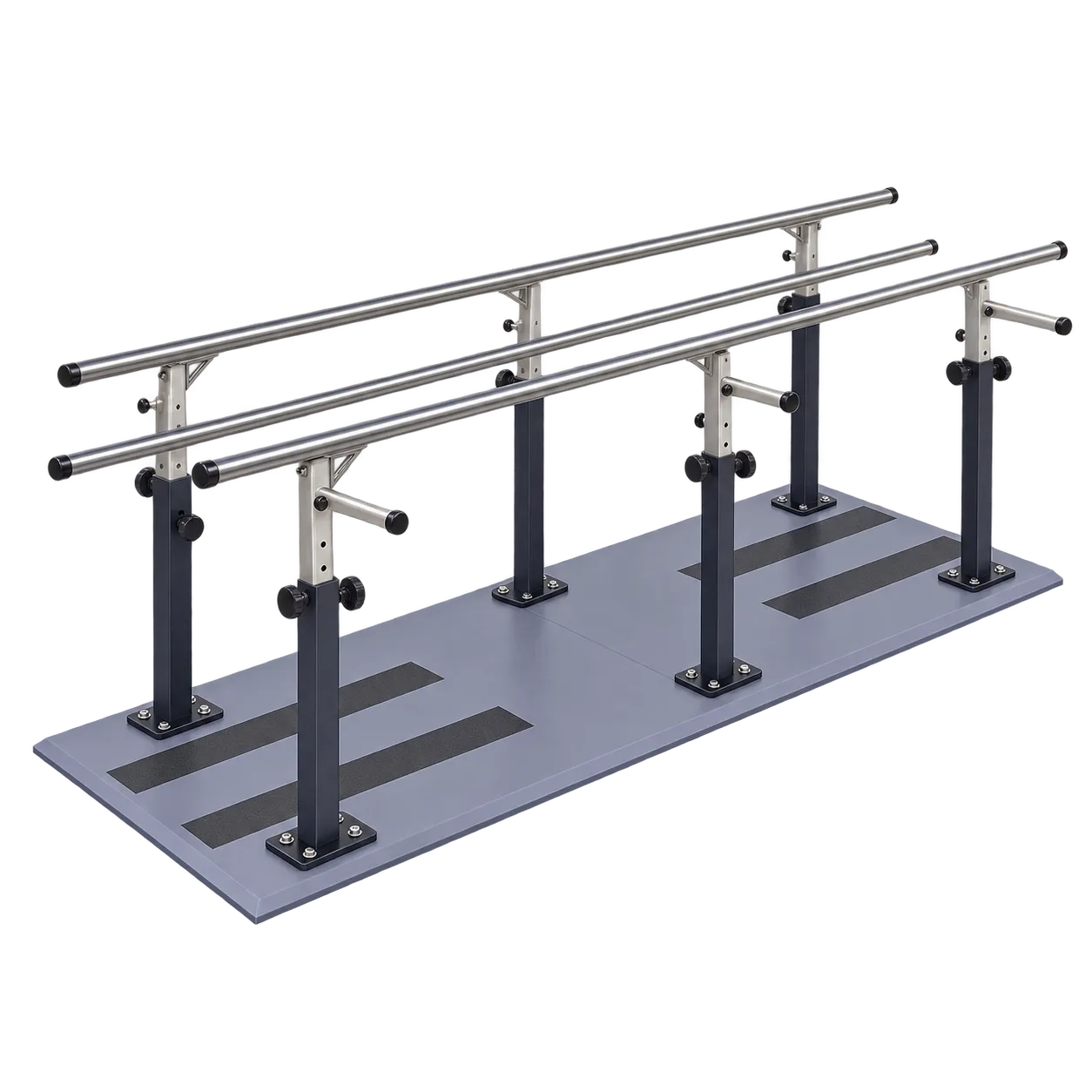
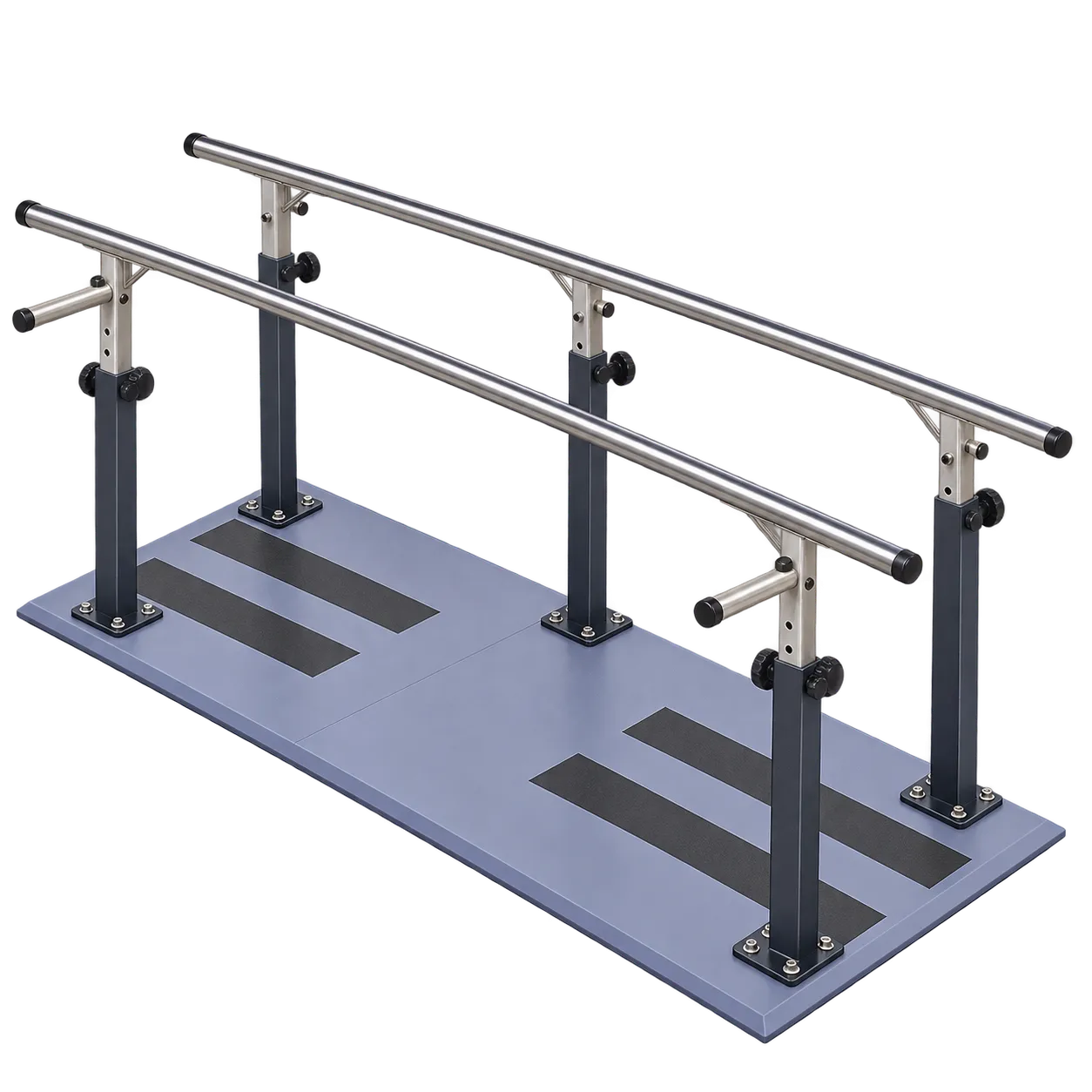
Children's hospitals, special schools, cerebral palsy and neurodisability clinics, community paediatric physiotherapy, and community hospitals that treat all ages are where the DPB10 earns its place. A child cruises and steps along the low rails in the morning clinic, while an adult walks the upper rails in the afternoon clinic. Young people moving from children's to adult services can also graduate from one pair of rails to the other in the same room.
Walking practice has strong evidence for increasing walking speed in children with cerebral palsy. A 2016 meta-analysis of 24 studies found that gait training increased walking speed (effect size 0.92), while resistance training had a negligible effect (0.06). The confidence interval for gait training ran from 0.19 to 1.66, so the size of the benefit is uncertain. A 2018 review of functional gait training reported a moderate effect on speed (0.79), with weaker evidence for endurance and gross motor function. The bars provide a safe frame at a child's height.
In the UK, physiotherapists working with children and adults alike are HCPC-registered. In England, the CQC regulates treatment providers, with separate regulators in Scotland, Wales, and Northern Ireland, and special schools follow their own education and care inspection regimes. NHS procurement routes ask for conformity documents and stated capacity for walking equipment, and equivalent public procurement elsewhere asks for the same. The conformity documentation those procurement routes require is issued by the manufacturer and shared by the enquiry team.