
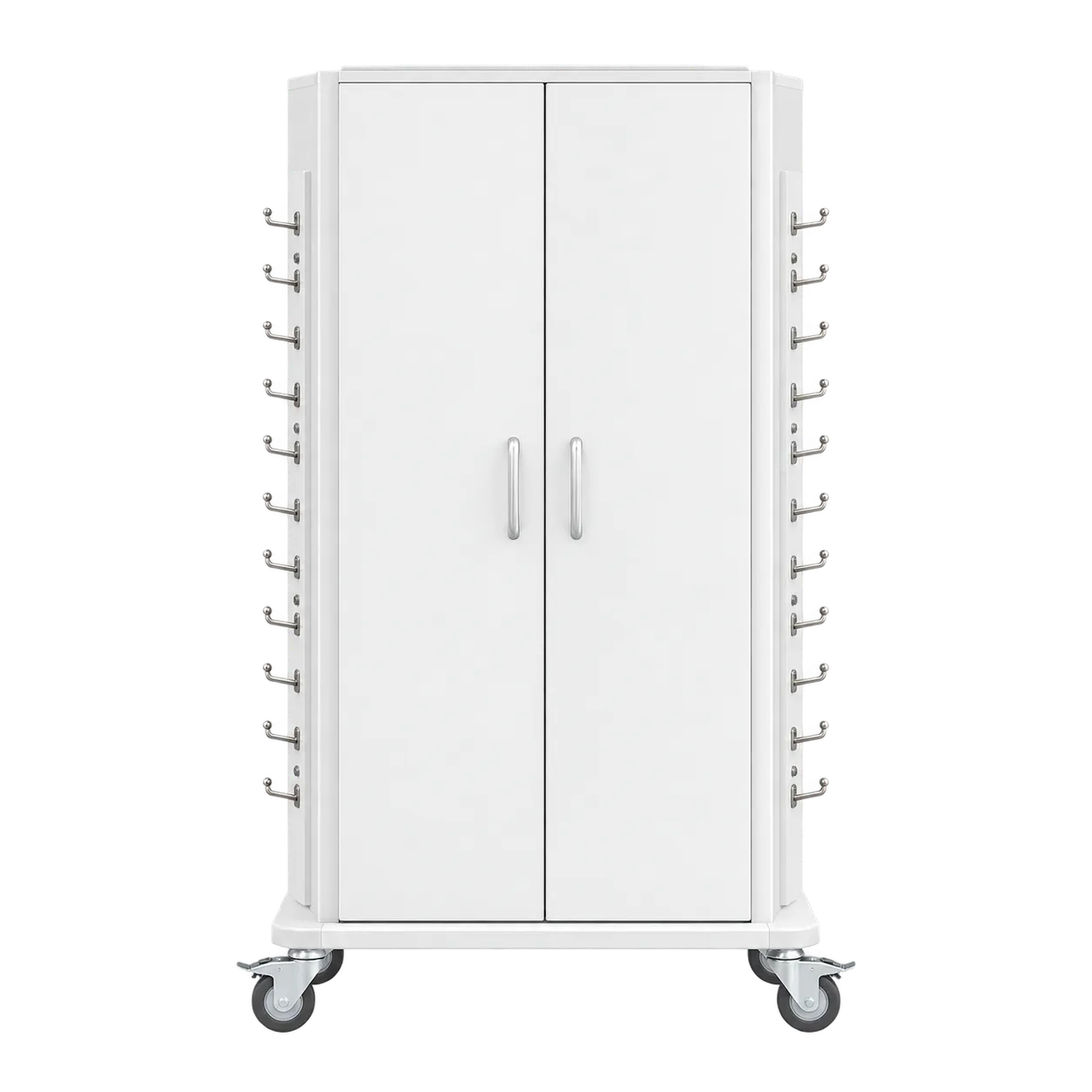
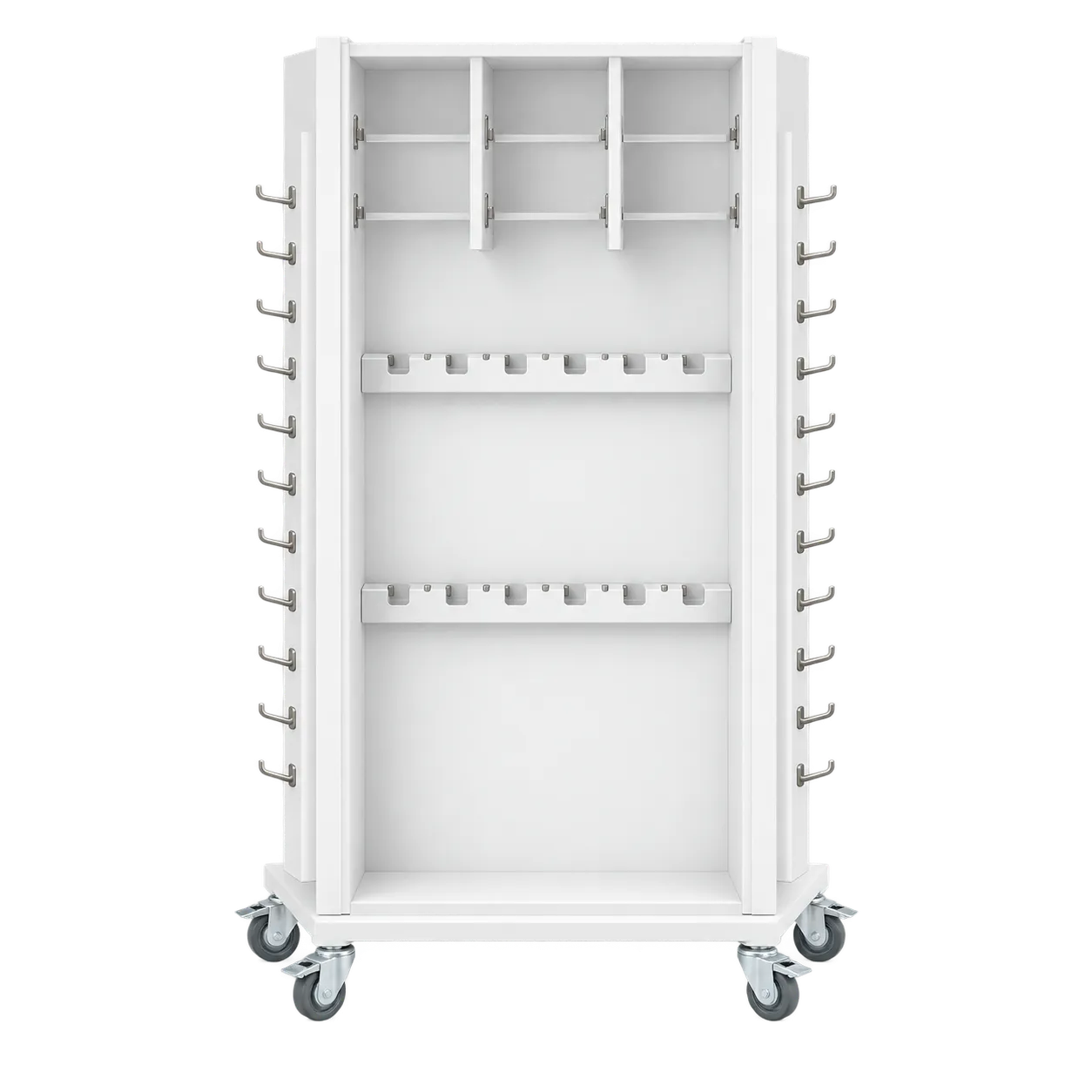
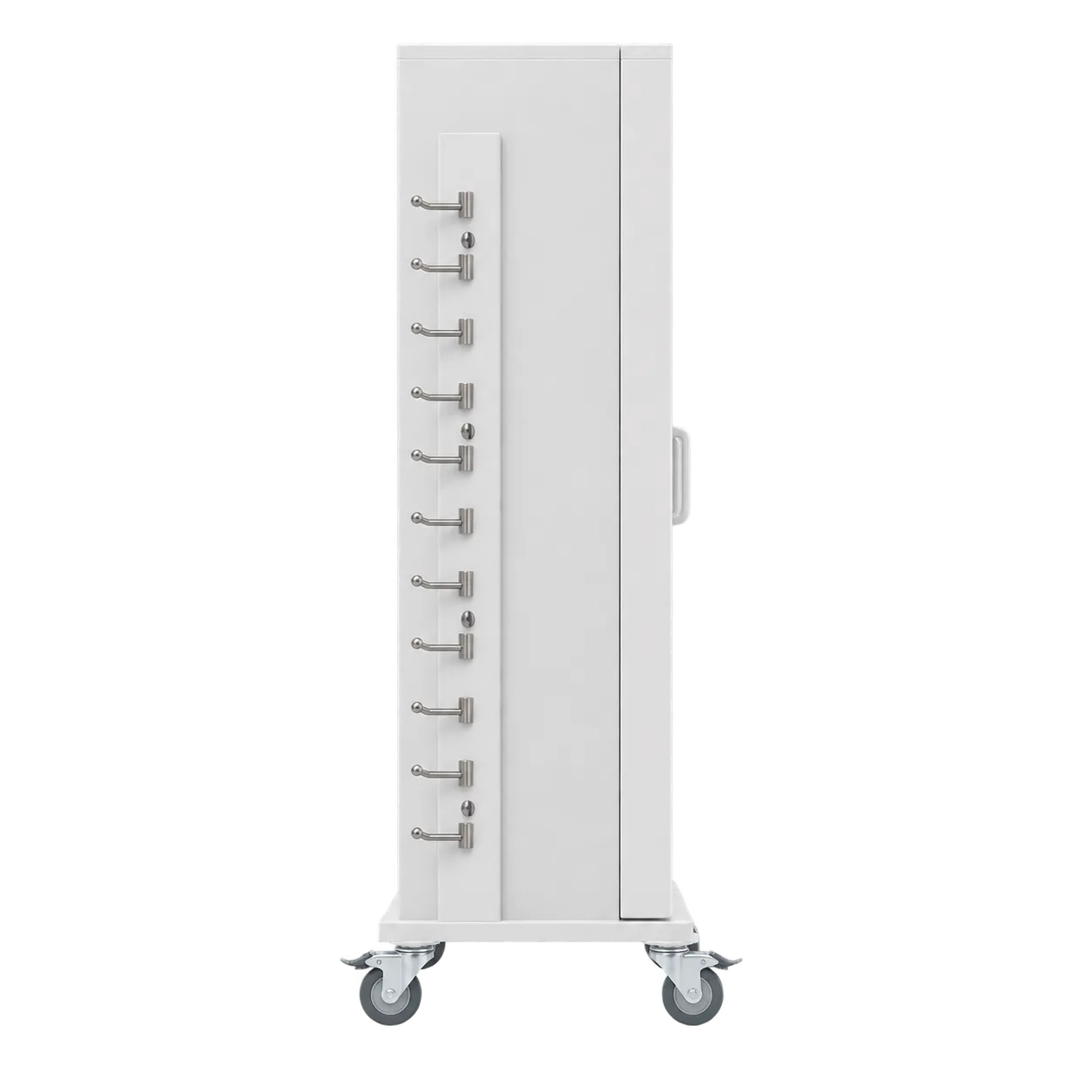
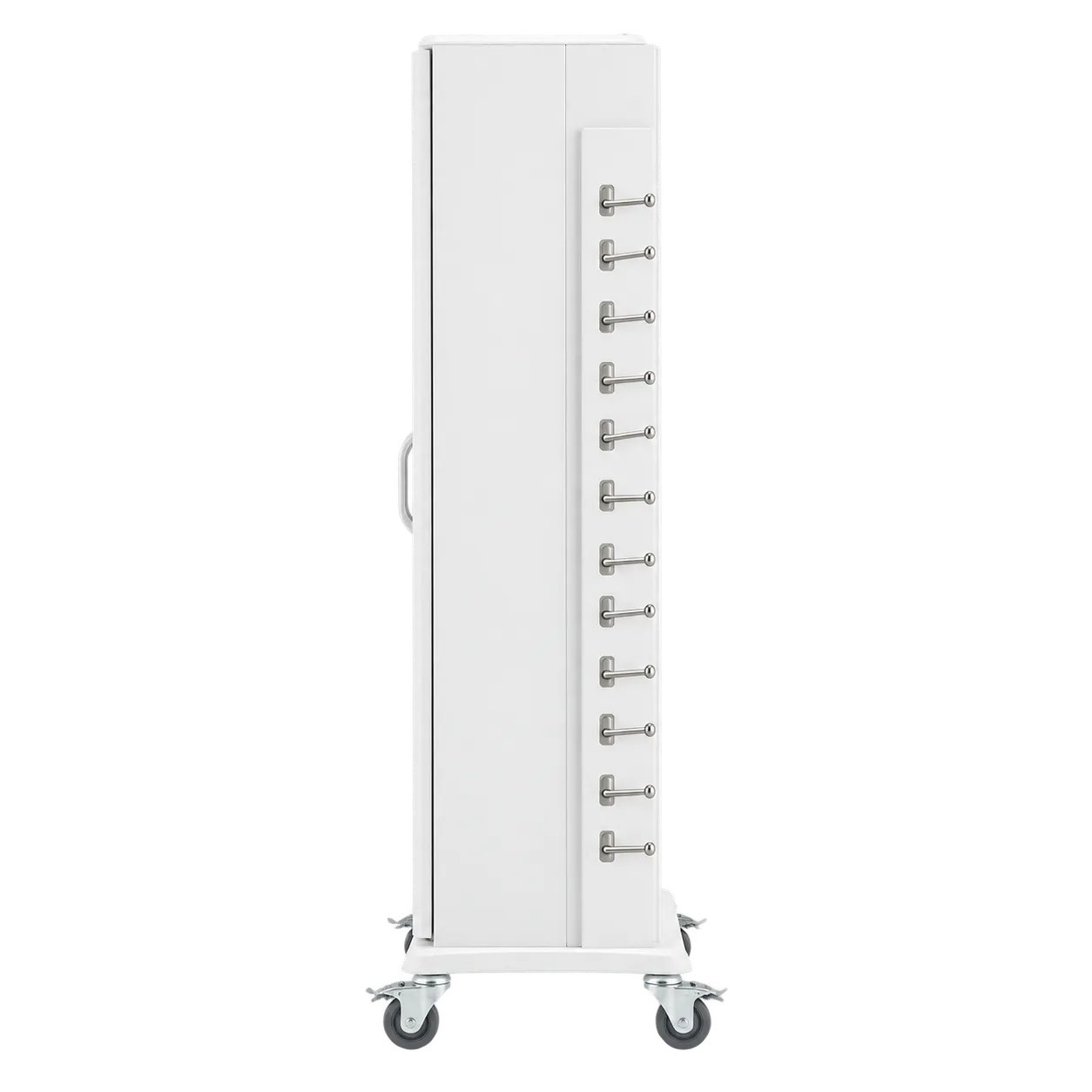
Outpatient physiotherapy and musculoskeletal clinics, sports injury clinics, community rehabilitation centres, occupational health gyms and school sports medicine rooms are where the CWR earns its place. It suits rooms that serve more than one purpose: a clinic in the morning, an exercise class at lunchtime and a staff meeting later, with the cabinet closed and parked between uses. The open rack keeps a graded set of weights at the therapist's side while the shelves hold everything else a session might call for.
The strengthening work it stocks has a large evidence base. A Cochrane review of 121 randomised trials with 6,700 older adults found that progressive resistance training had a large effect on muscle strength and a moderate to large effect on getting out of a chair. Its effect on overall physical ability was small, with a modest gain in walking speed of 0.08 metres per second, and the authors warned that many trials poorly monitored adverse events. The storage itself proves nothing clinically; it helps a team run the progressive loading that the evidence supports.
In the UK, HCPC registration covers the physiotherapists who run strengthening programmes. The CQC regulates treatment providers in England, while Scotland, Wales, and Northern Ireland each have their own regulator. NHS procurement routes ask for conformity documents and a stated load limit on storage furniture, and equivalent public procurement elsewhere asks the same. The conformity documentation those procurement routes require is issued by the manufacturer and shared by the enquiry team.