
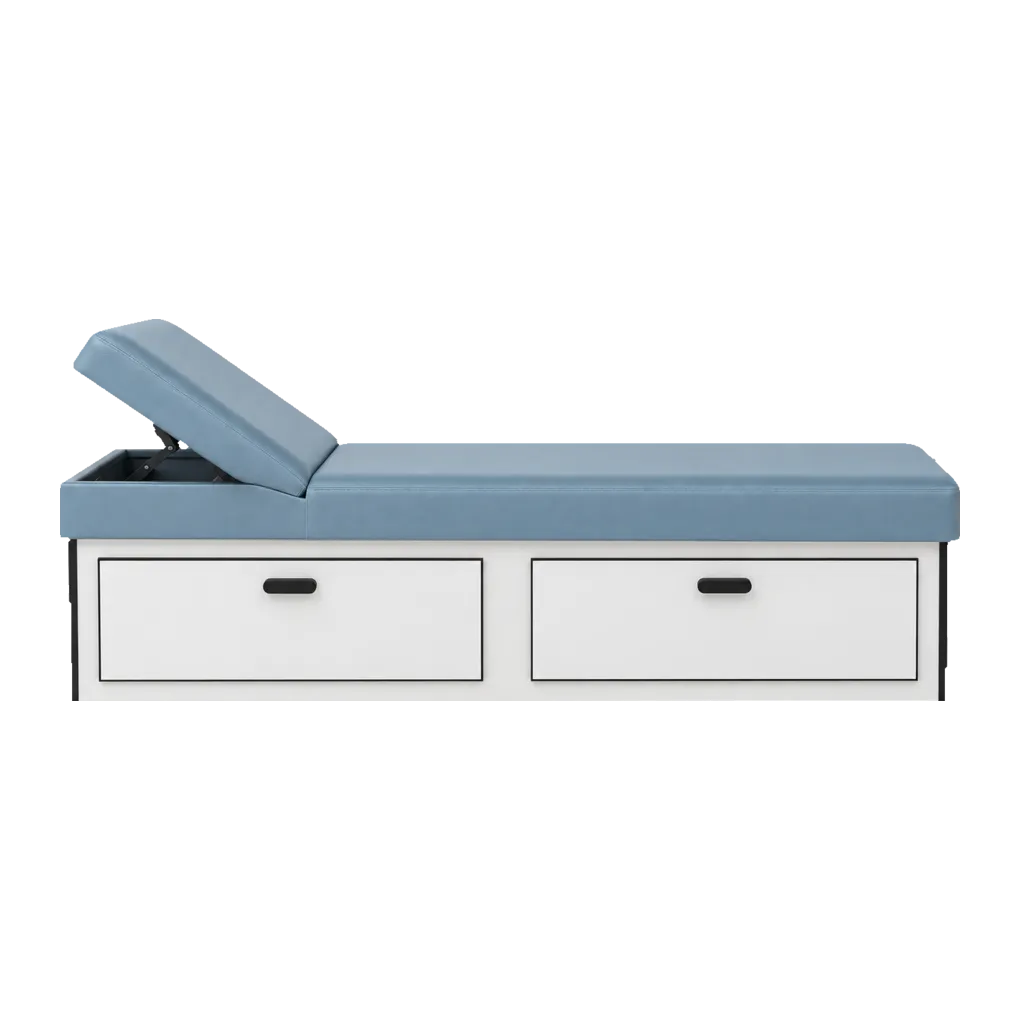
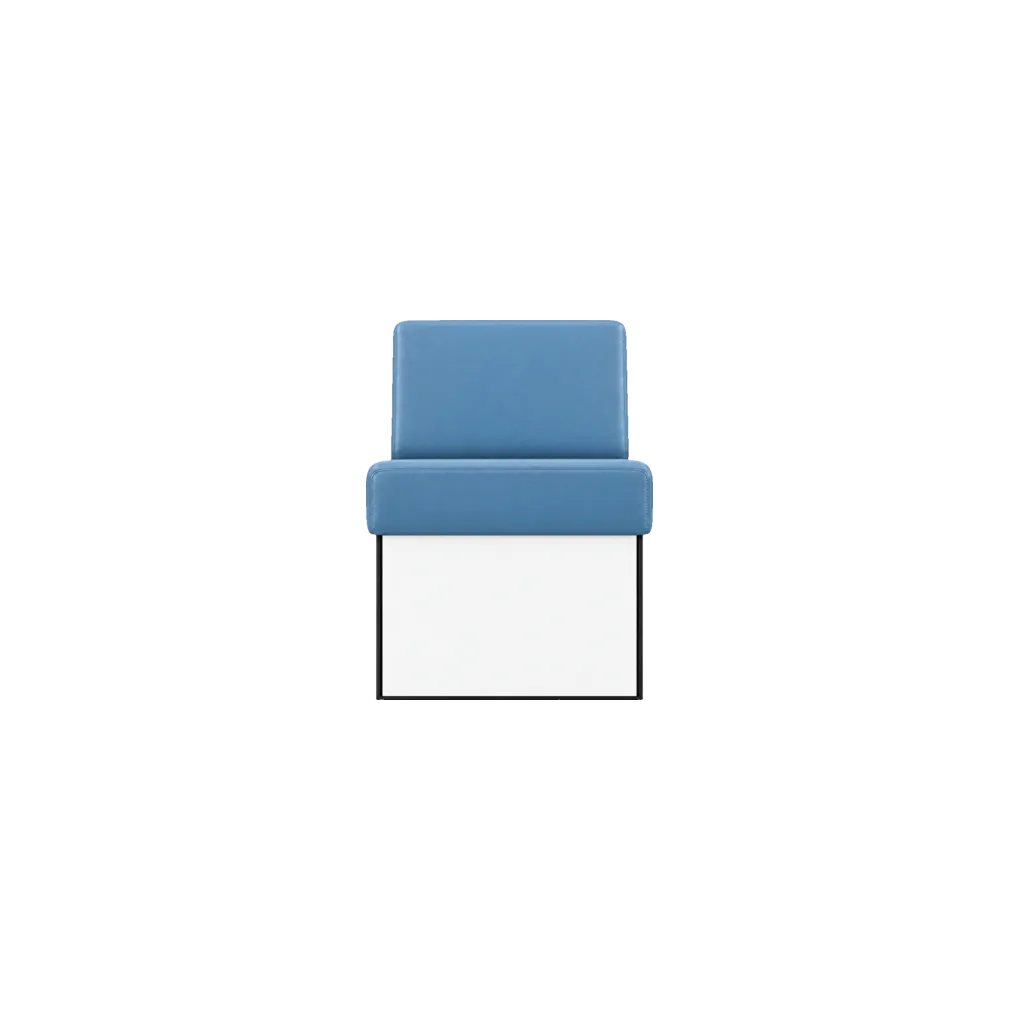
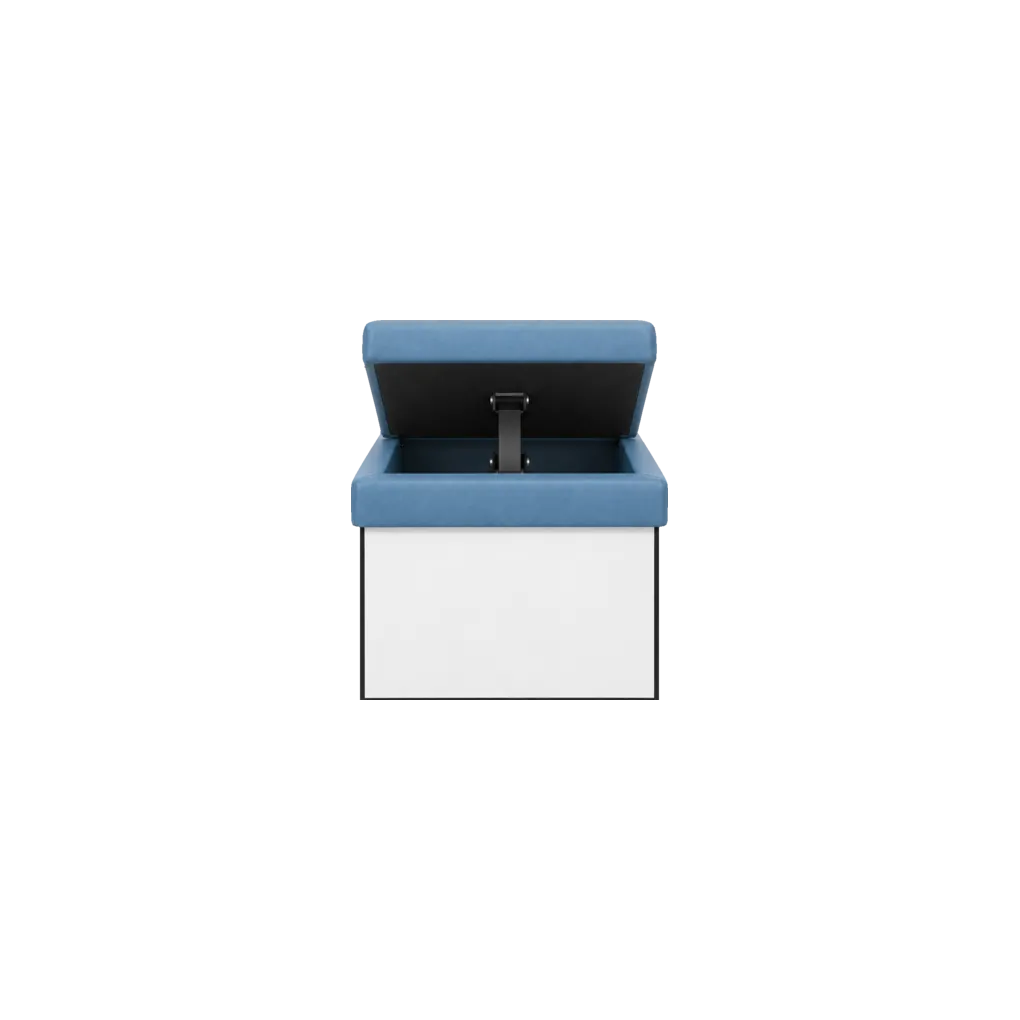
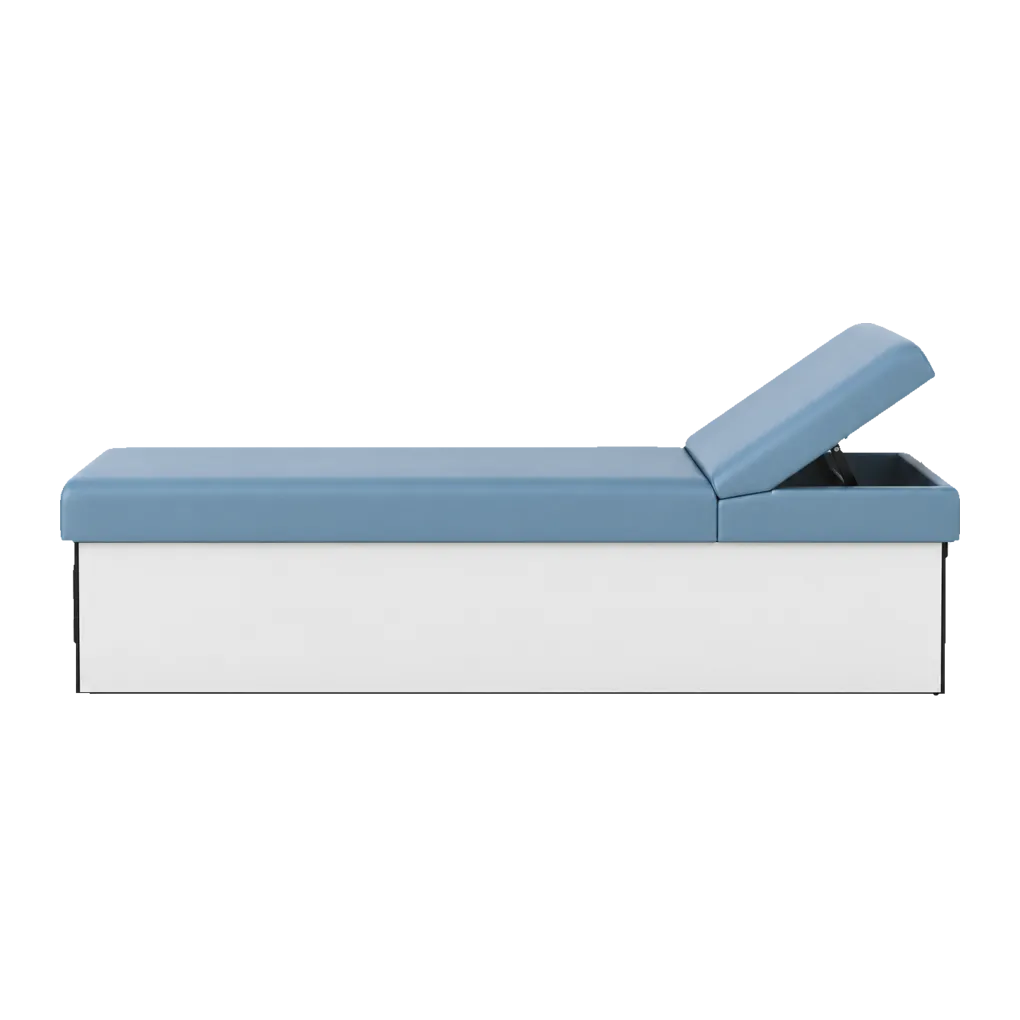
Children's clinics come first on the manufacturer's own sheet. In GP surgeries, community paediatrics and children's outpatient rooms, a low couch lets a child climb up without being lifted, with a parent sitting alongside at the same level. Wipeable surfaces matter here, where shared toys travel in from the waiting room. The backrest helps too: a child who can sit up and see their parent often settles quickly for an ear, chest or tummy examination.
Recovery after sedation is the second use. The Intercollegiate Advisory Committee for Sedation in Dentistry report, updated in 2020, is the UK standard for conscious sedation in dental care, and UK sedation practice expects patients to recover under trained staff in an area with monitoring and resuscitation equipment until discharge criteria are met. In a dental practice or day-case unit, a low couch with drawers for masks, probes and blankets fits that recovery area neatly, and a drowsy patient can sit on the edge with feet on the floor before standing.
Frailty and falls services see patients for whom climbing onto a standard couch is itself a hazard. A top near knee height lets an older person sit, swing their legs round and lie back in stages, and stand up again the same way. Check the actual height first. A couch at this height also brings the patient's face level with a seated clinician, which supports clear conversation with patients who have hearing loss or confusion.
Staff posture is the trade-off. Examinations on a low couch mean working seated or kneeling, so a low wheeled stool belongs in the room, and long procedures may suit a height-adjustable couch in another room. Where the layout is undecided, ask Medigear.uk about a site survey covering the couch, a stool and the monitoring kit.