
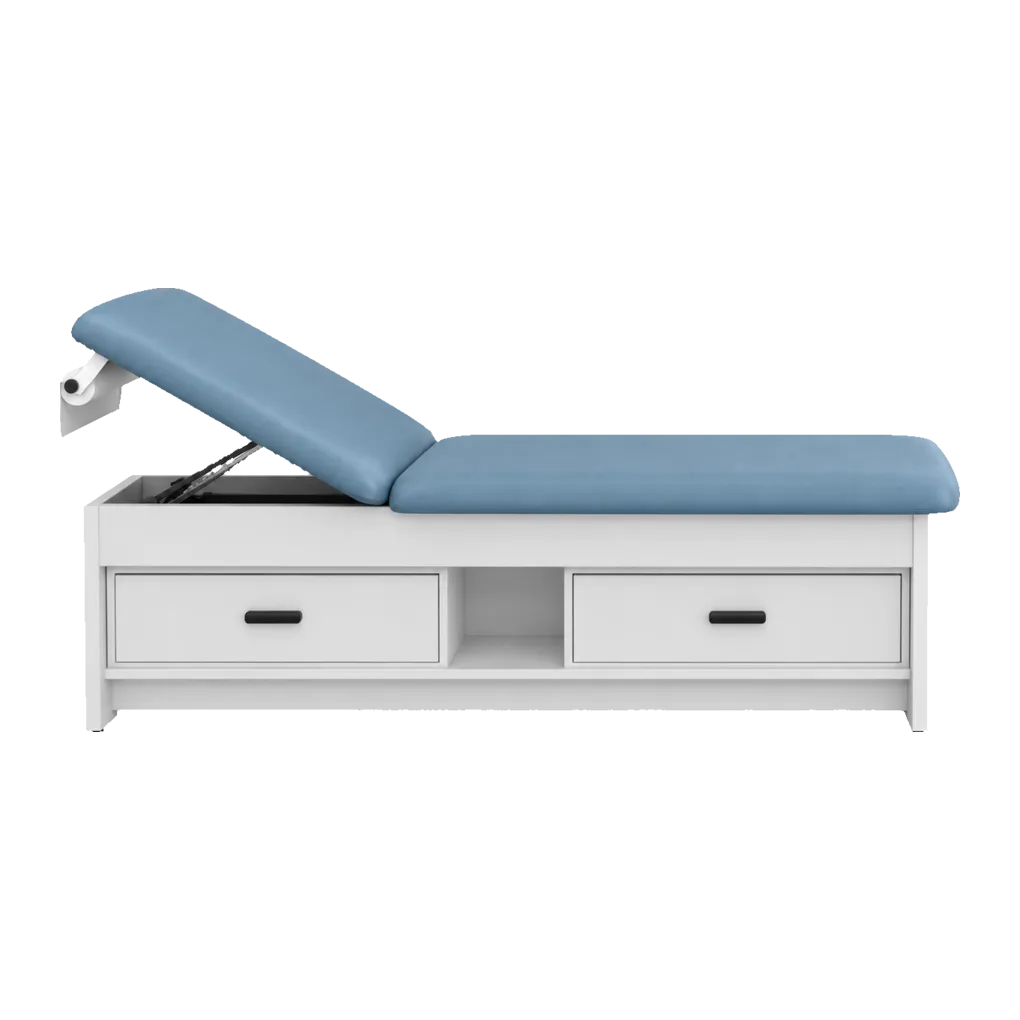

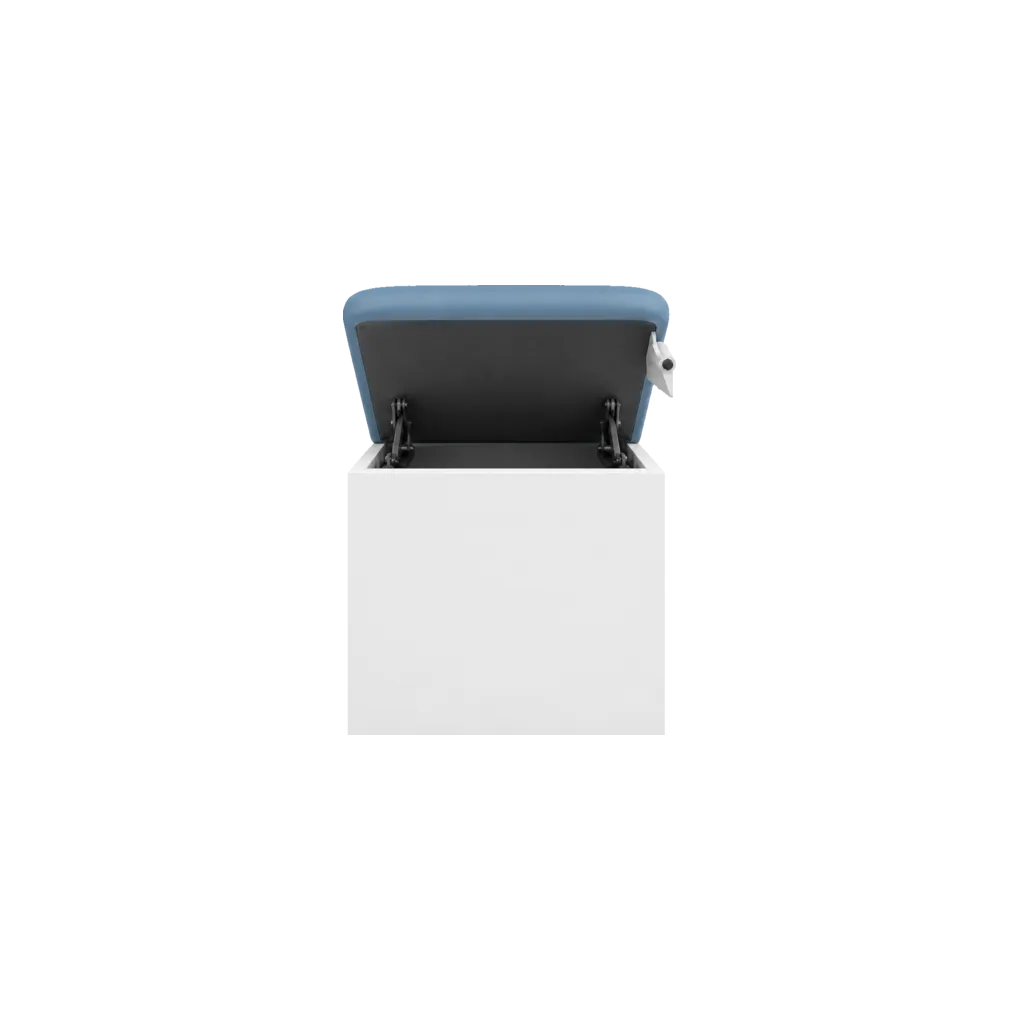
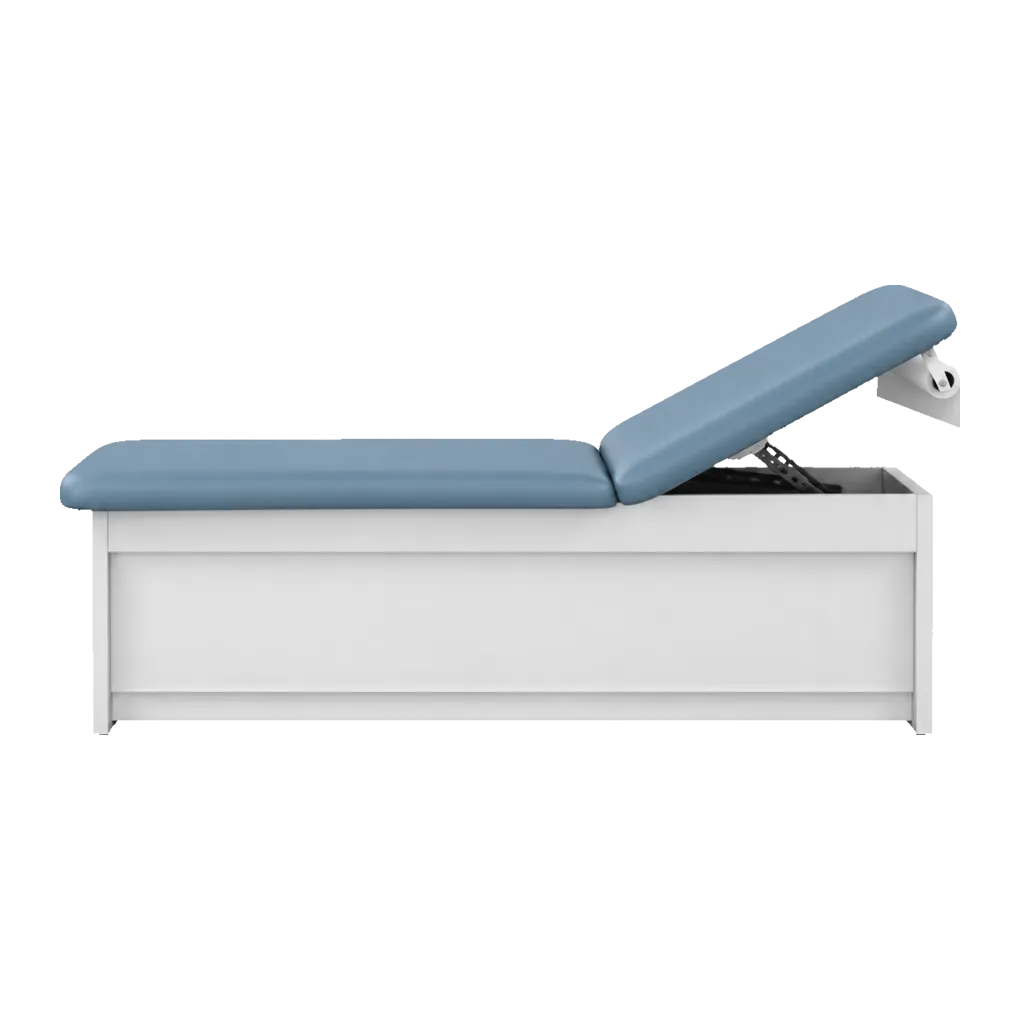
Postnatal services are the clearest fit. NICE guideline NG194 covers routine postnatal care through the first eight weeks, including care of the woman, care of the baby, the signs of illness in babies and the planning and support of feeding. Much of that work happens in a community room: a health visitor watching a feed, a midwife checking a wound, a baby weighed and examined. A 550 mm top lets a parent sit with feet flat and a baby safely held, and lets the clinician sit alongside at the same level.
Infant feeding support asks something specific of furniture. Positioning takes time, a parent may be sore, and the clinician needs to see the latch without leaning across. Sitting level beside the couch suits that conversation, and the drawers keep muslins, wipes, and a tape measure within reach.
Orthotics and footwear fitting borrows the same geometry from the other end. The patient sits with both feet flat while the clinician works seated at floor level, casting, measuring or checking a shoe, and the supplies live in the drawers below.
Shared community rooms tie the three together. A room used by feeding support on Monday, a nurse on Tuesday and an orthotist on Thursday can give each service a drawer and keep the shelf for bulky stock. One practical note: because the couch comes built, the room has to be reachable in one piece, which is worth checking before a refit locks in narrow doors. If the room is still being designed, a site survey through Medigear.uk can confirm where to place the couch, the stool, and a seat for the parent or carer.