

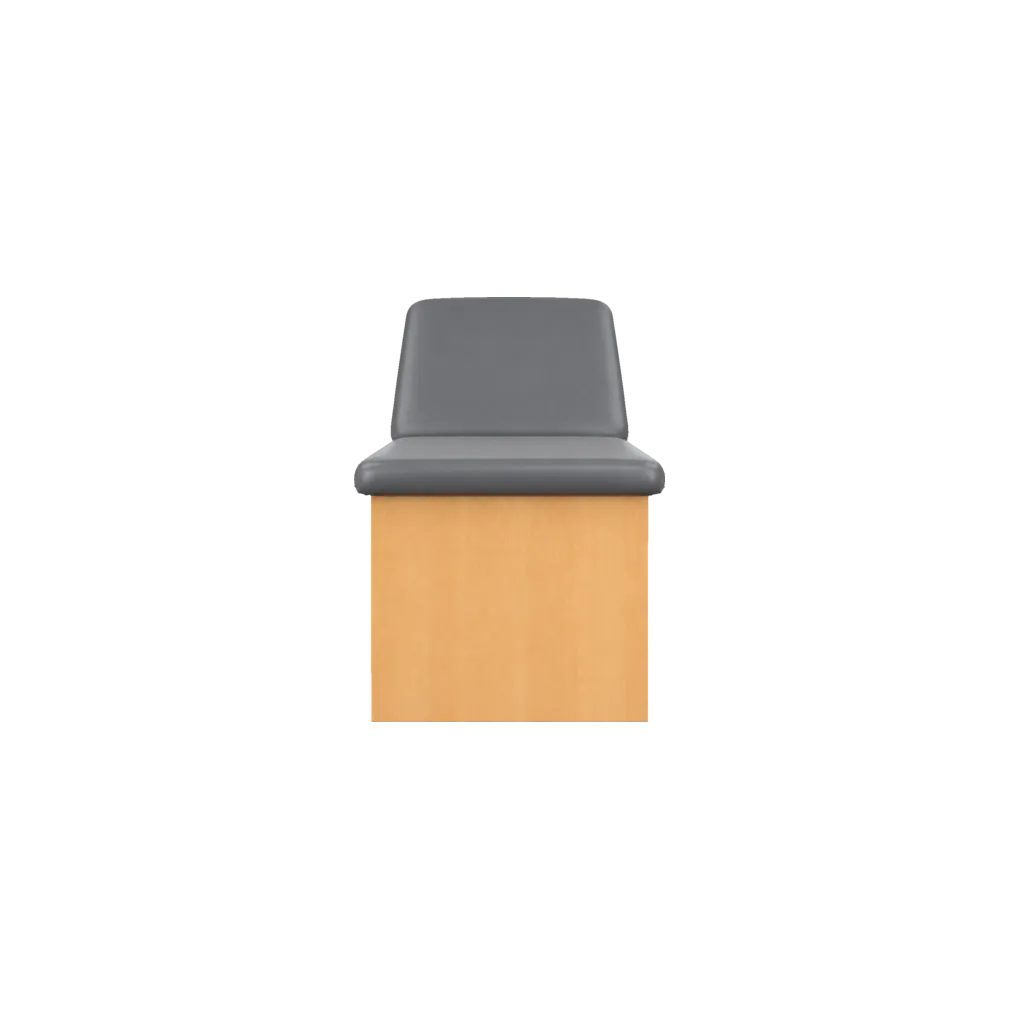
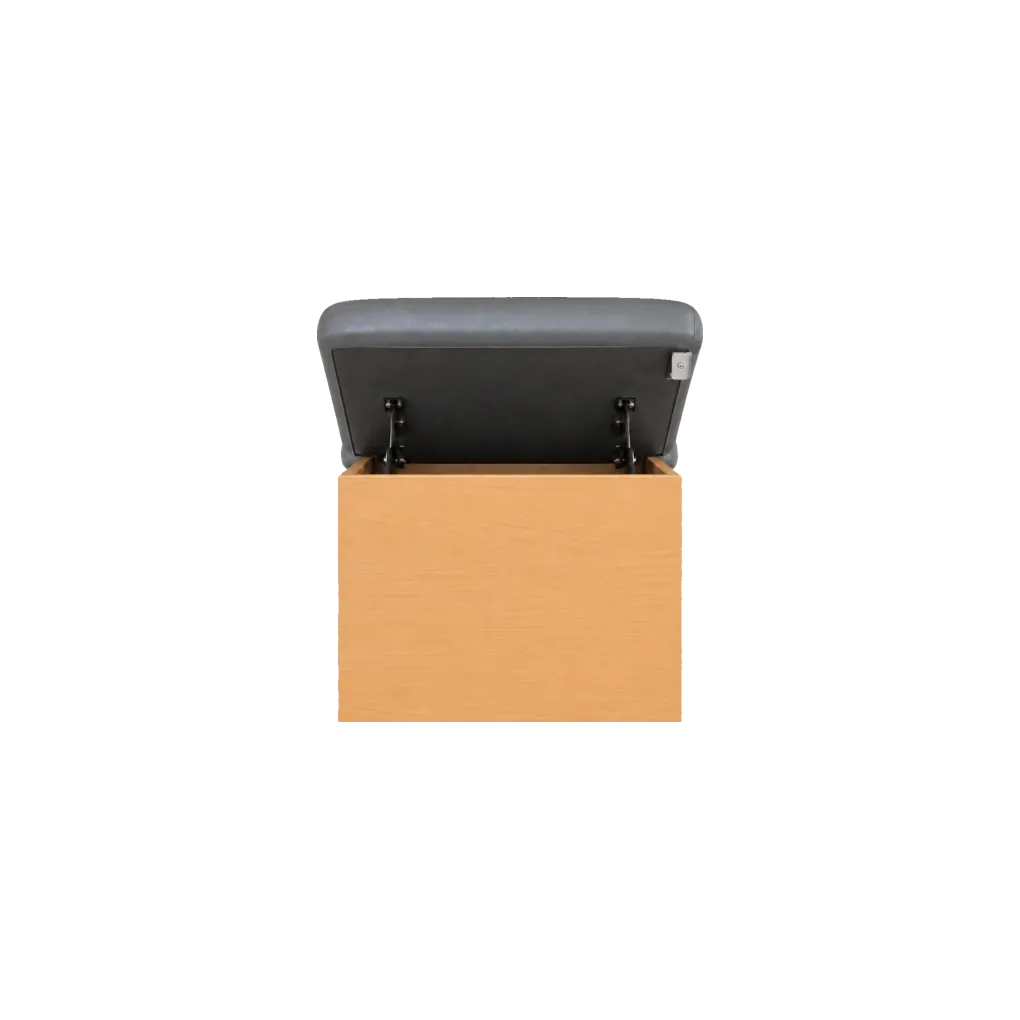
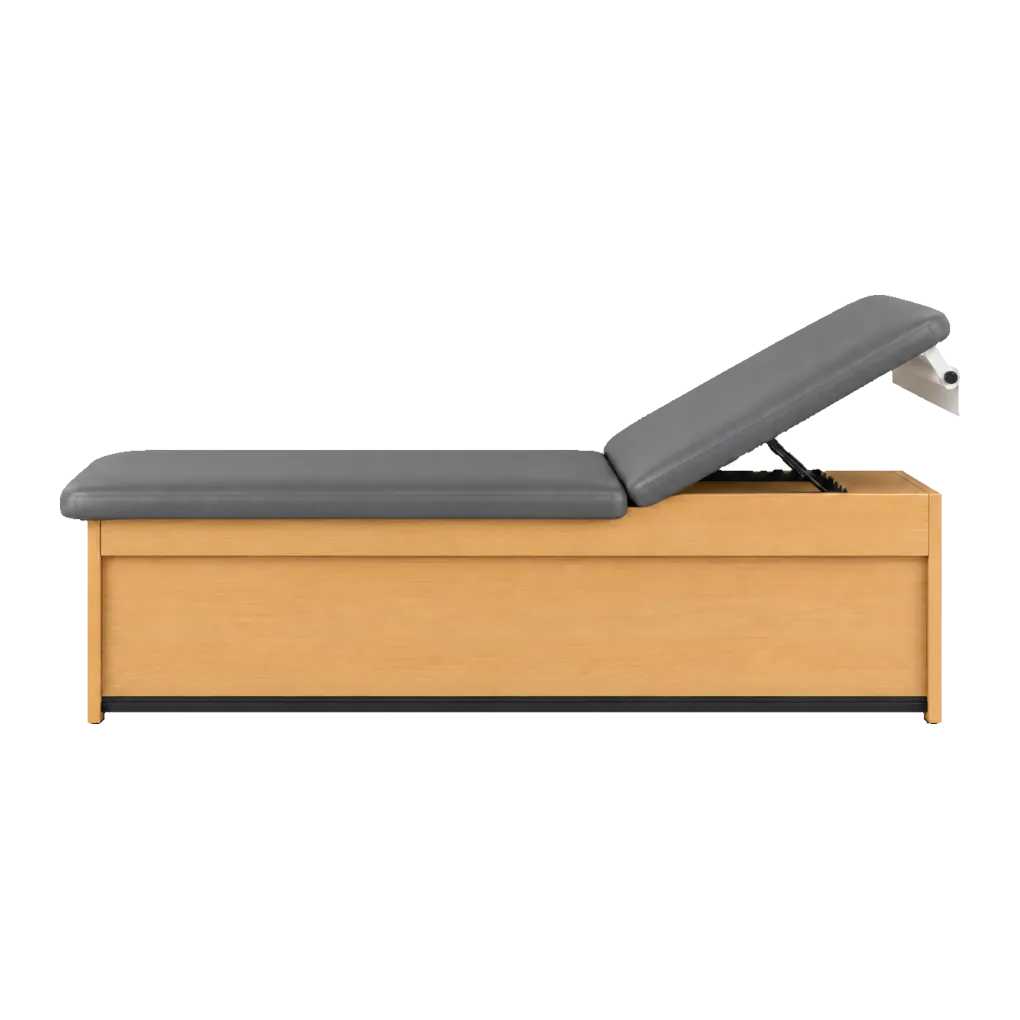
Allergy services give the clearest case. British allergy practice expects subcutaneous immunotherapy to be given in a clinical area with room for direct observation, resuscitation facilities, and staff trained to manage anaphylaxis; patients are usually kept for 30 to 60 minutes after each injection, since a 60-minute watch catches serious reactions. That hour needs somewhere comfortable to sit or lie, within sight of the nurse, with the routine stock close by and the emergency drugs kept apart and in plain view.
Day-case and minor procedure lists use the same pattern. After a vasectomy, a skin excision or a joint injection, patients rest until they feel steady, and a 510 mm top lets them sit up, put both feet down and stand when they are ready. The cabinet holds dressings, bowls, blankets and spare gowns, so nobody leaves the bay mid-session to fetch something.
The sliding doors earn their place in small rooms. Observation bays are often screened off with a curtain track, and panels that run along the carcase stay clear of it. They also mean half the cabinet is closed at any moment, so group items by panel and keep the runners clean.
Sintang MT also lists the couch among its kid and recovery couches, and the low top suits a child waiting with a parent, or an unwell pupil or student resting in a welfare room.
Where a bay is still being planned, Medigear.uk can arrange a site survey covering the couch, the chair for a relative, and the nurse's line of sight.