

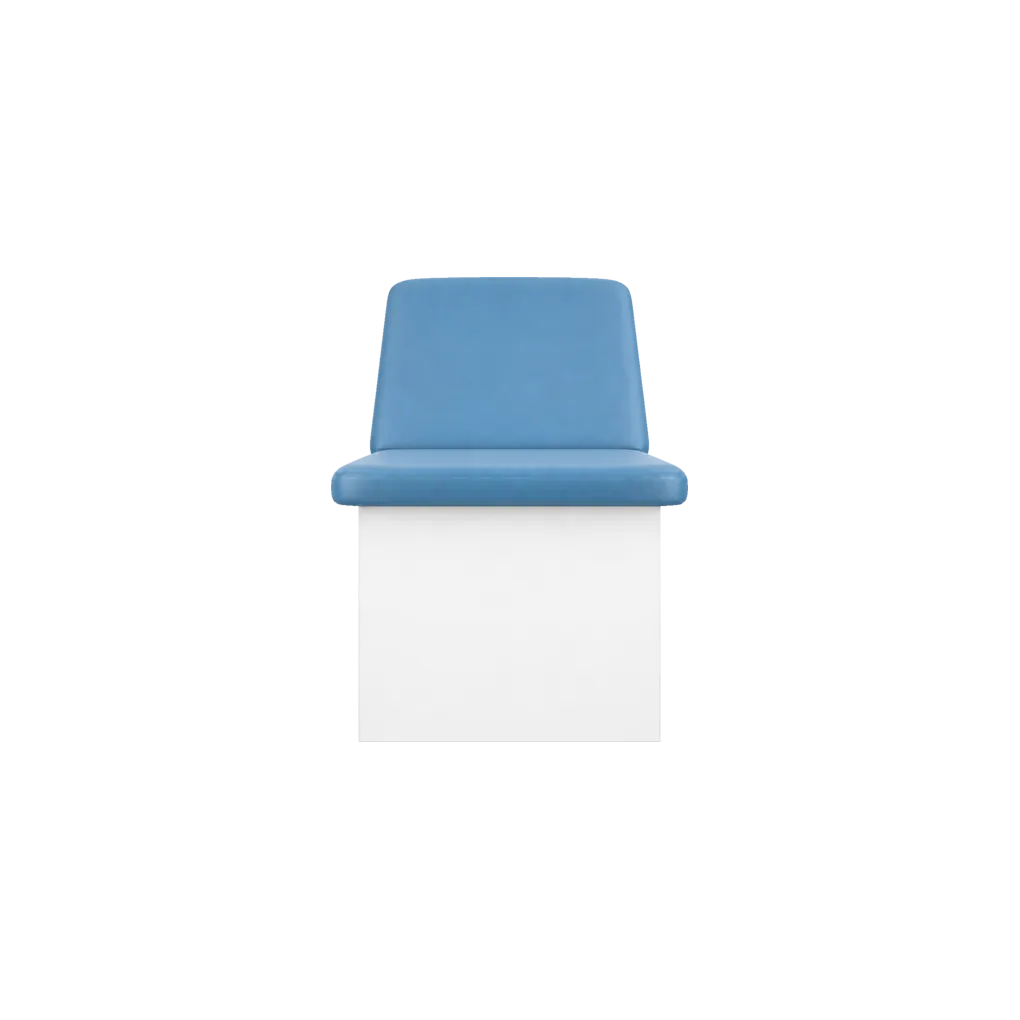
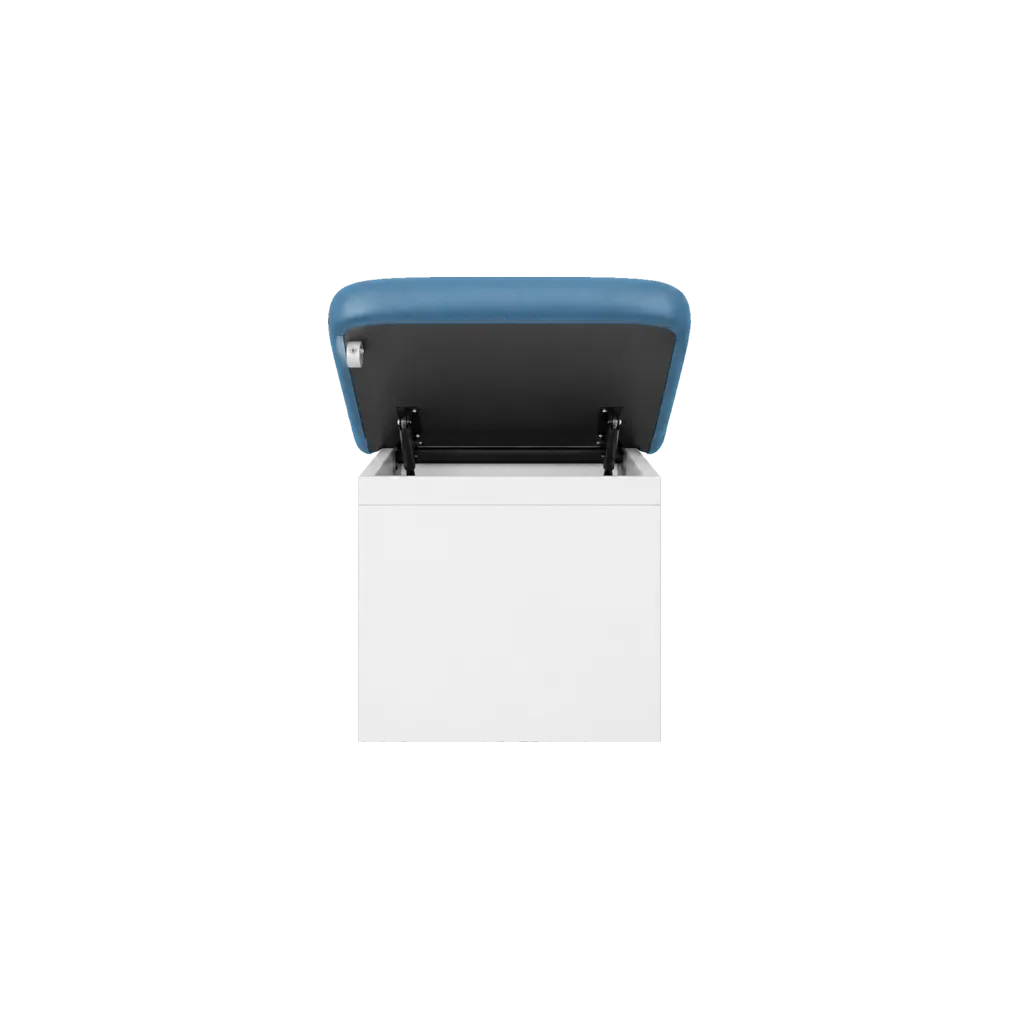
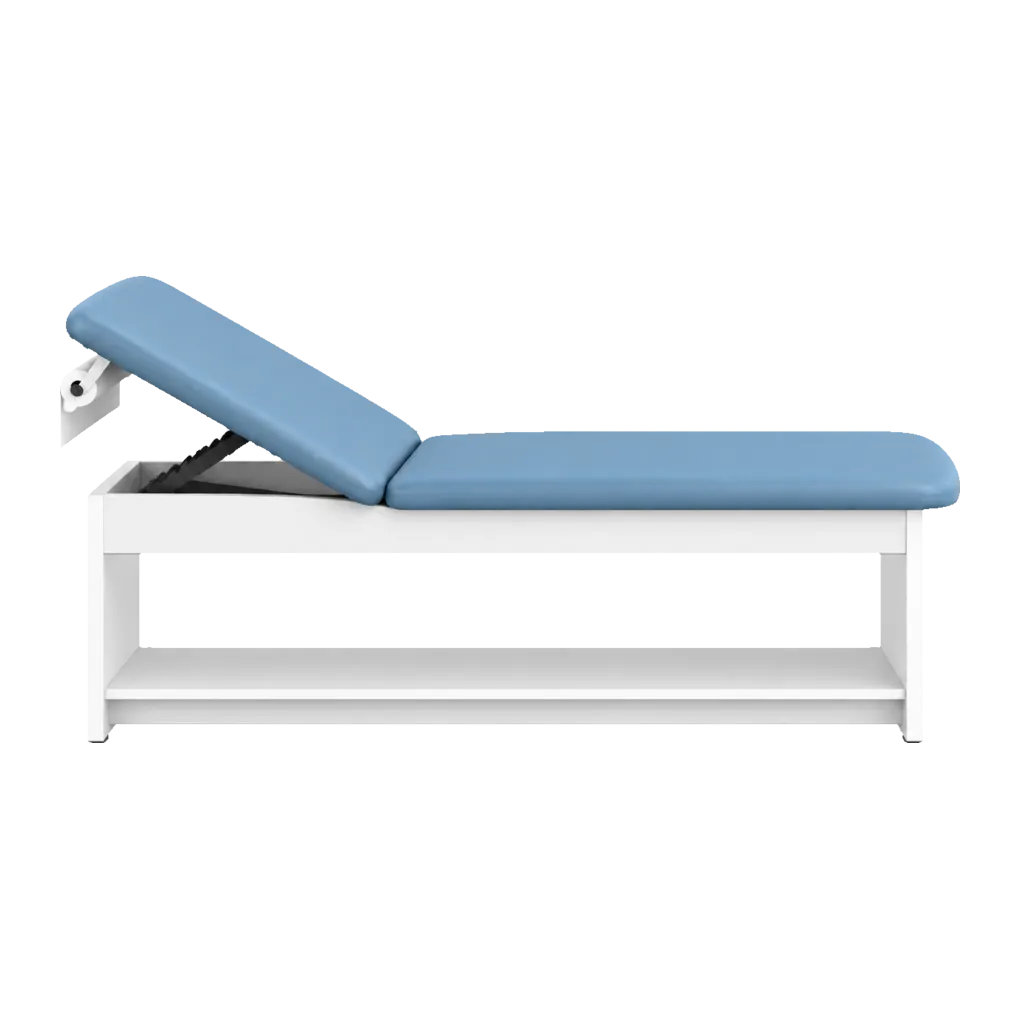
Stroke and neurological rehabilitation rely heavily on sitting and standing practice. NICE's stroke rehabilitation guideline (NG236, updated in 2023) covers assessment and interventions for movement difficulties, and in the therapy room much of that work begins sitting on the edge of a plinth with feet flat and knees at about hip height. A 550 mm top gives most adults that position, so therapists can work on sitting balance, reaching and sit-to-stand without a patient's feet dangling.
Wheelchair users are the second group. A top close to the seat height of many wheelchairs lets a patient slide across on a board with help, provided the chair and couch line up. Measure the chairs in use, because seat heights vary with the cushion, and keep the transfer side of the couch clear.
Memory and dementia services use low furniture for different reasons. A patient who sits on the edge with both feet on the floor tends to feel secure, and a couch that contrasts with the floor stands out clearly. The six-setting backrest lets an anxious patient stay partly upright during an examination, which often helps them stay calm.
Sintang MT also markets the couch as a recovery couch, and after minor procedures it gives patients somewhere low to rest and sit up in stages before standing.
The limits are worth planning around. Staff will kneel or sit to work at this height, so a low stool helps, and a moving and handling assessment should cover the tasks carried out at the couch. The panel legs and low shelf are also likely to block a mobile hoist. If the room is being planned from scratch, Medigear.uk can arrange a site survey that covers hoist access and transfer space.