

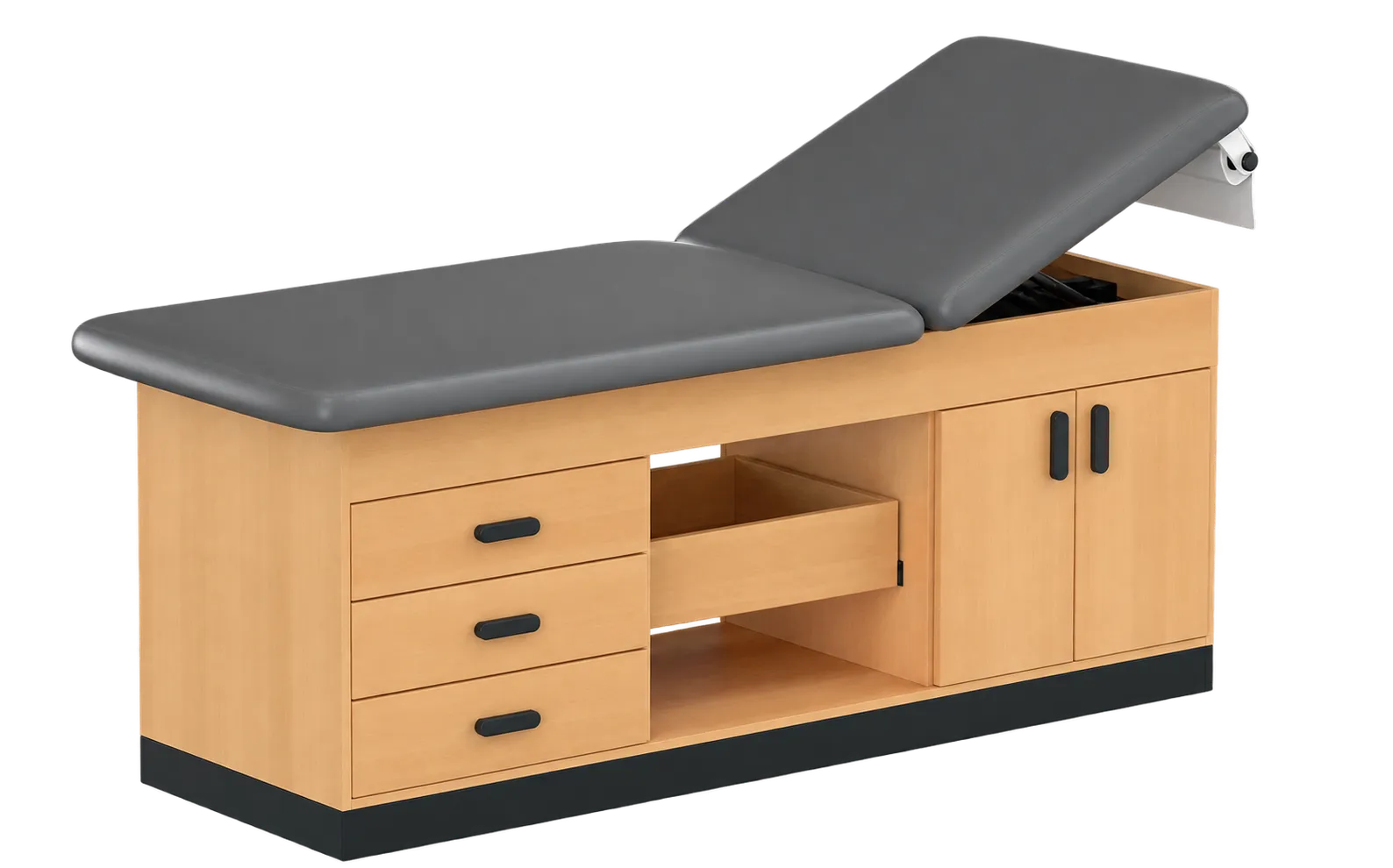
Treatment and examination couches carry out the routine work of a clinic, and a cabinet table with a raising back suits rooms that need enclosed storage and also see patients who cannot lie flat. Typical use covers general examination, respiratory assessment, minor procedures, injections and dressings, phlebotomy, consultation and counselling, and post-procedure observation.
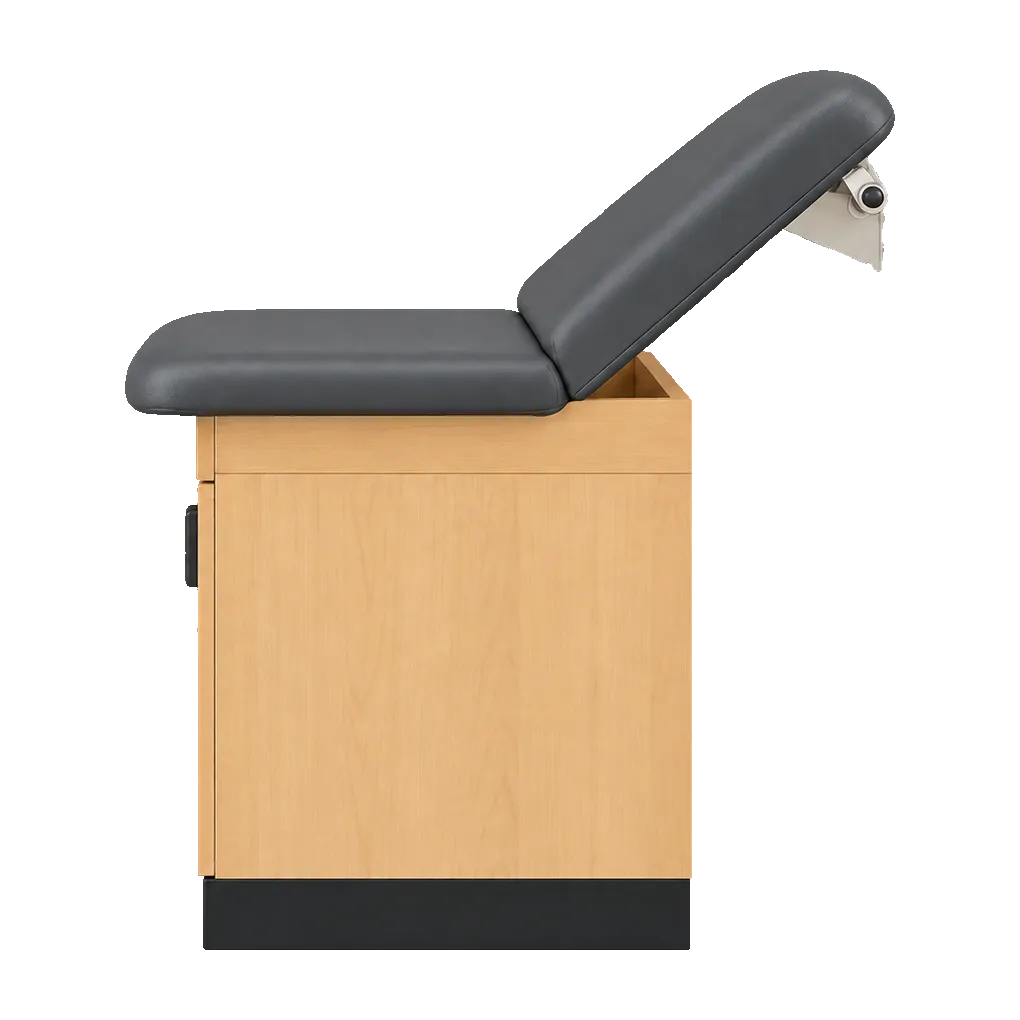
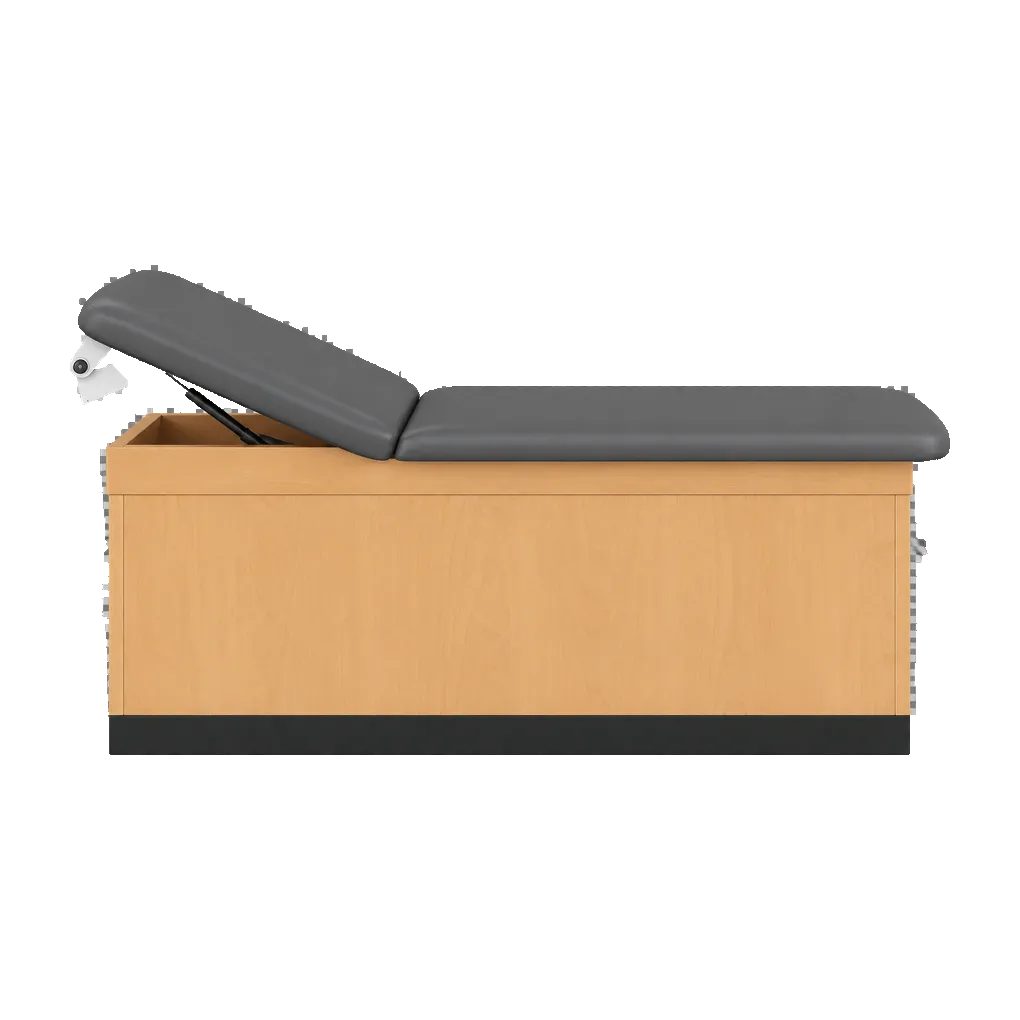
The backrest is what widens the caseload the room can take. Orthopnoea associated with heart failure or advanced respiratory disease, late pregnancy, significant reflux, high body mass and anxiety about being supine all make lying flat difficult, and a raising back means those consultations happen properly rather than hurriedly. Respiratory examination benefits directly, since auscultation of the posterior chest requires the patient sitting forward.
Storage splits three ways in this arrangement — a drawer column for small categorised consumables, an enclosed cupboard for bulk, and an open section between the two. Each suits different stock, and deciding which holds what before the unit arrives is worth the five minutes it takes.
Working position deserves attention at the planning stage. A raised back brings the clinician to the head end, while drawers extend and doors swing into the space beside the cabinet, so their placement relative to that end decides whether storage is reachable during a consultation.
Because no written specification accompanies this model, the room cannot be planned from the listing alone. Request the dimensions before committing floor space.