
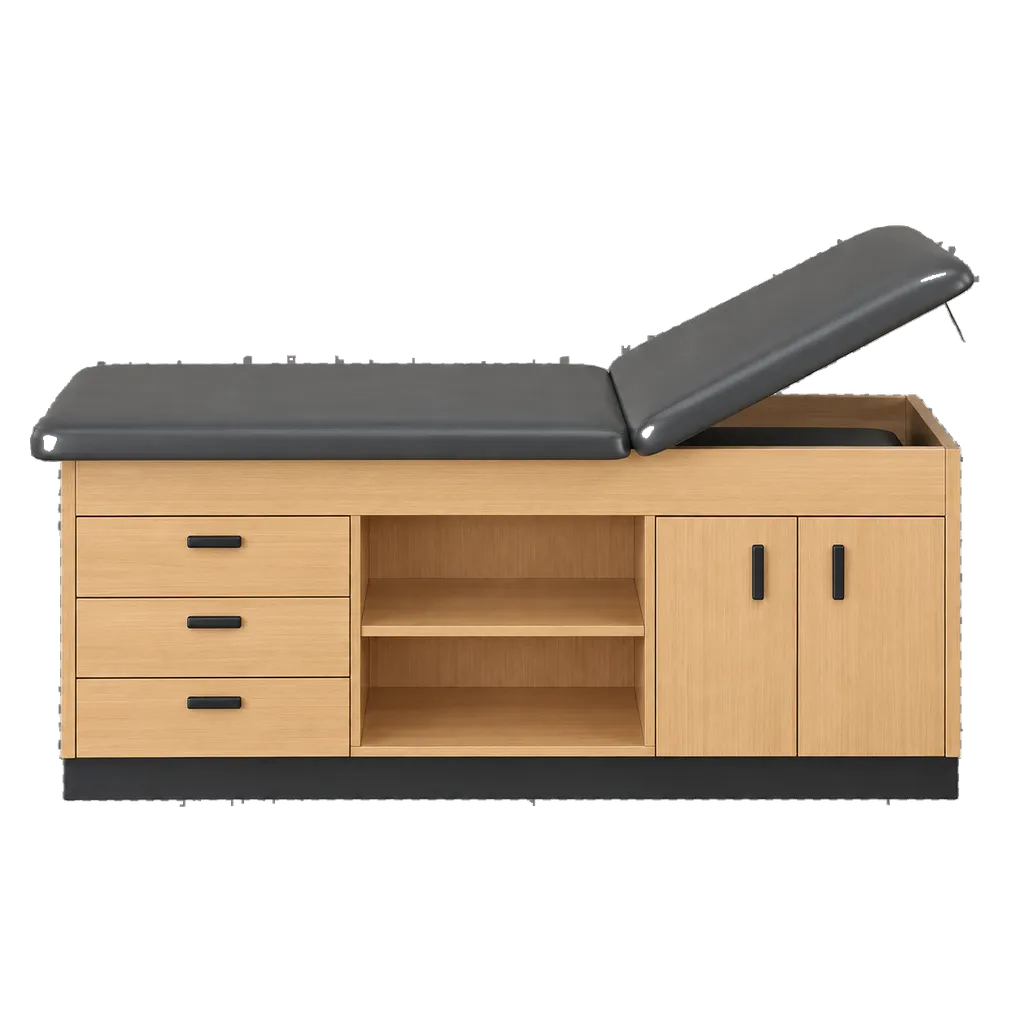
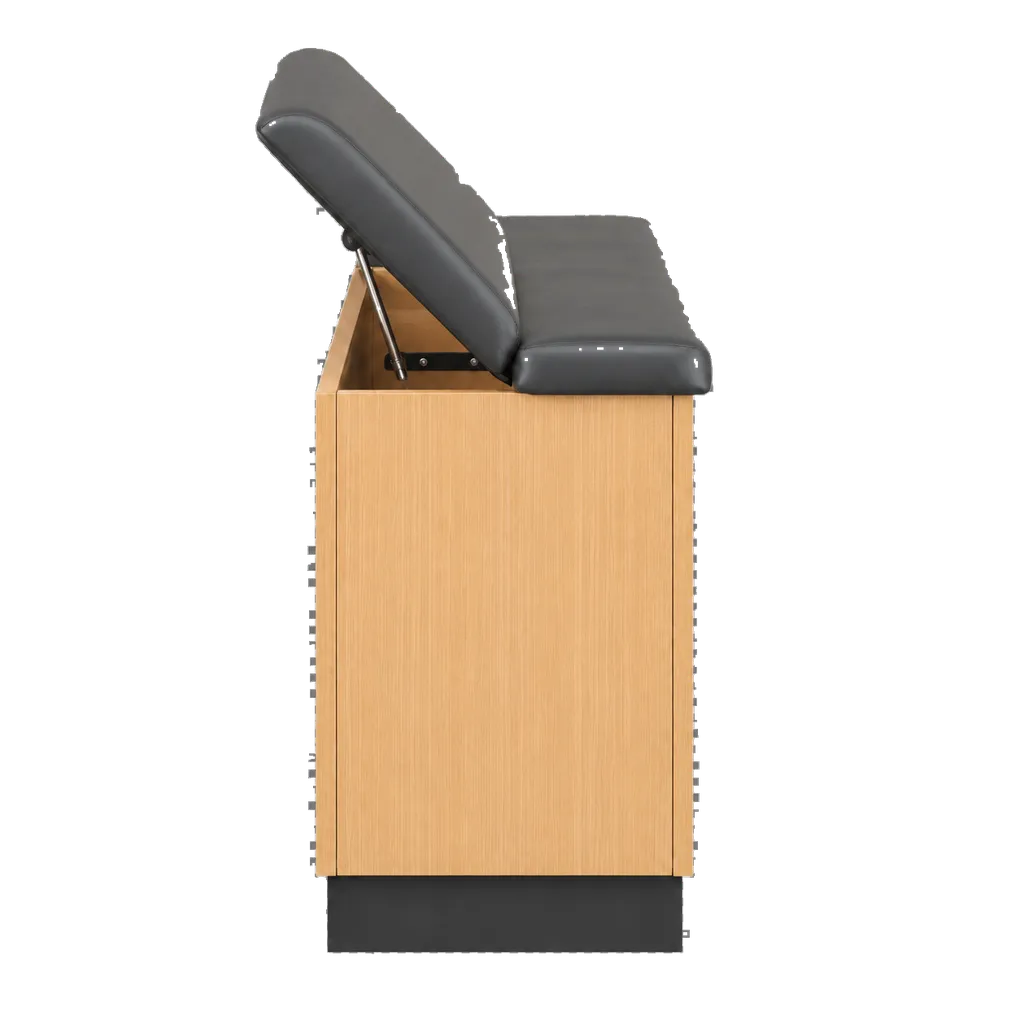
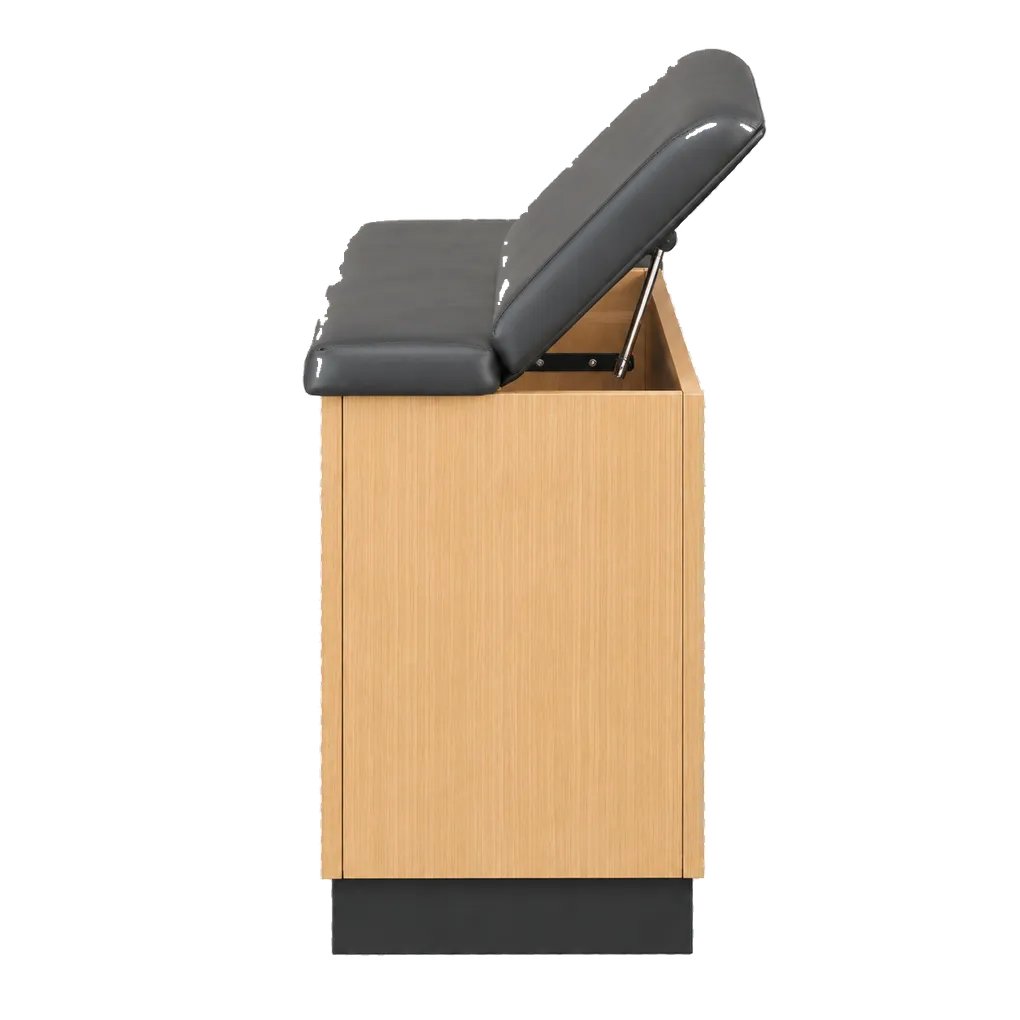
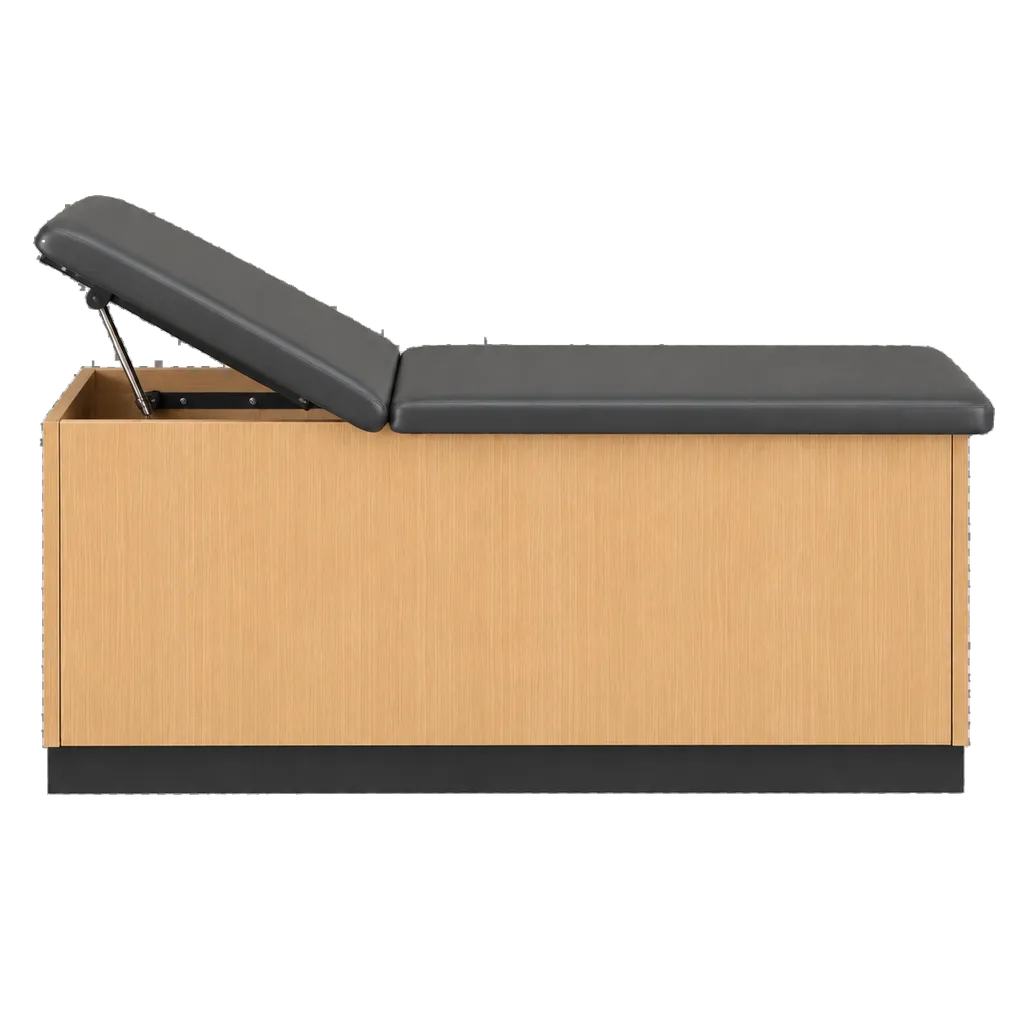
Treatment and examination couches carry the routine work of a clinic, and a cabinet whose access side is specified on order suits rooms whose layout is fixed, unusual, or still being settled. Typical use covers general examination, respiratory assessment, minor procedures, injections and dressings, phlebotomy, consultation and counselling, and post-procedure observation.
Handling matters more than it first appears. A cabinet facing a wall is storage that exists on paper, and that usually becomes obvious after delivery. Specifying against a drawn room plan removes the risk, and both-sides access removes the question altogether for a couch that is freestanding or whose position may change. The backrest interacts with the choice: a raised back draws the clinician towards the head end, and storage facing the opposite flank at that moment is reachable only between patients. Two-clinician working points the same way — where an assistant attends, or a room is shared across a rota, either-flank access avoids the compromise.
Storage itself is modest — three drawers and one enclosed compartment — so measure your largest regularly stored item against the internal dimensions first.