

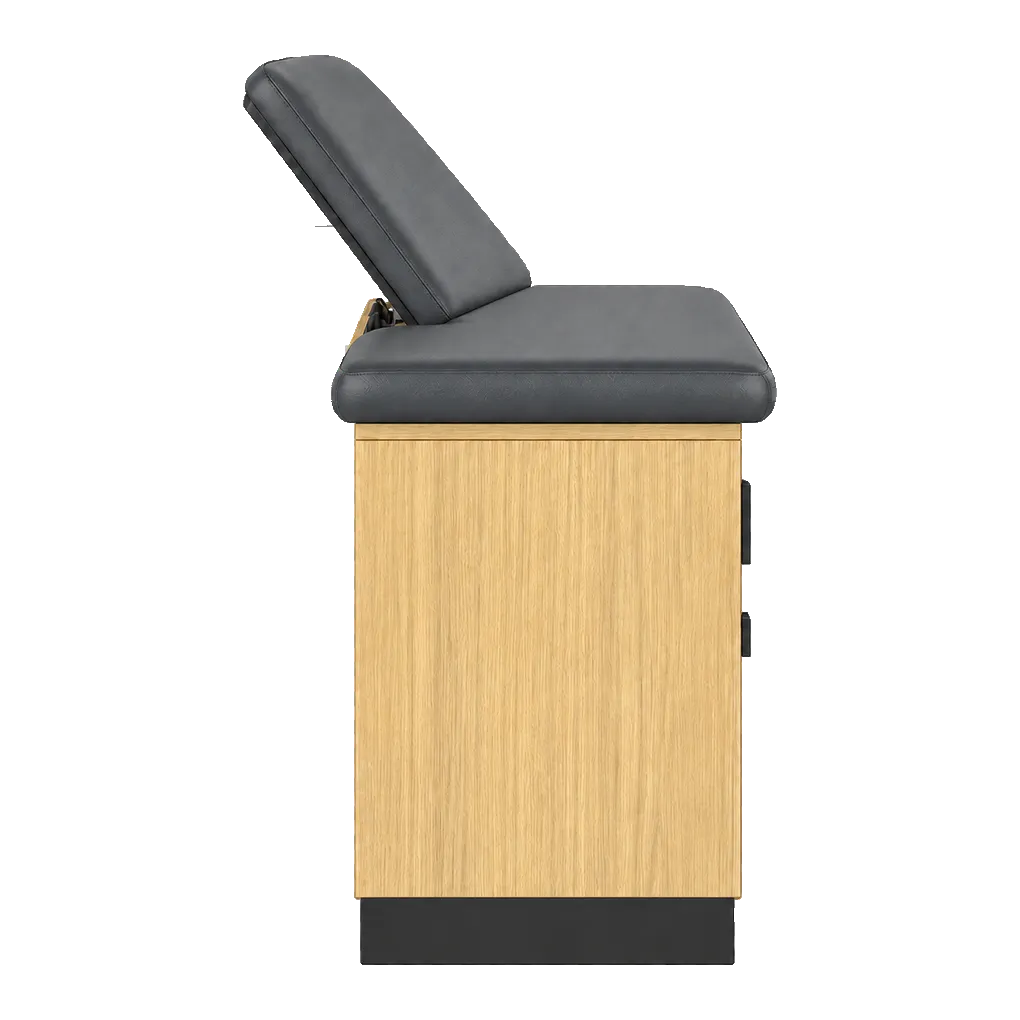
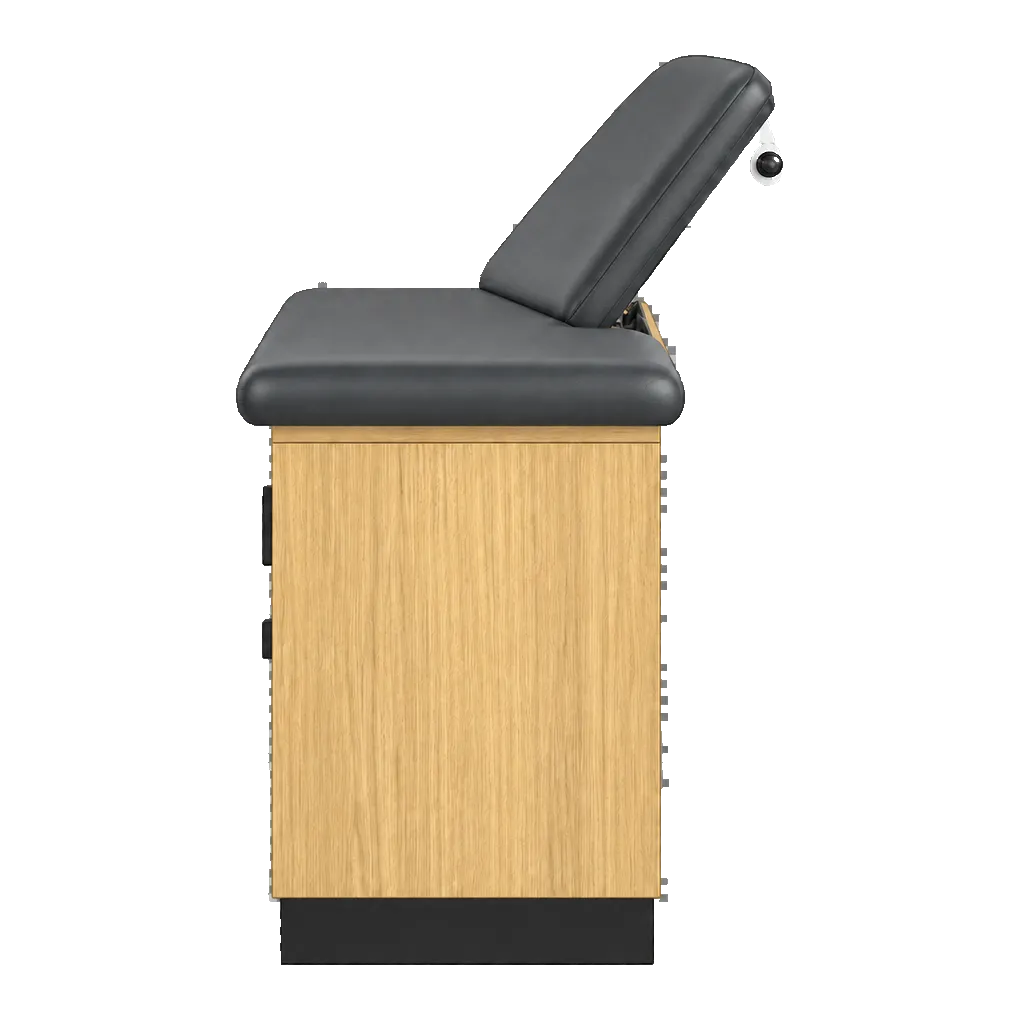
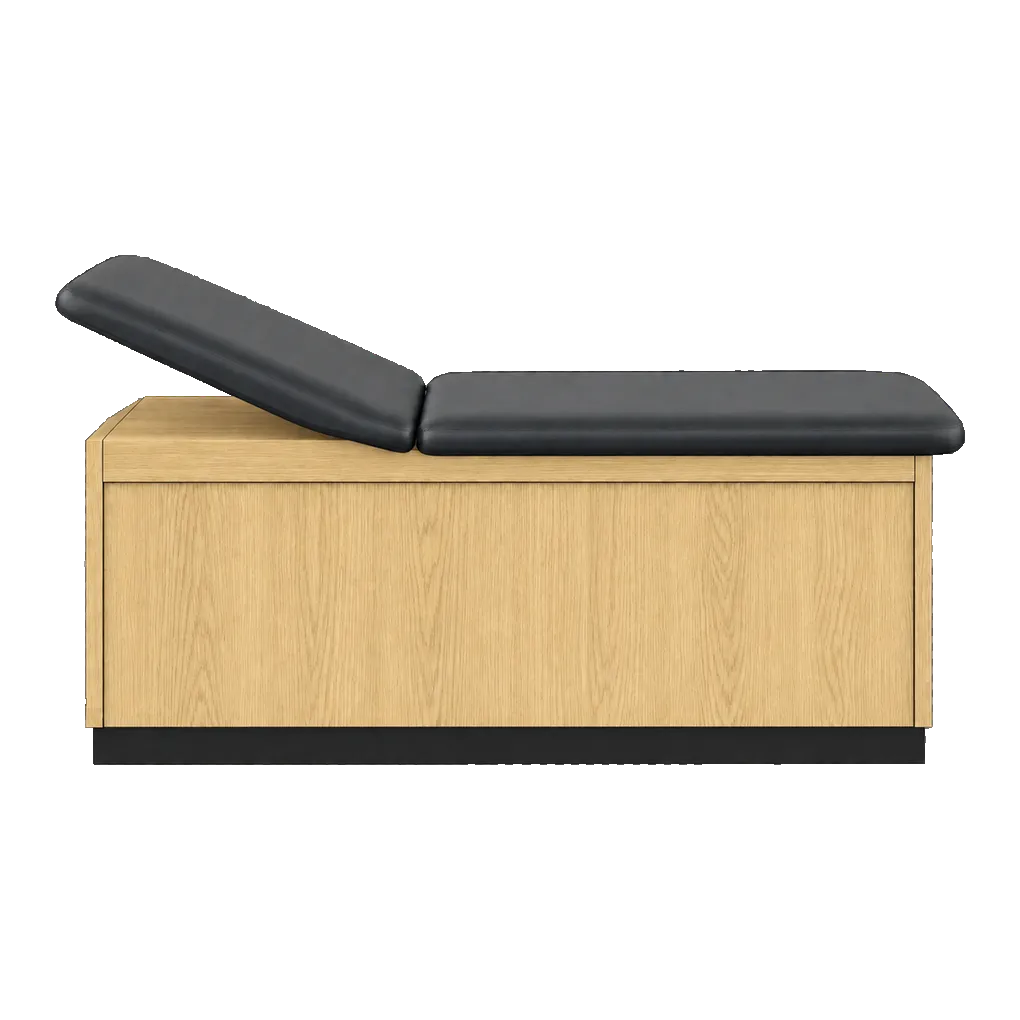
Treatment and examination couches carry the routine work of a clinic, and a cupboard-led base with a small drawer provision suits rooms where most stock is stored and only a few categories are handled during a consultation. Typical use covers general examination, respiratory assessment, minor procedures, injections and dressings, phlebotomy, consultation and counselling, and post-procedure observation.
The two drawers do a specific job: they are the only storage here that opens at working height and shows its contents at a glance, which makes them the right home for whatever a clinician reaches for repeatedly with a patient in position. Everything else — reserve stock, bulkier items, anything set out before the appointment — belongs behind doors. That division is worth setting deliberately, since a room where the drawers fill with whatever arrived first has the storage without the benefit.
The backrest widens the caseload the room can take. Orthopnoea associated with heart failure or advanced respiratory disease, late pregnancy, significant reflux, high body mass and anxiety at being supine all make lying flat difficult, and a raising back keeps those consultations in the room they were booked into.
Working position ties the two together. A raised back moves the clinician towards the head end, so whether the centrally placed drawers stay within reach from there is worth confirming against a room plan before the couch is sited.