

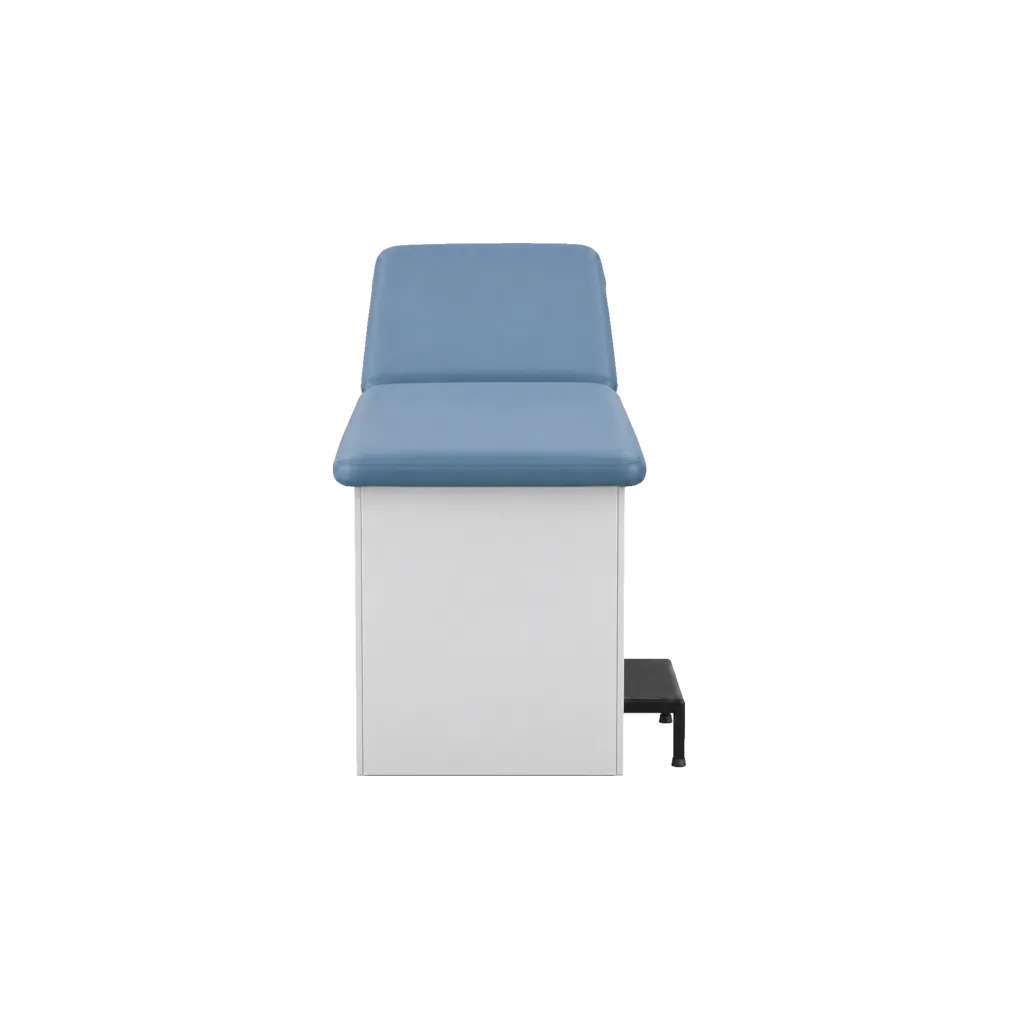
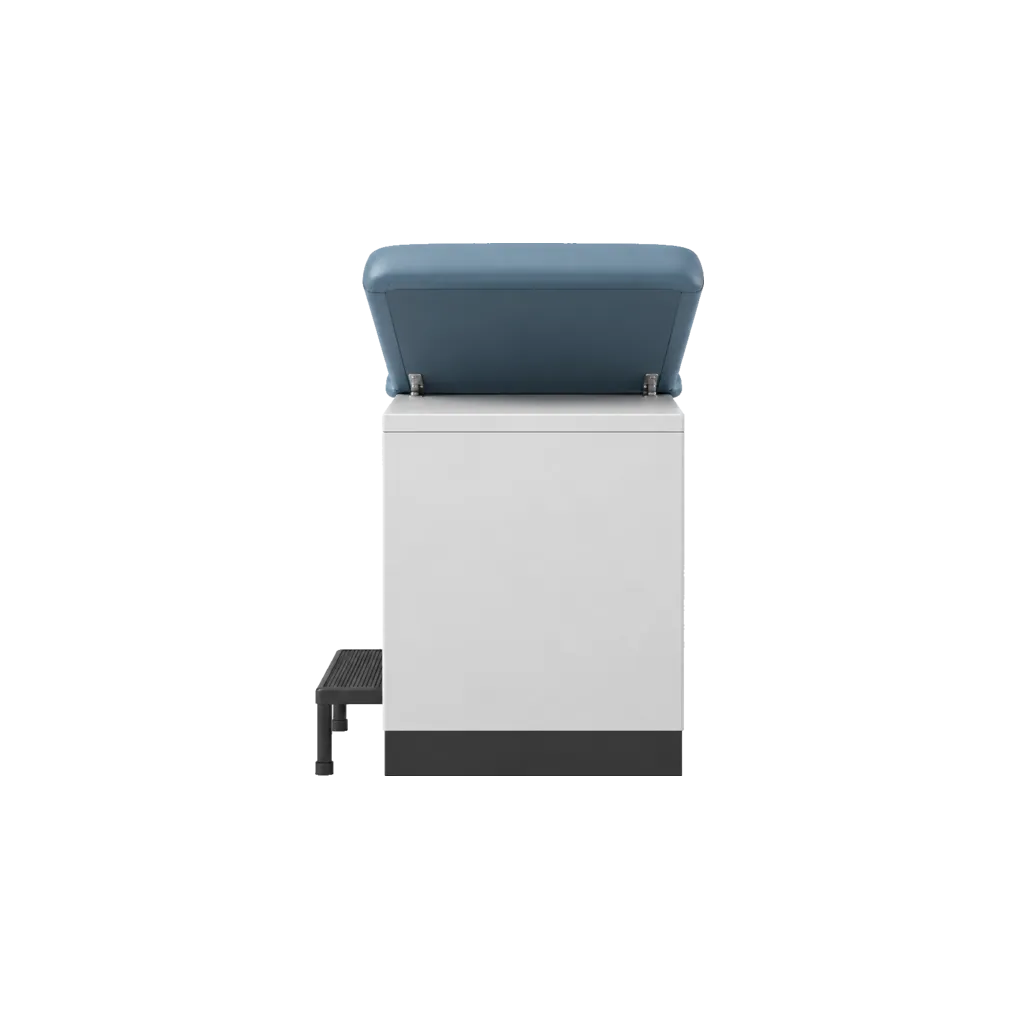
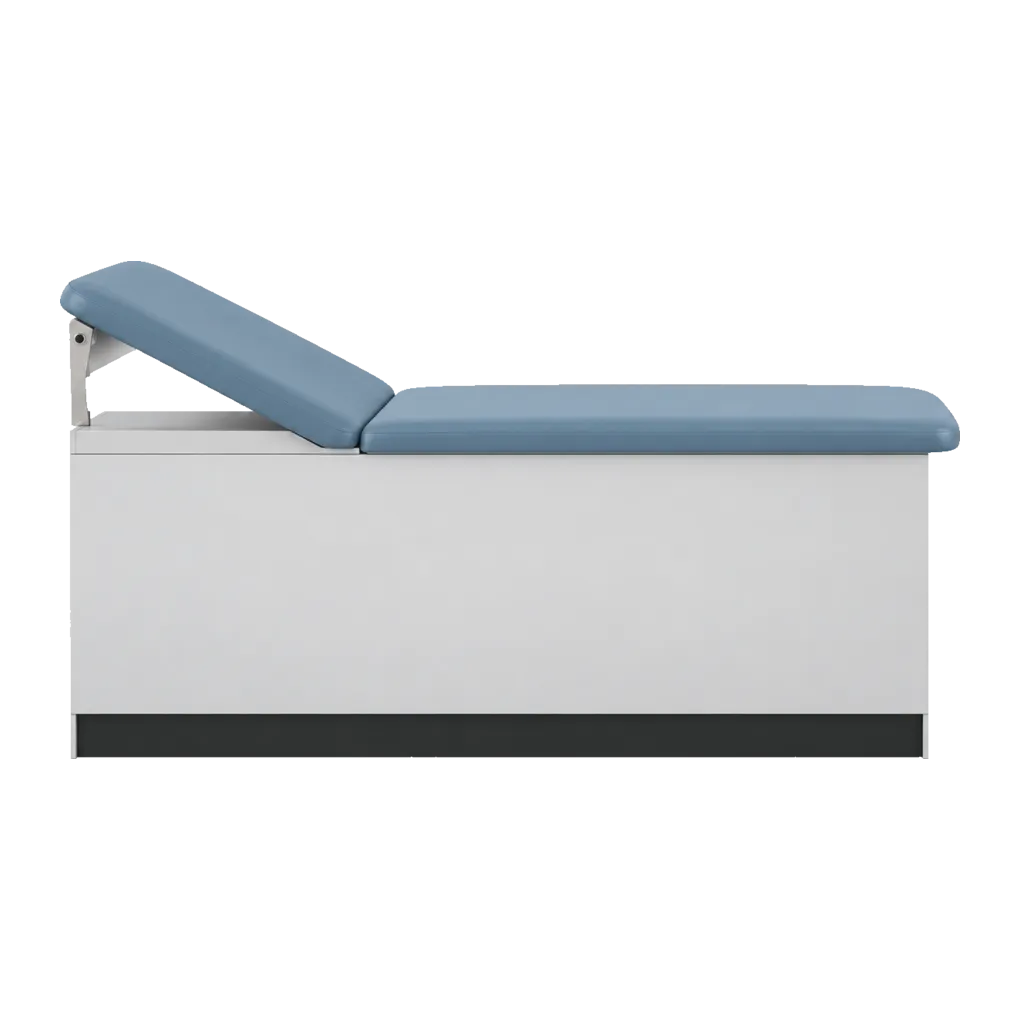
Treatment and examination couches carry out the routine work of a clinic, and a cabinet with specified handling and a possible integrated step suits rooms seeing a broad patient mix. Typical use covers general examination, respiratory assessment, minor procedures, injections and dressings, phlebotomy, consultation and counselling, and post-procedure observation.
Access is where the photographed step would change things most. A 790 mm surface asks a patient to climb roughly 300 mm or more from a seated hip height, and for older, unsteady or anxious patients that is the least safe moment of the appointment. A separate step block helps but becomes a floor-level trip hazard; a step that draws out and stows solves both — provided it locks, carries the load and offers a secure tread. Where it is not confirmed, plan access conservatively: a proper step with a handrail, or a height-adjustable couch for patients who cannot climb safely.
Storage is divided between two drawers at working height for small consumables and two enclosed compartments for bulk. Because three doors serve two compartments, one opens its full face, and the other only half, so wide items belong behind the pair.
The backrest widens the caseload the room can take, accommodating patients who cannot lie flat properly rather than hurriedly — frequently the same patients for whom the climb is hardest.