

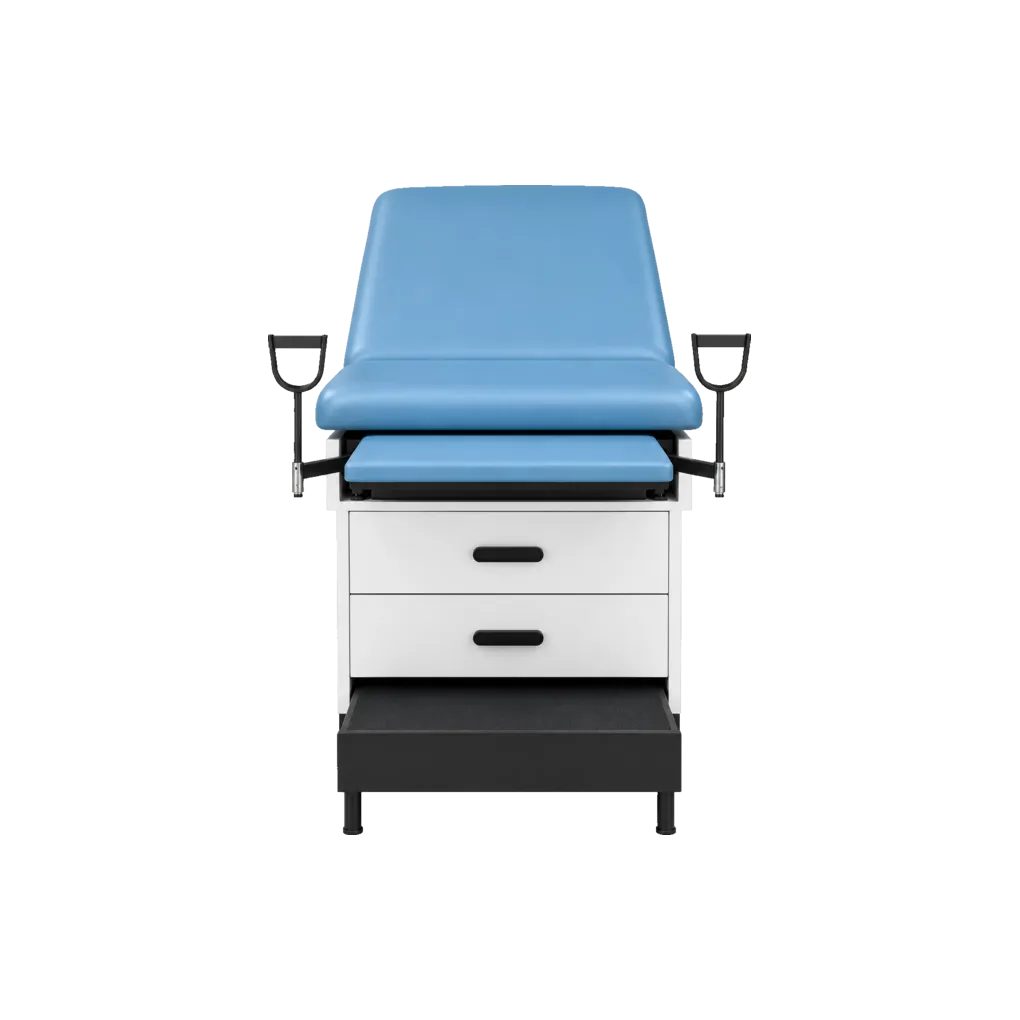
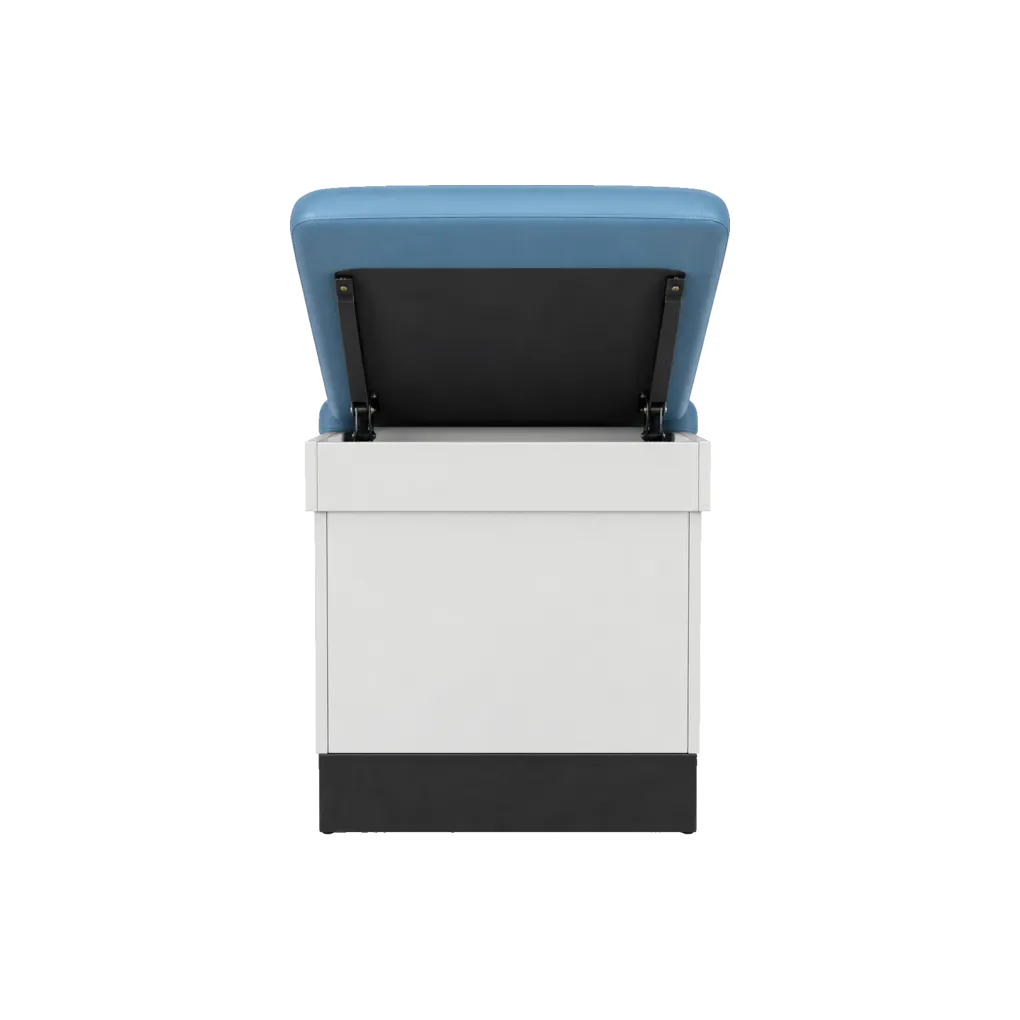
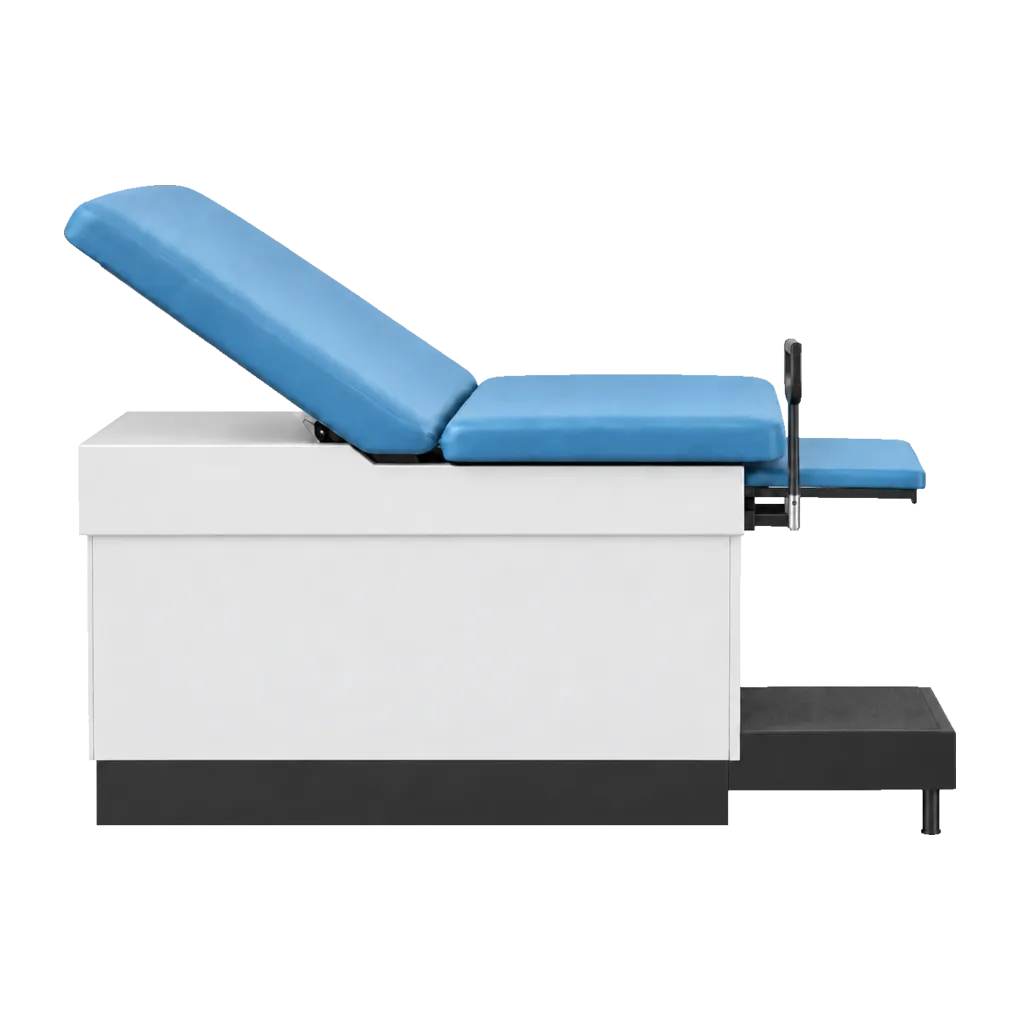
The 2115 is set up for rooms where intimate examinations are routine. In general practice, it covers NHS cervical screening for women and people with a cervix, coil fitting and removal, pessary fitting and review, and postnatal checks, with everyday examinations carried out on the same couch once the stirrups are set aside. Sexual health and contraception services, menopause and women's health clinics, and hospital gynaecology outpatient rooms draw on the same mix of leg support, step access and storage close at hand.
Positioning shapes the choice. Some clinicians and patients prefer supported legs for a speculum examination, while others use a knees-bent position on the flat top. Four-position stirrups and a backrest that runs from flat to 70° let one couch serve both habits, and a raised back helps breathless patients, those in later pregnancy, or those anxious about lying flat.
Dignity belongs in the room plan. The GMC's guidance on intimate examinations and chaperones, in effect since January 2024, expects you to offer patients a chaperone who can observe the examination. Place the couch so the foot end faces away from the door, behind a curtain line, with space at the side for a chaperone and somewhere private to undress. The foot end also needs clear floor space for a clinician's stool and an examination lamp.
Quiet storage suits these appointments. Soft-close drawers and a soft-close door keep the room calm while a patient is in position, and consumables stay near the clinician's seat.
The sheet lists no height adjustment, so plan hoist access or a height-adjustable couch in at least one room for patients who transfer from a wheelchair or cannot manage a step.