

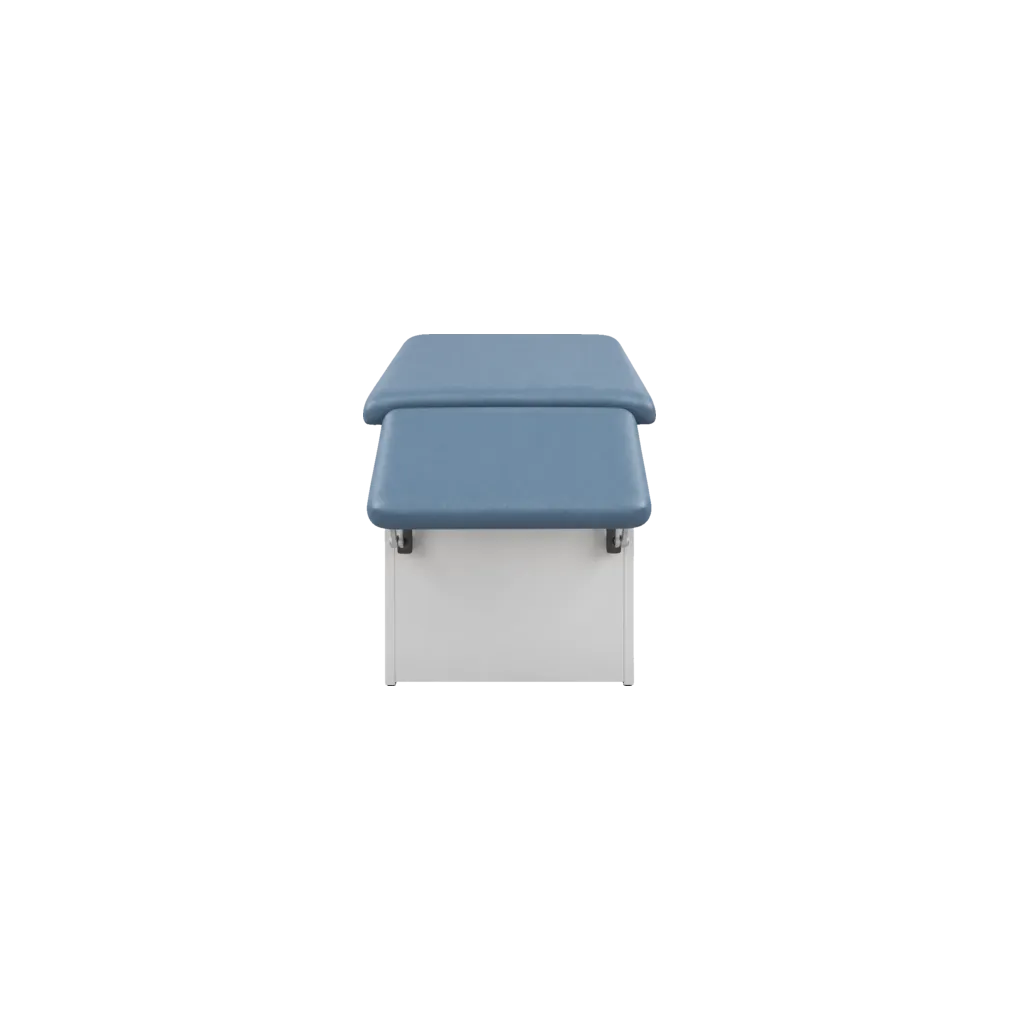

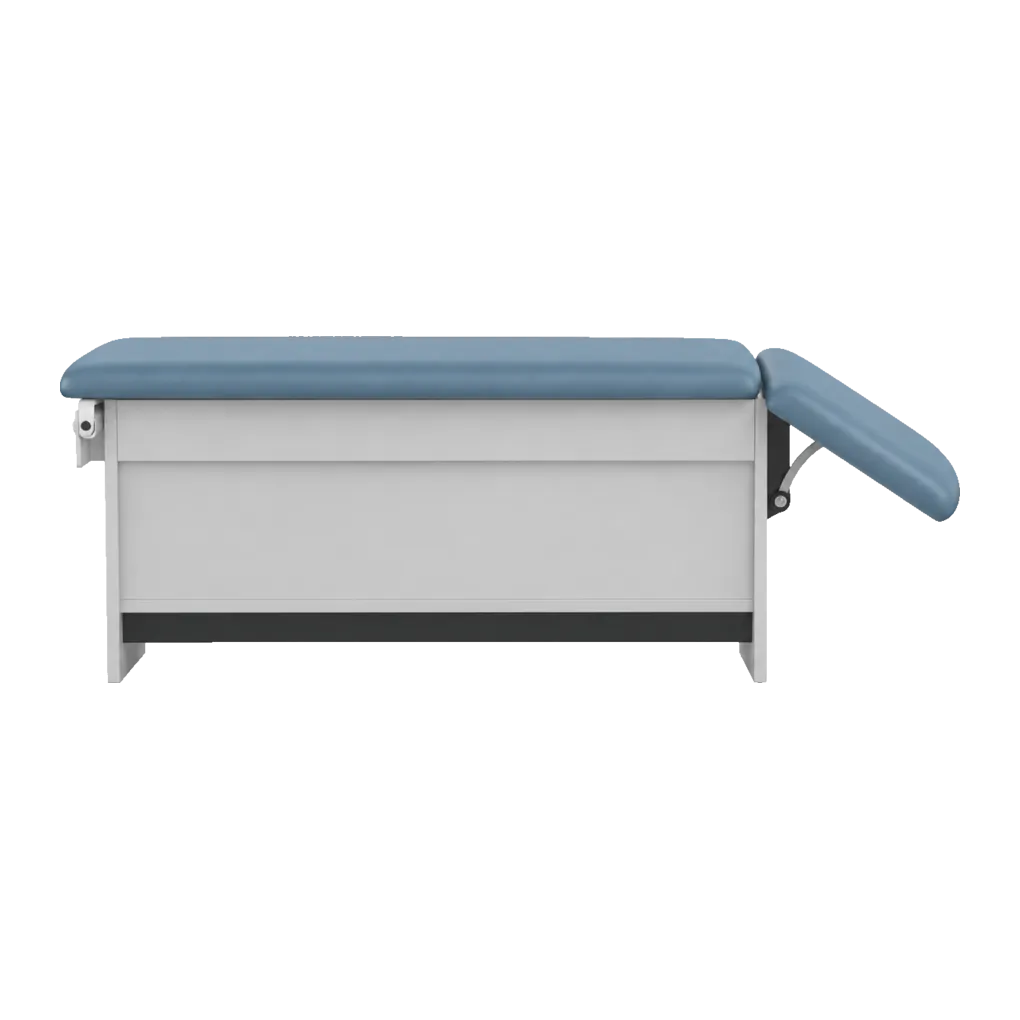
Treatment and examination couches carry out the routine work of a clinic, and a leg-support cabinet table is aimed squarely at services whose work concentrates on the lower limbs. Typical use covers wound care and dressing changes, leg ulcer management, podiatry, lower-limb assessment, minor procedures, injections, and general examination.
The leg support defines the fit: dressing a lower-leg wound or treating a foot is easier with the limb at a workable angle, and district nursing clinics, tissue viability services and podiatry rooms are the natural settings. Equally, it does not help patients who cannot lie flat because of breathlessness — a service whose caseload includes them should weigh whether a backrest configuration serves it better, or plan for both.
Sliding doors suit the rooms these services often occupy. Treatment rooms in community settings are frequently small, and a cabinet that needs no clearance in front can sit against a wall with all its storage still reachable.
The single undivided compartment takes bulky dressing stock well, though small items benefit from baskets to stay findable without a shelf to separate them.