

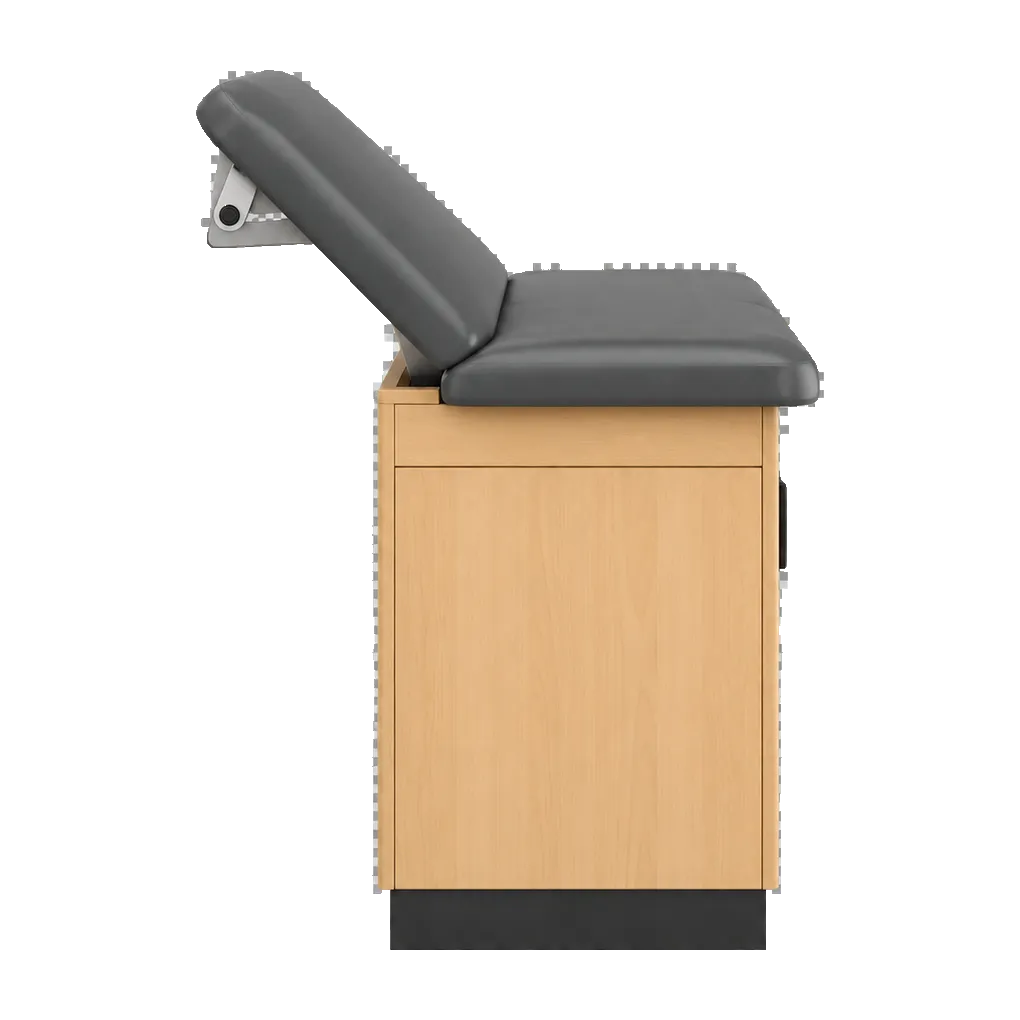
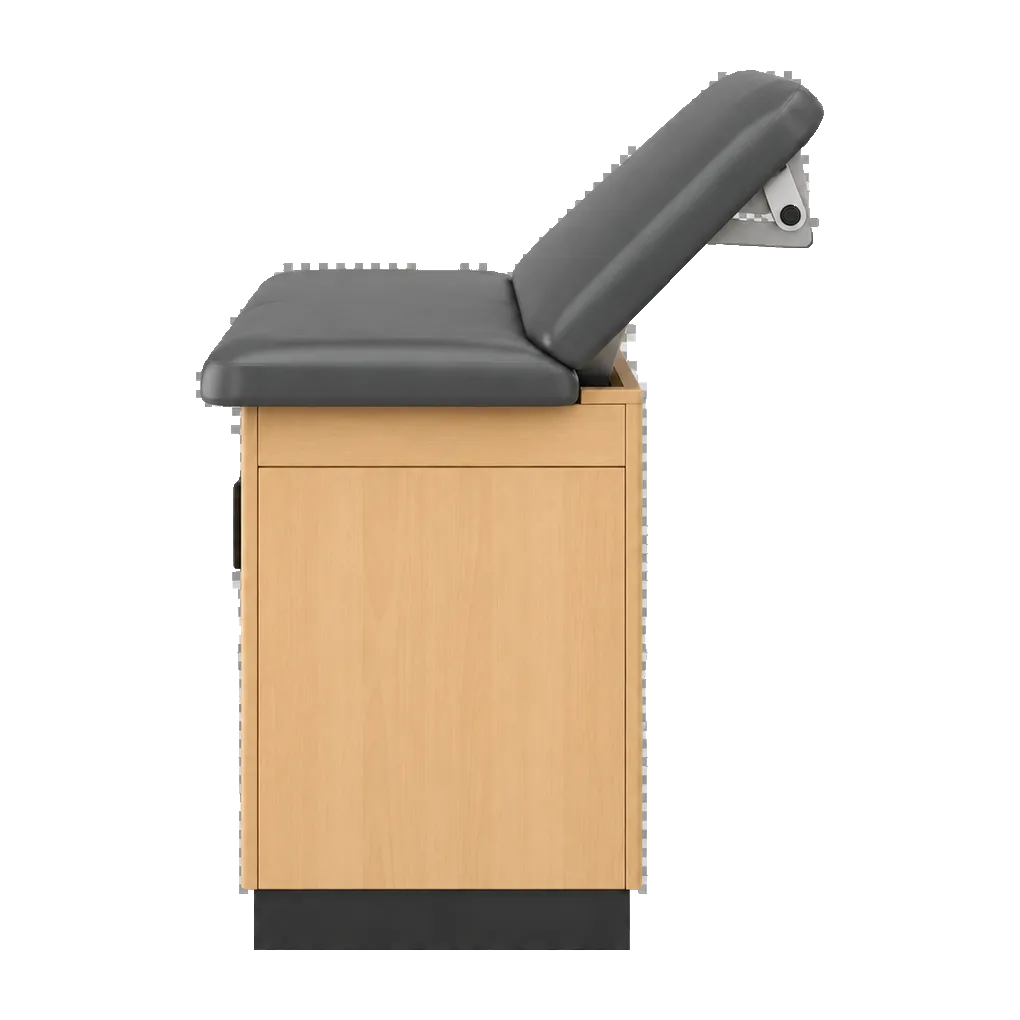
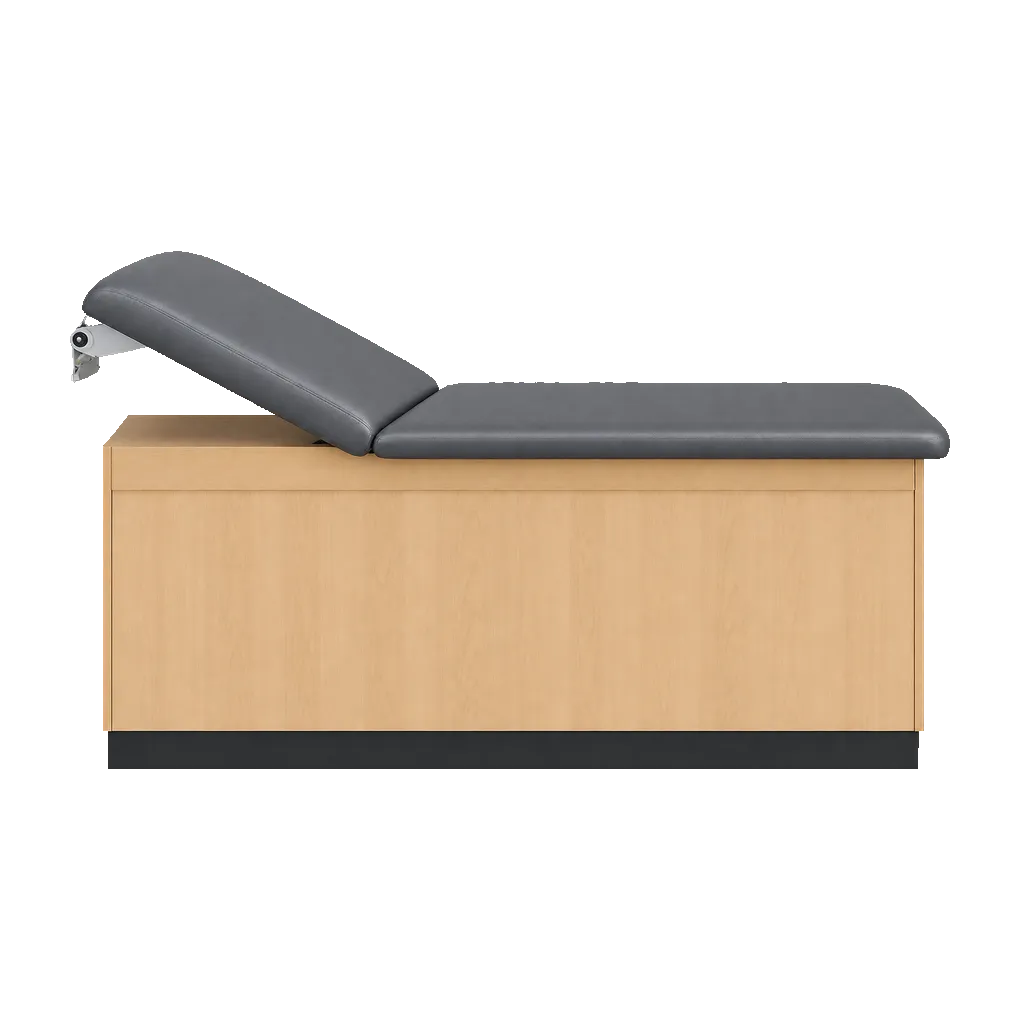
Treatment and examination couches carry out the routine work of a clinic, and an all-cupboard cabinet table suits rooms where stock is stored rather than constantly handled. Typical use covers general examination, respiratory assessment, minor procedures, injections and dressings, phlebotomy, consultation and counselling, and post-procedure observation.
The storage arrangement suits some working patterns better than others. Where consumables are set out before a patient arrives, and the couch-side cupboards hold reserve stock, an all-cupboard base works well and keeps everything out of sight. Where a clinician reaches repeatedly during a procedure for small items, the extra movement of opening a door and bending to a shelf is felt across a list.
Infection control is where this arrangement is strongest. Nothing sits exposed beneath the patient surface, so clean consumables and sterile stock can be held in the base rather than needing a separate cupboard elsewhere in the room — which is not true of open shelving under a couch.
The backrest widens the caseload the room can take. Orthopnoea associated with heart failure or advanced respiratory disease, late pregnancy, significant reflux, high body mass and anxiety at being supine all make lying flat difficult, and a raising back keeps those consultations in the room they were booked into.
Room planning turns on the door swing. Four doors need clearance along the cabinet on whichever side they face, so a couch placed tight against a wall makes half the storage impractical.