

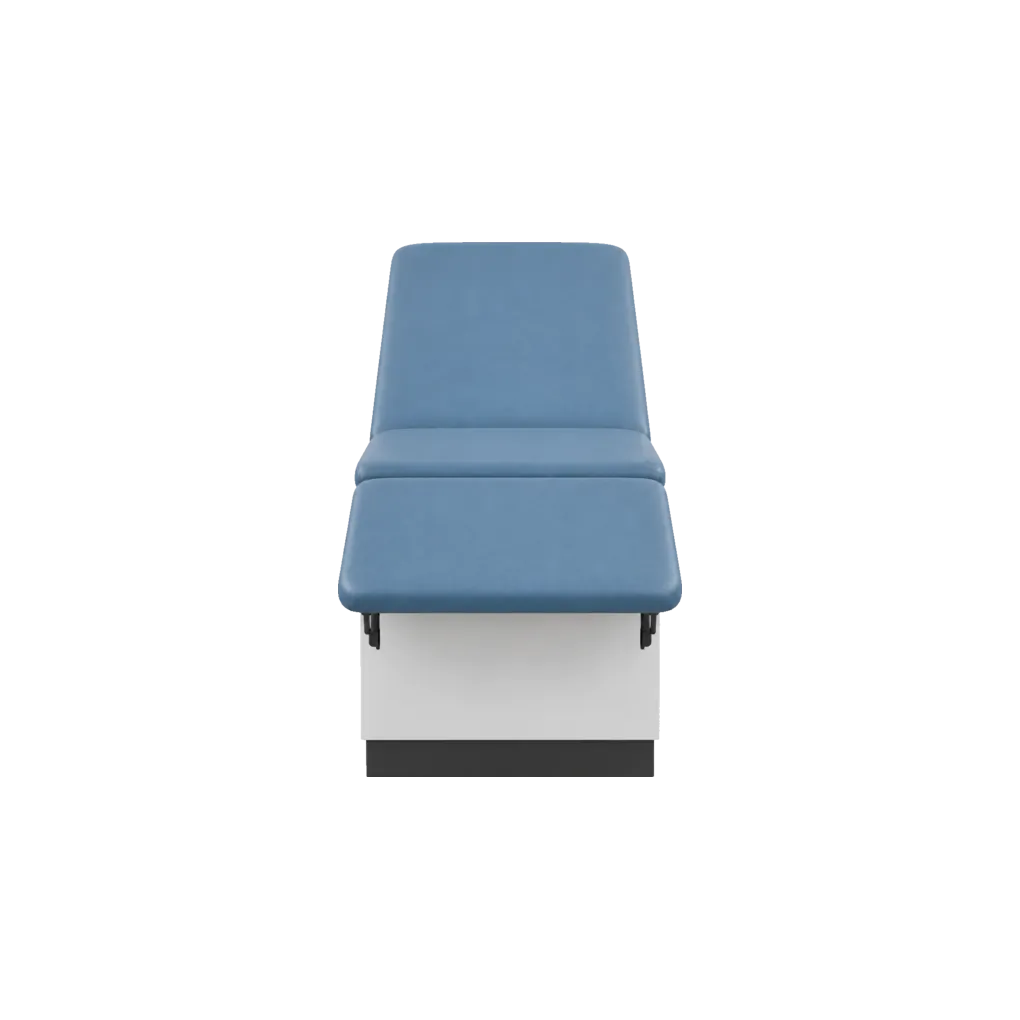
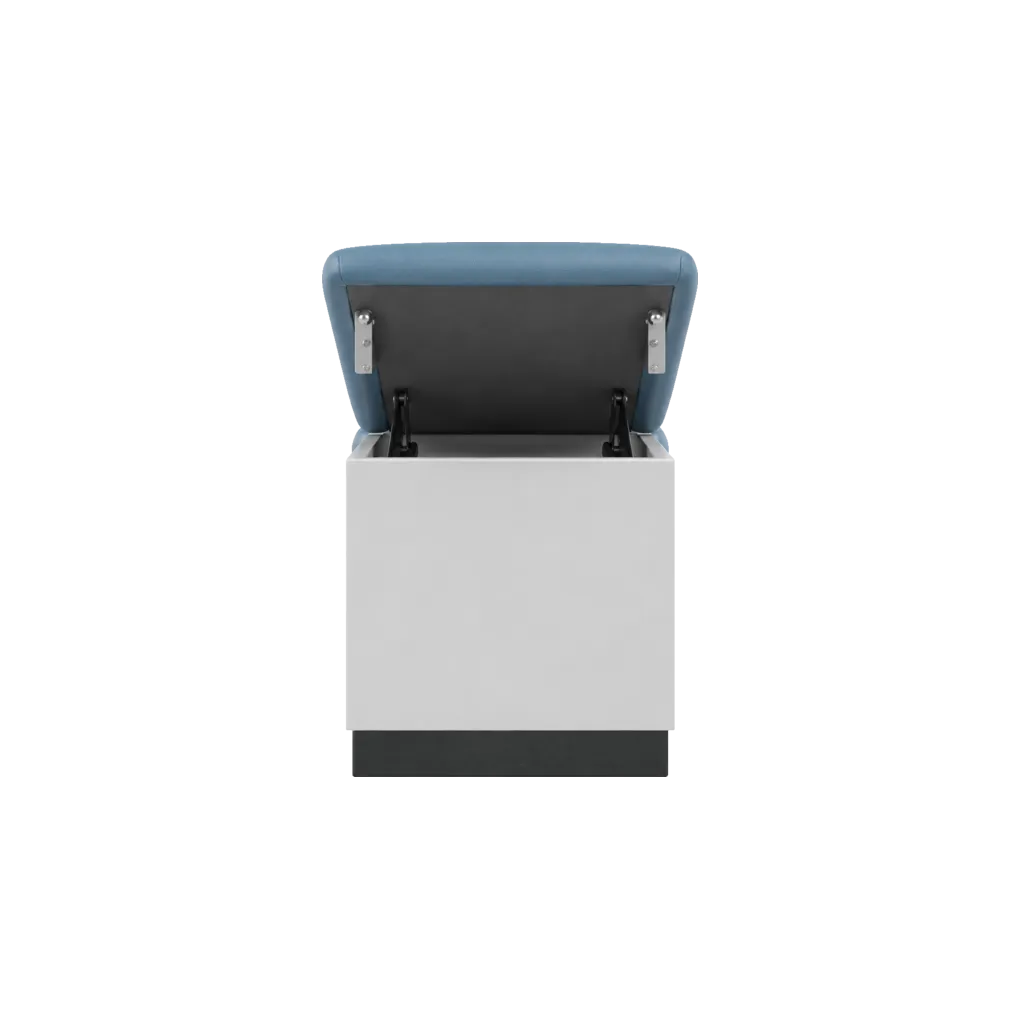
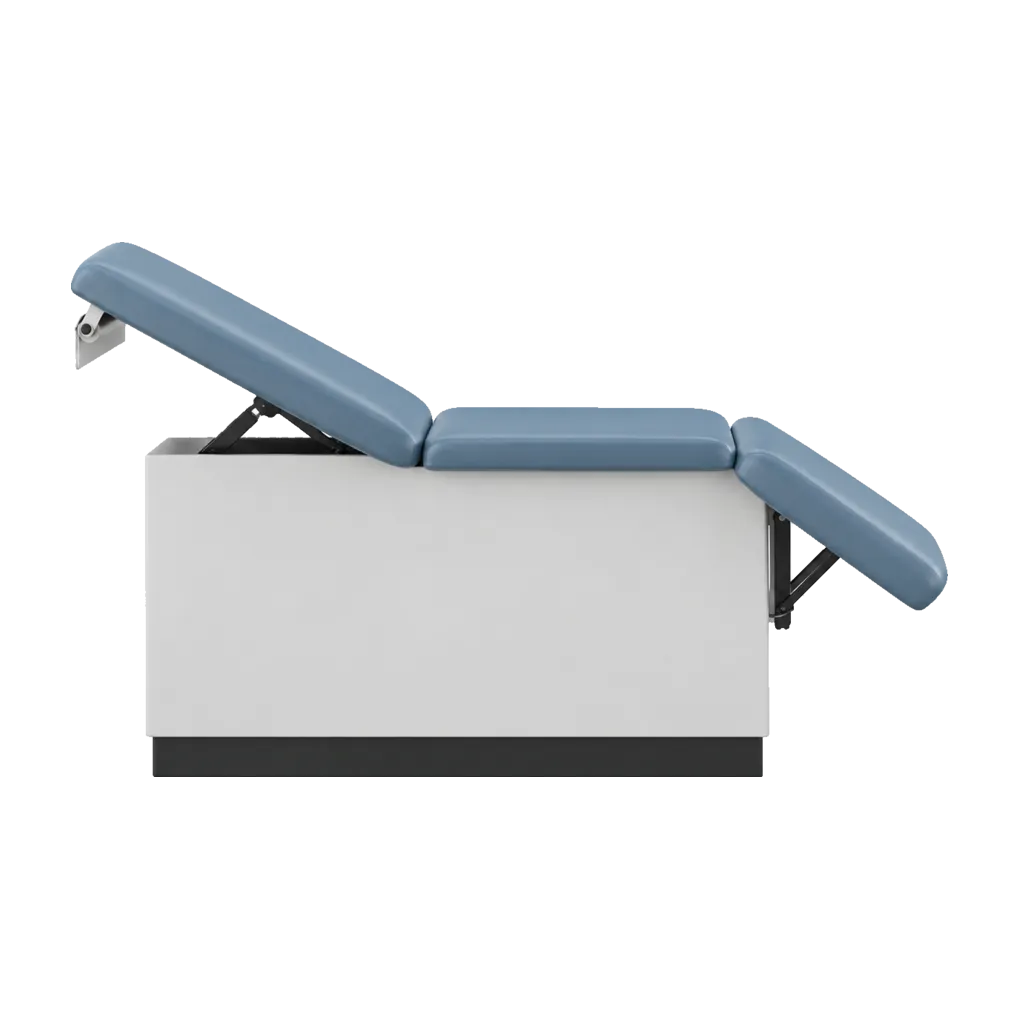
Treatment and examination couches carry the routine work of a clinic, and a three-section cabinet table suits rooms seeing a genuinely mixed caseload. Typical use covers general examination, respiratory assessment, wound care and dressings, podiatry, phlebotomy and injections, head and upper-body examination, consultation and counselling, and post-procedure observation.
The seated position is the configuration's defining feature. A patient sitting upright with back and legs supported is well placed for injections, blood tests and upper-body examination, and a conversation at eye level runs differently from one conducted over a supine patient.
Getting out of that position is the part to plan. With the seat at 790 mm and the feet off the floor, leaving the couch means coming down to the ground rather than simply standing. The risk sits with exactly the patients the seated position tends to attract — older, frail or unsteady people, and anyone recovering after a procedure or a faint. A stable step at the exit end, a secure handhold, and a clinician alongside at the moment of standing turn a risky transfer into a routine one. Returning the leg support towards level before the patient moves can help too.
Independently, the sections broaden the room's range: the backrest for breathlessness and respiratory examination, the leg support for lower-limb dressings and podiatry.
Two enclosed shelved compartments keep stock organised, and handing specified at order lets the hinged doors open away from where the clinician and the exit step will be.