
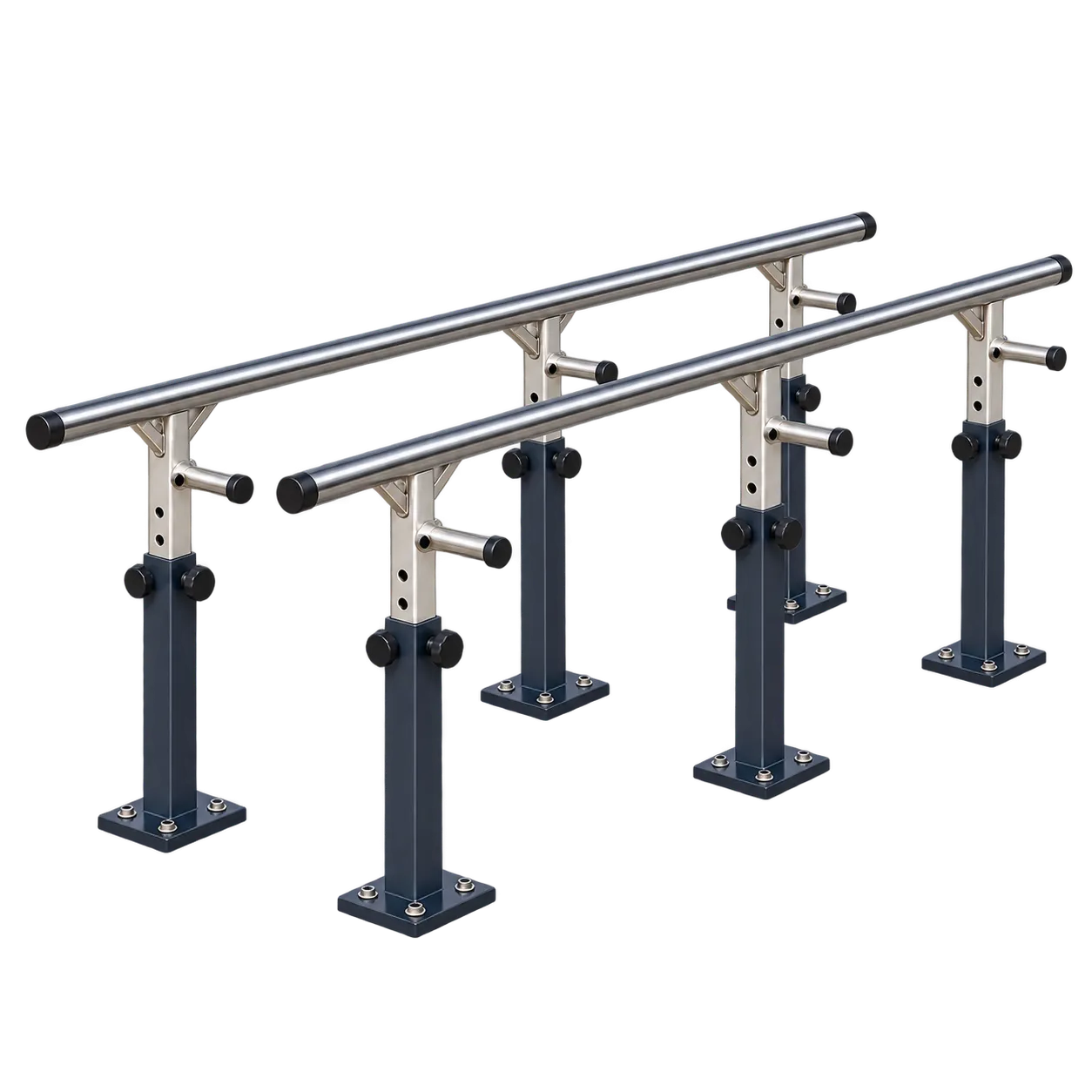
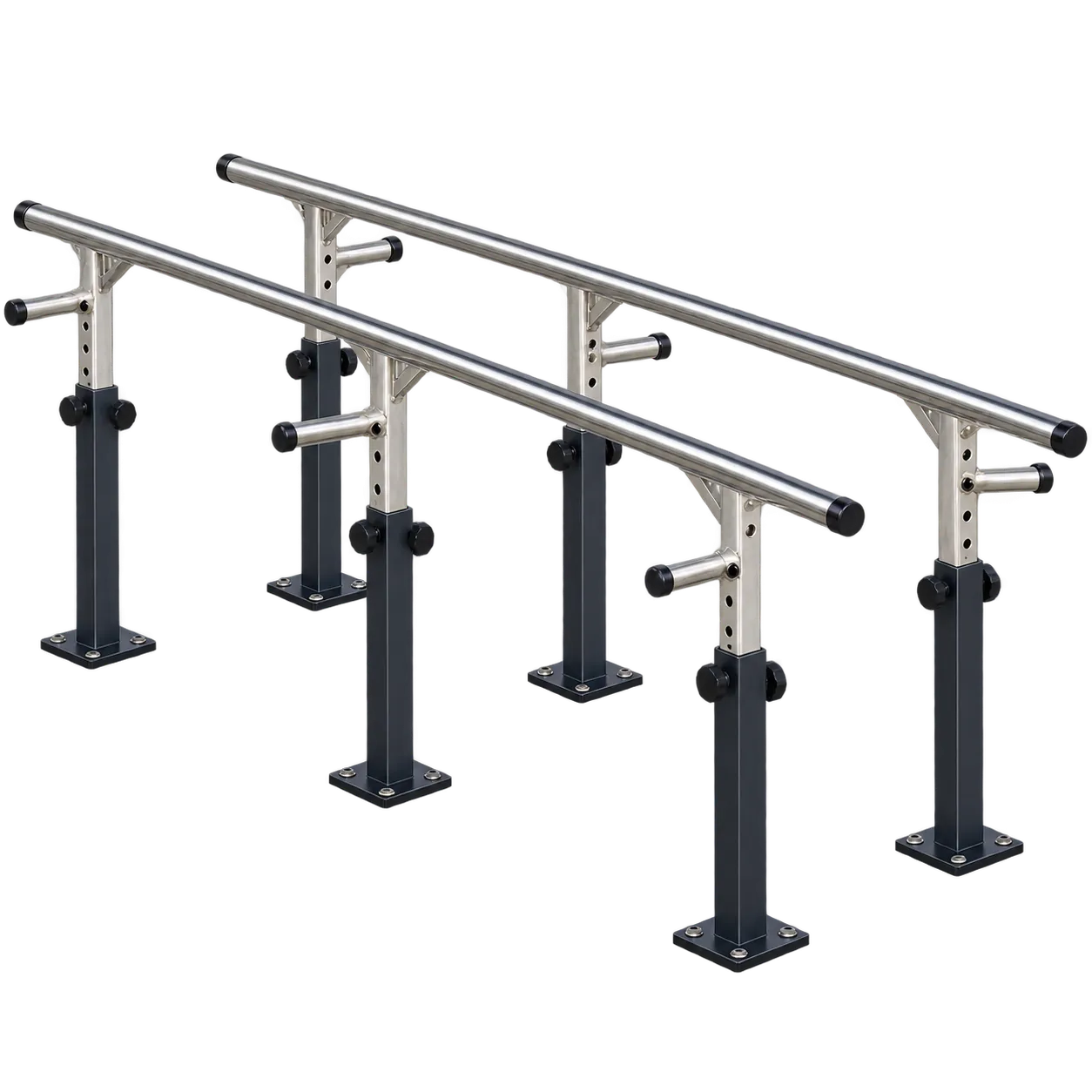
Rehabilitation units where many patients arrive seated are the natural home for the MPB10-FM: inpatient neurological and spinal injury units, brain injury services, stroke units, amputee services, orthopaedic and major trauma wards, and community hospitals. A patient wheels in and brakes, stands up between the rails, then works on weight shift and walking along 3.05 m with the chair waiting behind. People learning to walk in orthoses after spinal injury take their first stands where the chair stops, and amputees can rise on a new prosthesis with both hands supported.
Standing up from a chair is a trained skill with trial evidence of its own. A 2014 Cochrane review of 13 trials with 603 stroke survivors found moderate-quality evidence that practice made standing up faster (a small effect, 0.34 on a standardised scale) and more evenly weighted between the legs (a large one, 0.85). Only one small trial measured whether people could then stand up unaided, and its evidence was very low quality. Five trials found no clear effect on falls (odds ratio 0.75, 95% CI 0.46 to 1.22), and most participants could already stand on their own, so the results say little about those who cannot yet. The bars provide a safe place for that practice, with the dose still set by the therapist.
Physiotherapists running these sessions in the UK hold HCPC registration. Treatment providers answer to the CQC in England, Healthcare Improvement Scotland, Healthcare Inspectorate Wales and the RQIA in Northern Ireland. NHS procurement routes ask for conformity documents and a stated capacity on fixed rehabilitation equipment; equivalent public procurement elsewhere asks the same, and drilling into a ward or gym floor usually needs estates approval. The conformity documentation those procurement routes require comes from the manufacturer and is shared by the enquiry team.