

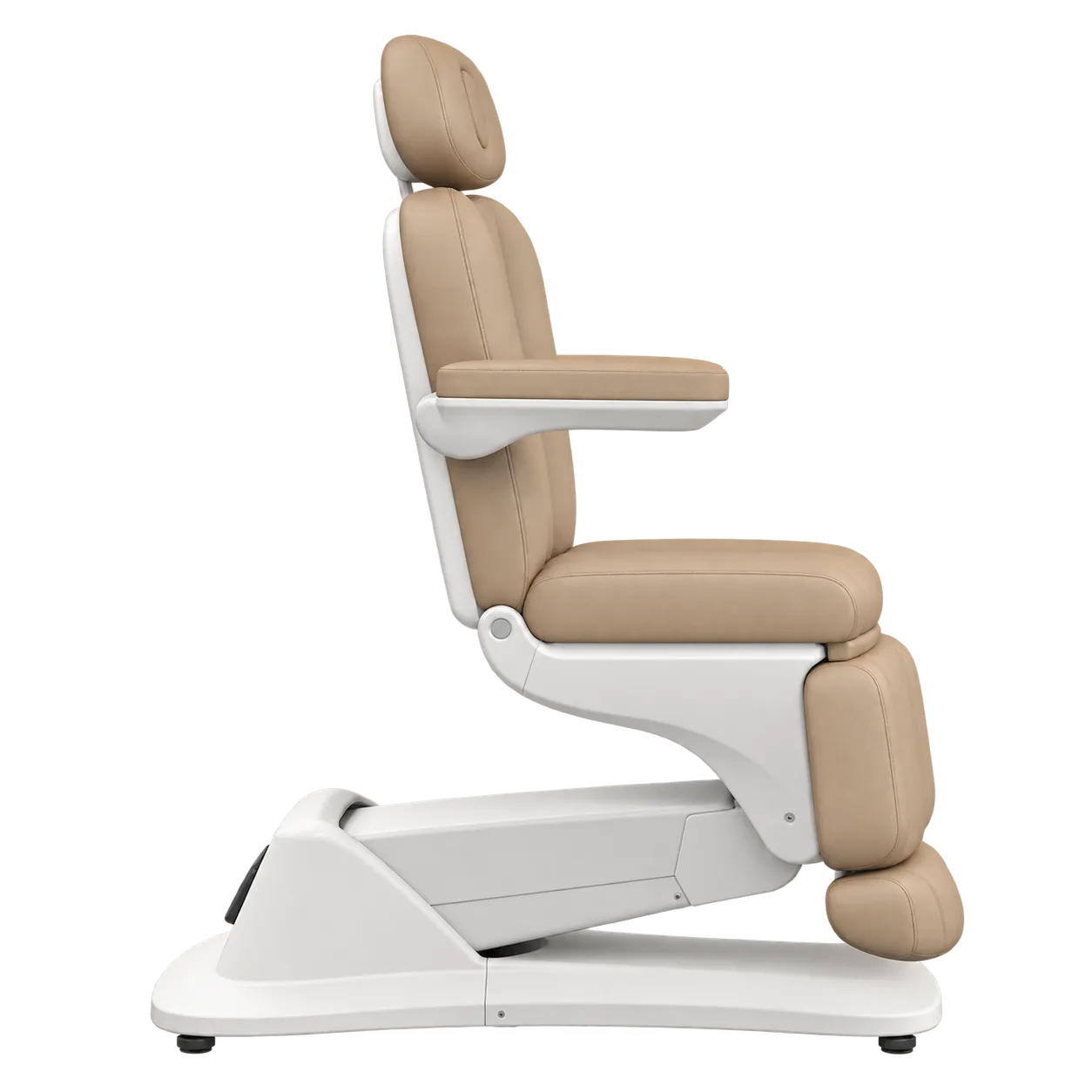
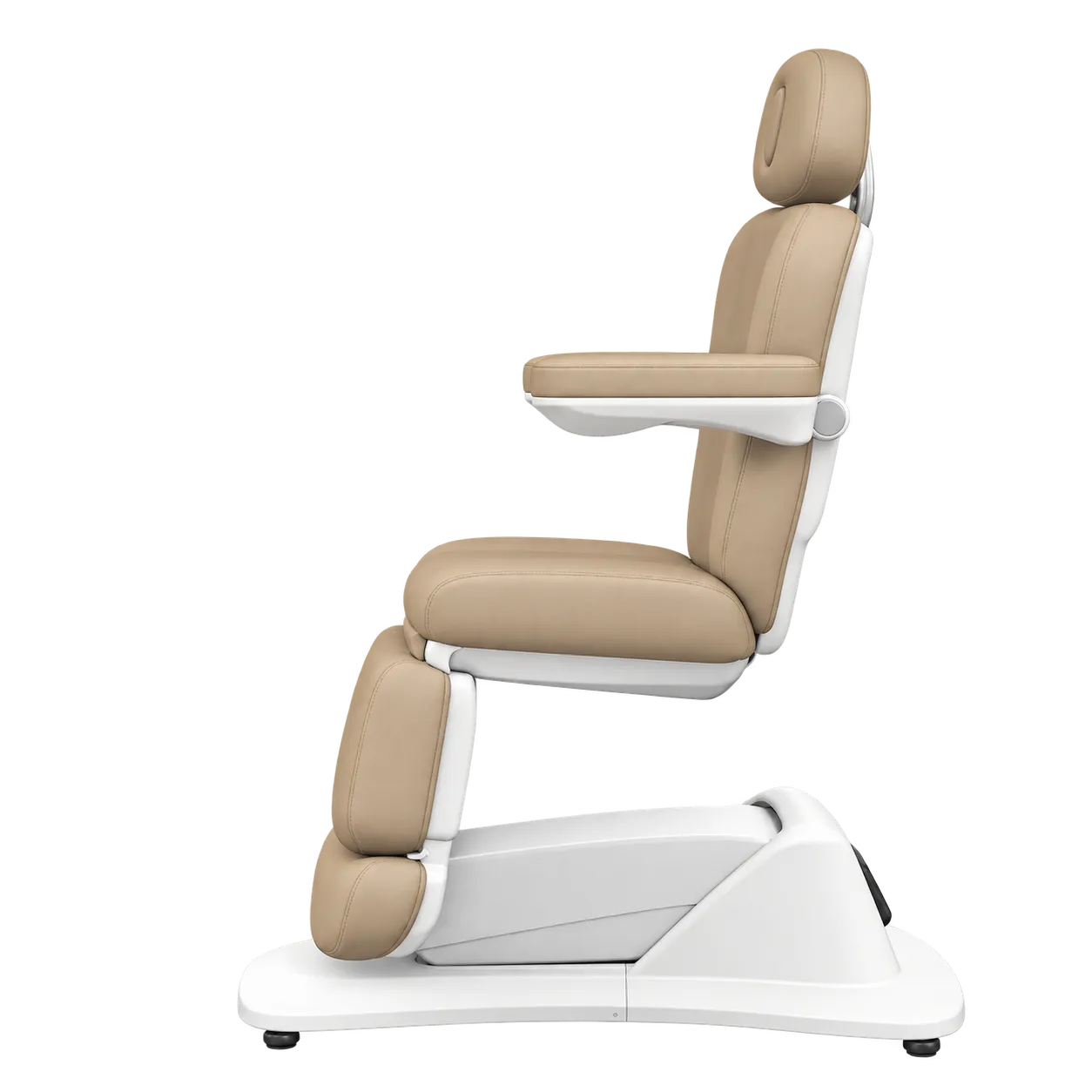

Shared procedure rooms suit the Morley-471: GP and community minor surgery rooms on a rota, outpatient rooms split between podiatry and dermatology, and aesthetic medicine clinics with several practitioners. A podiatrist working seated at the leg end, a dermatologist examining skin with the patient lying back, and a practitioner giving injections each have the patient turned to suit their hand, and each recalls stored positions from memory. The 12° tilt stays available to every user.
Handedness is a layout question before it is a comfort one. A 2020 meta-analysis in Psychological Bulletin, covering more than two million people, estimated left-handedness at 10.6%. A UK survey of 88 ENT surgeons from Imperial College Healthcare and Cambridge University Hospitals, reported in ENT & Audiology News in 2026, found a quarter were left-hand dominant. Of those, 42% had not adapted their theatre set-up, though the authors judged adaptation achievable. The same survey found no difference in physical discomfort by handedness; it covered one surgical speciality working in theatres, and no study has tested a rotating treatment chair. The remaining case is practical: in a shared room, turning the patient adapts the set-up for whoever is working, and nothing else needs to move.
The HCPC registers UK podiatrists, the GMC doctors and the NMC nurses, while providers answer to the CQC in England and to Healthcare Improvement Scotland, Healthcare Inspectorate Wales and the RQIA in the other nations. A powered, rotating chair sourced through NHS procurement routes needs a declaration of conformity, a stated working capacity, and electrical safety evidence; equivalent public procurement elsewhere requires the same. The manufacturer issues the conformity documentation those procurement routes require, and the enquiry team shares it.