
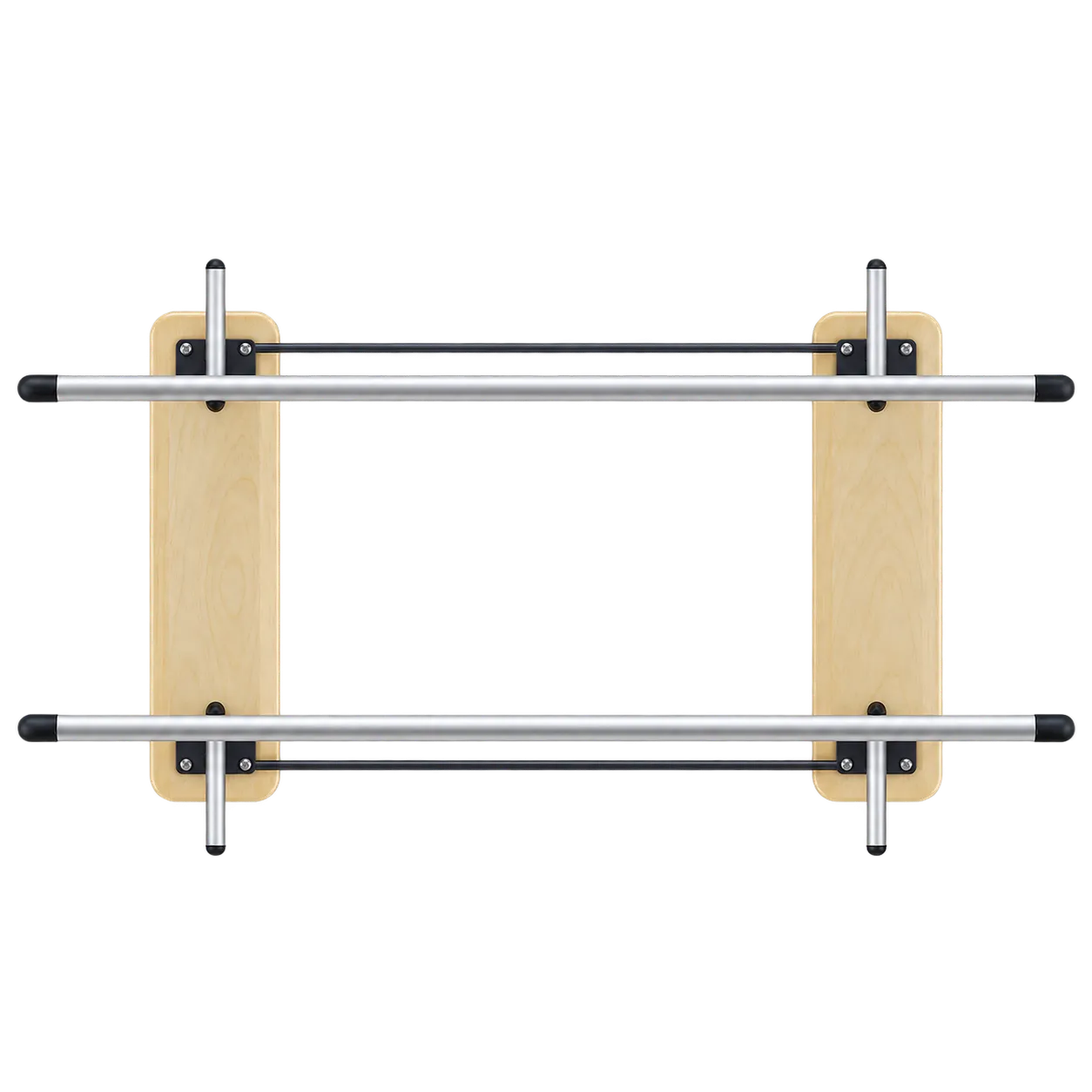
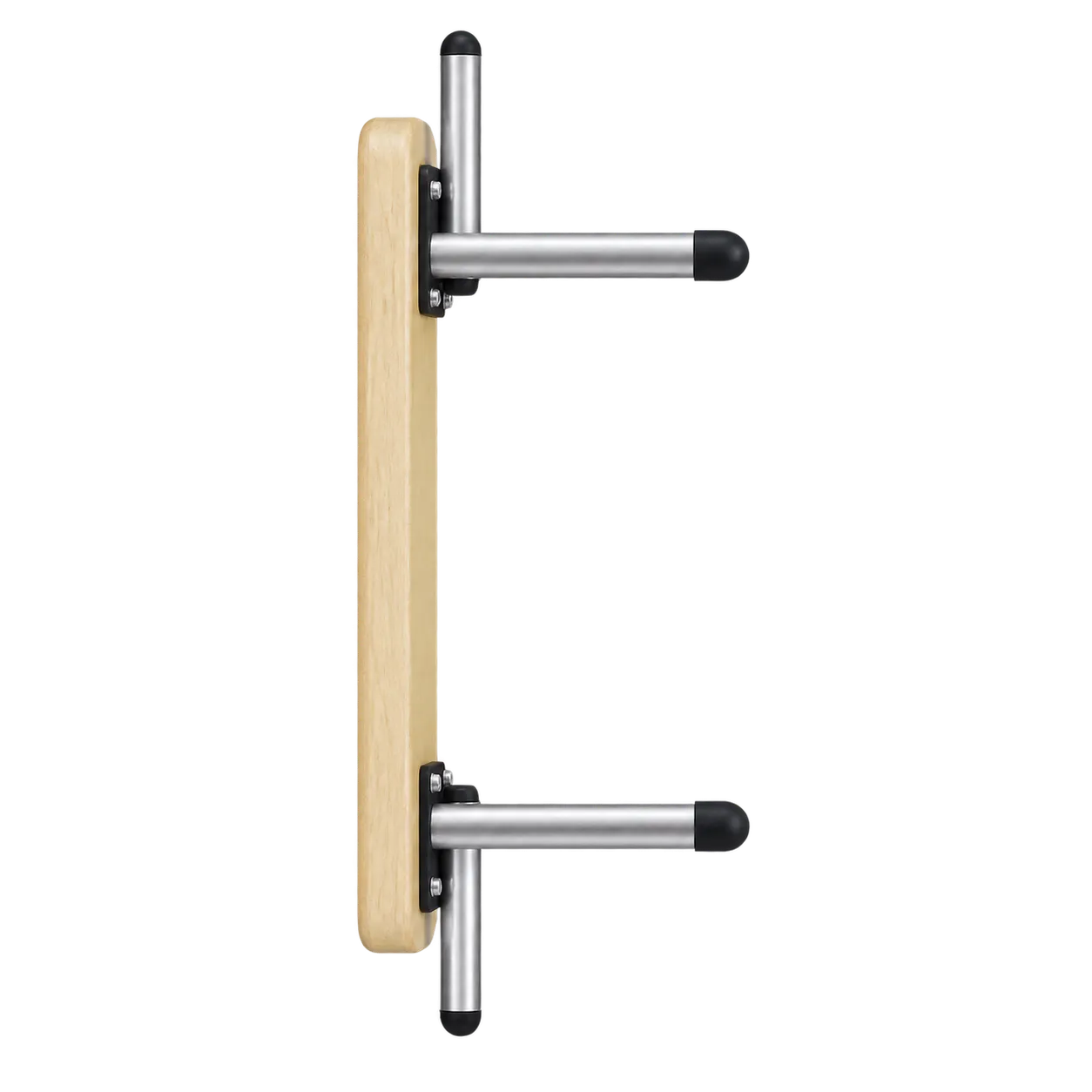
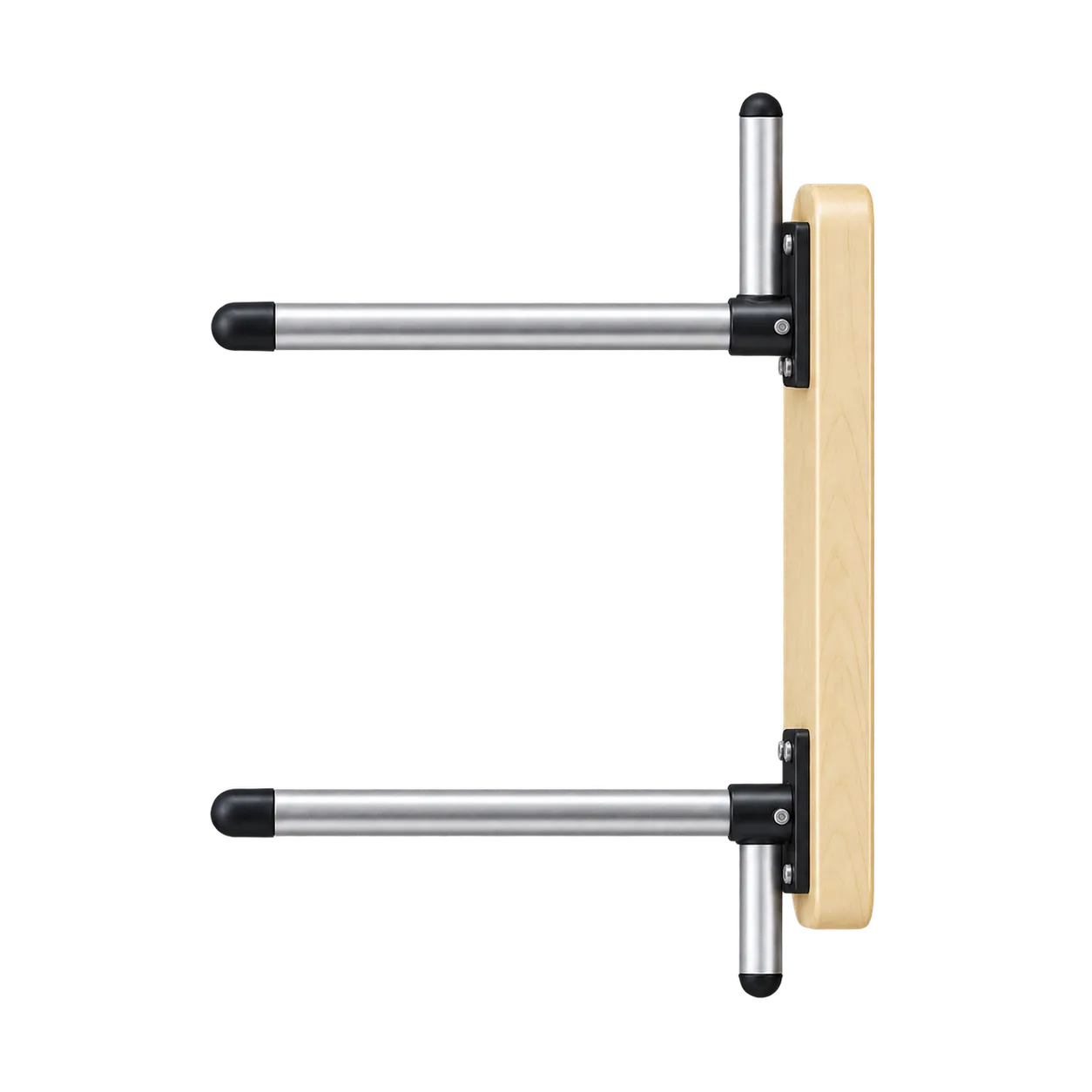
Hospital physiotherapy gyms, stroke and neurological units, amputee and prosthetic centres, orthopaedic and trauma rehabilitation, spinal injury services and community rehabilitation are where the FPB earns its place. Patients take their first assisted standing here, shift weight from side to side, step forwards and back, and learn a new gait pattern with a prosthesis while the therapist guards from inside or beside the bars because the frame folds; a room that hosts classes or other equipment can still offer a walking lane when it is needed.
Walking practice between parallel bars is a form of the repetitive task training that stroke rehabilitation relies on. A 2016 Cochrane review of 33 trials with 1,853 adults found moderate-quality evidence that repetitive task training improves walking distance, by about 35 metres on average, and functional ambulation. The evidence for lower-limb function measures was low quality, and the review found too little data to judge the risk of adverse events such as falls. The bars provide a safe framework; the therapist still determines the dose and progression. Recording each patient's rail setting makes that progression easier to repeat.
In the UK, physiotherapists who supervise walking practice are registered with the HCPC. Providers of treatment in England are regulated by the CQC, and Scotland, Wales, and Northern Ireland each have their own regulator. NHS procurement routes ask for conformity documents and a stated user weight on walking equipment, and equivalent public procurement elsewhere asks the same. The conformity documentation those procurement routes require is issued by the manufacturer and shared by the enquiry team.