
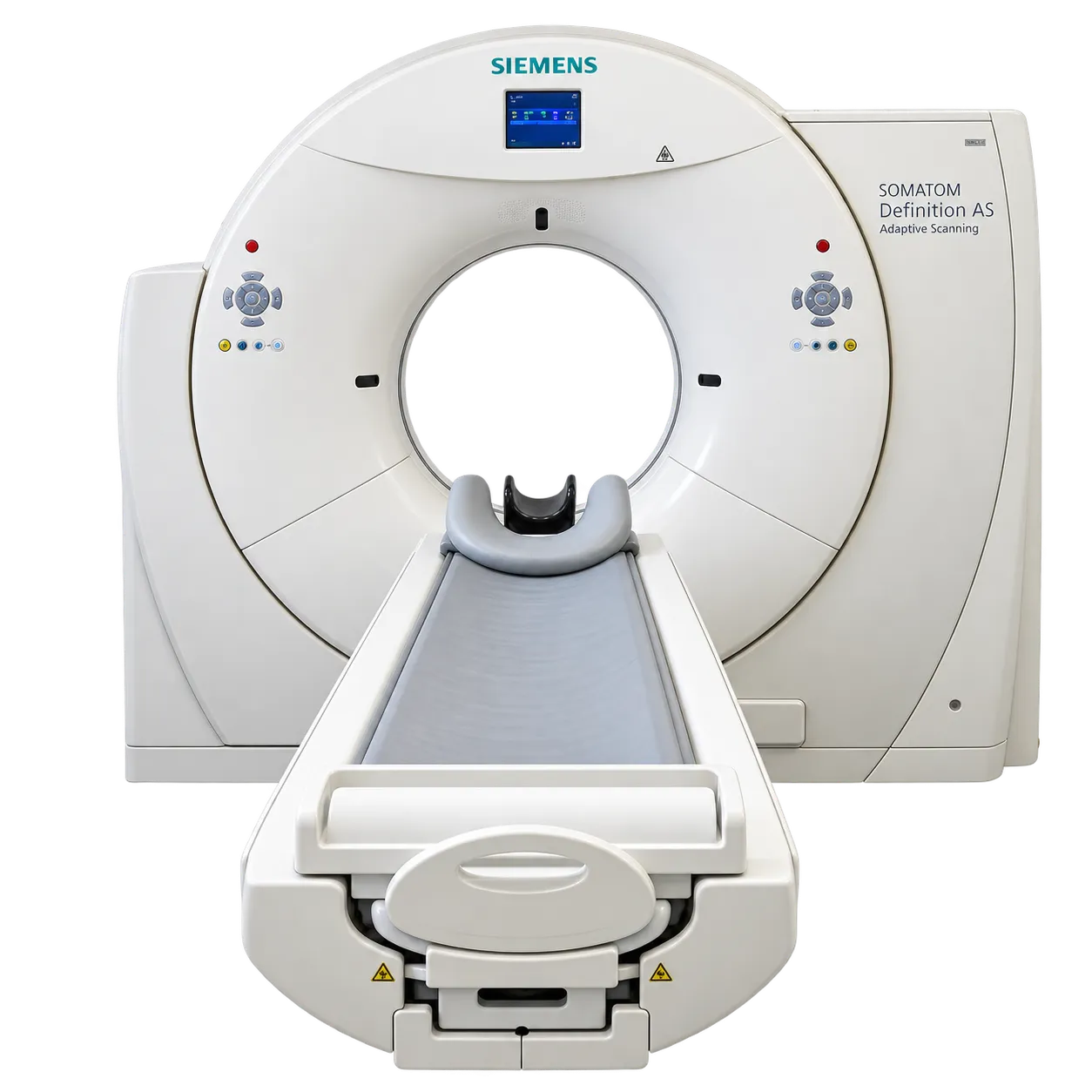
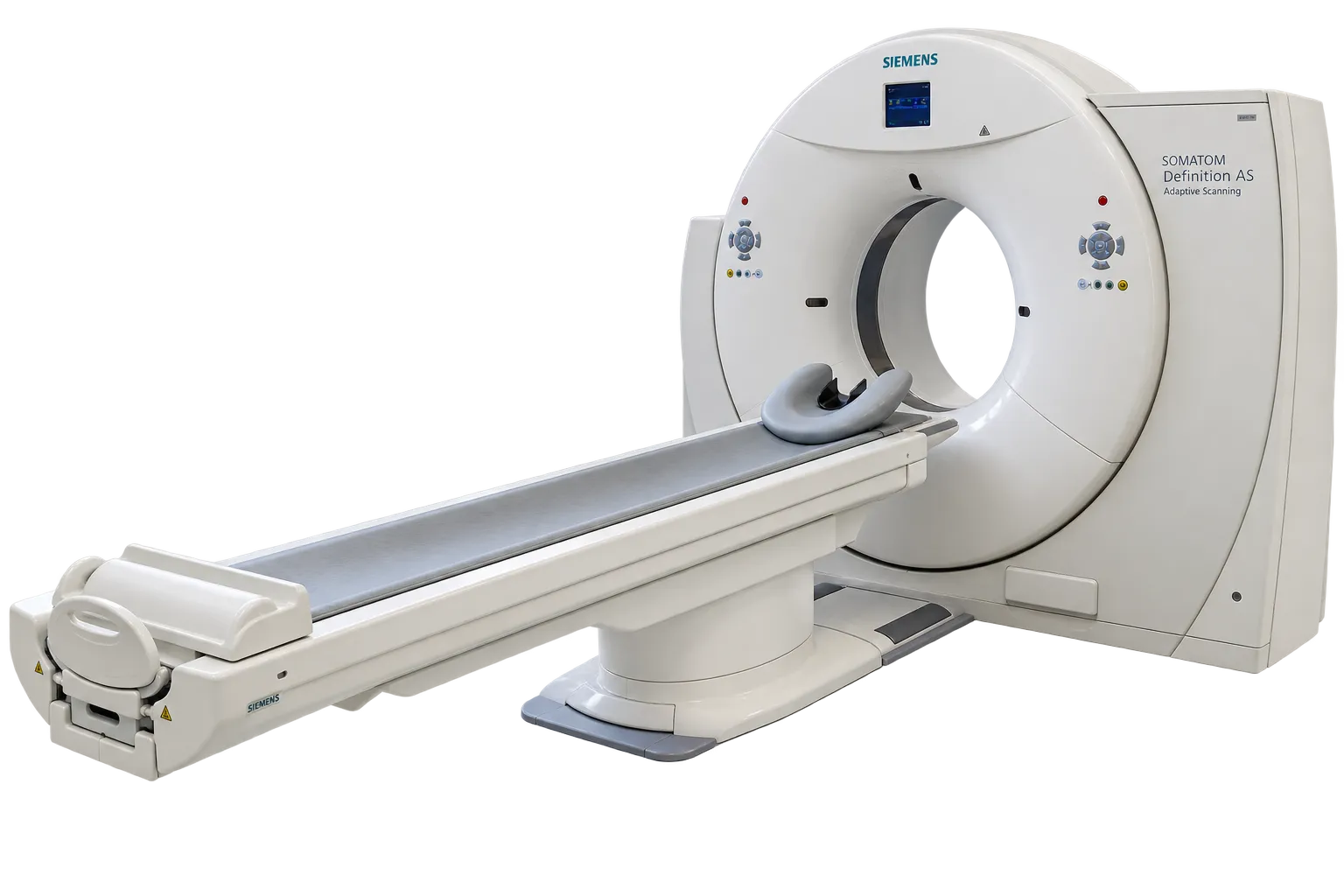
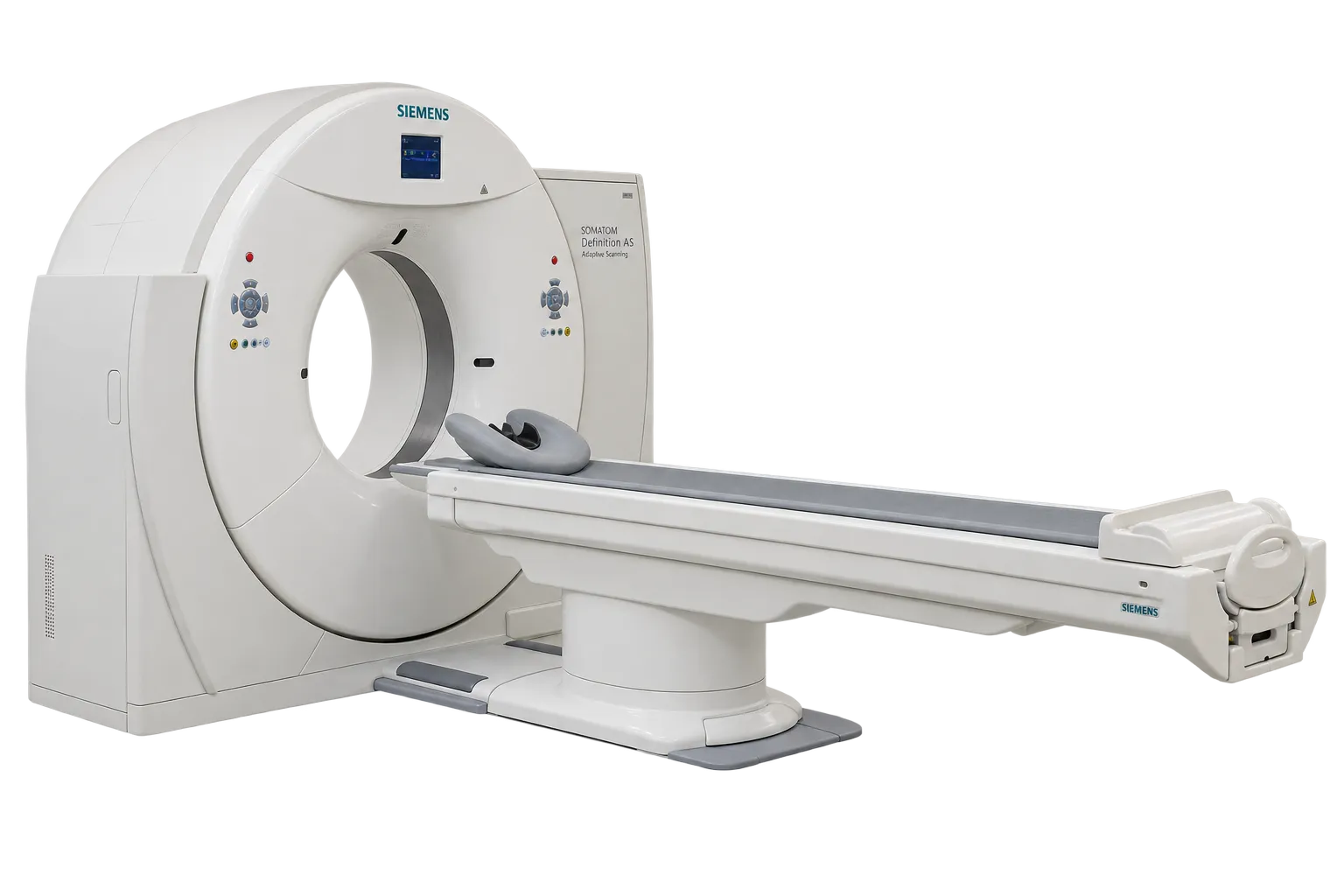
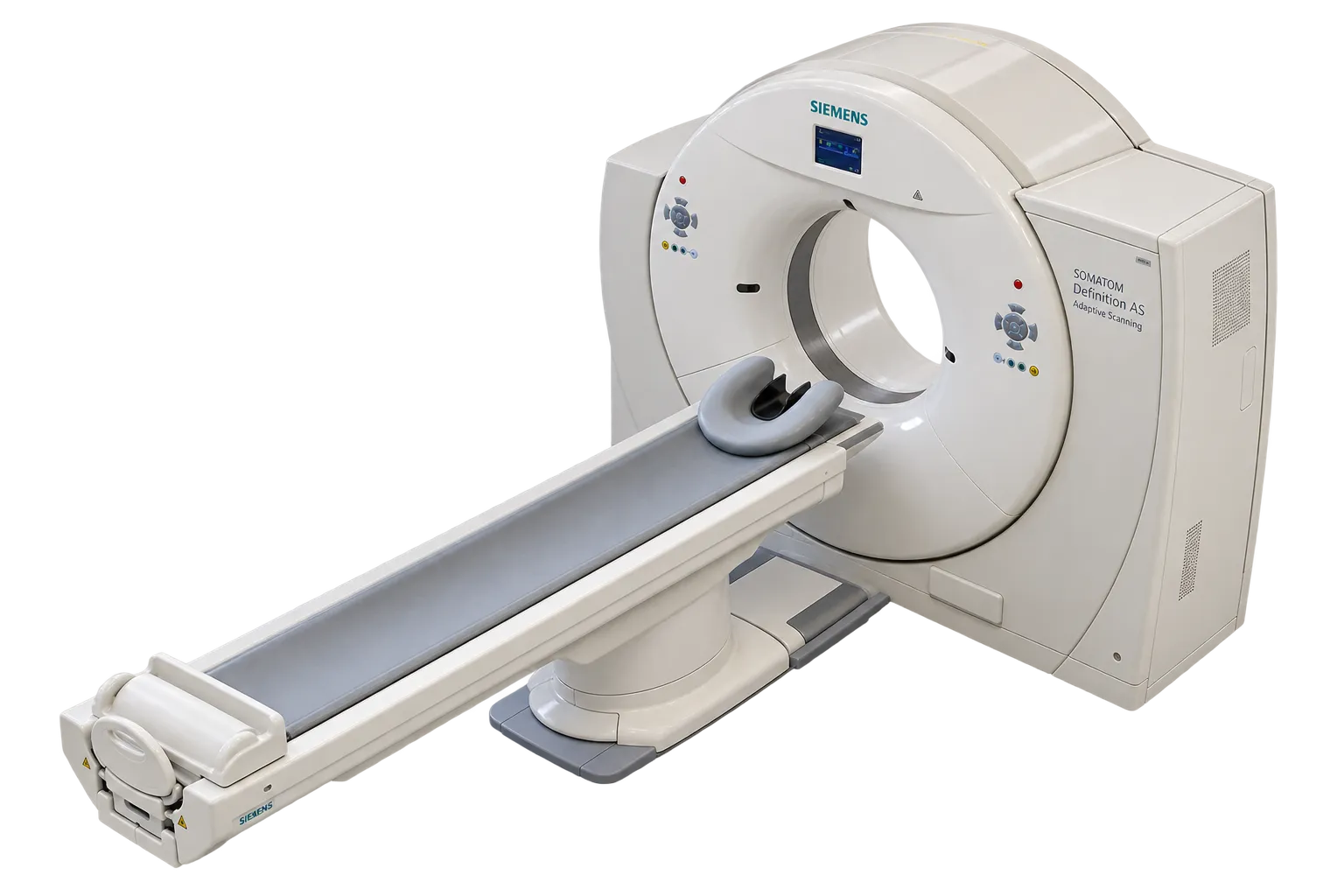
General diagnostic CT across head, chest, abdomen and musculoskeletal work is what this platform serves, at volumes typical of a district general hospital or a busy imaging centre. Siemens positions the Definition AS as an adaptive scanner, adjusting to patient, dose and workflow requirements. All clinical judgement, including whether an examination is justified, remains with the referring and reporting clinicians, and Medigear.uk supplies configuration and condition detail rather than clinical guidance.
Bariatric and larger-patient imaging benefits from the 78 cm bore and a table rated to 300 kg, both beyond the 70 cm bore and lower capacity typical elsewhere. Where a service regularly refers patients on size grounds, that capability can open referral routes rather than simply improving comfort, and bore width is not something that can be added to a scanner afterwards.
Perfusion studies of the brain and other organs are supported through Adaptive 4D spiral where the licence is enabled. Medigear.uk confirms the full list, since two scanners of identical model and age can differ substantially in what they are permitted to perform, and a scanner capable of an acquisition but not licensed for it cannot take the referral.
Services planning capital replacement cycles should note where this tube sits. At 396,000 scan seconds inside a Straton band of roughly 350,000 to 500,000, there is working life remaining without the purchase carrying an imminent retube, which makes it a more straightforward proposition than a scanner sitting at the top of that range. Medigear.uk supplies the figures needed to weigh that against expected throughput.