
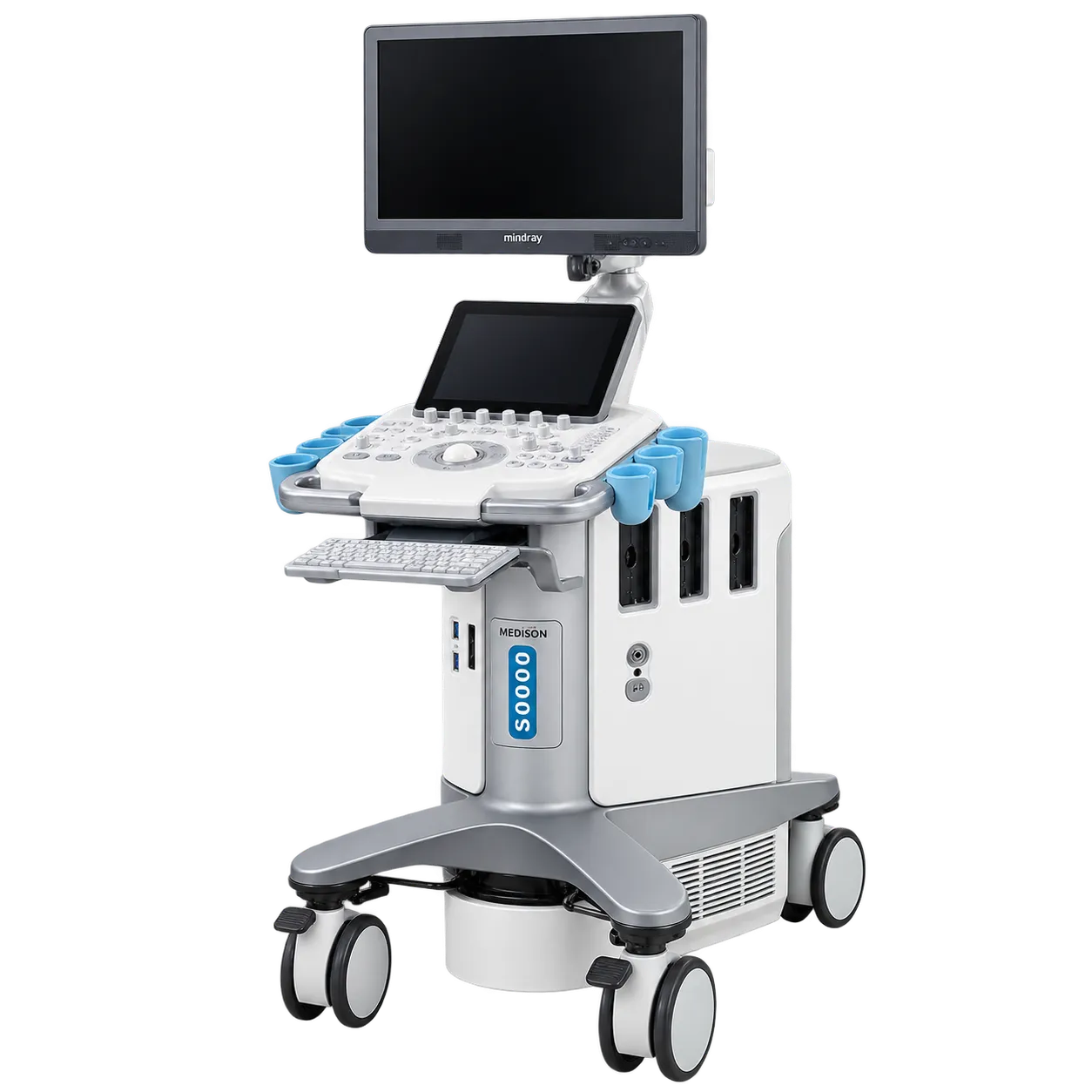
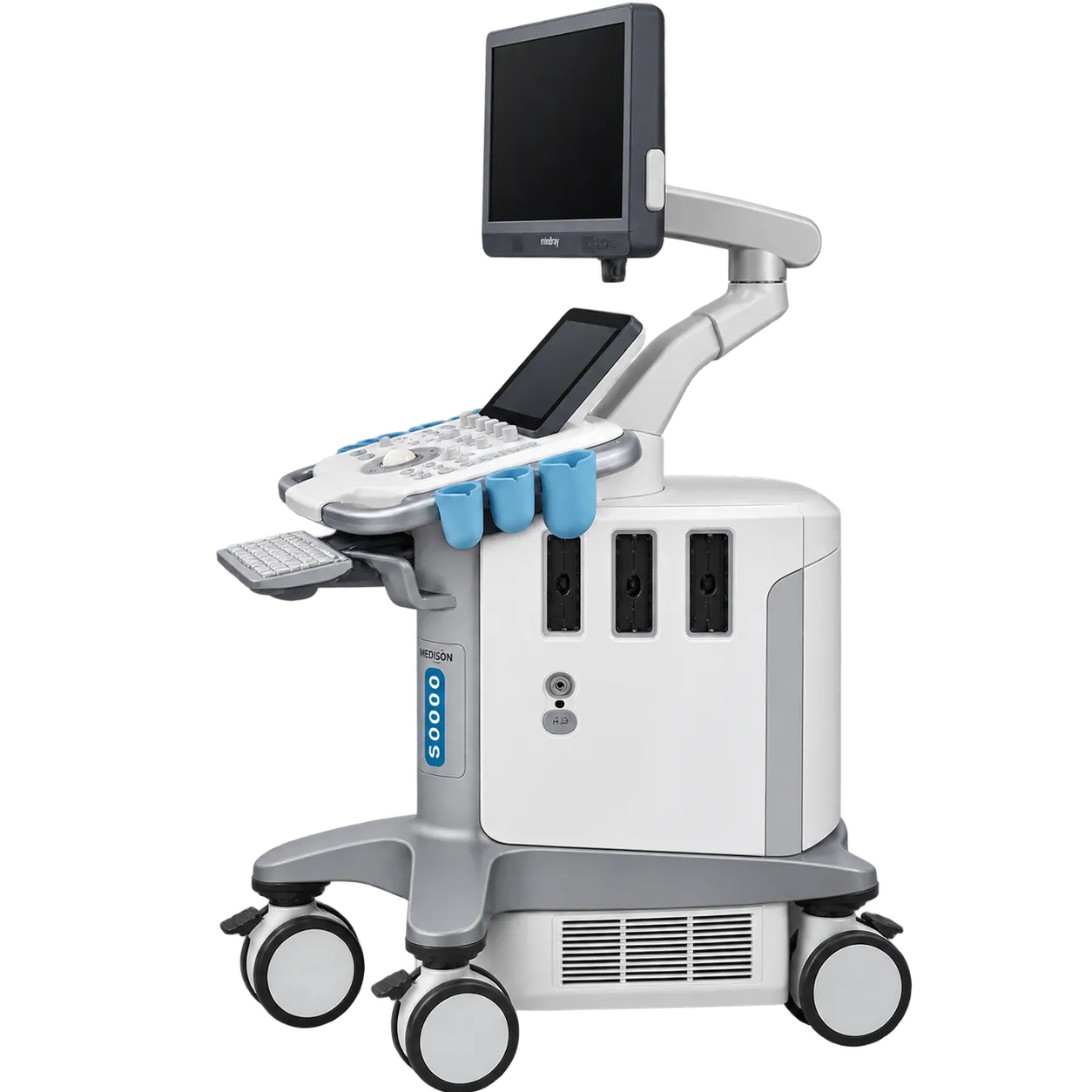
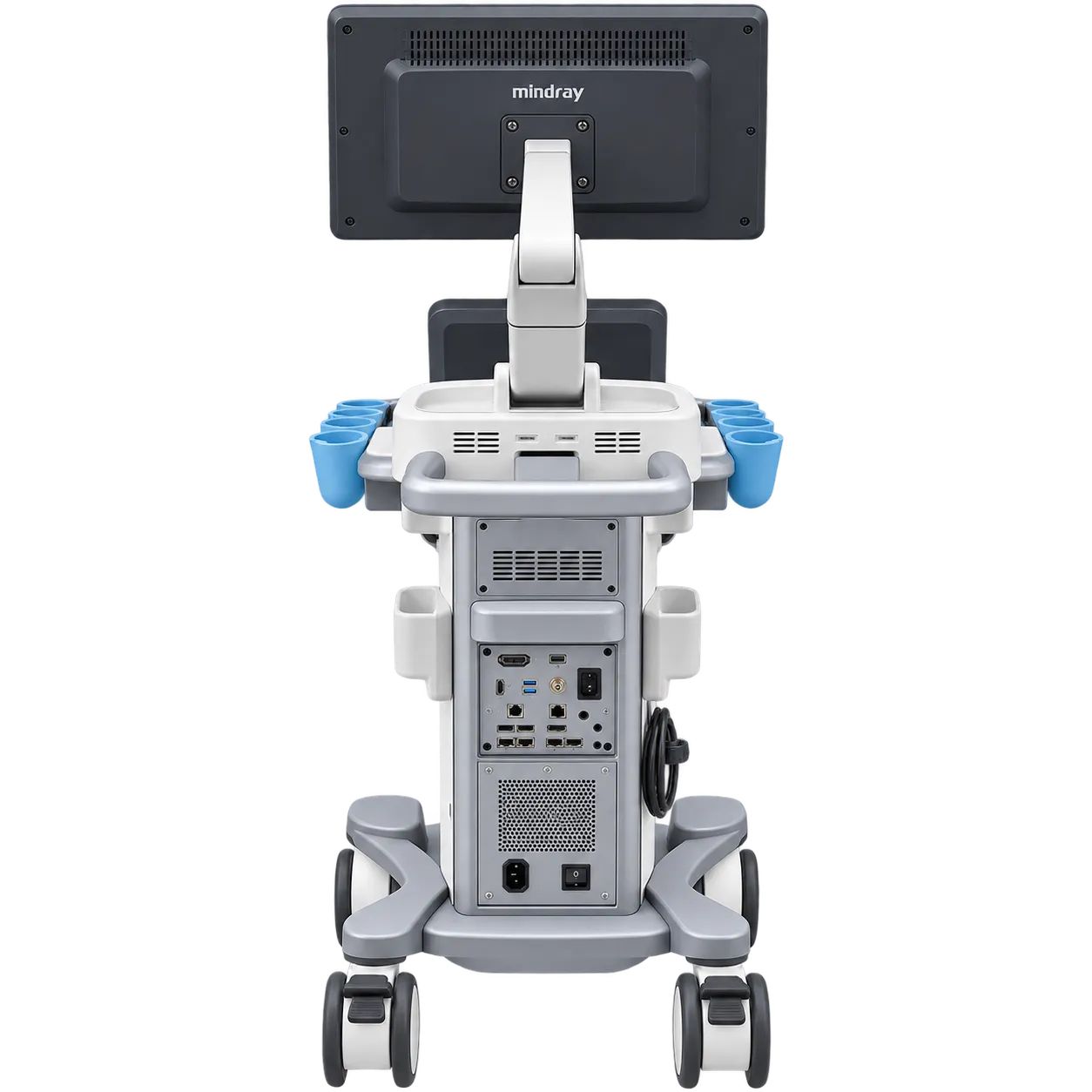
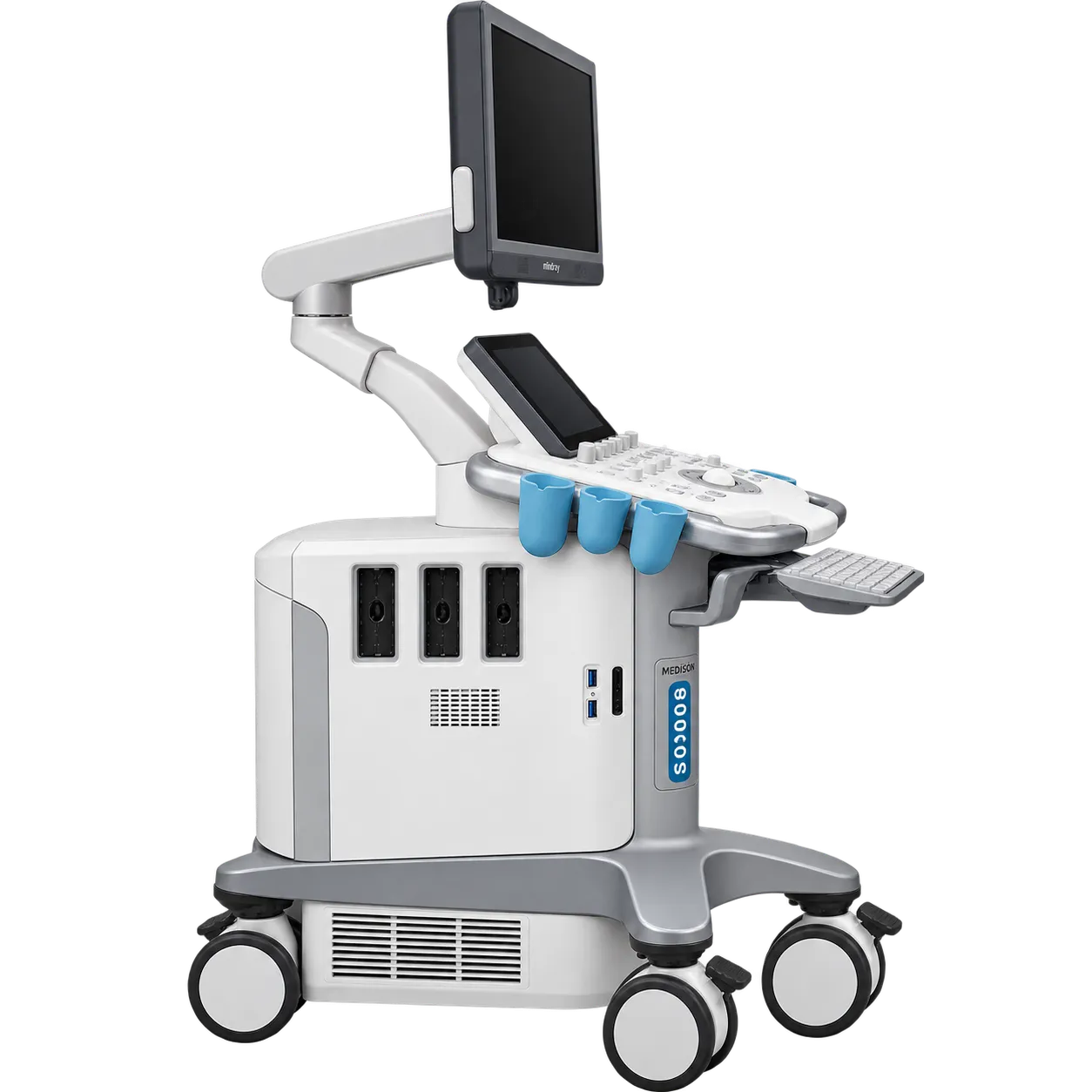
General abdominal imaging covering liver, biliary, renal and general abdominal assessment runs on a curved array transducer, with harmonic imaging carrying much of the load where the body wall makes a study technically difficult.
Small parts imaging covering thyroid, testicular and superficial structures uses a high-frequency linear transducer, where compounding tells most because the findings are frequently border-defined.
Musculoskeletal work on tendons, ligaments and joints uses the same linear transducer, with panoramic acquisition available for structures longer than a single footprint.
Vascular assessment runs on the linear transducer with Doppler capability according to the configuration supplied.
Obstetric and gynaecological work runs on curved array and endocavity transducers where those are among the ones supplied.
Services running mixed lists gain most from a console that holds several application types at once, since the same platform covers the day without a change of room.