
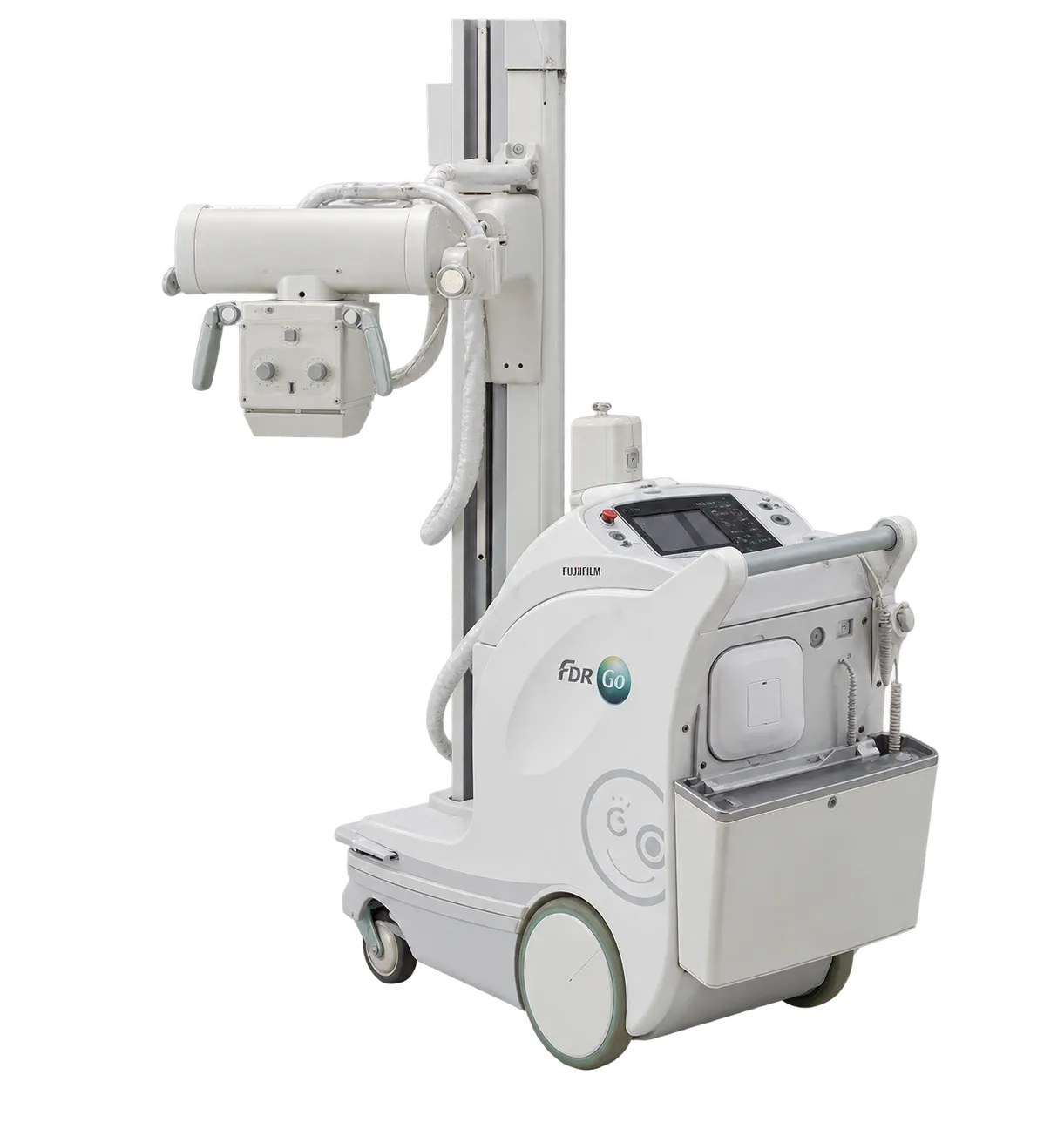
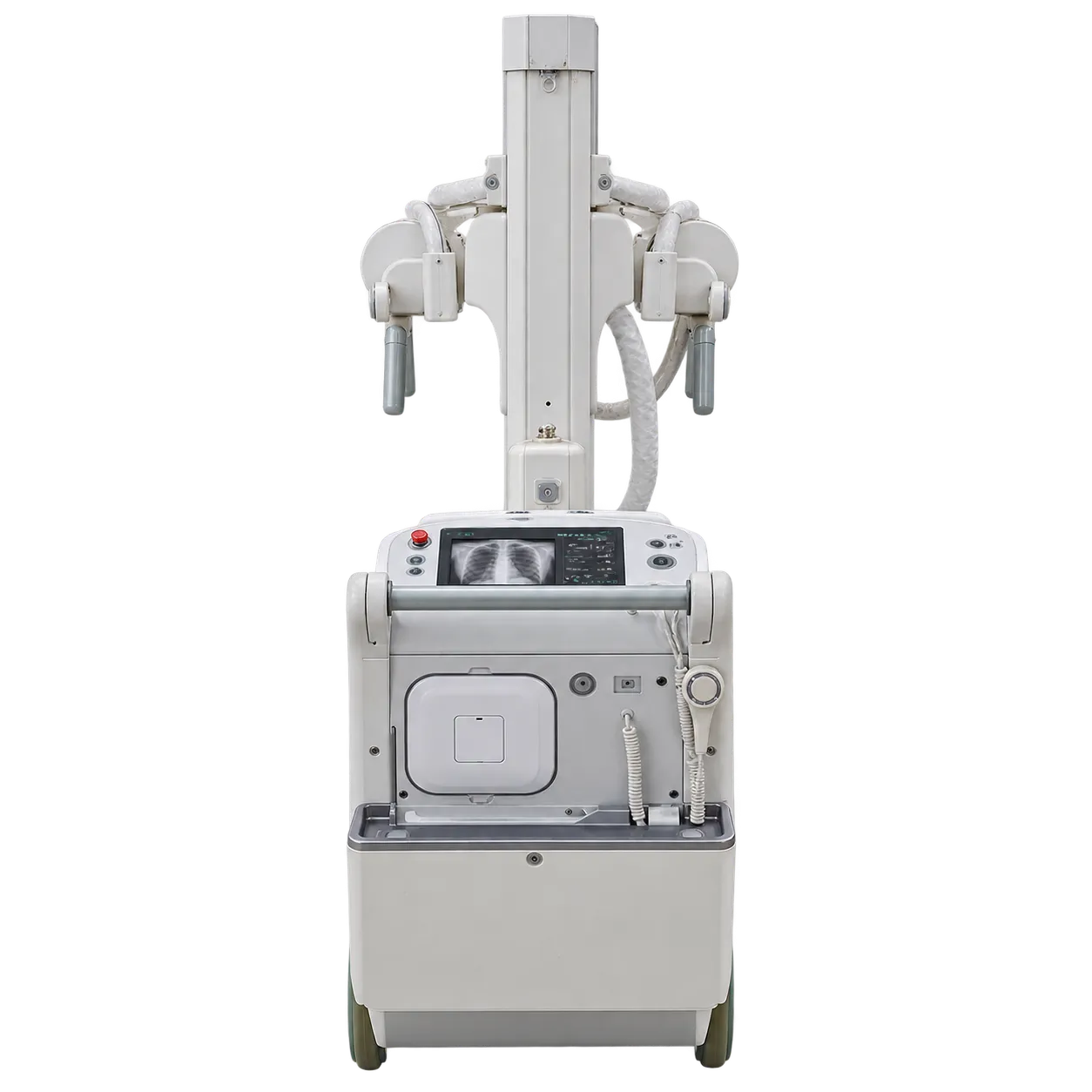
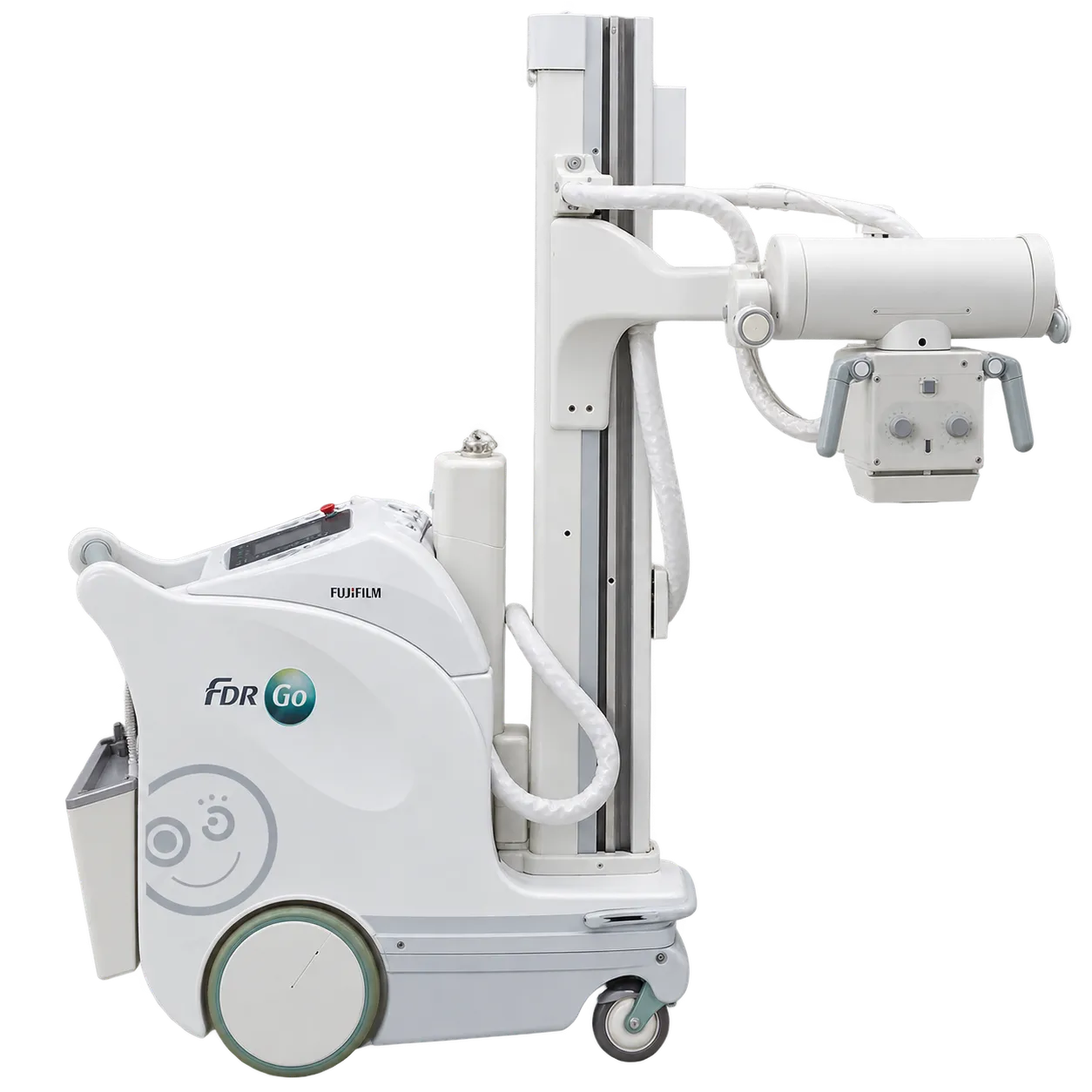
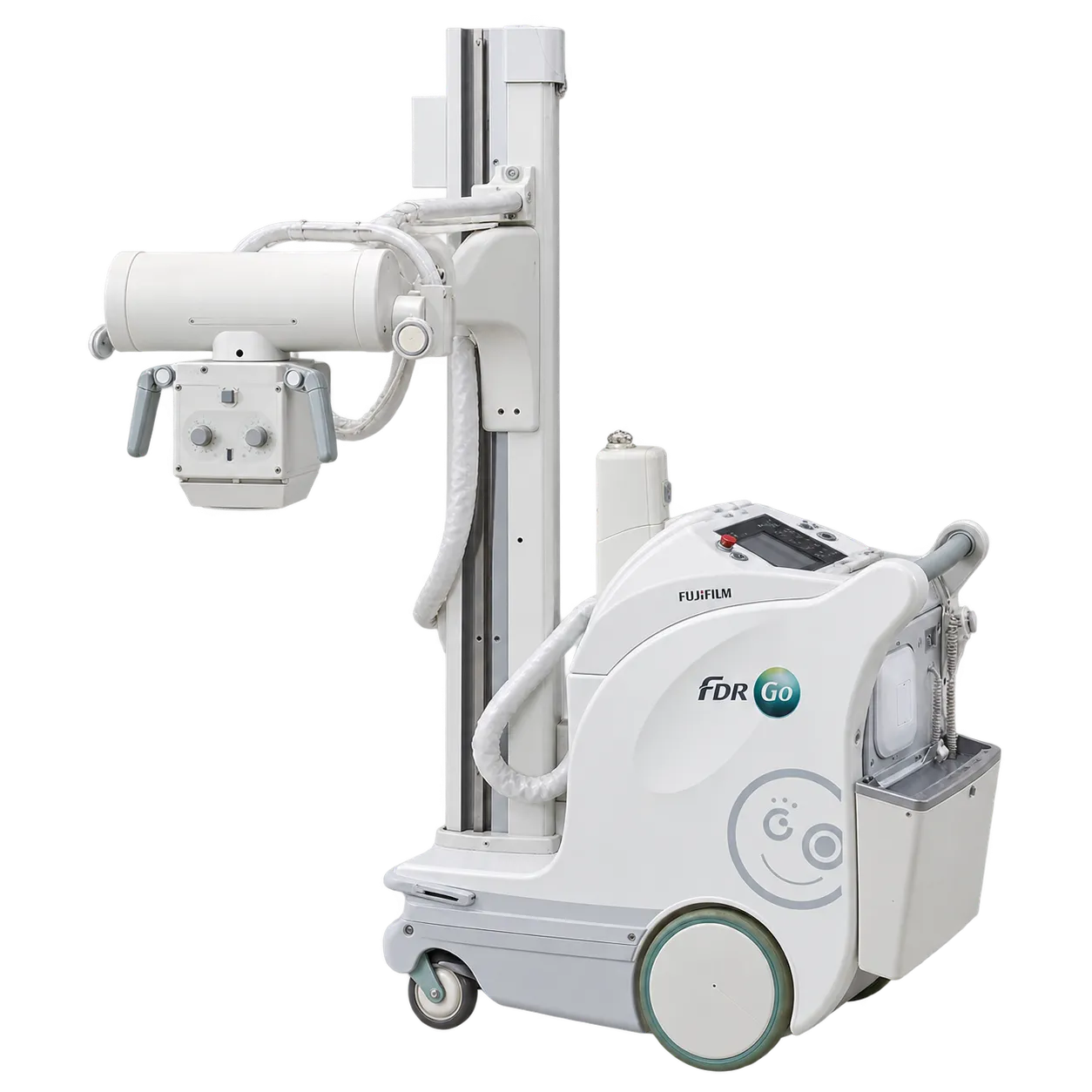
Ward and bedside chest radiography across intensive care, high dependency, general wards and emergency settings is the core of what this system delivers, for patients whose condition makes a trip to the imaging department difficult or undesirable. All clinical judgement, including whether an examination is justified, remains with the referring and reporting clinicians, and Medigear.uk supplies configuration and condition detail rather than clinical guidance.
Intensive care work is where the compact design contributes most directly. Bays accumulate equipment around the bed, and a machine that positions without first requiring ventilators, stands and monitors to be moved saves time on every examination and reduces the disturbance around a critically unwell patient. Line and tube position, chest review and post-procedure checks are achievable without disconnecting and transferring a ventilated patient.
Older hospital estates benefit for the same reason. Corridors, doorways and lifts sized before mobile imaging existed constrain which machines can practically reach which wards, and a compact unit widens the area a single machine can serve.
Theatre, recovery and isolation settings suit mobile imaging generally, with the added benefit that taking the equipment to a contained patient avoids moving that patient through shared spaces.
Departments assessing this platform should measure the dimensional figures against their own most constrained bay, doorway and lift rather than relying on a general impression of compactness. Medigear.uk supplies those figures so the check can actually be made before purchase.