
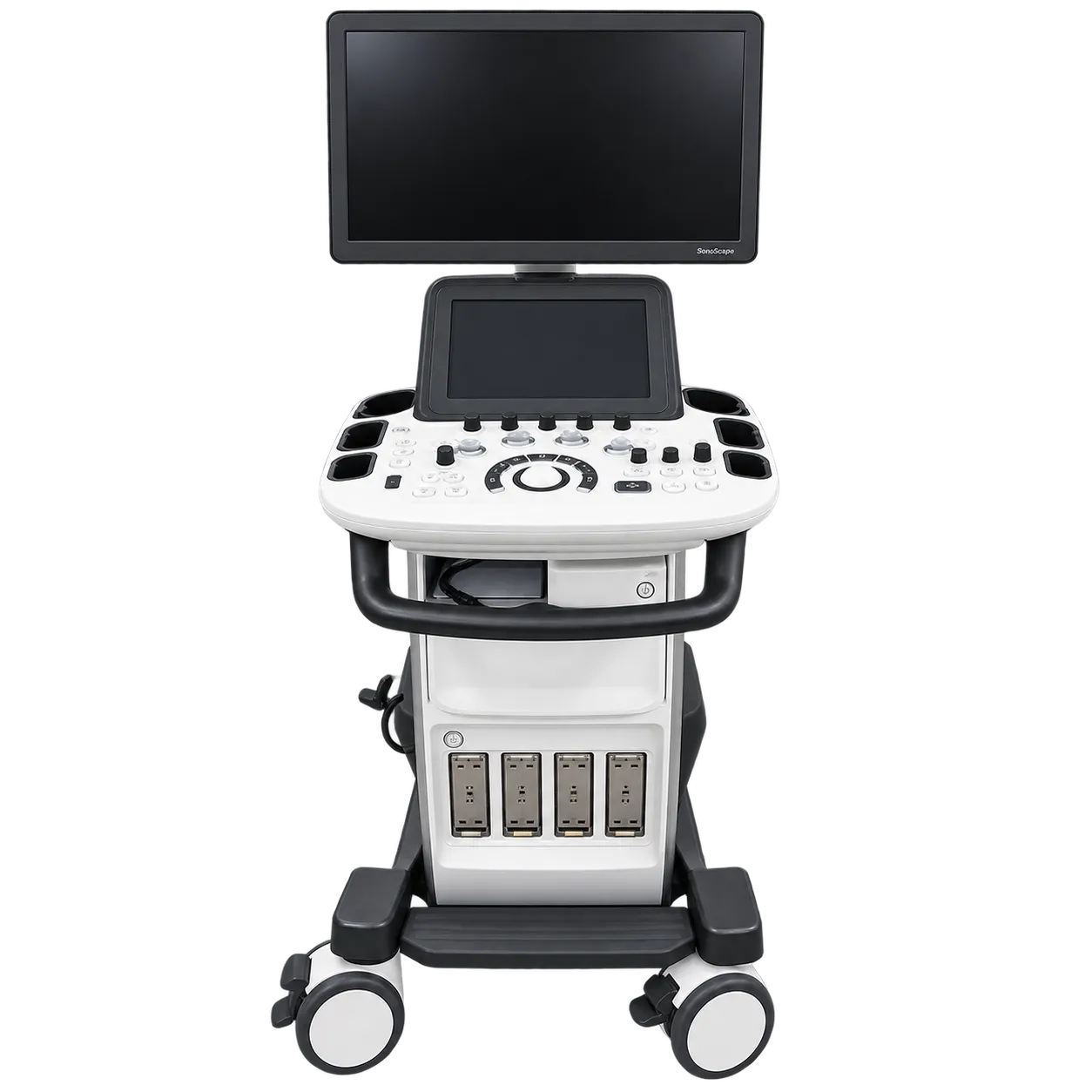
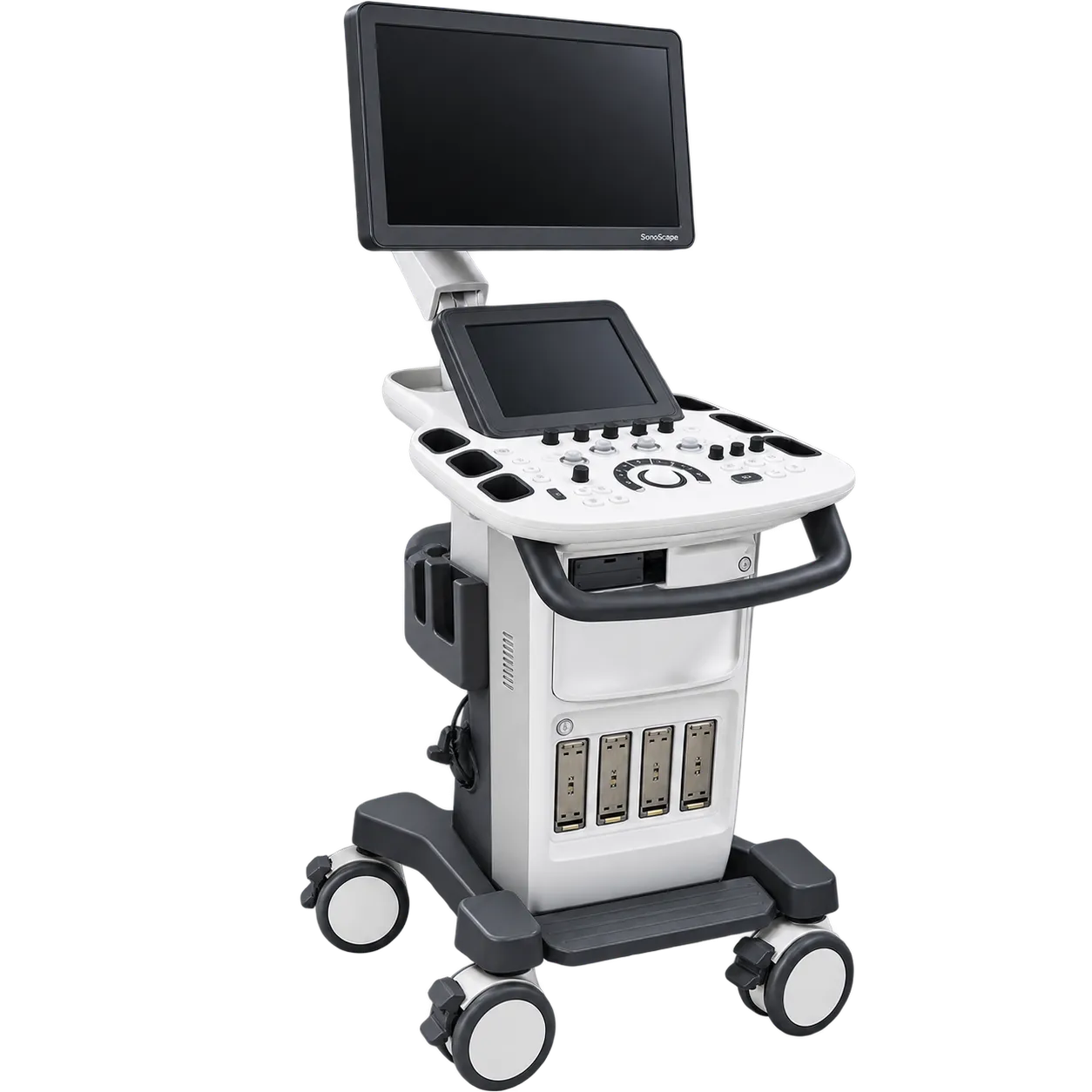
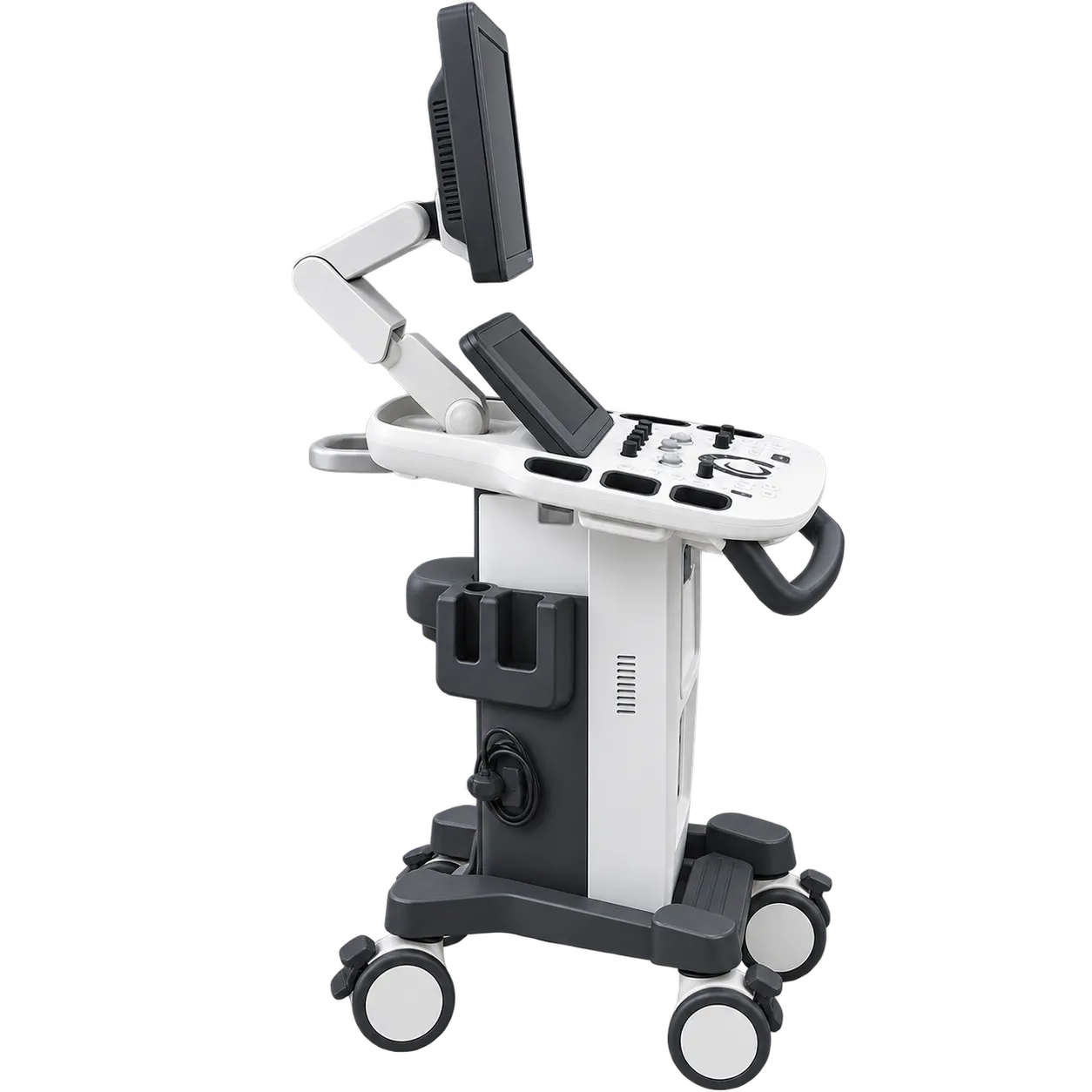
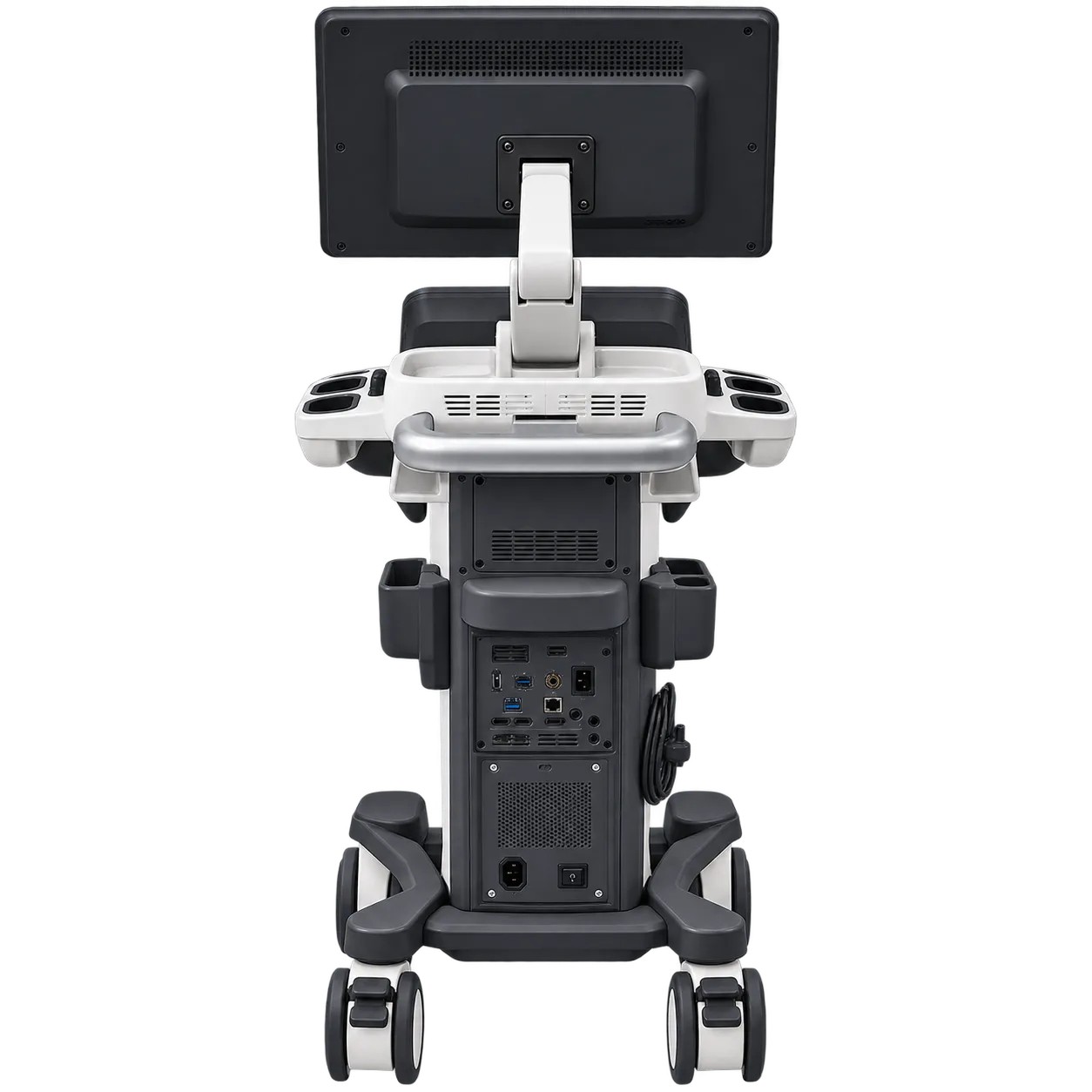
General abdominal imaging covering liver, biliary, renal and general abdominal assessment runs on a curved array transducer. All clinical judgement, including whether an examination is indicated, whether an automated measurement is appropriate and how findings are interpreted, remains with the performing and reporting clinicians.
Obstetric work benefits from automated biometry where those packages are enabled, with measurements stored against the study and carried into the report.
Gynaecological examination runs on an endocavity transducer where one is among those supplied.
Small parts imaging covering thyroid, testicular and superficial structures uses a high-frequency linear transducer.
Vascular assessment runs on the same linear transducer with Doppler capability according to the configuration supplied.
Departments running high-volume lists gain most from the automated portion of the workflow, since the saving recurs on every study.