
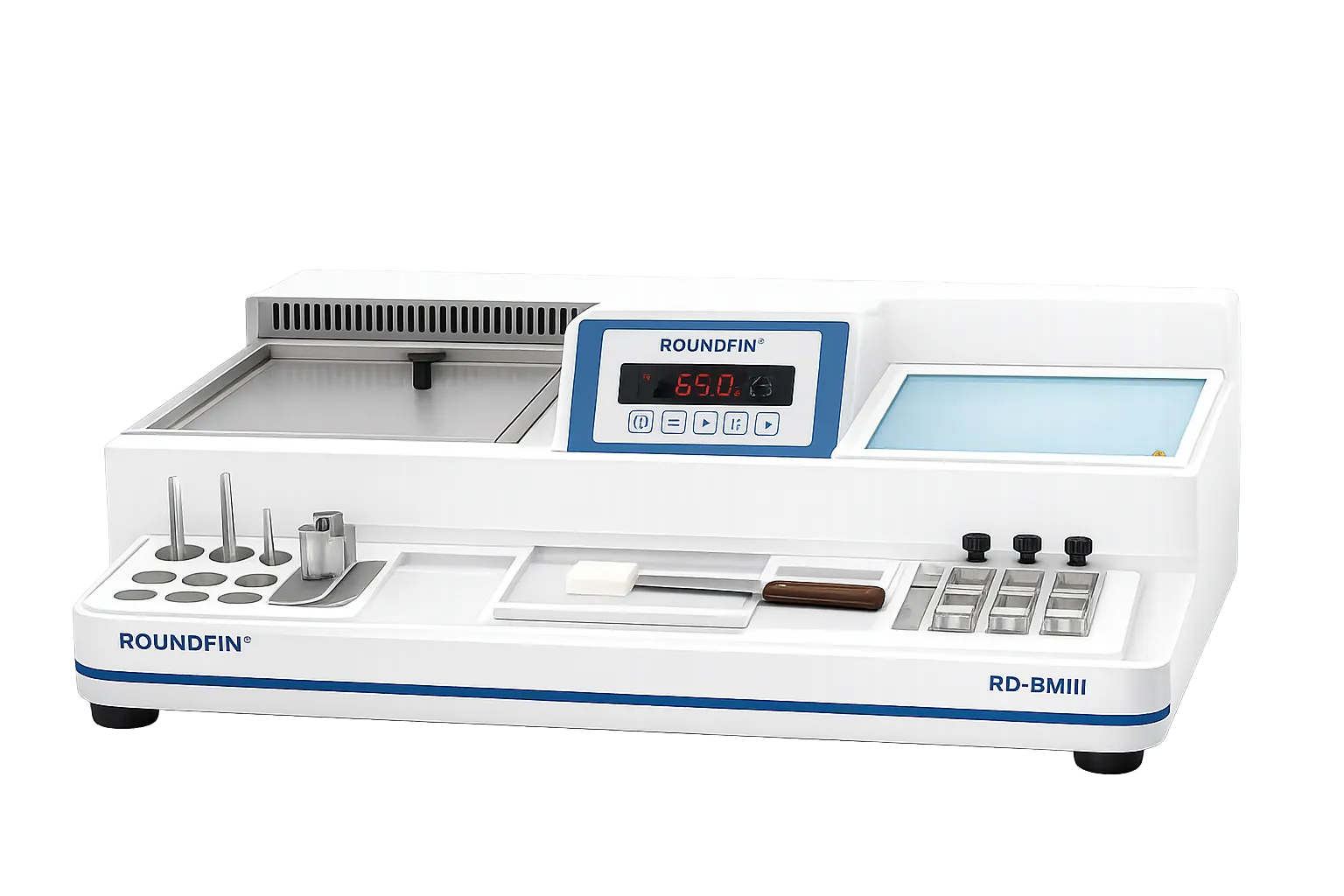
General histopathology laboratories processing routine surgical biopsies and resection specimens benefit from the RD-BMIII's five independently controlled heated zones, which maintain stable temperatures across all embedding surfaces without mutual interference. The 4-litre paraffin chamber supports extended sessions with numerous specimens without mid-session replenishment. For NHS trusts and hospital procurement managers, CE certification provides the baseline documentation required for device validation and compliance with procurement frameworks. Medigear.uk supplies full certification packs and pre-purchase technical documentation to facilitate institutional procurement submissions of any complexity.
High-throughput diagnostic laboratories processing complex oncology and neuropathology caseloads benefit from the RD-BMIII's 0–200mL/min adjustable paraffin flow, 360° magnifying glass for ultra-small specimen work, and dual-side trimming plates for bilateral block access. The programmable weekly scheduling with automatic storage of settings ensures the instrument reaches operating temperature precisely when needed each day of the working week, and the auto-restart function provides operational continuity after power interruptions without requiring manual intervention.
Research institutions, veterinary pathology services, and specialist embedding facilities require precise, adaptable instrumentation for diverse tissue categories and non-standard protocols. The RD-BMIII's room-temperature-to-85°C paraffin range accommodates both low-melt research formulations and high-melt diagnostic paraffins in a single system, and its multiple overheating protection mechanisms support safe unattended operation during programmed sessions. ROUNDFIN's OEM acceptance policy enables distributors to source branded variants of the RD-BMIII through Medigear, the UK B2B procurement channel.
Independent buyers and specialist clinics can acquire the RD-BMIII directly through Medigear.uk. The luminotron-equipped buttons provide a clear indication of working status for all operators. Automatic memory and restoration eliminate the need for daily protocol re-entry and support consistent embedding outcomes across operators and shifts.