
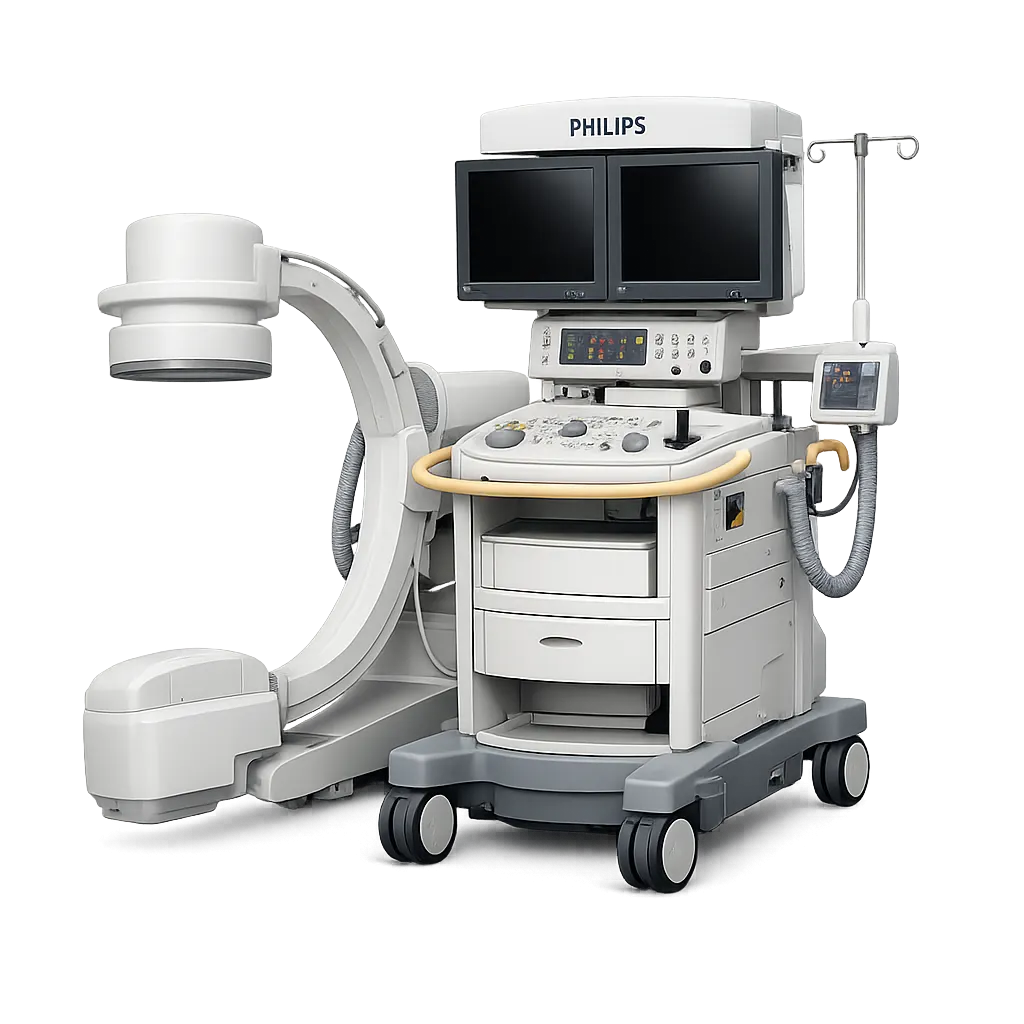
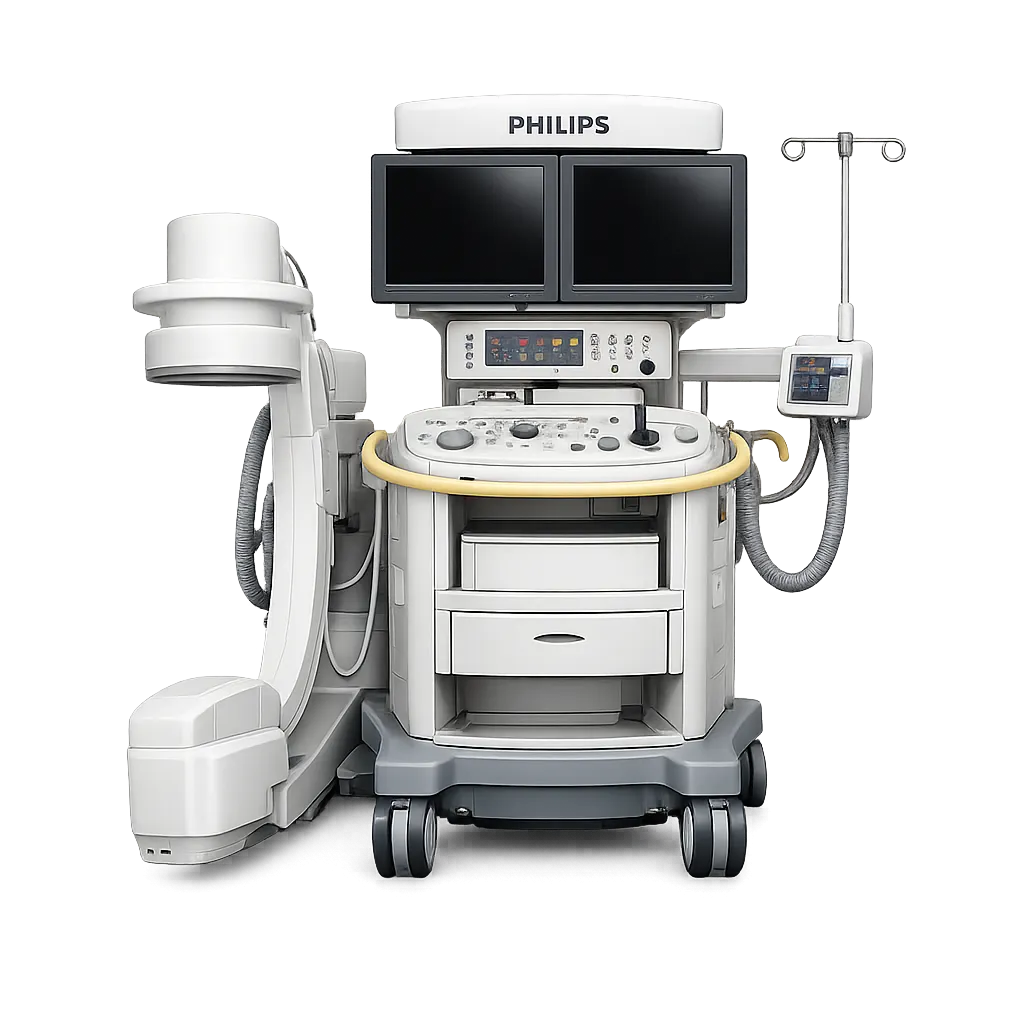
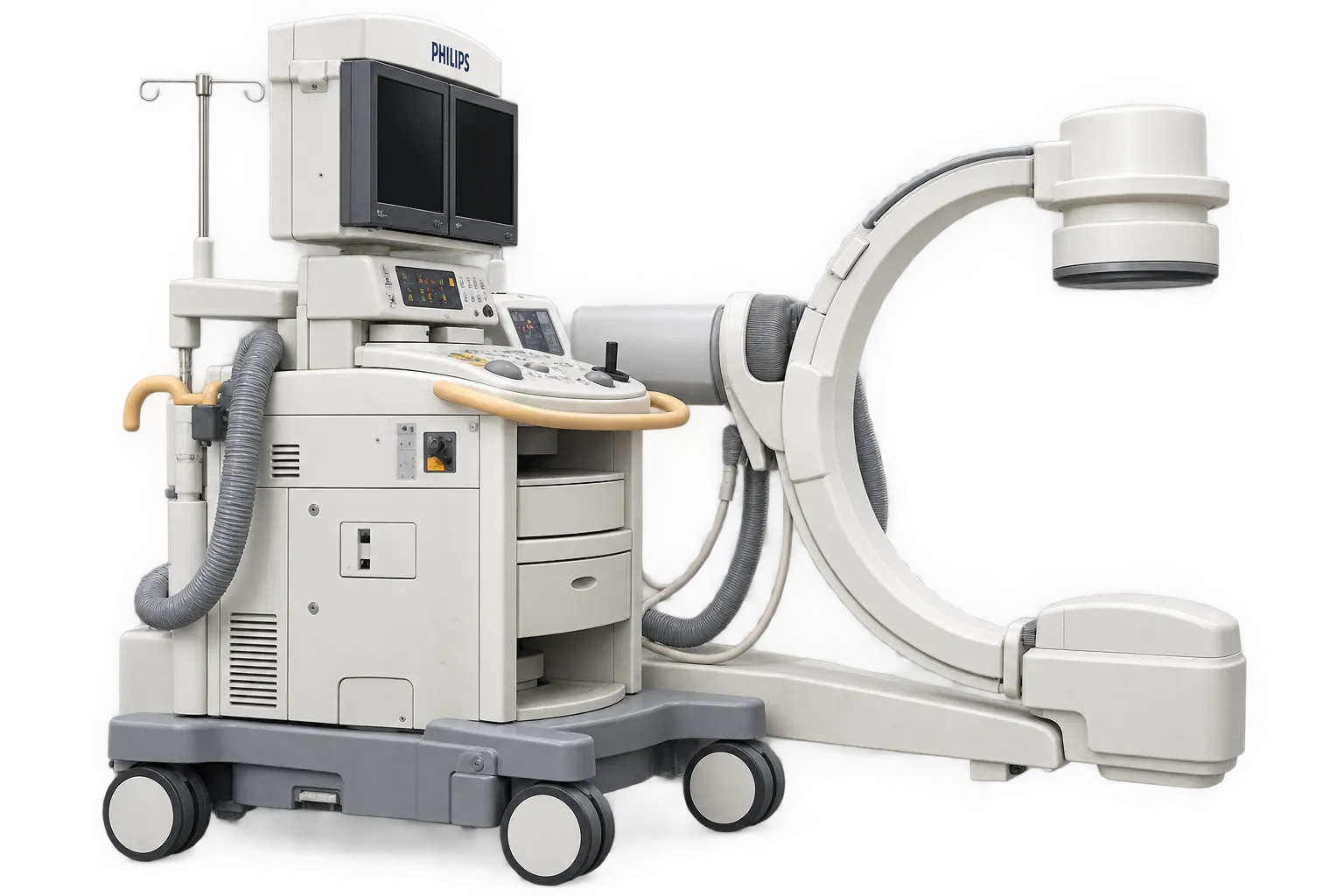
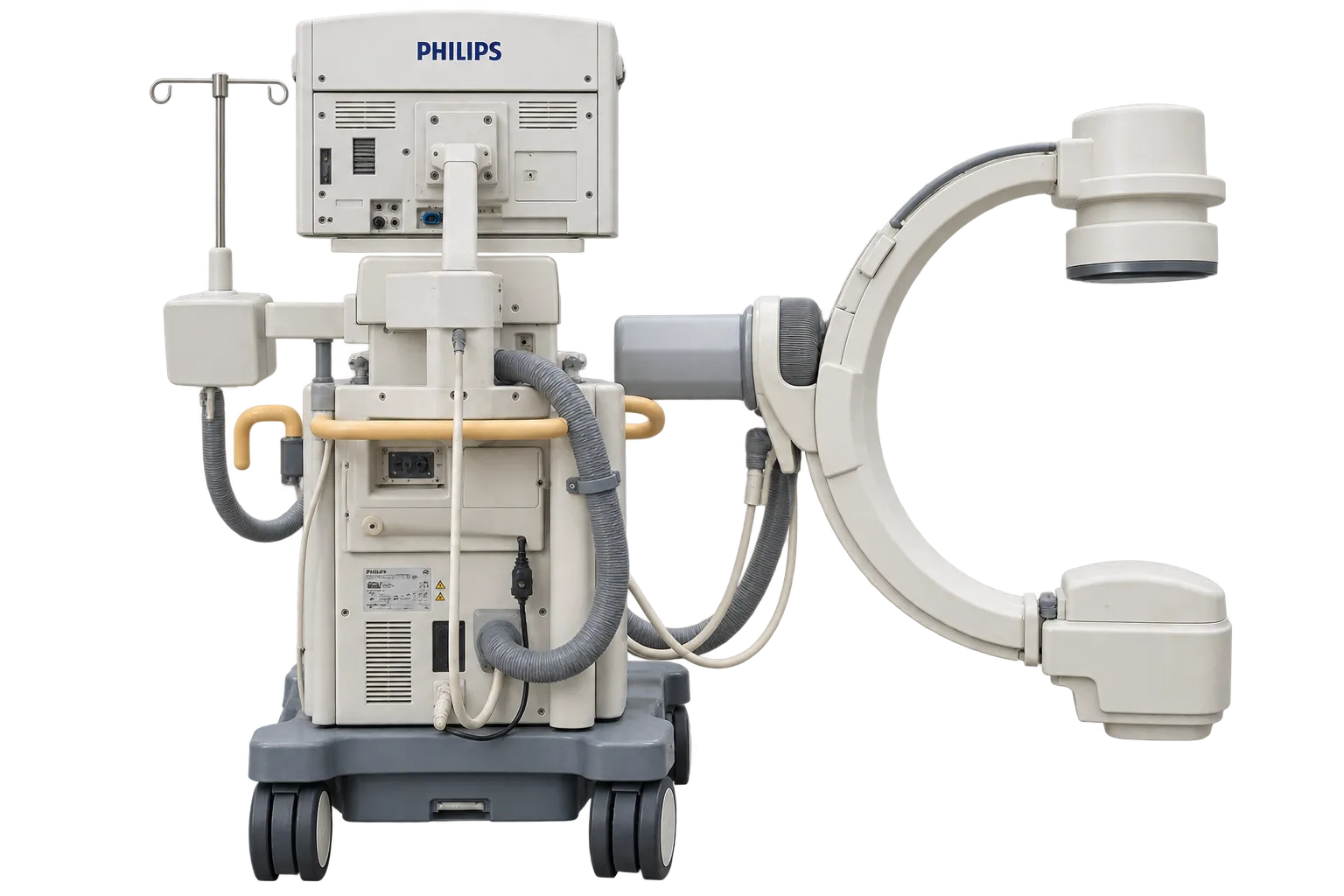
General surgery and orthopaedic work built around discrete exposures suits this design directly. BodySmart framing the field to the anatomy, automatic shutter placement from image content and automatic contrast and brightness together aim at the opening exposure being usable rather than being a positioning attempt. Where a list is made of planned acquisitions rather than continuous screening, spending less per exposure is the more effective route to lower cumulative dose. All clinical decisions, including whether an exposure is justified, remain with the entitled practitioner, and Medigear.uk supplies configuration and condition detail rather than clinical guidance.
Vascular work is served where the modes are fitted, covering subtraction, trace, roadmap and masking with a range of frame rates. An optional carbon dioxide acquisition mode is described, a technique used where iodinated contrast is contraindicated. Which modes are present is confirmed against the specific machine, since several were optional rather than standard.
Services concerned with cumulative dose across a list benefit from the filtration and the fluoroscopy floor together. Additional copper filtration removes photons that add dose without adding image, and low dose fluoroscopy reaching 0.10 mA is a genuinely low floor. Together they reduce what each exposure costs rather than limiting how many are taken, which is the more useful lever on a busy list.
Services running extended continuous fluoroscopy through thick tissue should weigh the fixed anode carefully. Thermal capacity of 50 kHU is a fraction of a rotating anode design, and Medigear.uk raises that before quoting rather than after delivery, because a machine that pauses to cool partway through a case interrupts the procedure and not merely the schedule.