
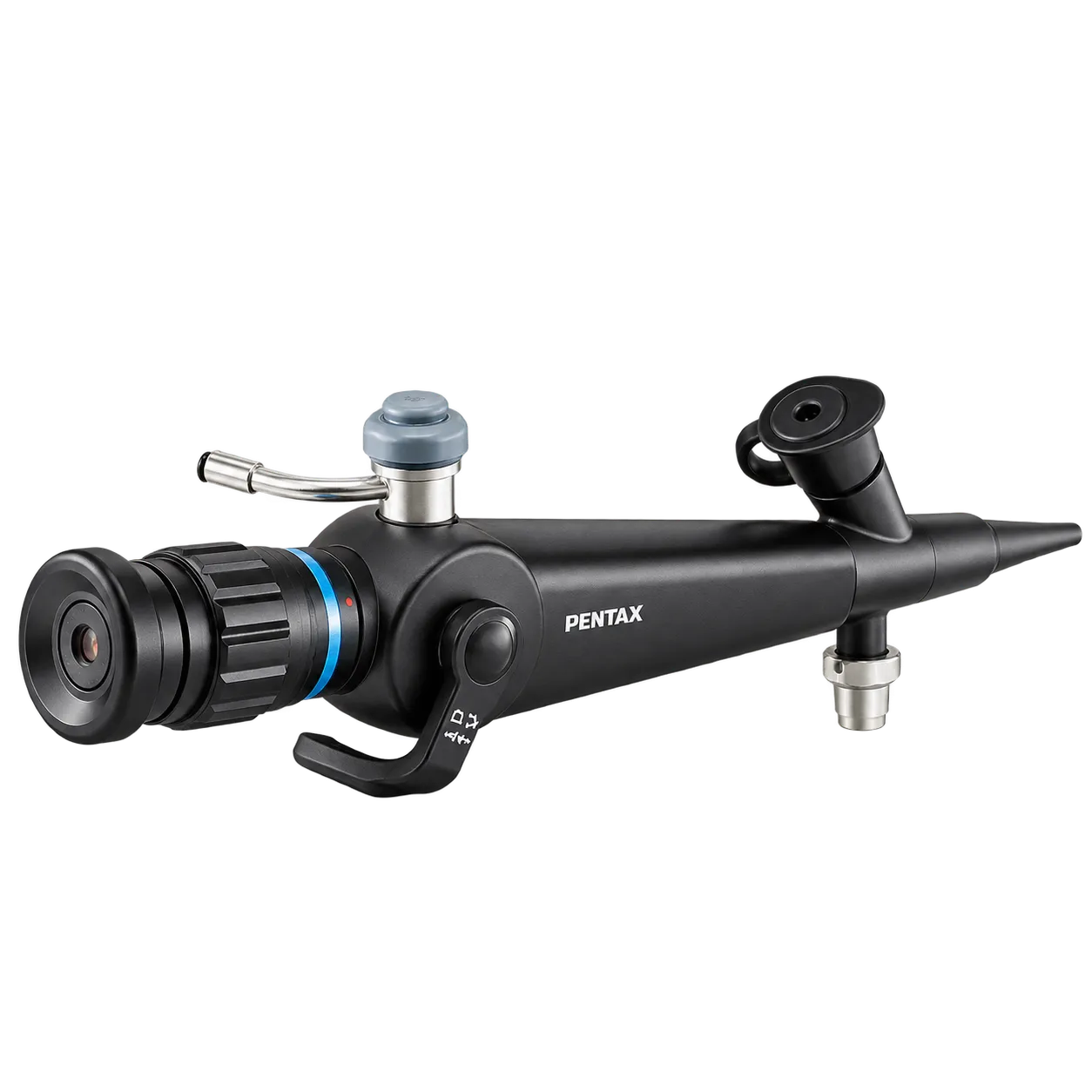
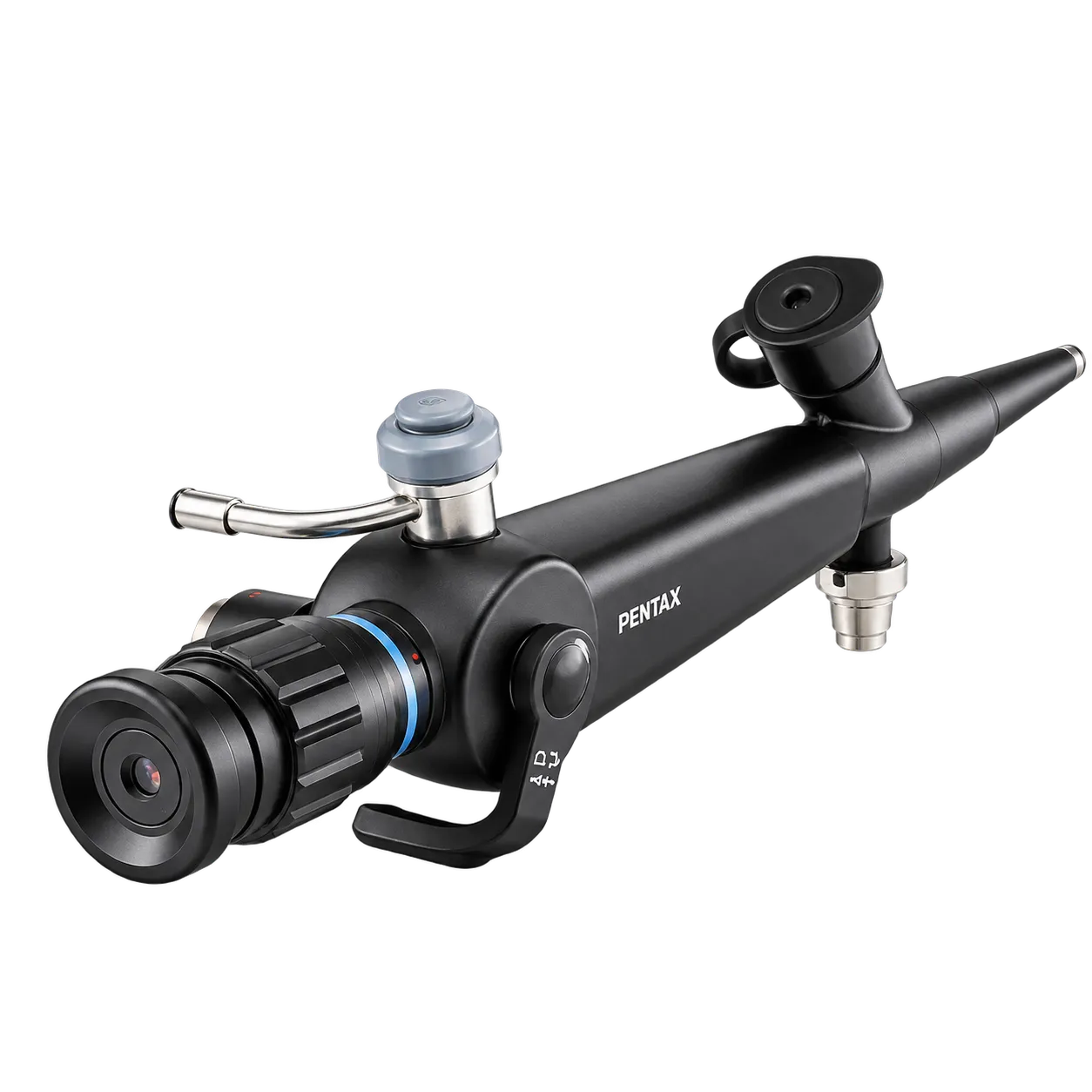
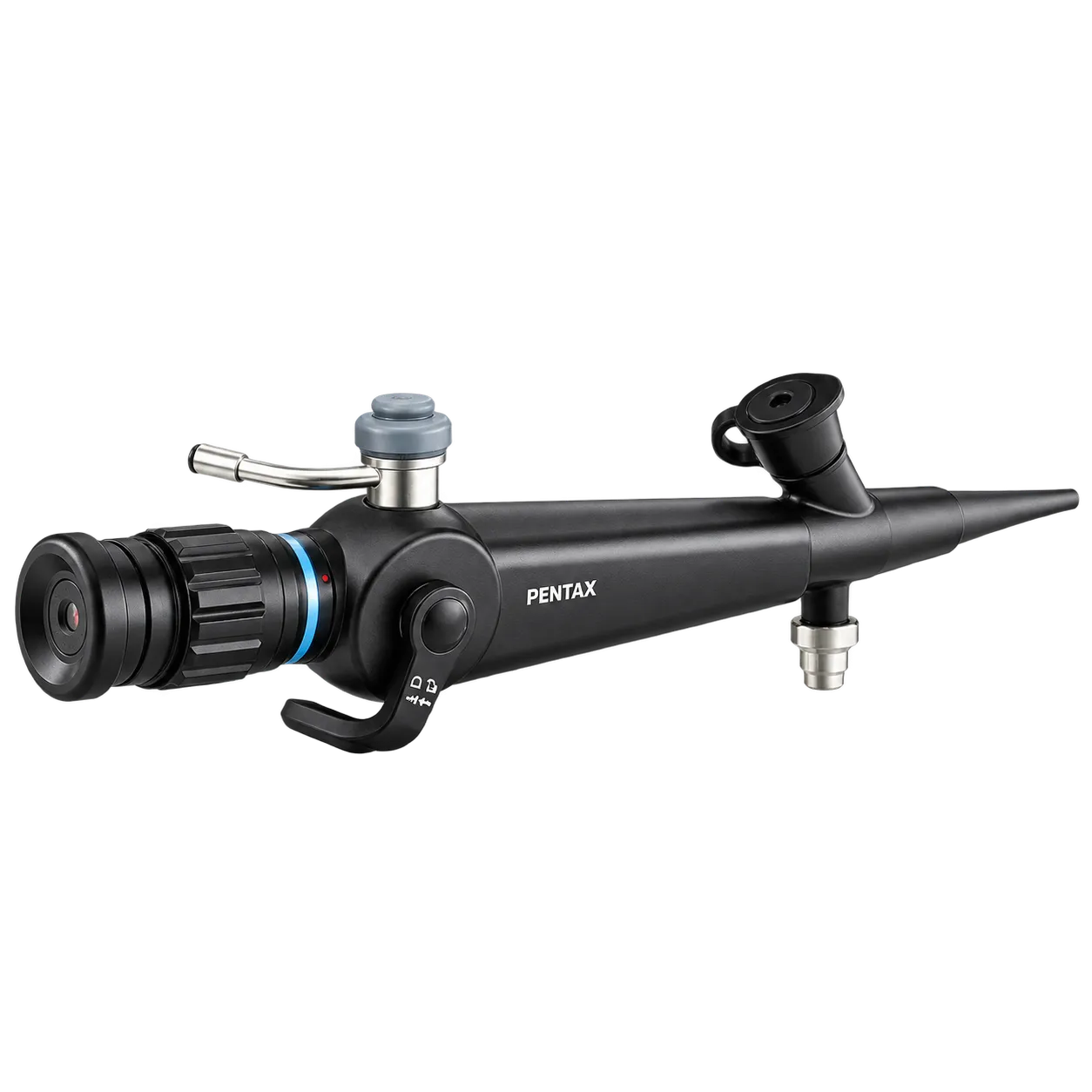
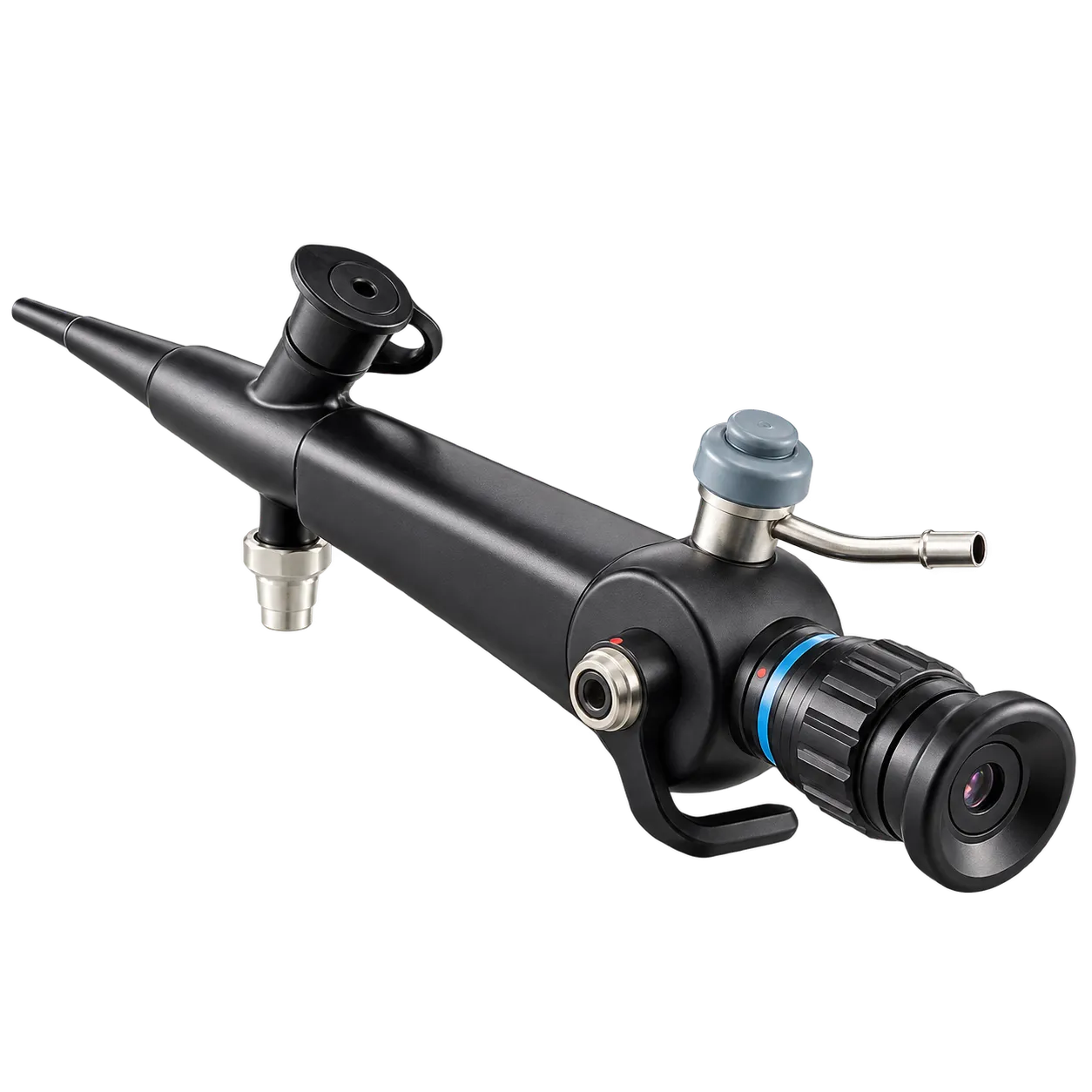
The FCY-15RBS serves urology departments and clinics that perform cystoscopy. Urologists use it for diagnostic, therapeutic, and emergency procedures, and its 4.9 mm tube and 400 mm working length are designed for examination of the urethra and bladder. A unit that performs diagnostic and emergency procedures holds one scope type for both.
Observation comes first. Superfine fibres carry the image to the eyepiece with fine resolution and colour discrimination; the field of view is wide, and the depth of field from 3 to 50 mm covers tissue close to the tip and structures further along. The image travels along the fibre bundle to the eyepiece, so the operator watches the tissue as the tip moves.
Steering follows. The tip bends 220° up and 120° down, so the operator can sweep the urethra and bladder from a single entry point and bring the tip to the area of interest. The 4.9 mm tube carries the fibre bundle and channel together, so one insertion enables observation, irrigation, and sampling.
The working routine runs through the 2.1 mm channel. Irrigation clears debris from the viewing area, and biopsy instruments then pass to the tissue, turning a diagnostic look into a biopsy without changing scopes. The same arrangement serves emergency procedures, where a clear view is needed before any step can proceed.
Light and upkeep complete the picture. The scope works with stationary and portable light sources, so the examination can take place where a source is installed or carried. After each patient, the cystoscope is reprocessed by ethylene oxide sterilisation or high-level disinfection, returning the reusable scope to service for the next list.