
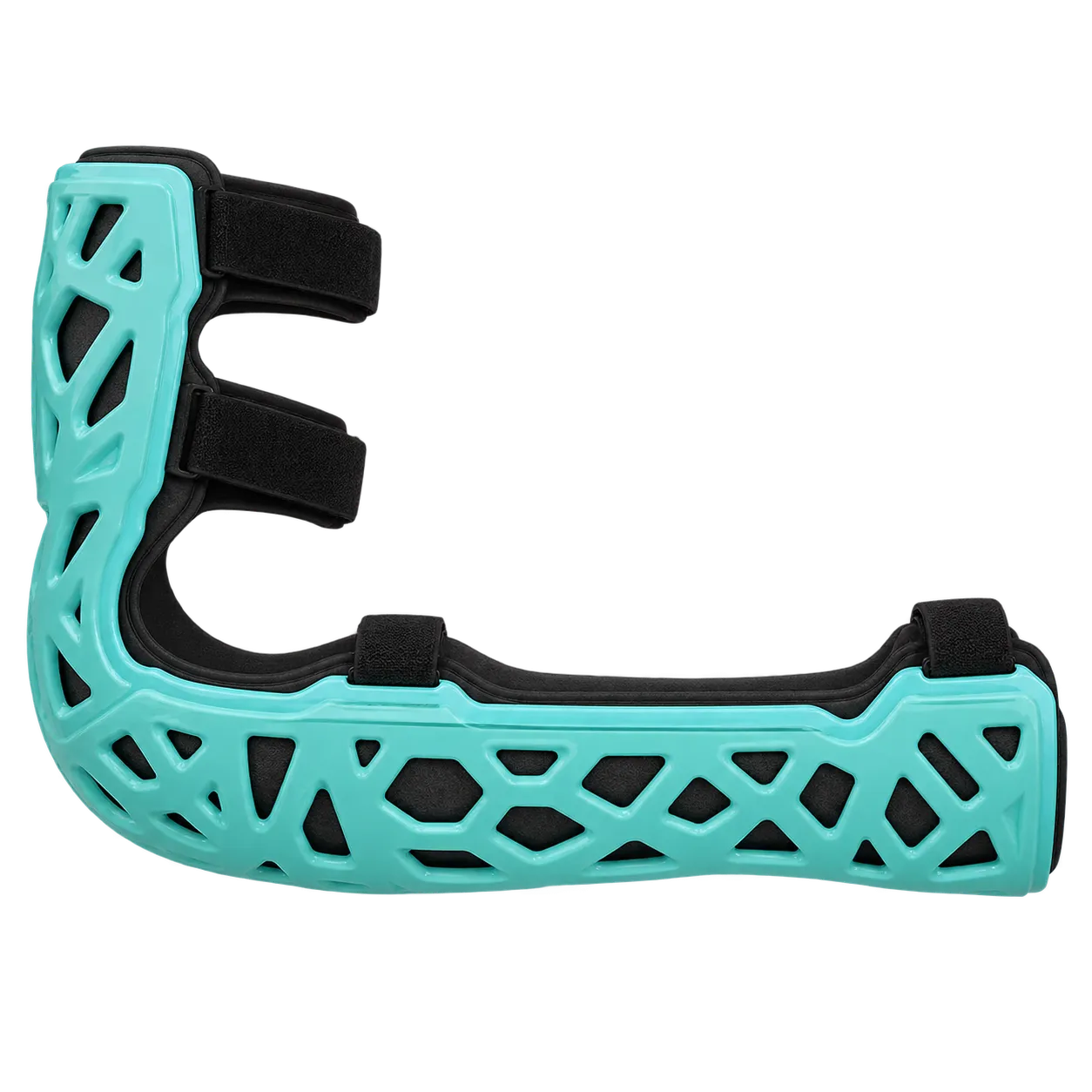
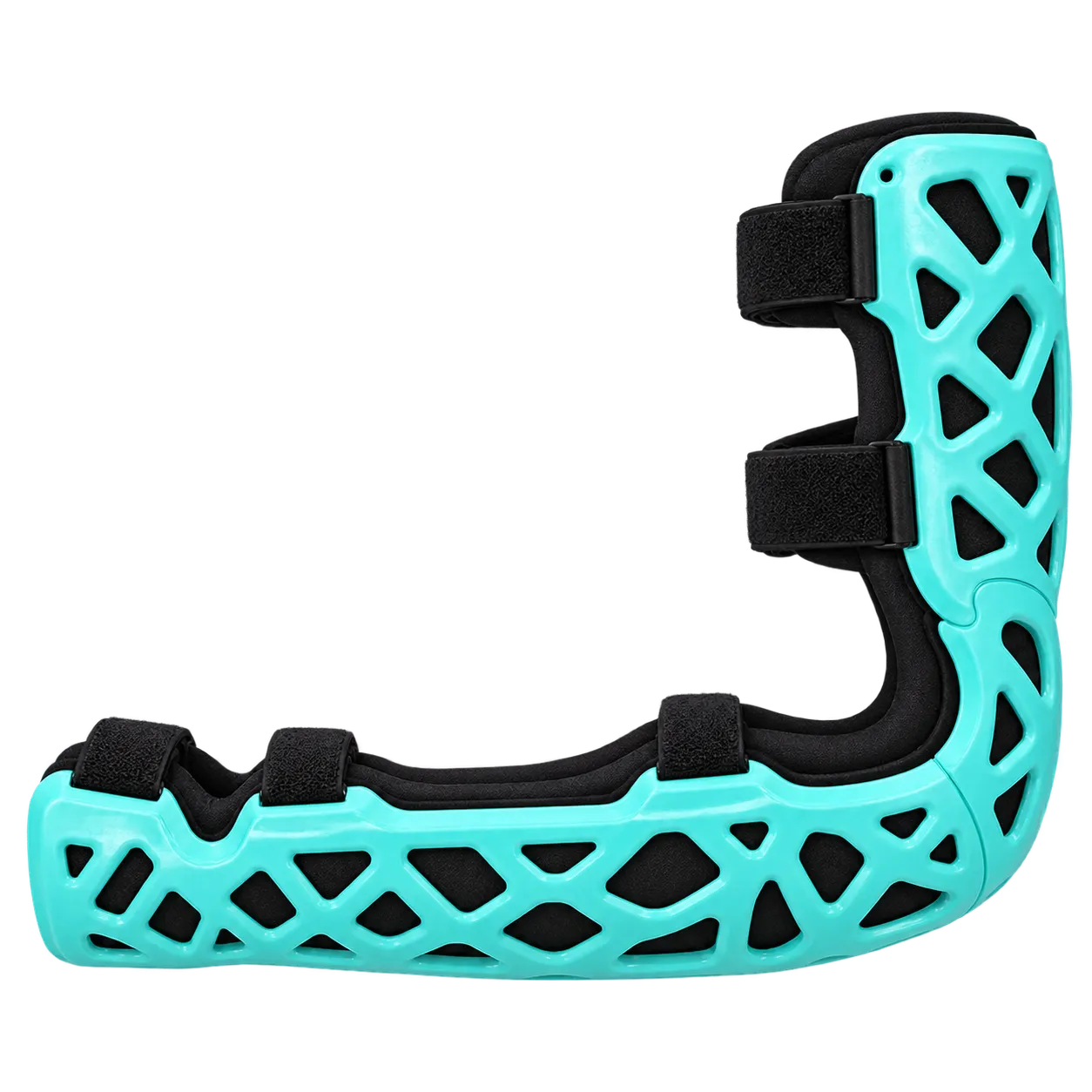
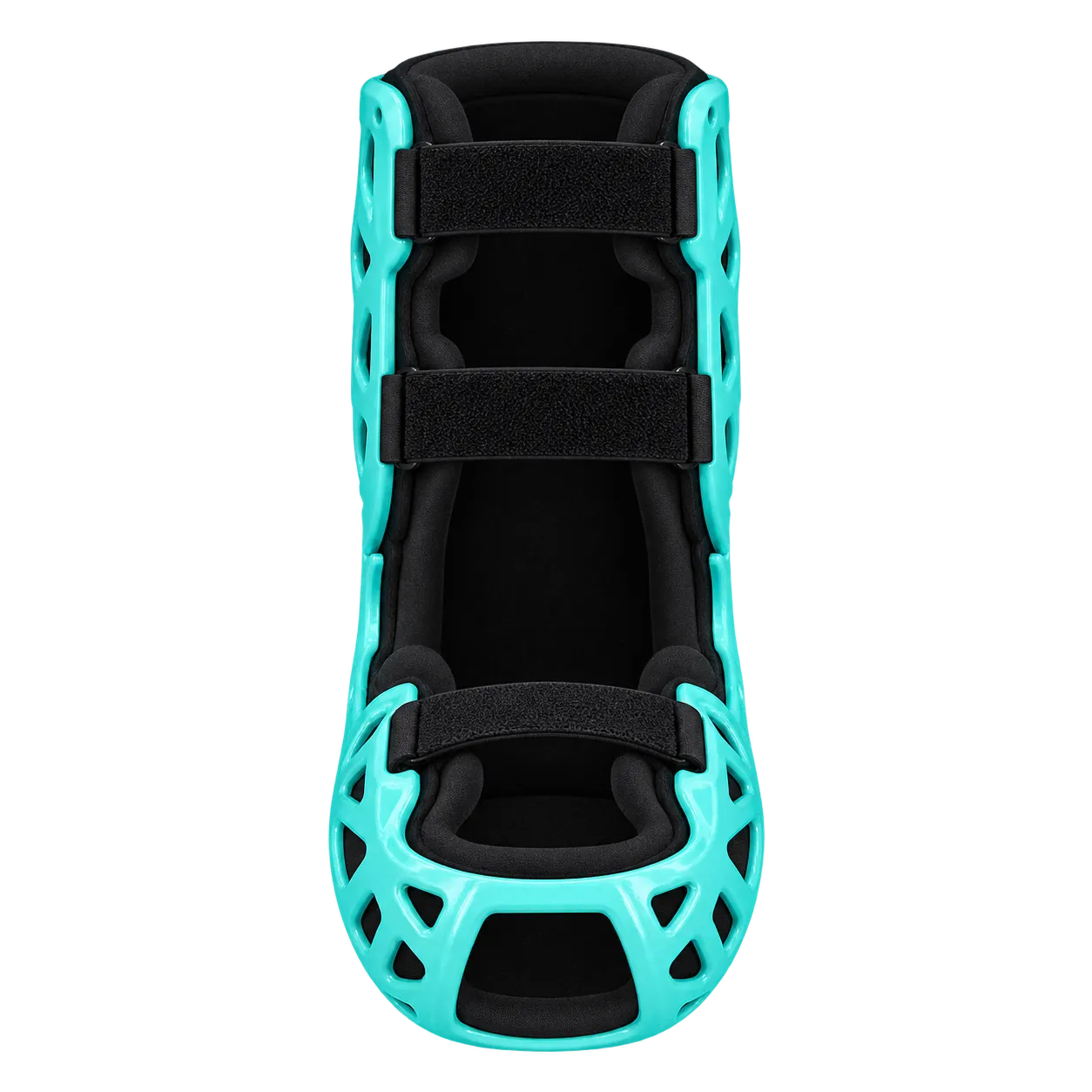
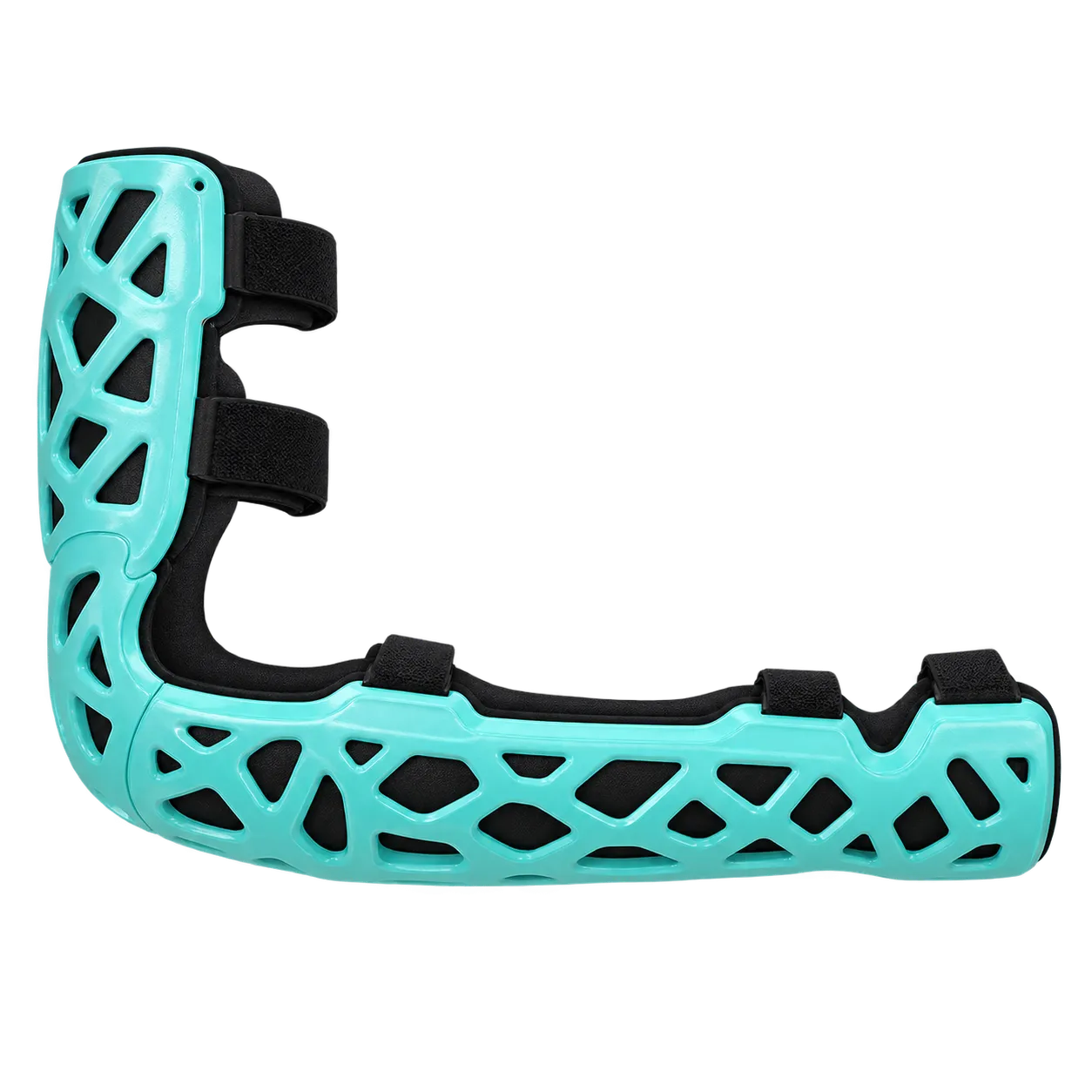
The FlexiSplint Long Arm is a removable posterior support that runs from the upper arm across the elbow to the forearm, for fracture clinics, emergency departments, orthopaedic outpatients, and hand therapy services.
The anatomy under the shell is what distinguishes this geometry. The ulnar nerve passes superficially behind the medial epicondyle with little soft tissue covering it, and cubital tunnel syndrome is the second most common compression neuropathy in the upper limb. Cadaveric measurement found cubital tunnel volume falling by 30 to 41 per cent as the elbow moved from full extension to 135 degrees of flexion, with a sevenfold rise in intraneural pressure and minimum pressures between 30 and 60 degrees. Extension splinting for the condition rests on that finding.
The practical consequence is that elbow flexion angle is a specification worth obtaining in degrees, and that ulnar symptoms belong in the patient instructions and in what gets checked at review. Paraesthesia in the little and ring fingers, clumsiness, and grip weakness are specific enough for staff to recognise and for patients to report.
The open lattice helps, since the material crossing the medial epicondyle is perforated rather than continuous, though strap positioning matters as much as the shell does. Stiffness is the other consideration: the elbow is among the joints least forgiving of immobilisation, and loss of terminal extension is the common residual deficit, which supports a device that comes off at review so the joint can be moved through range.
The conformity documentation and instructions for use are issued by the manufacturer and provided by the seller.