
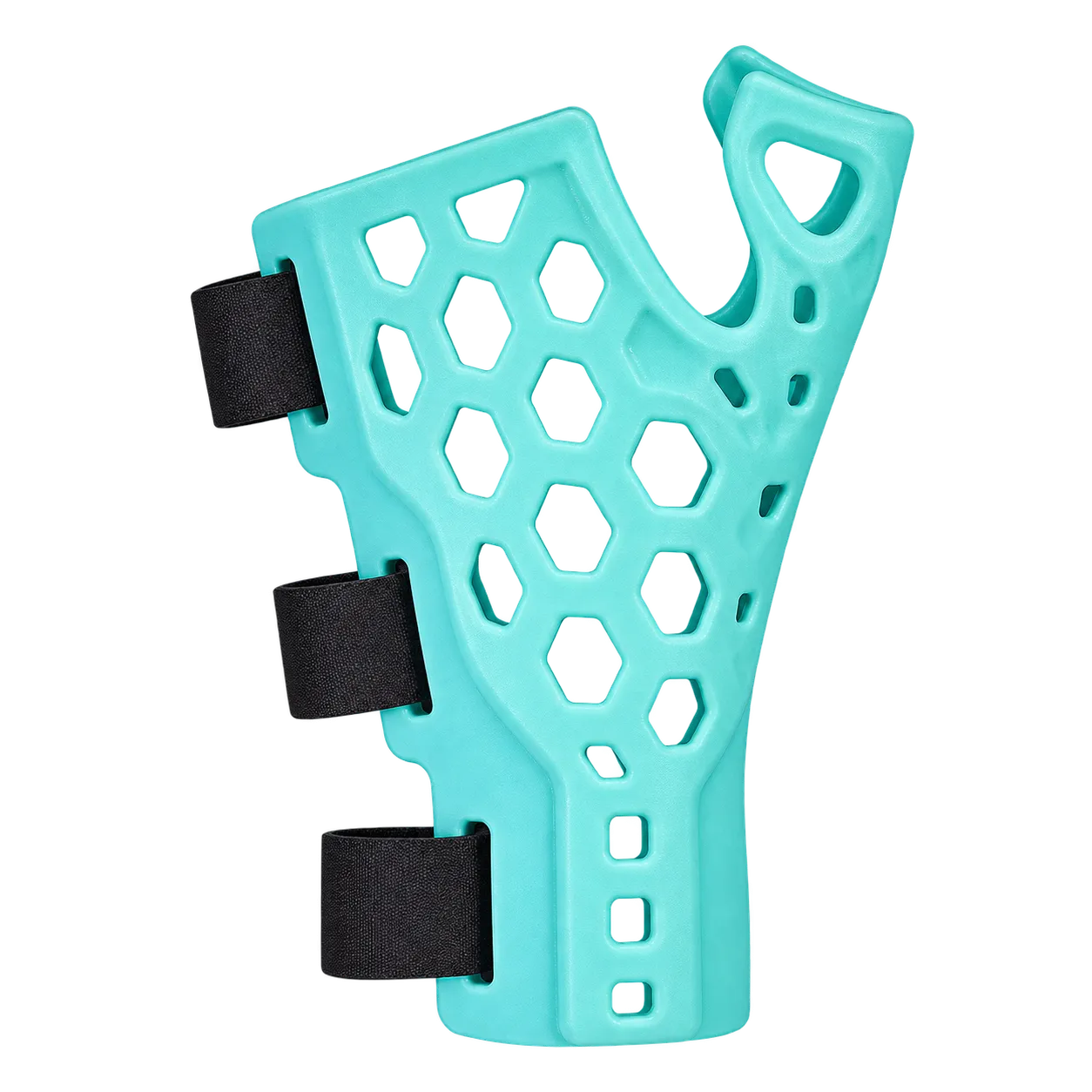
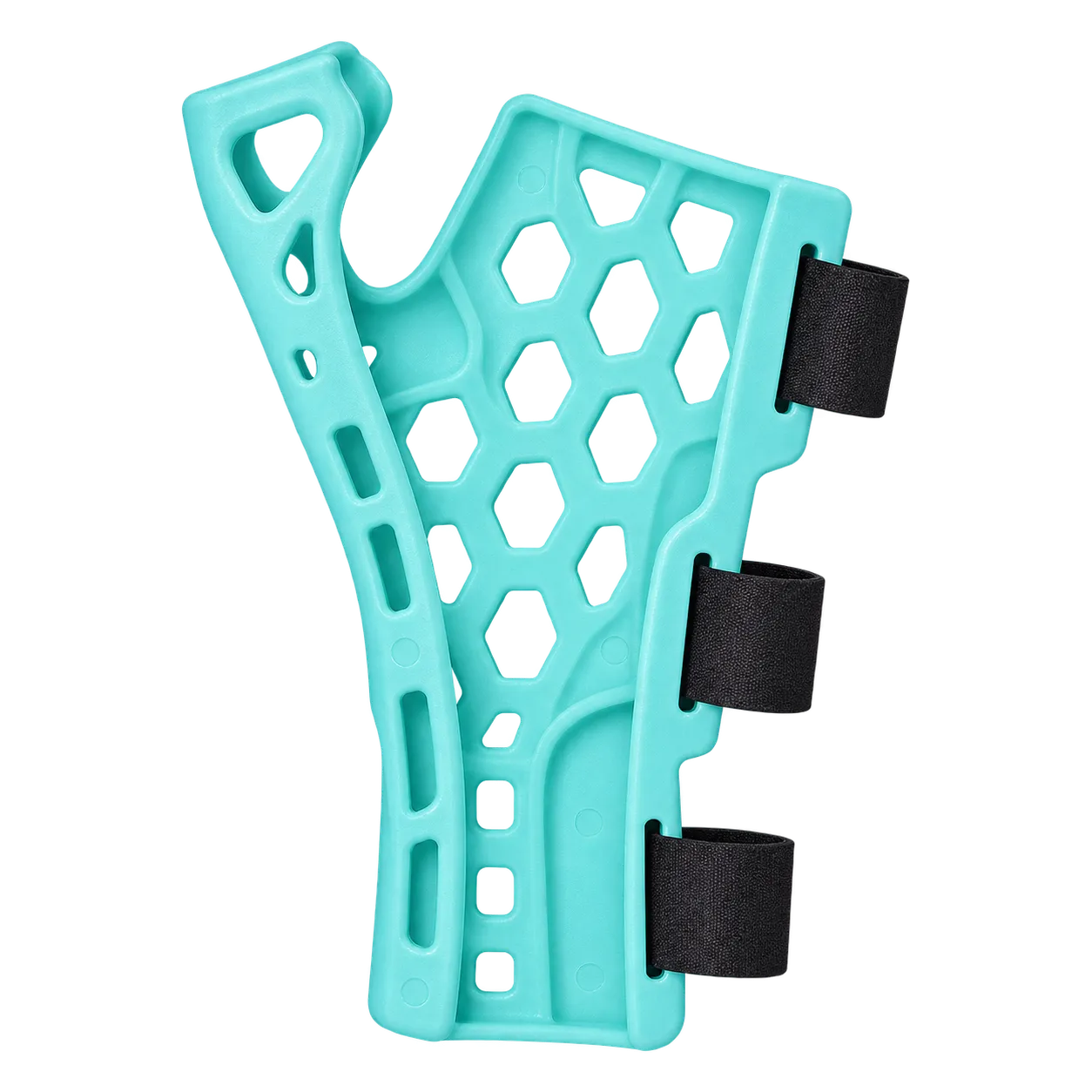
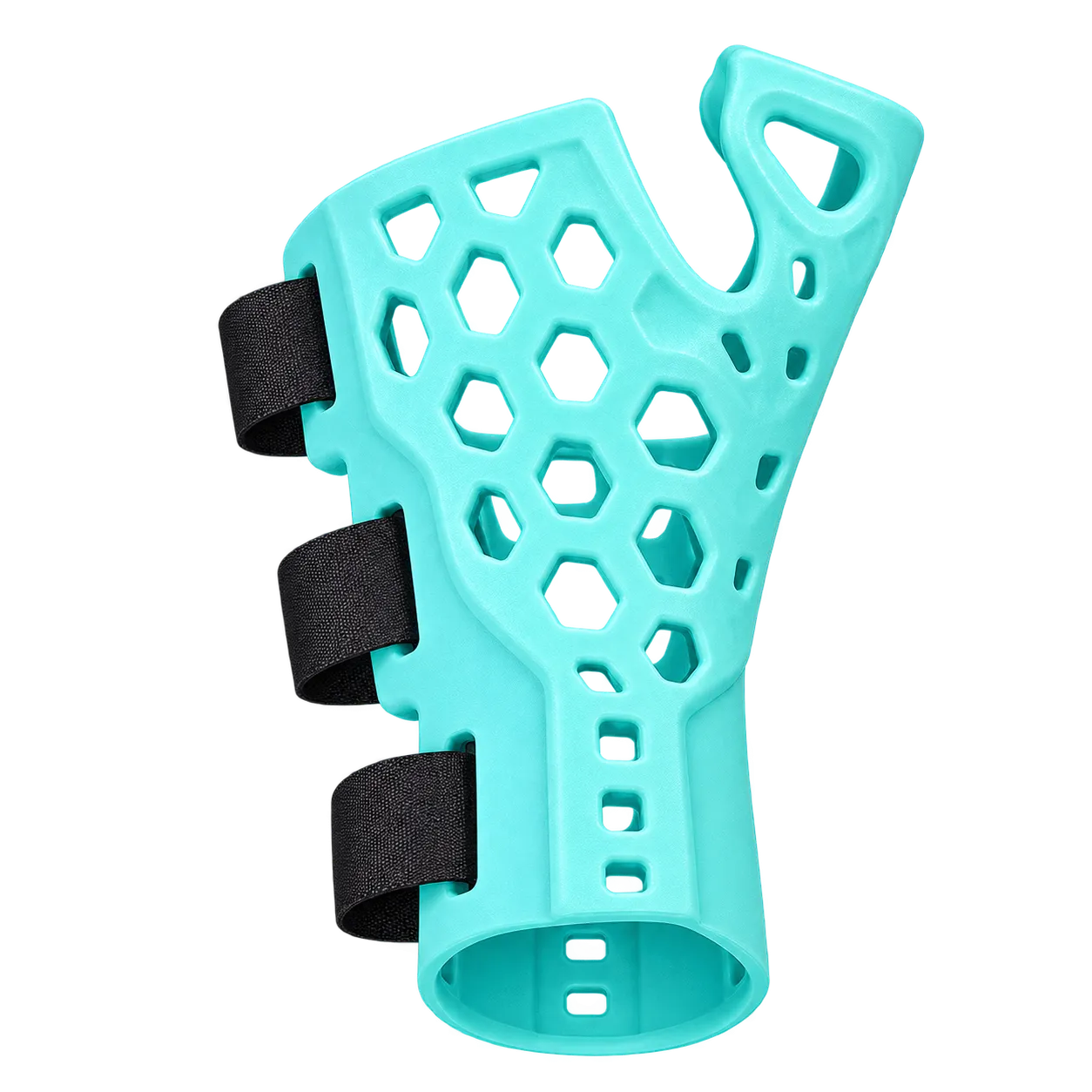
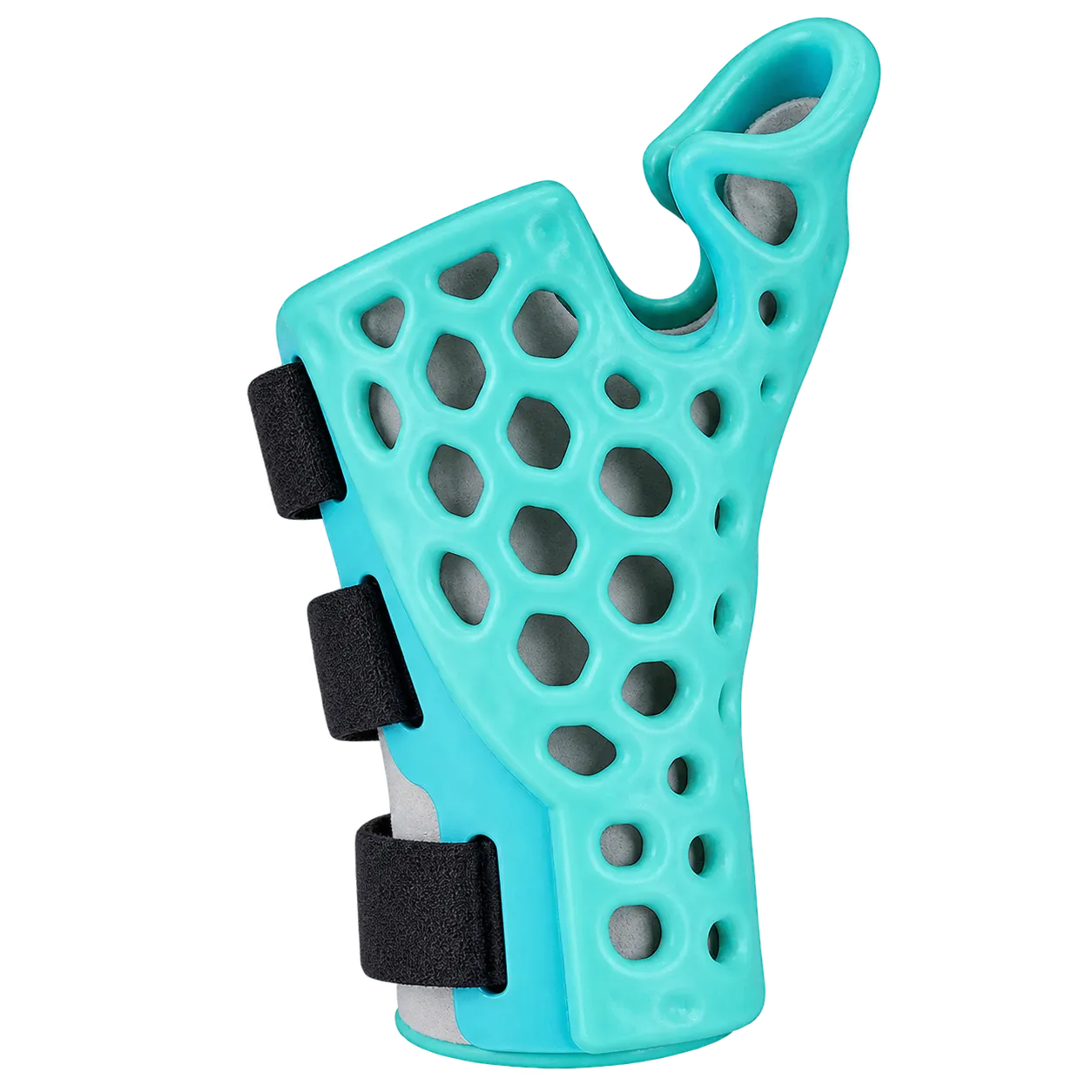
The FlexiOH Thumb Spica holds the thumb column and wrist while leaving the fingers free, for hand therapy services, fracture clinics, plaster rooms and emergency departments.
The clearest indications are when the thumb itself is the problem: de Quervain's tenosynovitis, first metacarpal fractures, ulnar collateral ligament injury, thumb carpometacarpal osteoarthritis, and post-operative thumb immobilisation. In each of those, the thumb column is what needs holding, and the device does precisely that.
Scaphoid injury is the larger volume use and the one that deserves thought. Standard practice for a clinically suspected scaphoid fracture with normal initial radiographs is immobilisation for around two weeks pending re-imaging, and published work puts the proportion who turn out to have an occult fracture at fewer than one in ten. So the majority of devices applied on that pathway are worn by people who do not have the injury. A strapped device that opens for imaging, comes off cleanly and can be washed suits a period defined by not yet knowin;, in a wa,y a device requiring a saw does not.
Where the fracture is confirmed, the evidence on including the thumb is worth knowing. A multicentre randomised trial found union at ten weeks significantly better where the thumb was left free, concluding that thumb immobilisation appears unnecessary for non-displaced scaphoid waist fractures, and published commentary notes UK preference already runs that way.
Free fingers preserve grip throughout, which affects work absence and daily independence across several weeks. The conformity documentation, instructions for use and stated indications are issued by the manufacturer and provided by the seller.