
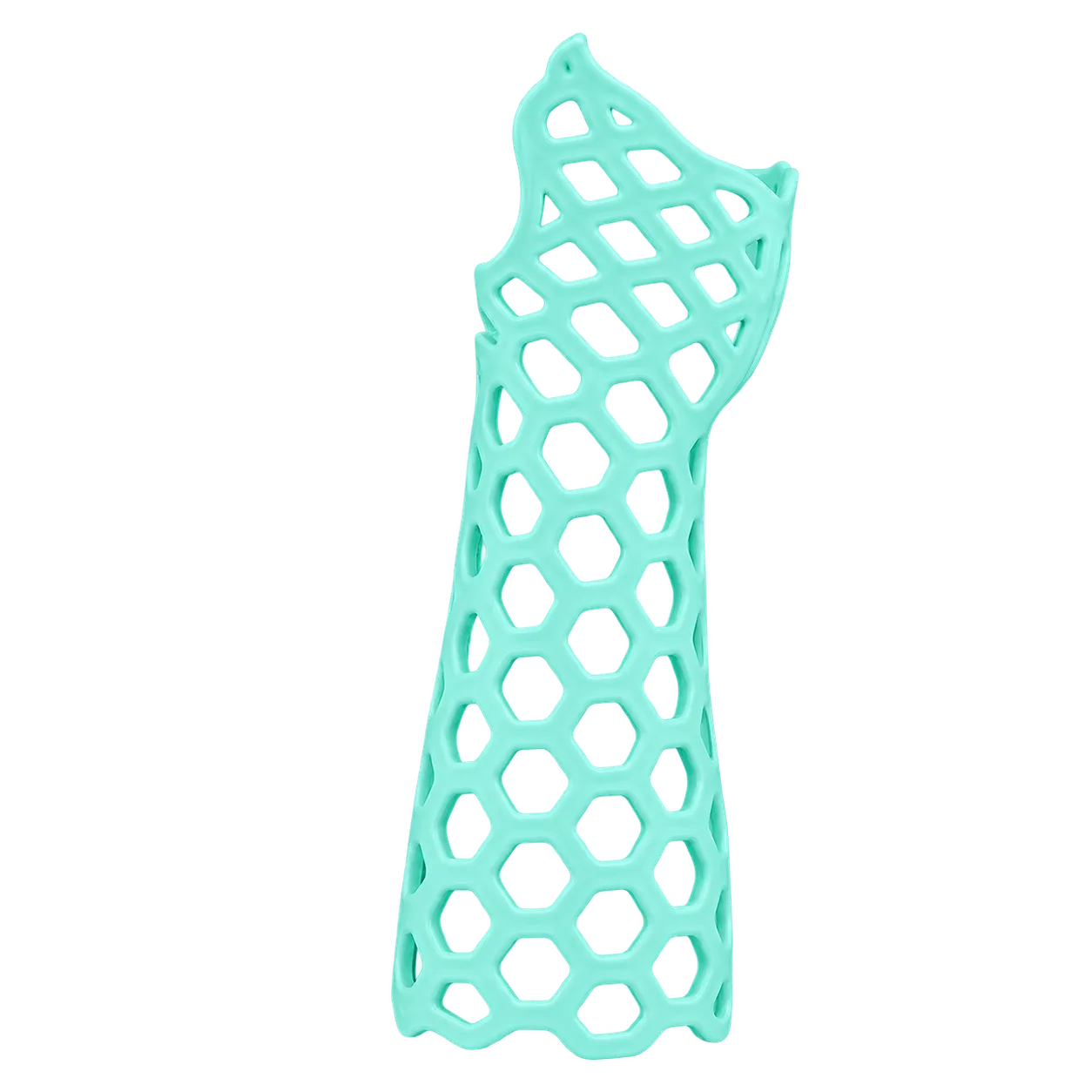
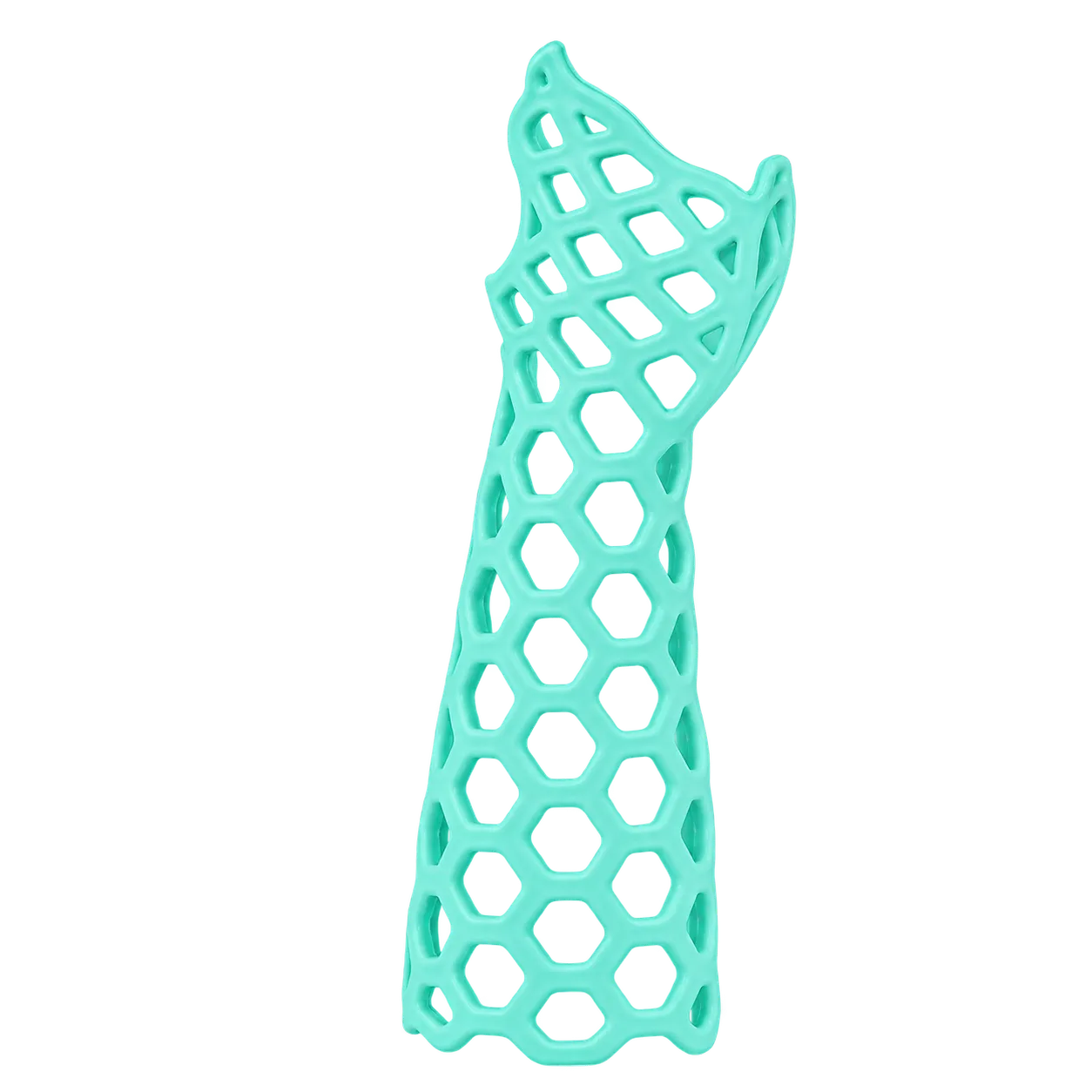
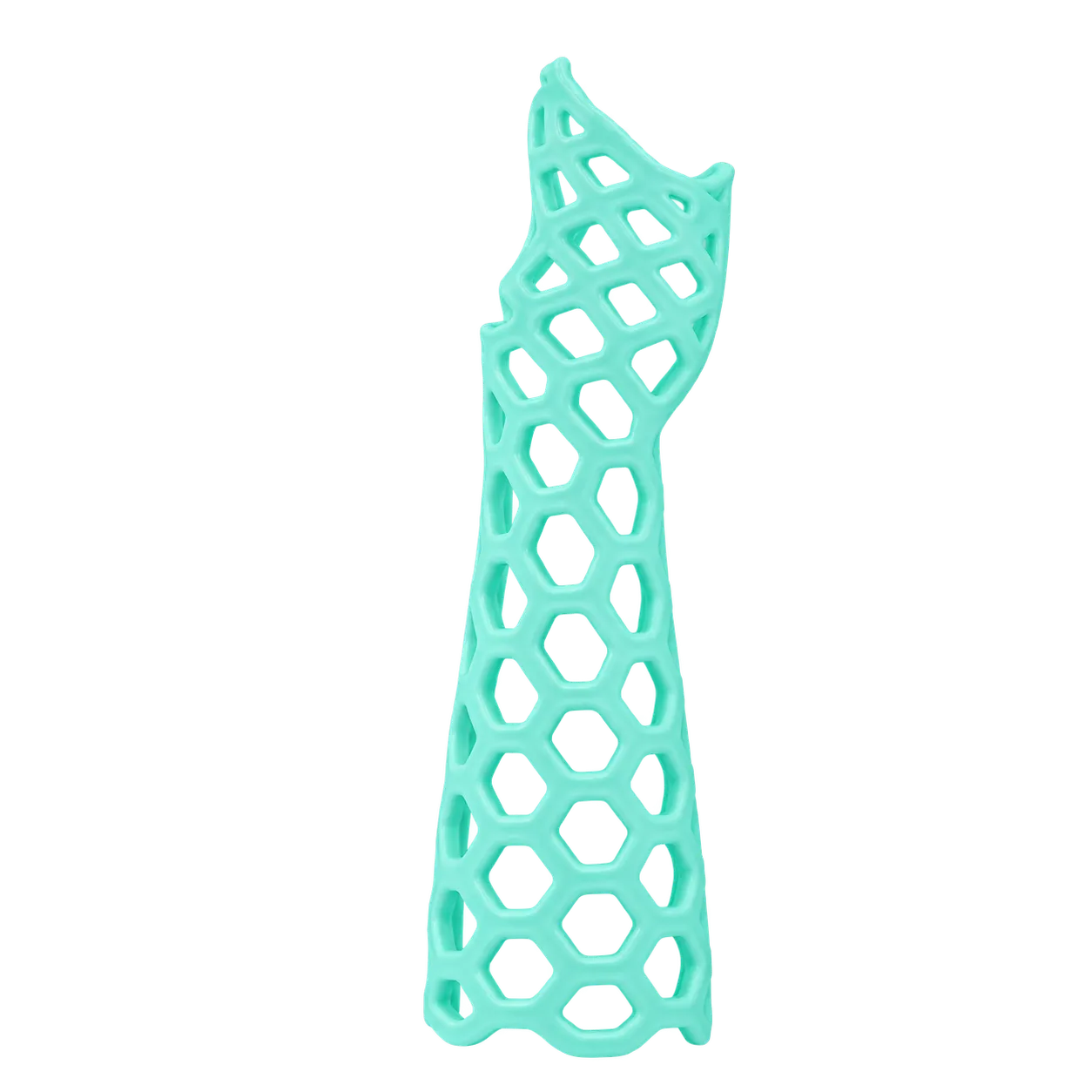
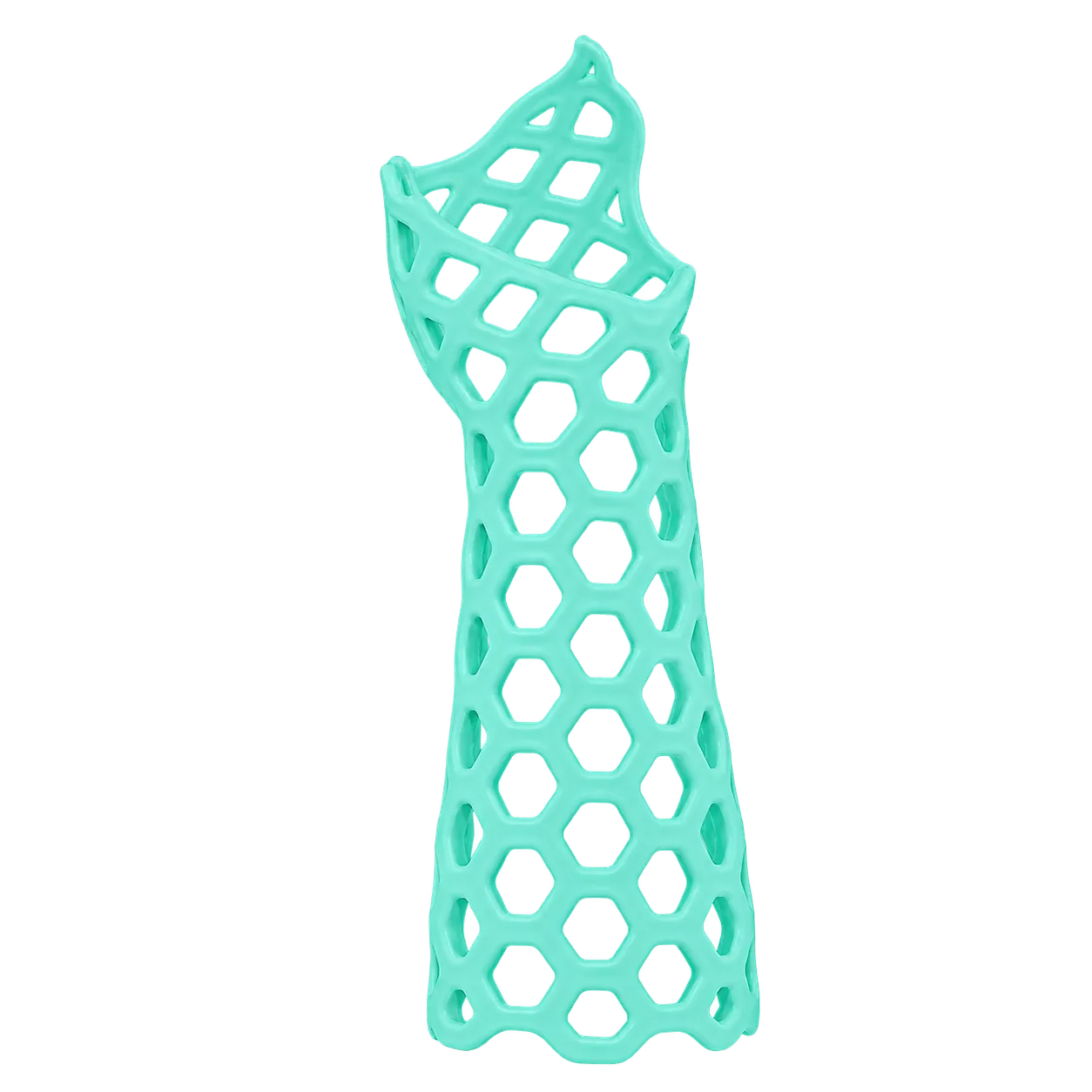
The FlexiOH Short Arm is a light-cured polymer immobiliser for the forearm and wrist, intended for uncomplicated, non-displaced injuries in fracture clinics, plaster rooms, emergency departments and hand therapy services.
The open lattice is what distinguishes it in daily use. Leaving a substantial proportion of skin exposed means the limb can be washed and air-dried during the immobilisation period, which addresses the ordinary miseries of several weeks in a rigid device: itching that cannot be reached, odour, moisture trapped against skin, and the patient workarounds that follow. For patients with eczema or sensitive skin, exposure and ventilation are clinically useful, not just more comfortable.
Twelve size codes give that choice real reach, covering everything from slight to heavy forearms in one product line. In return, it asks for measurement, because the device is chosen rather than moulded, which puts the clinical weight on getting the code right. Too tight brings neurovascular compromise, compartment syndrome and pressure injury into play. Too loose allows movement at the fracture, friction against skin and the possibility of malalignment or slow union. An acute injury swells and then settles, so the fit that is correct at presentation may not be correct at review.
That makes documented neurovascular assessment central rather than routine. British Orthopaedic Association Standards for Trauma require documenting nerve and vascular status after cast fitting, and UK audit work repeatedly finds that documentation falls short of the standard in practice.
The conformity documentation, instructions for use and stated indications that procurement and clinical governance require are issued by the manufacturer and provided by the seller.