


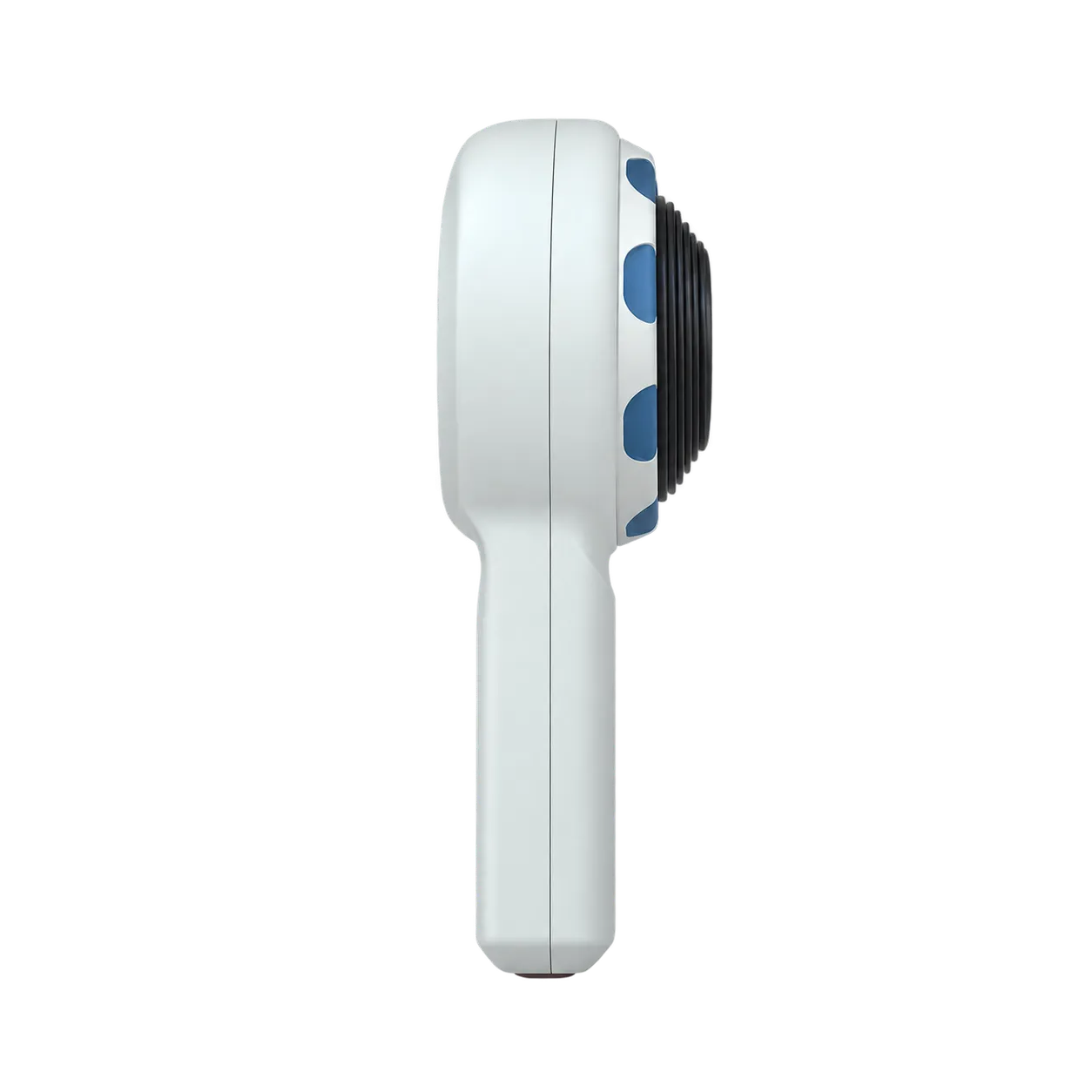

Optometry and ophthalmology practices, contact lens clinics, and corneal services use the Easygraph to map the eye's front surface under the slit lamp. Optometrists, ophthalmologists, and trained technicians mount the head on a slit lamp, record a topography in a few quick steps, and return the lamp to normal use in the same appointment. The camera image and the colour map overview stay on screen for the examiner.
For contact lens fitting, the software recommends lenses from an expandable database and simulates fluorescein images for different lens types and geometries. The refractive comparison module follows Ortho-K lens wear, and the comparison displays show refractive changes after surgery. OxiMap adds oxygen transmissibility for soft lenses by material and thickness, supporting decisions about comfortable long-term wear.
For corneal assessment, the sagittal and tangential maps, the refractive power map, the elevation maps, and the overview display describe corneal shape. Keratoconus screening applies eight indices, flags abnormal values in yellow or red and supports follow-up of progression. Zernike analysis describes corneal irregularities in 2D and 3D and locates the apex.
In a small room, the compact head and its holder keep the slit lamp free for other work. Patient data management links Oculus devices on a local network. It connects to external EMR systems, so each patient record stays together, and a floating license key assigns optional functions to individual devices across the network. The headset weighs 0.73 kg, measures 102 × 119 × 216 mm, and operates at a 40 mm distance.