
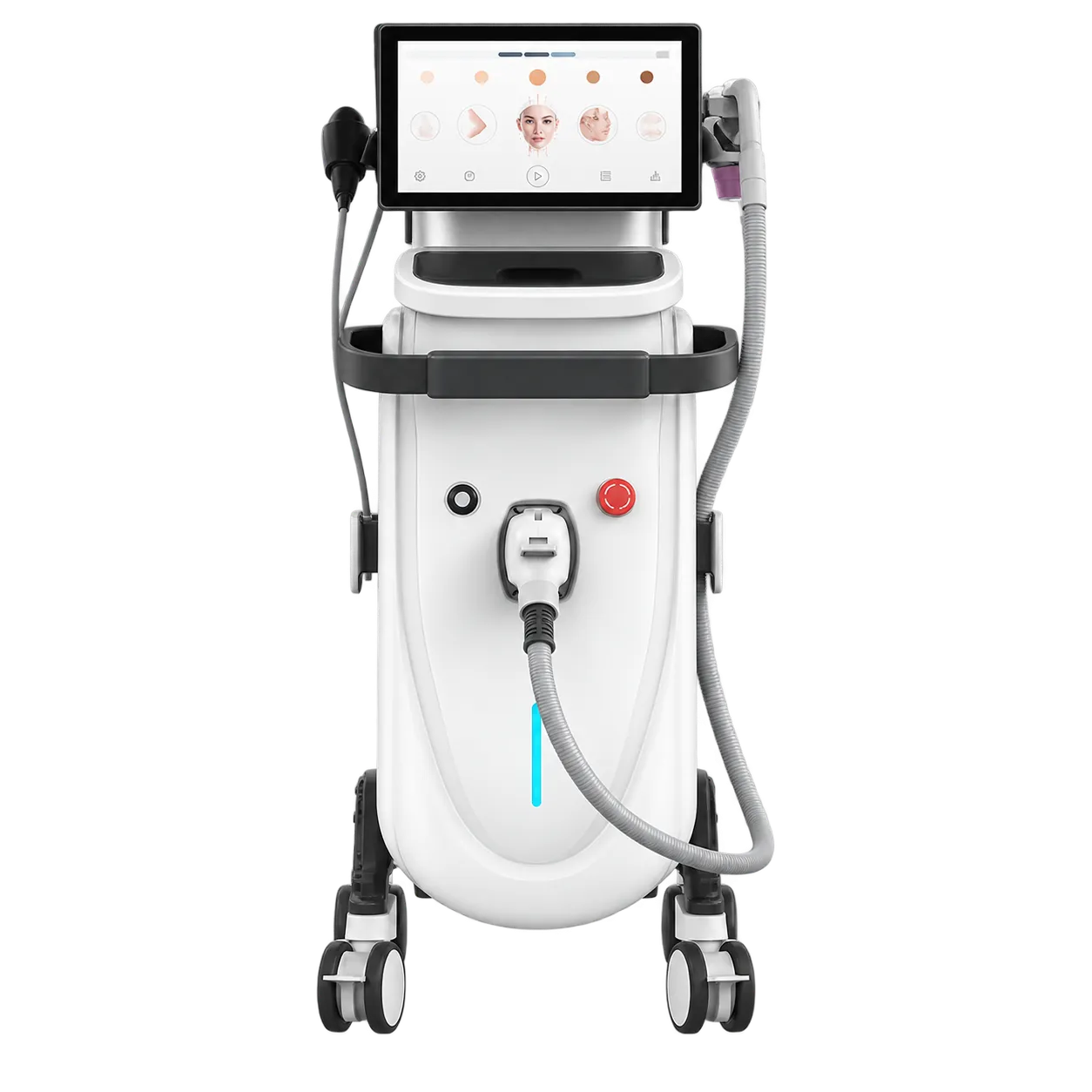
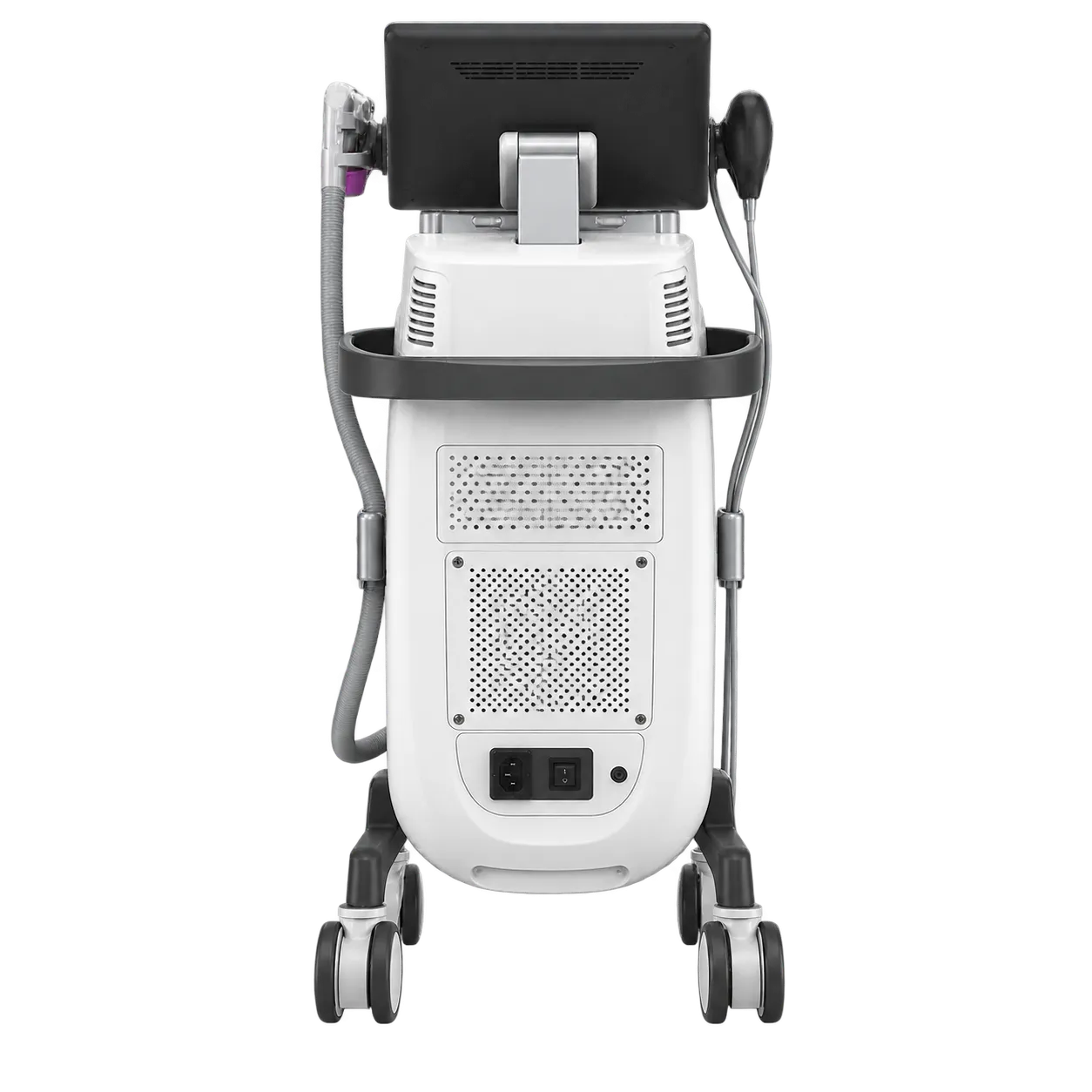
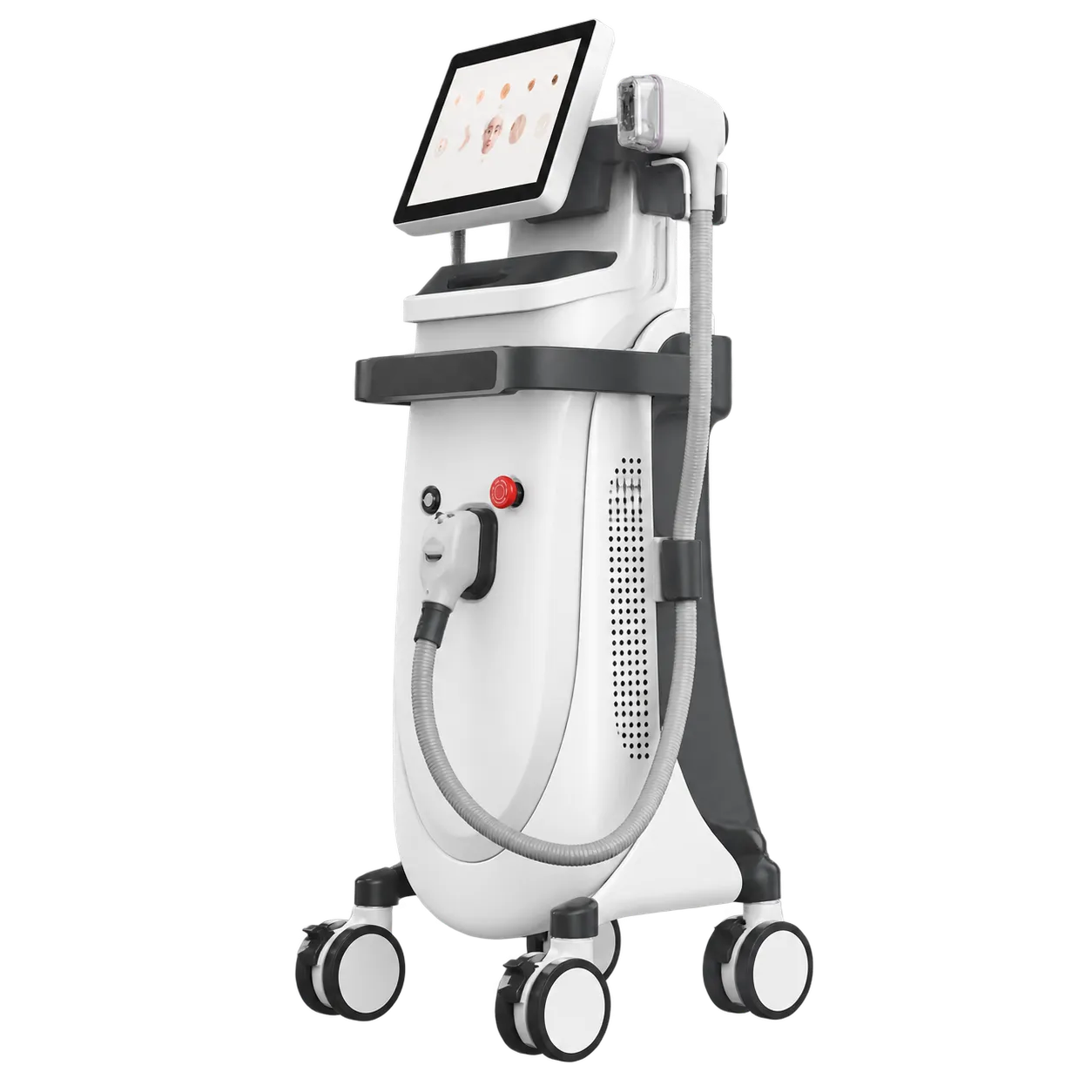
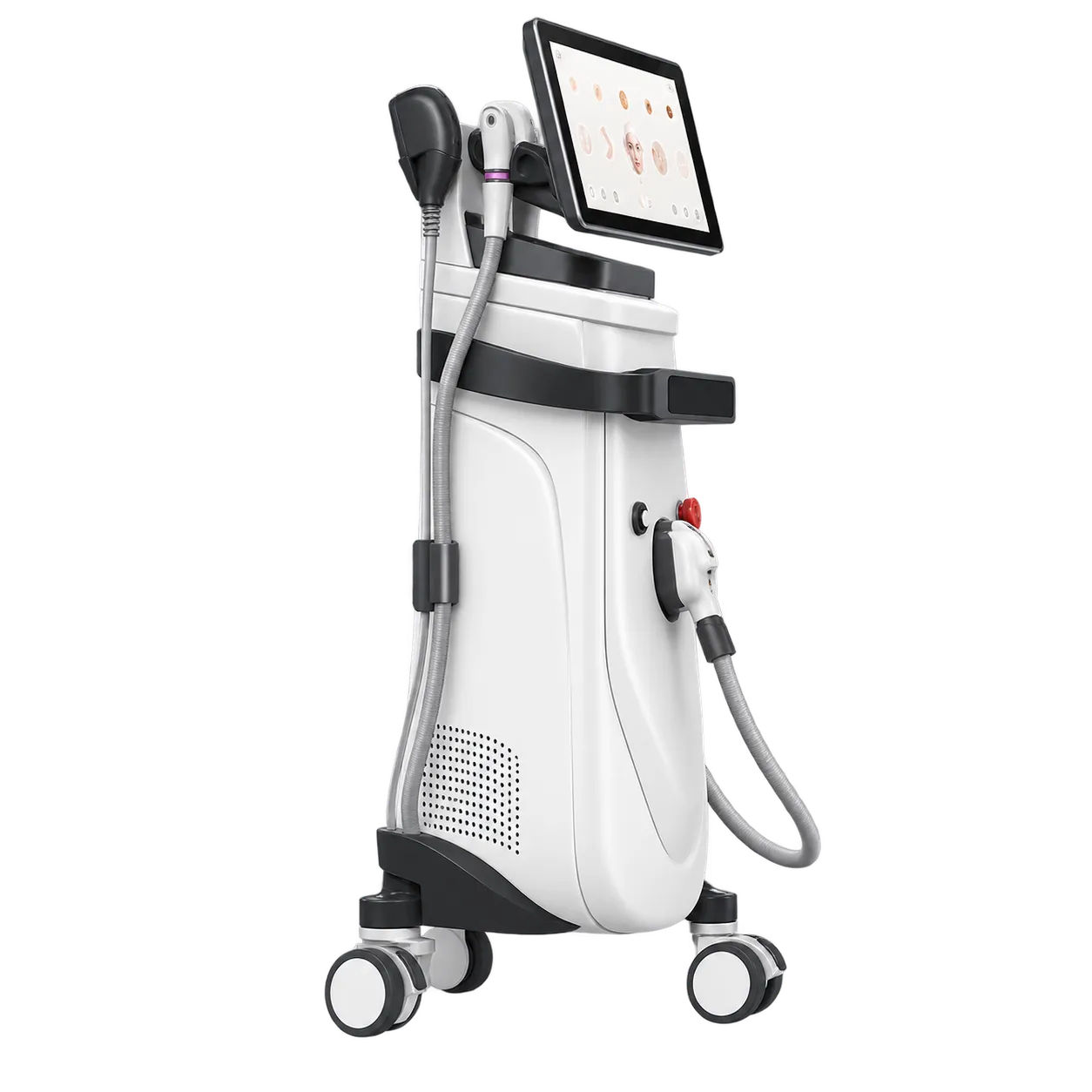
Aesthetic clinics, dermatology practices with a cosmetic list and larger salons are the buyers for a machine of this size. The work is unwanted hair on the legs, underarms, bikini line, back, chest, and face, delivered as a course of appointments spaced several weeks apart to catch follicles in their growth phase, since only actively growing hair has enough pigment to absorb the beam.
Skin tone sets the approach before anything else. A machine fitted with 1064 nm can treat the darkest skin types at lower absorption in the epidermis, while 755 nm suits lighter skin with dark hair. Fine, grey and red hair remains outside what any of these wavelengths can do. Published cohorts show reduction of roughly seven tenths at six months, with darker skin needing more visits for the same result, so the course is planned rather than promised.
Consent and records carry as much weight as the settings. Each client needs a patch test at the intended parameters, a written consent that names burns, pigment change and paradoxical growth, and a baseline photograph. Settings, spot size, wavelength and pulse width belong in the notes for every area treated, because the next appointment is set from them.
The room and the paperwork come with the purchase. A Class 4 machine needs a Laser Protection Adviser, written local rules, a controlled area and eye protection for everyone present, and the clinic must check what its own council or national regulator requires before opening the diary. The manufacturer issues conformity documents, and the seller is the route to them.