
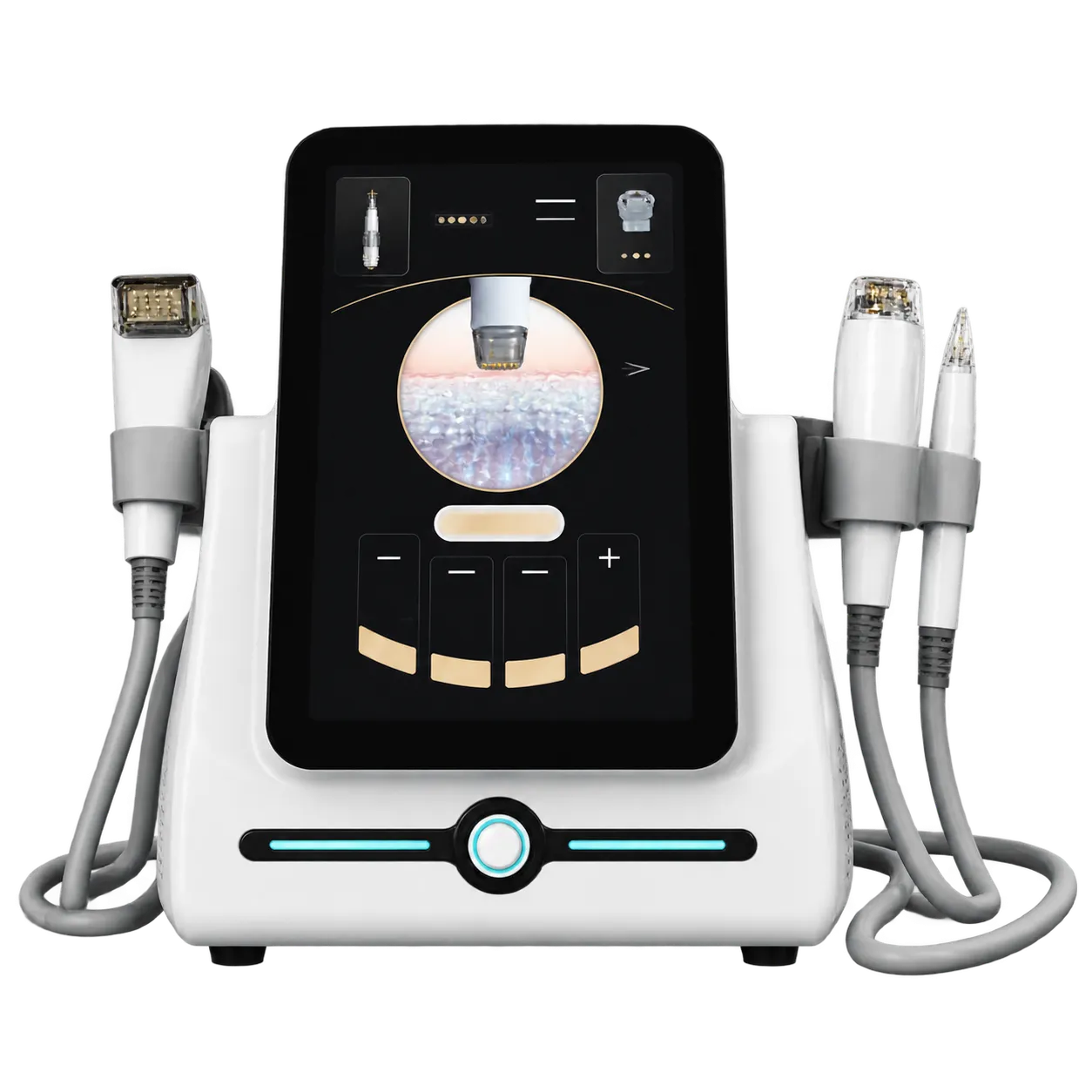
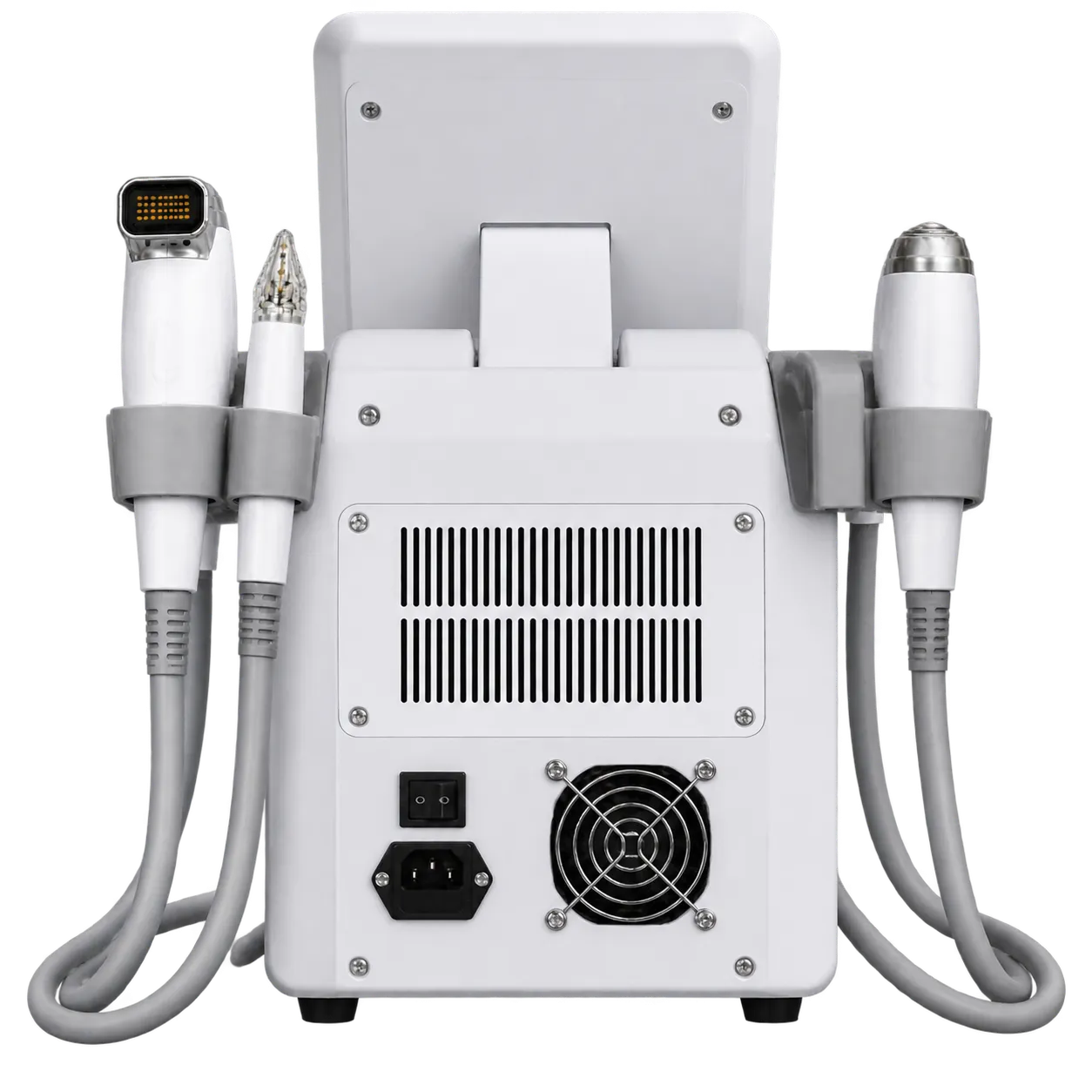
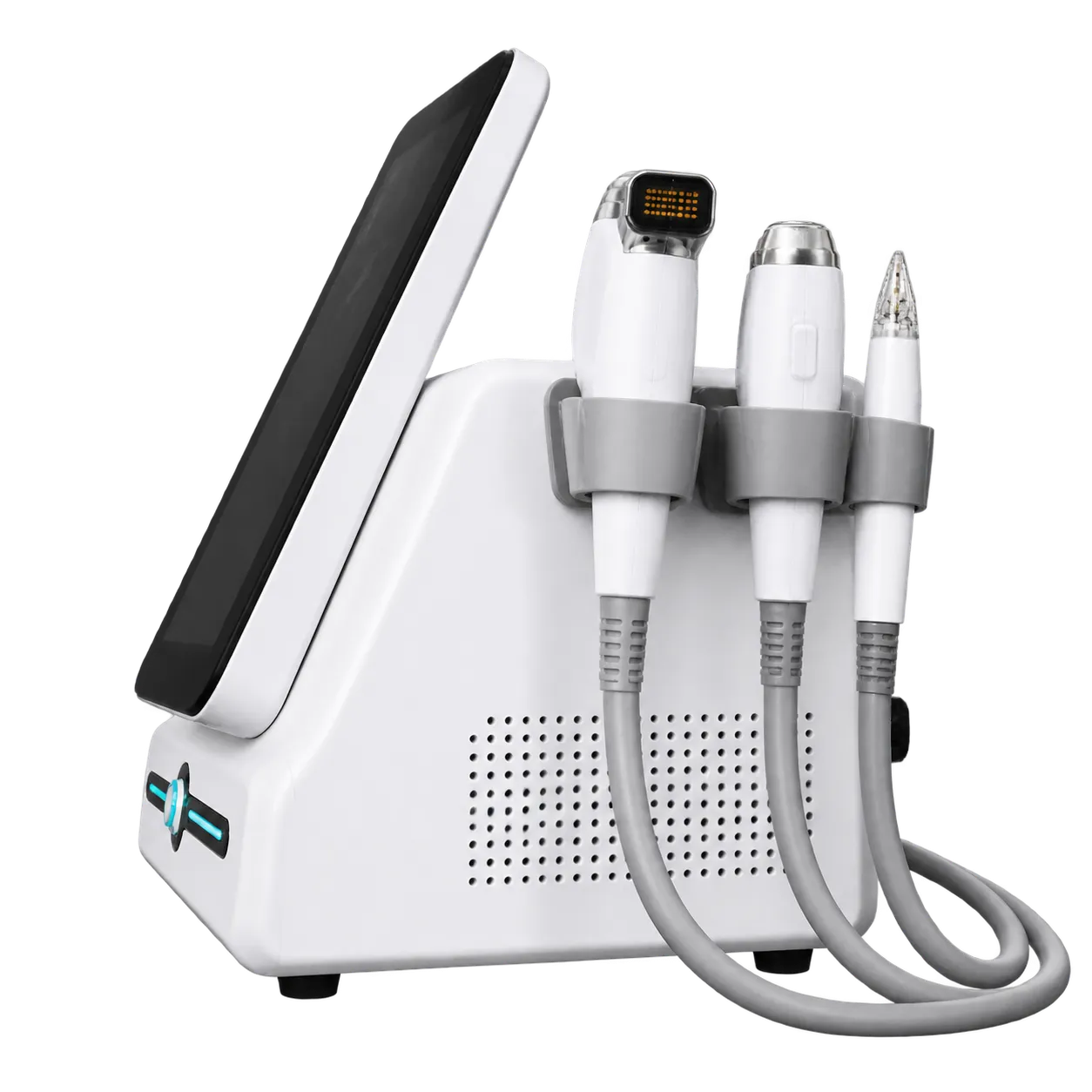
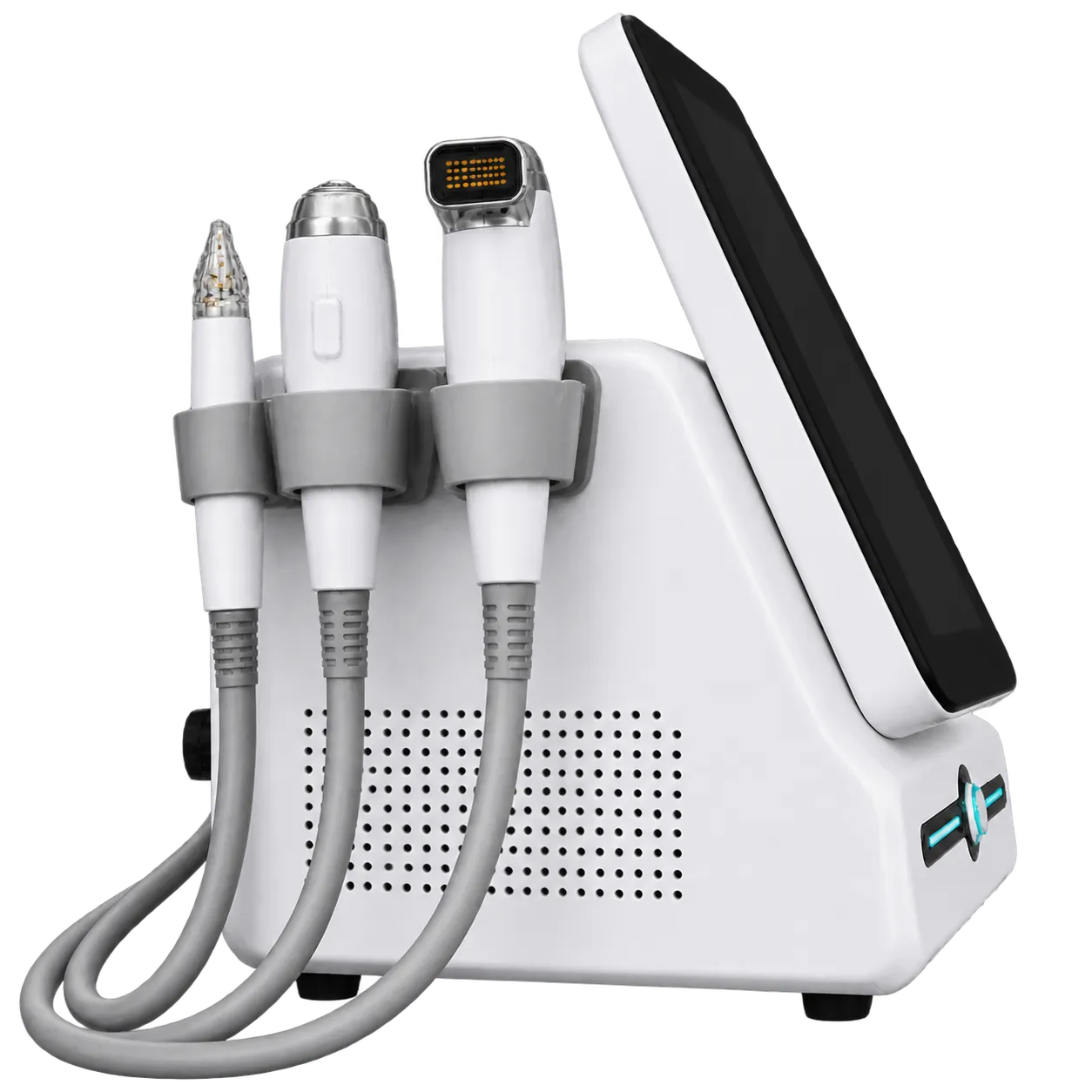
Aesthetic clinics use RF microneedling for atrophic acne scars, adjusting depth and energy to the scar type across a course of sessions about a month apart. Fine depth control helps treat shallow and deeper scars on the same face in one appointment. Standardised photographs under fixed lighting clearly show the gradual change.
Skin clinics treat texture, enlarged pores and fine lines on the face. The small handle reaches the nose, upper lip and eye area, where thin skin needs shallow, carefully controlled passes. Strict sun protection during the course protects the result.
Neck and décolletage treatments use the larger handles and conservative settings. Clients with mild crepiness or early laxity suit the treatment, and suction helps needles enter evenly on curved skin.
Mobile practitioners and small studios value the tabletop format. One unit can travel between sites, provided every location meets the same standard for infection control, sharps disposal and electrical safety.
Non-invasive RF handles support tightening sessions with no needles and no cartridge cost. They suit maintenance visits between microneedling courses and clients who prefer a gentler treatment, and they keep the unit earning on days without needling bookings.
The large handle lets you treat body areas such as the abdomen, thighs, and arms for texture and stretch marks. Results on older stretch marks are modest, and consultations should make that clear.
Doctor-led practices can combine RF microneedling with other scar treatments under clinical governance, and manage complications such as prolonged redness, infection or pigment change through established referral routes.