
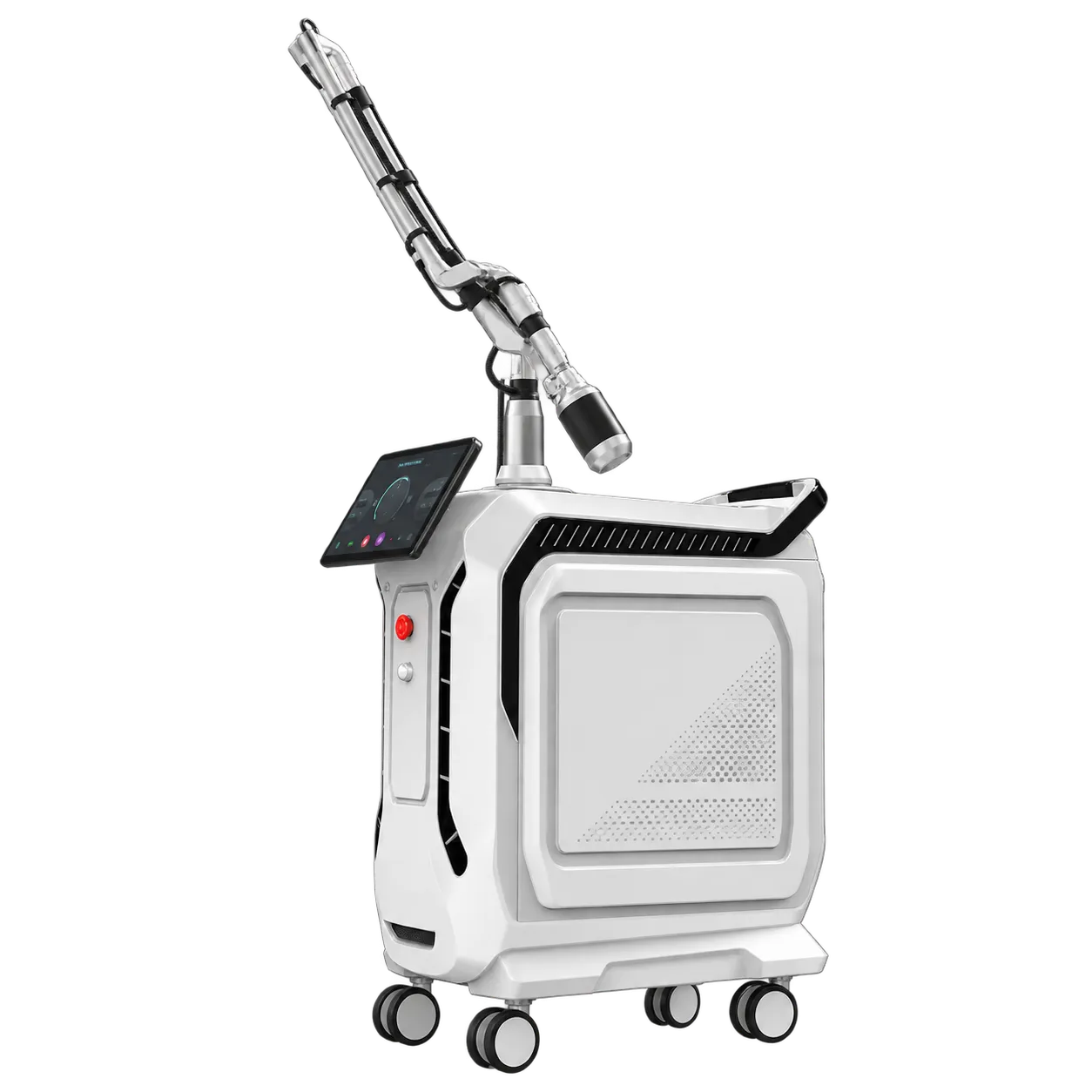
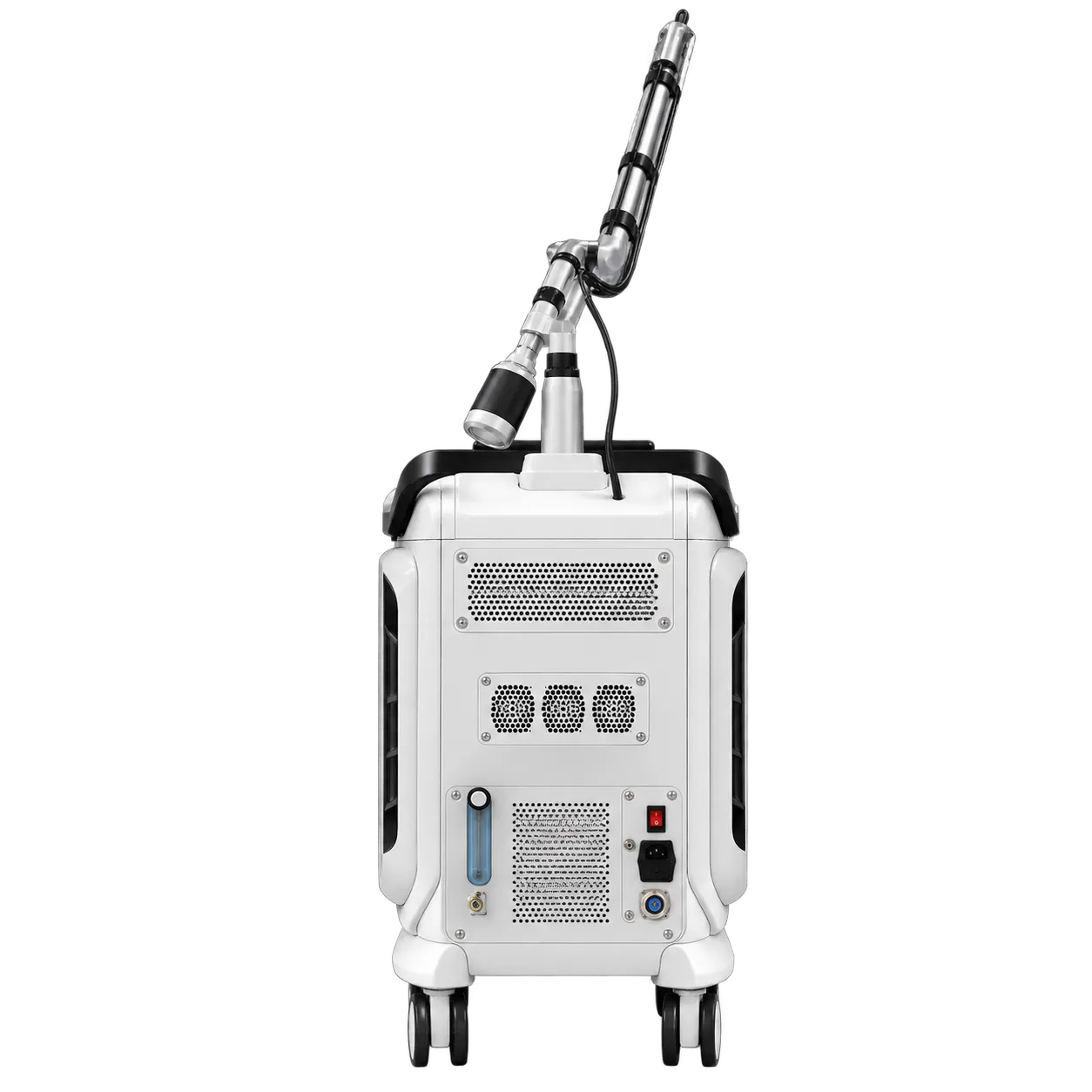
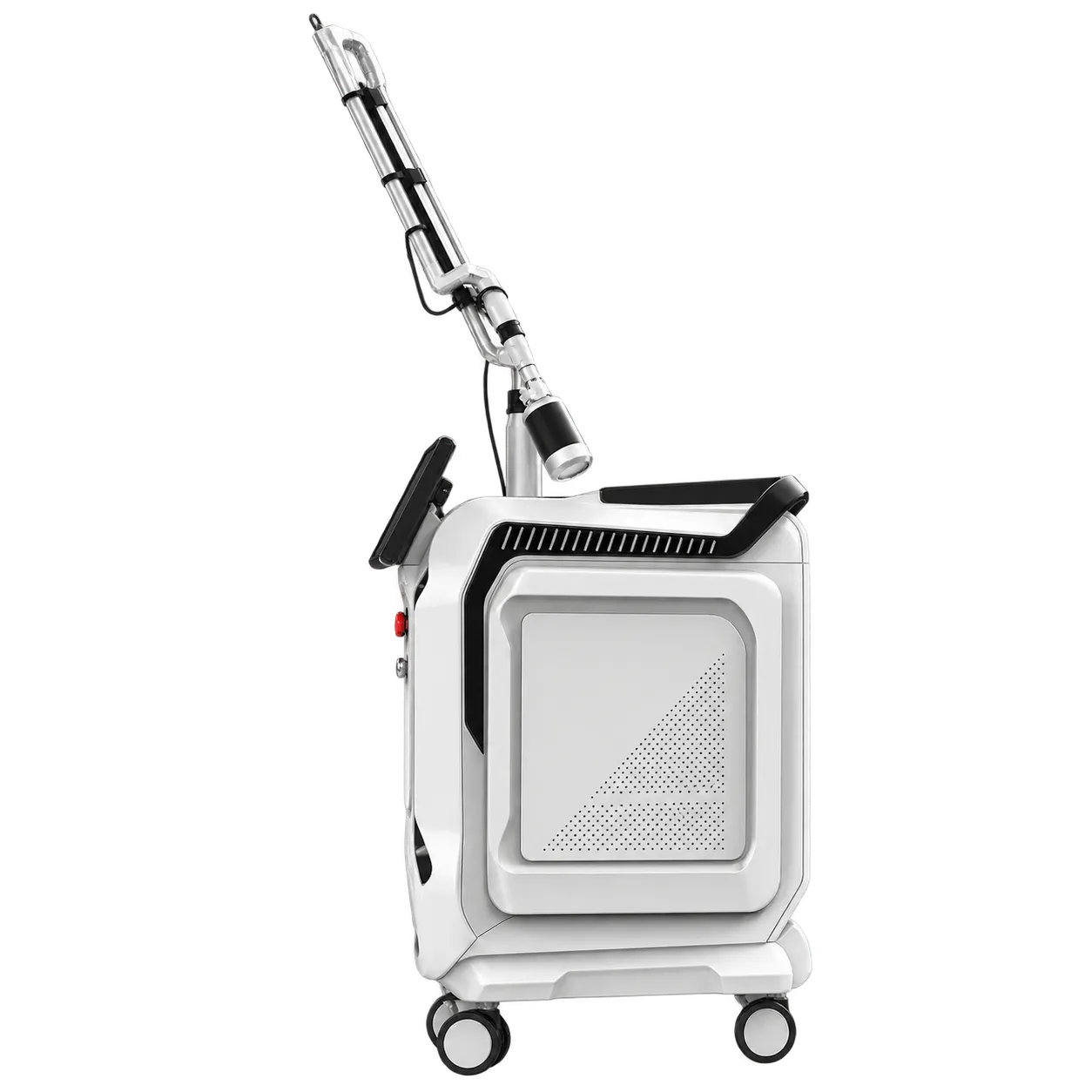
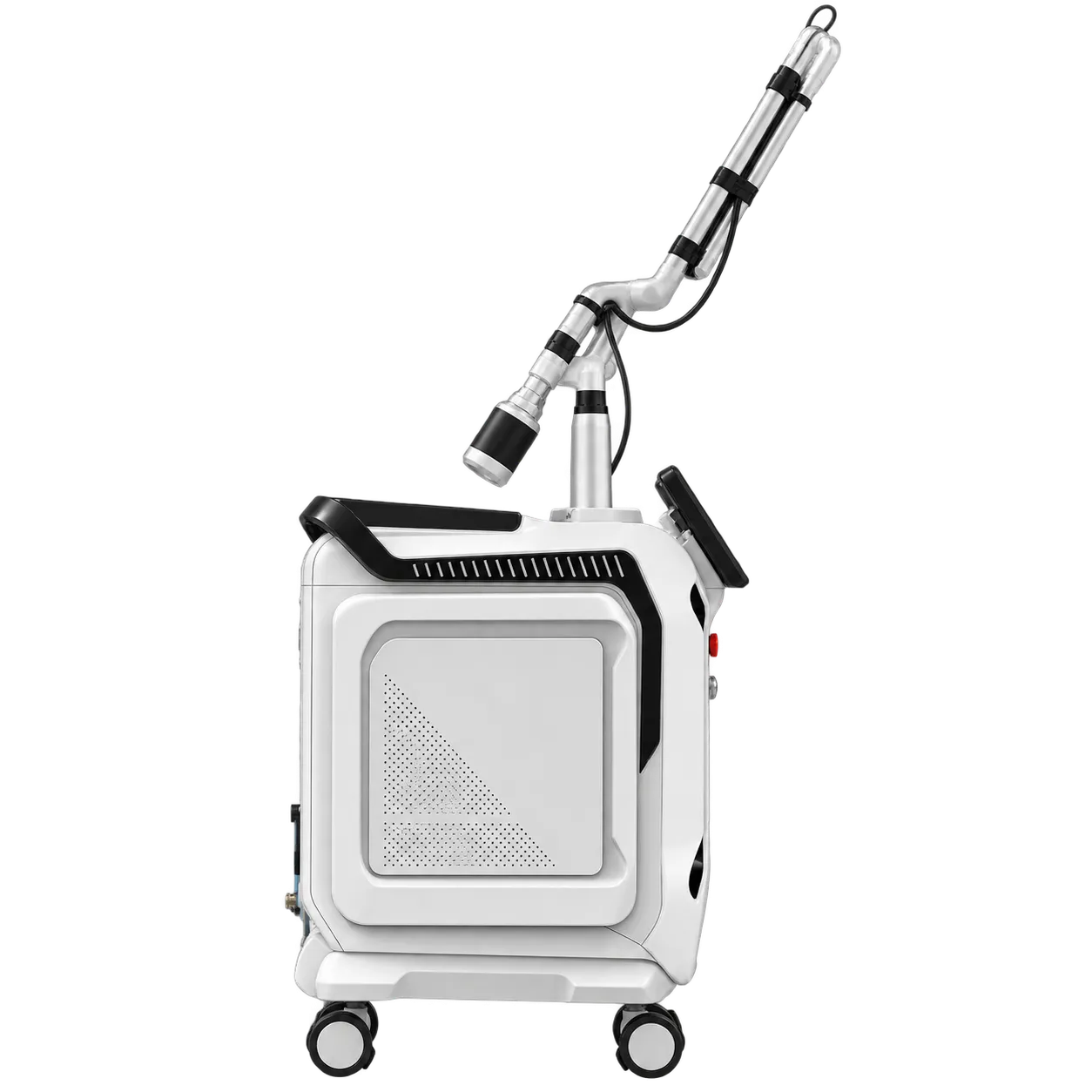
The PS700 belongs in rooms where pigment and tattoo ink are the daily caseload: dermatology clinics, laser clinics, cosmetic practices run by doctors or nurses, and salons that hold the premises licence and laser safety arrangements the work requires. Tattoo removal is the obvious use. Clients arriving for removal usually need a course of sessions spaced several weeks apart, and a cart on castors lets one unit serve more than one room across a working day.
Pigment work is the second use. Listing copy for Nubway's range pairs the 532nm wavelength with freckles, sun spots and age spots, and the 1064nm wavelength with deeper dermal pigment. Nubway's marketing also mentions melasma, but melasma relapses readily and responds unpredictably to any laser. It belongs in a protocol written by the treating clinician, not in a promise made at consultation.
Nubway also lists a fractional handpiece for texture and scarring work. Published studies of fractional 1064nm picosecond treatment for acne scars and striae exist, but they are small, and the handpiece is optional. Confirm it on the quotation if that work is planned.
The published evidence supports picosecond lasers as effective for black and blue tattoo ink, with a thinner and more mixed picture for other colours and indications. That is a sound basis for a removal-led service and a weak one for broad rejuvenation claims.
Procurement in aesthetic and dermatology settings will ask for a declaration of conformity, a class label, a Laser Protection Adviser's sign-off and the operator training record. The conformity documentation required for those routes is issued by the manufacturer and provided by the seller.