
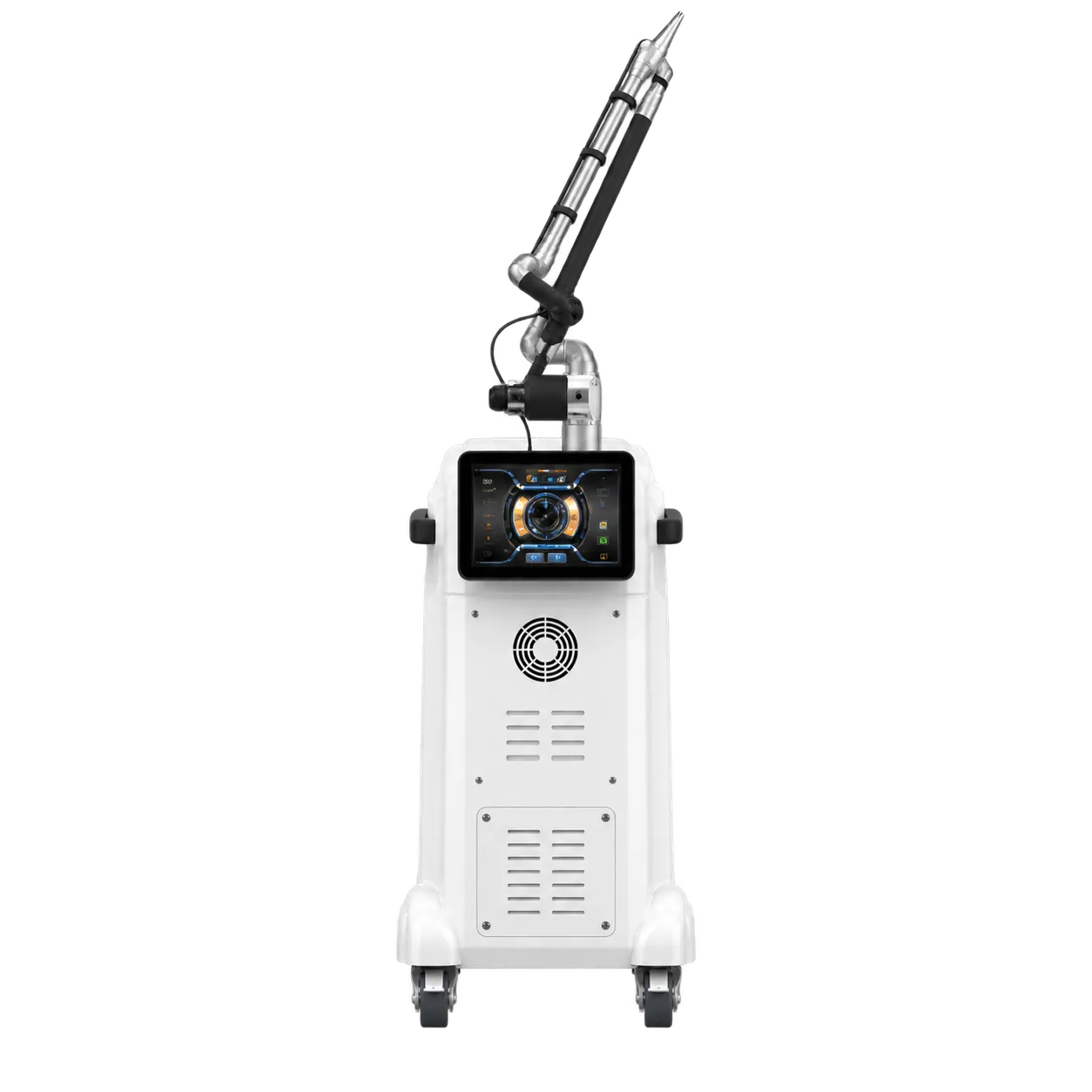
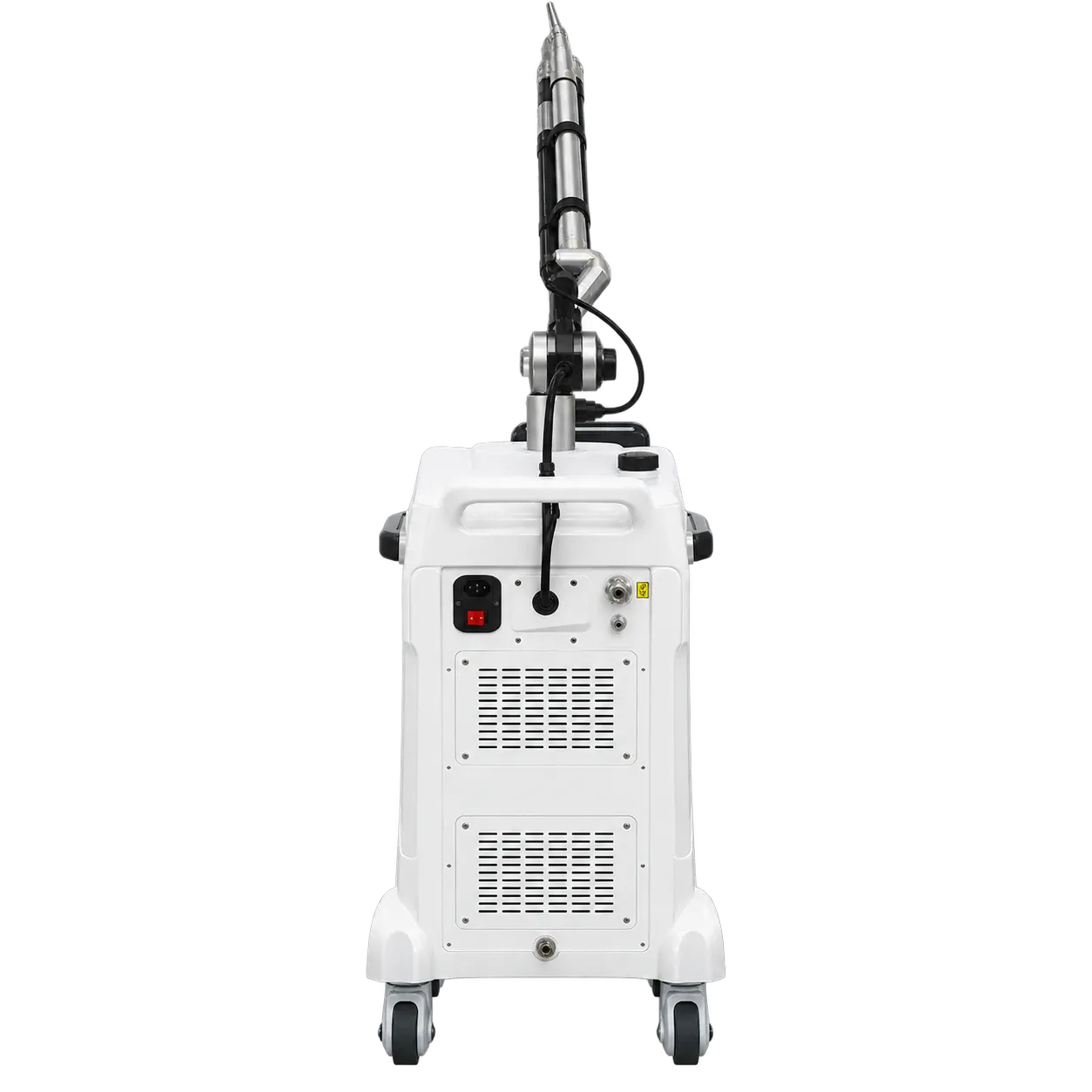
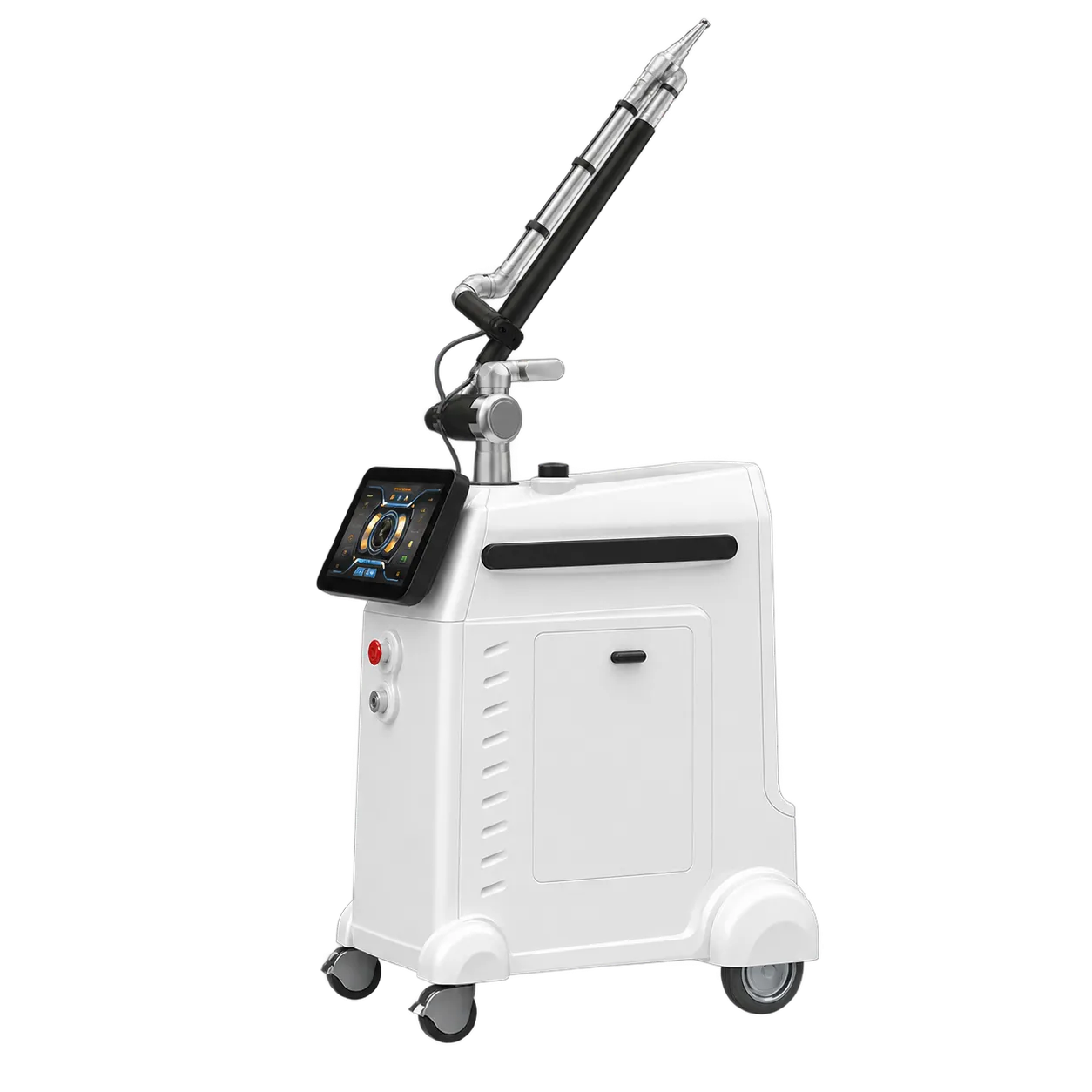
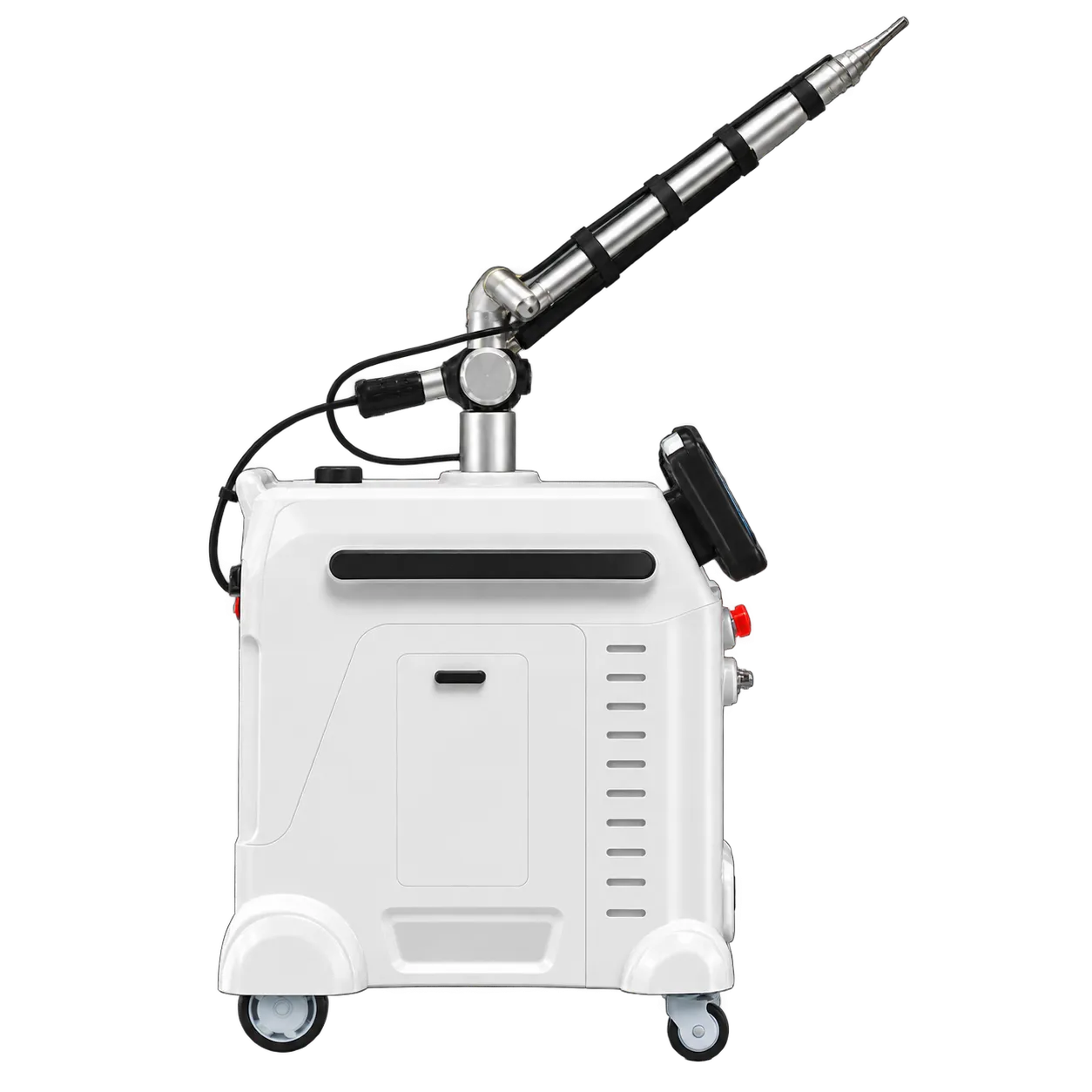
Tattoo removal is the core job. The 1064 nm output is the working wavelength for black and dark blue ink, including older amateur work, which tends to clear more readily than dense professional pieces. The 532 nm output handles red and orange, and an operator can switch between the two in one session to treat a two-colour piece without changing machines. Green and light blue ink sit outside the standard pair, so practices that see a lot of colour work should settle the optional wavelengths before ordering.
Benign pigmented lesions form the second strand. Freckles, solar lentigines and age spots are the conditions where a short 532 nm pulse is most commonly used, and they suit clinics already offering consultation-led skin work. The manufacturer lists Melasma and post-inflammatory pigmentation, but both relapse readily, and both can worsen after thermal injury. Hence, they belong under a protocol written by an expert medical practitioner.
Skin texture work depends on configuration. Nubway mentions a fractional handpiece and describes a long-pulse setting aimed at dermal heating; if either is confirmed on the supplied unit, the platform extends into acne scar and texture treatments.
Suitable settings include dedicated laser clinics, dermatology practices, cosmetic surgery units offering non-surgical lists, and aesthetic clinics with a registered treatment room. Hospital dermatology departments that remove tattoos for clinical reasons, such as radiotherapy marker removal, may also find a use for it. The obligations follow the premises: a Laser Protection Adviser, local rules, an authorised operator list and, depending on the nation, registration or licensing. The conformity documentation required by those registration routes is issued by the manufacturer and provided by the seller.