
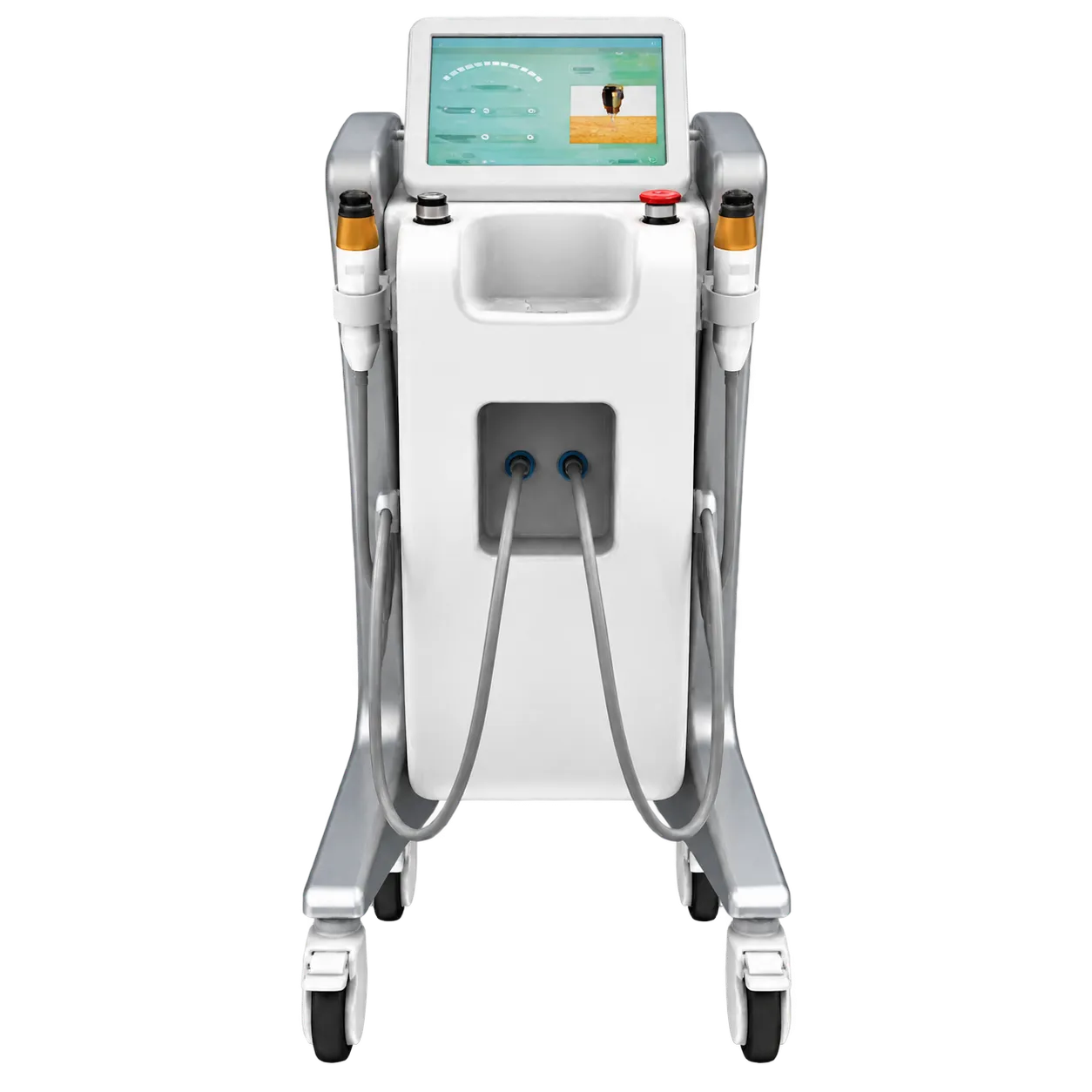
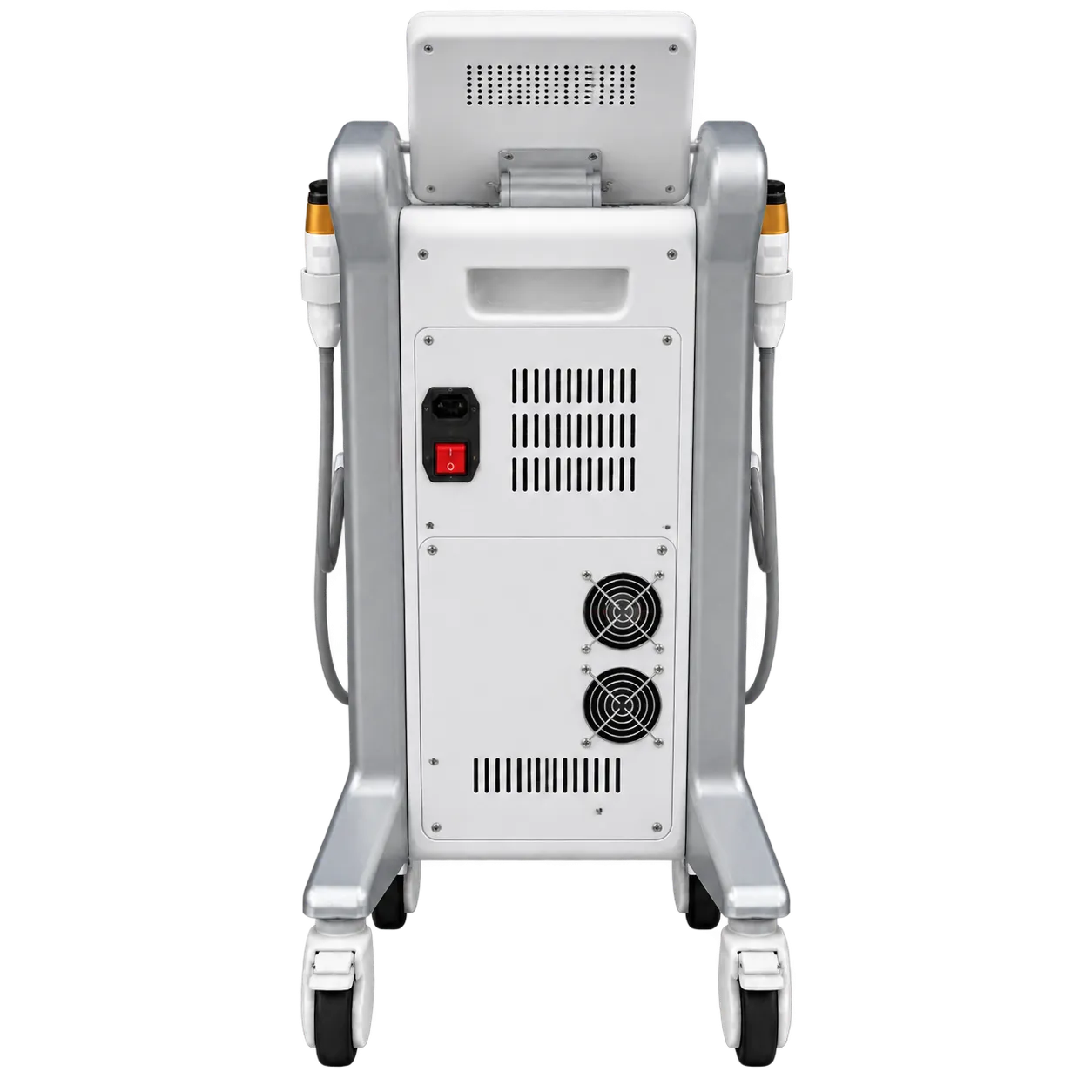
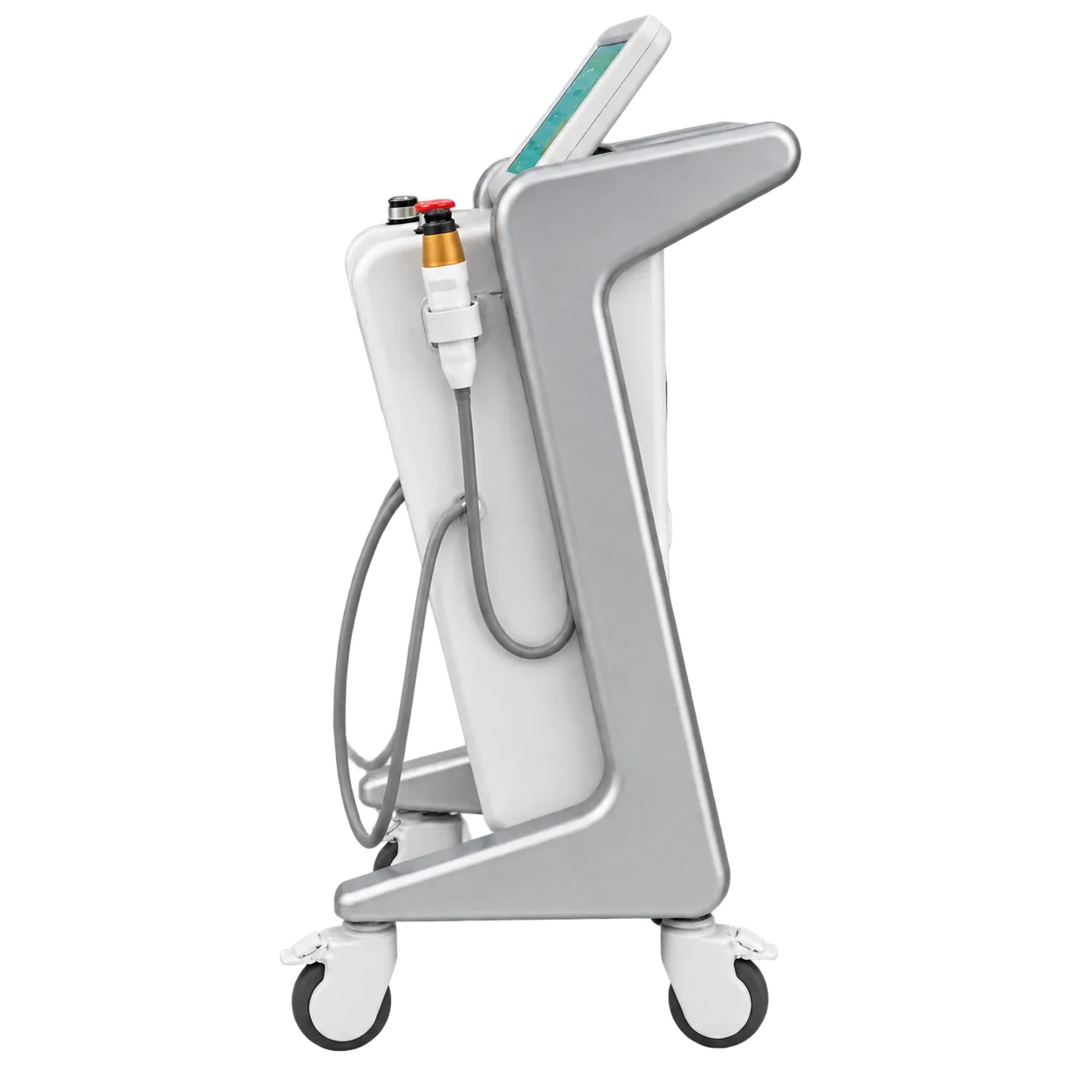
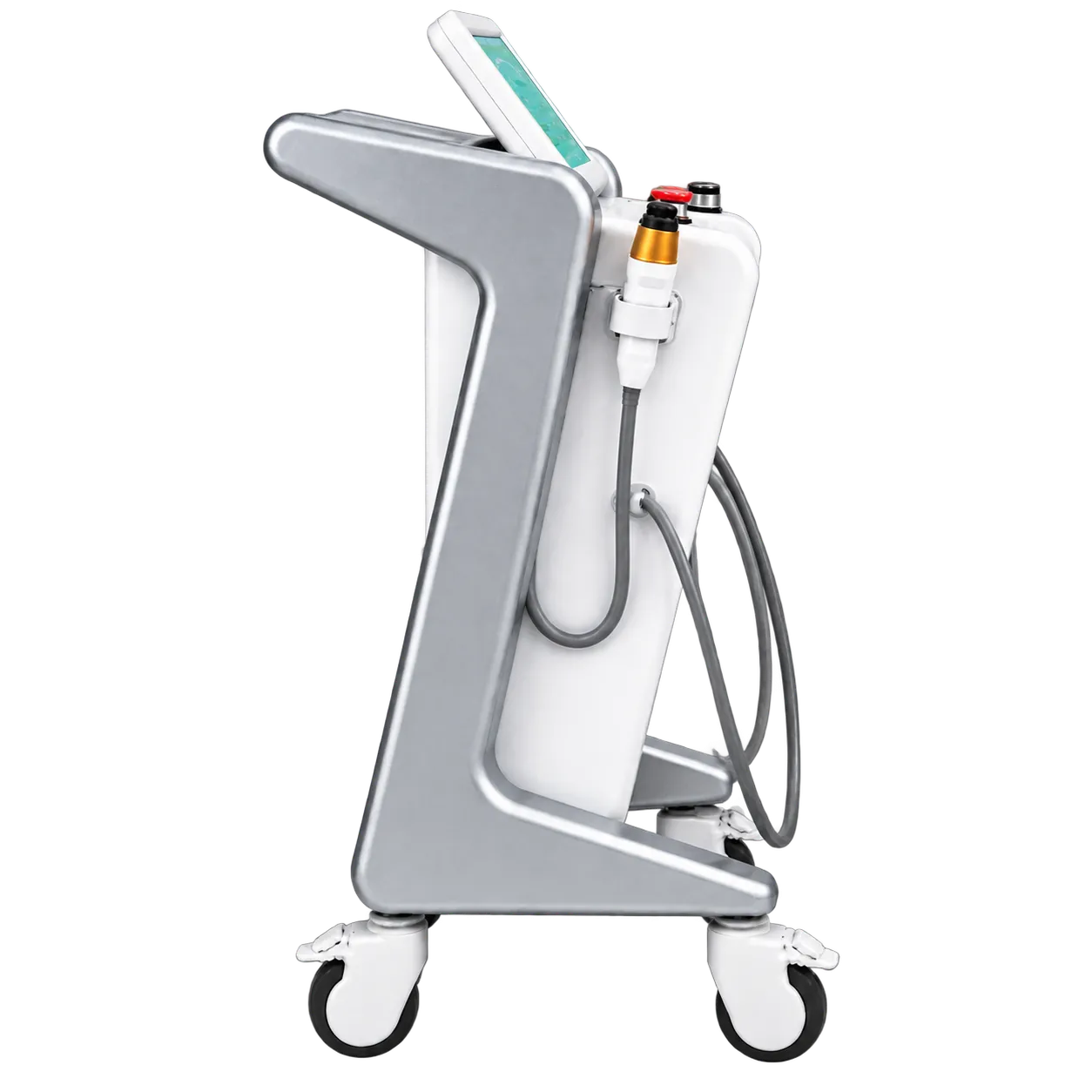
Aesthetic clinics use fractional RF microneedling for atrophic acne scars. Planning tip size and depth zone by zone lets one appointment cover shallow scars near the jaw and deeper scars across the cheeks, while consistent photographs track change over time. Rolling and boxcar scars usually respond well, while deep ice-pick scars often need additional procedures.
Skin rejuvenation services treat enlarged pores, fine lines and dull texture on the face and neck. The small 25-needle tip reaches the nose and eye area, and the large 81-needle tip covers the cheeks and neck quickly. Strict sun protection throughout the course protects the result.
Surface RF treatments with the 64-pin head suit clients who want texture improvement without needles, or maintenance between microneedling courses. These sessions carry no needle tip cost and fit easily into a busy diary.
Body services treat stretch marks and uneven texture on the abdomen, thighs and arms using the large tip. Body areas take longer and use more tips, so pricing should reflect both. Results on older, silvery stretch marks are modest, and consultations should set expectations accordingly.
Clinics with several operators benefit from a documented tip, depth and intensity plan for each client, so any trained operator can continue a course consistently.
Doctor-led practices can combine RF microneedling with other scar treatments under clinical governance, and manage complications such as infection, prolonged redness or pigment change through established routes. Every setting needs a sharps procedure, a clean treatment field and written infection control before the first client.