
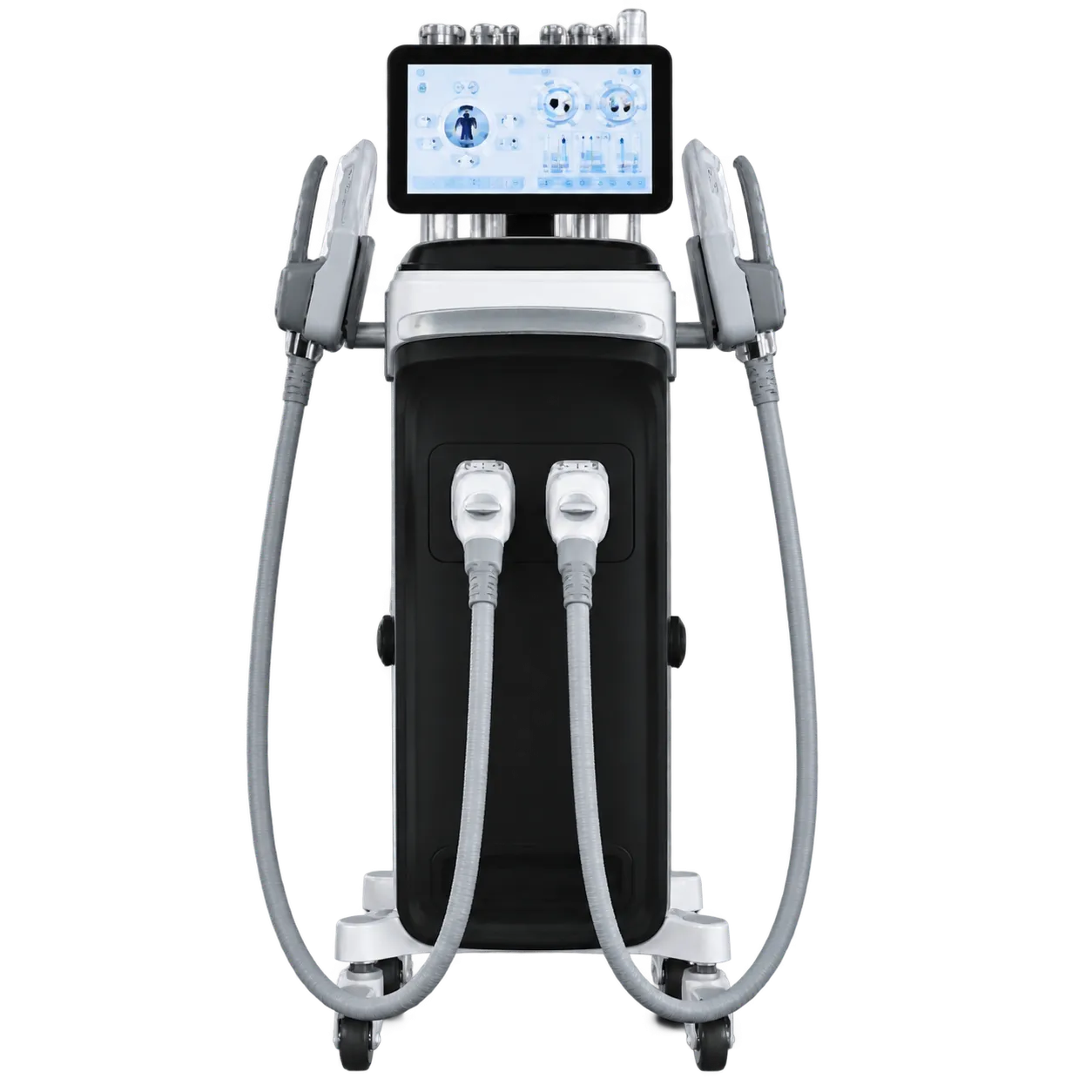
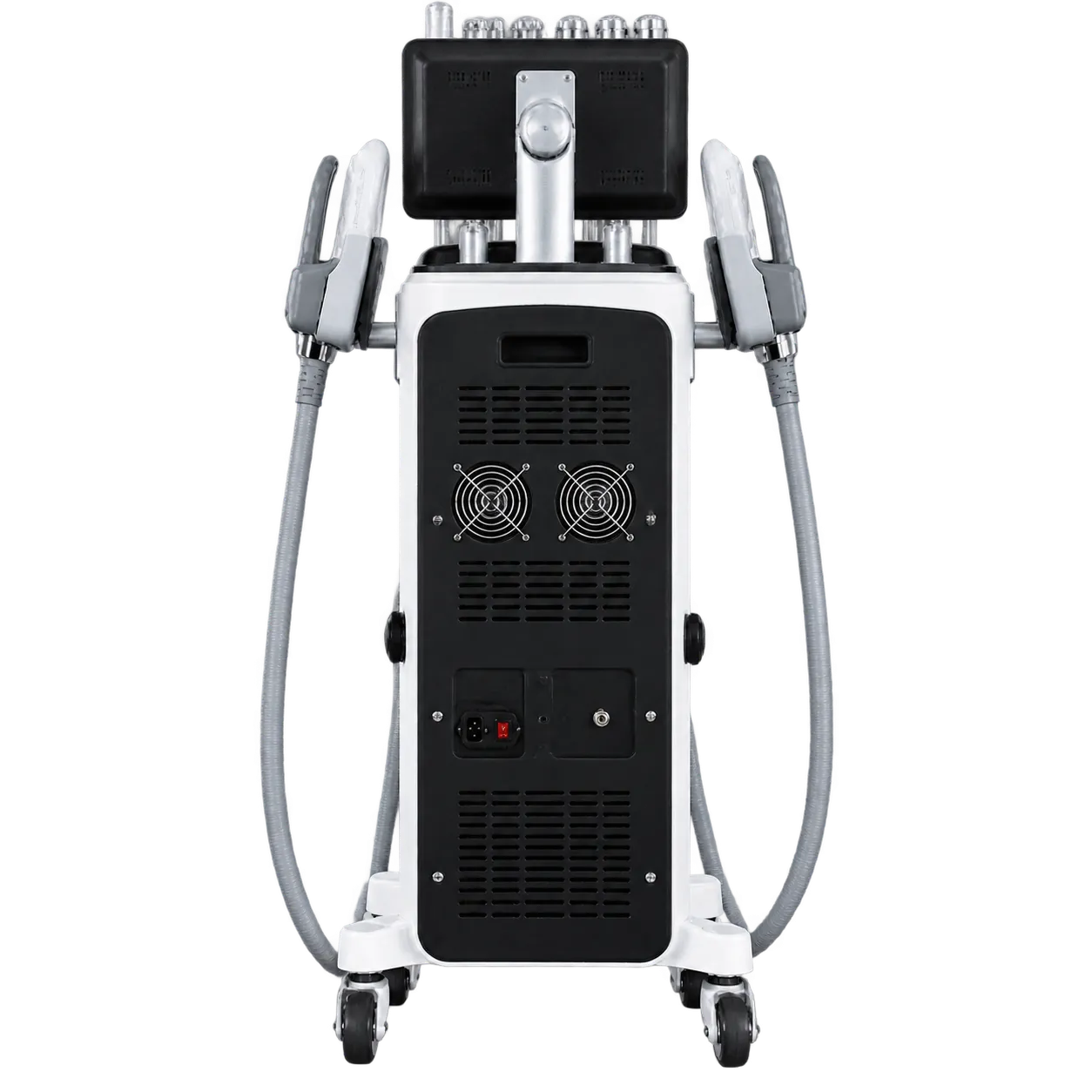
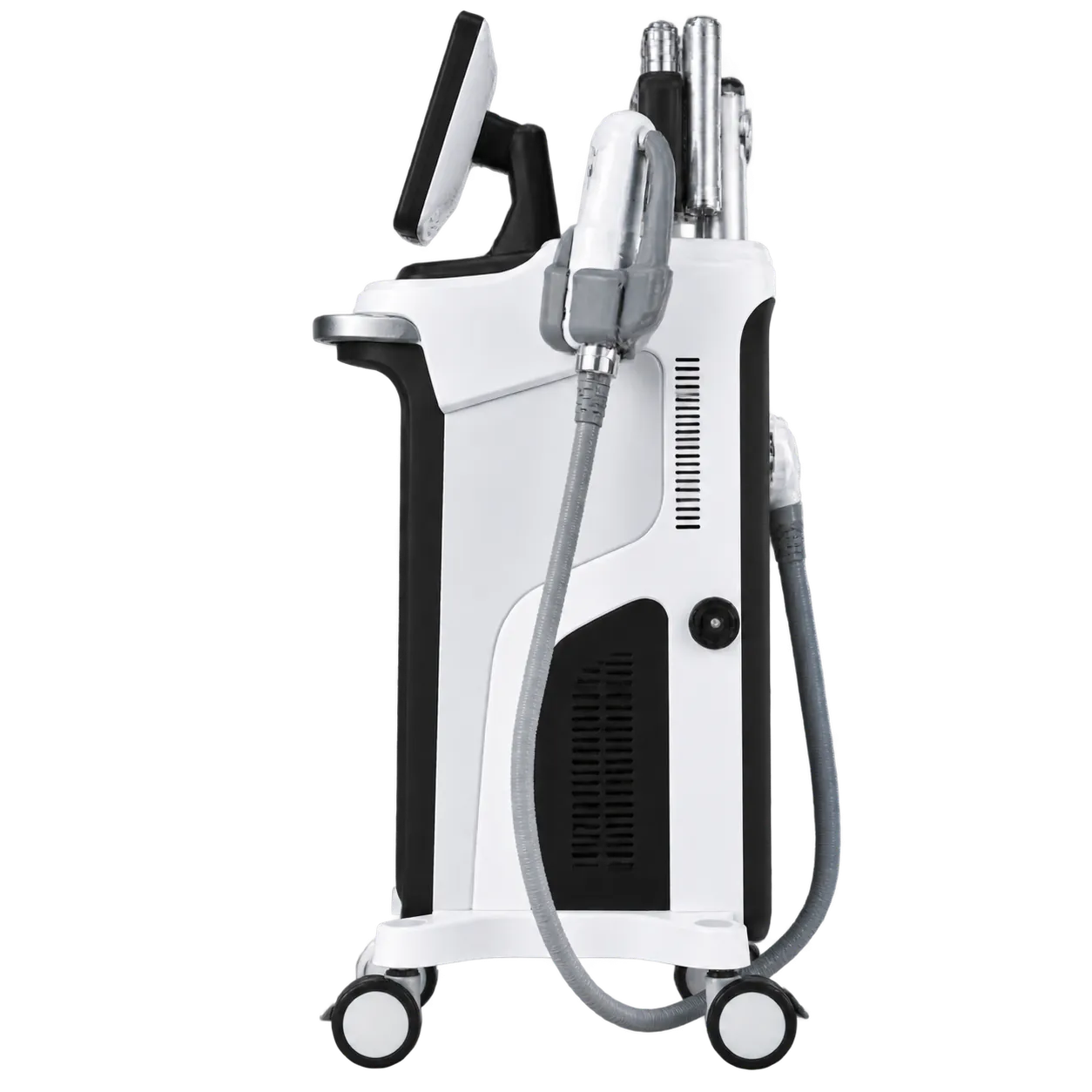
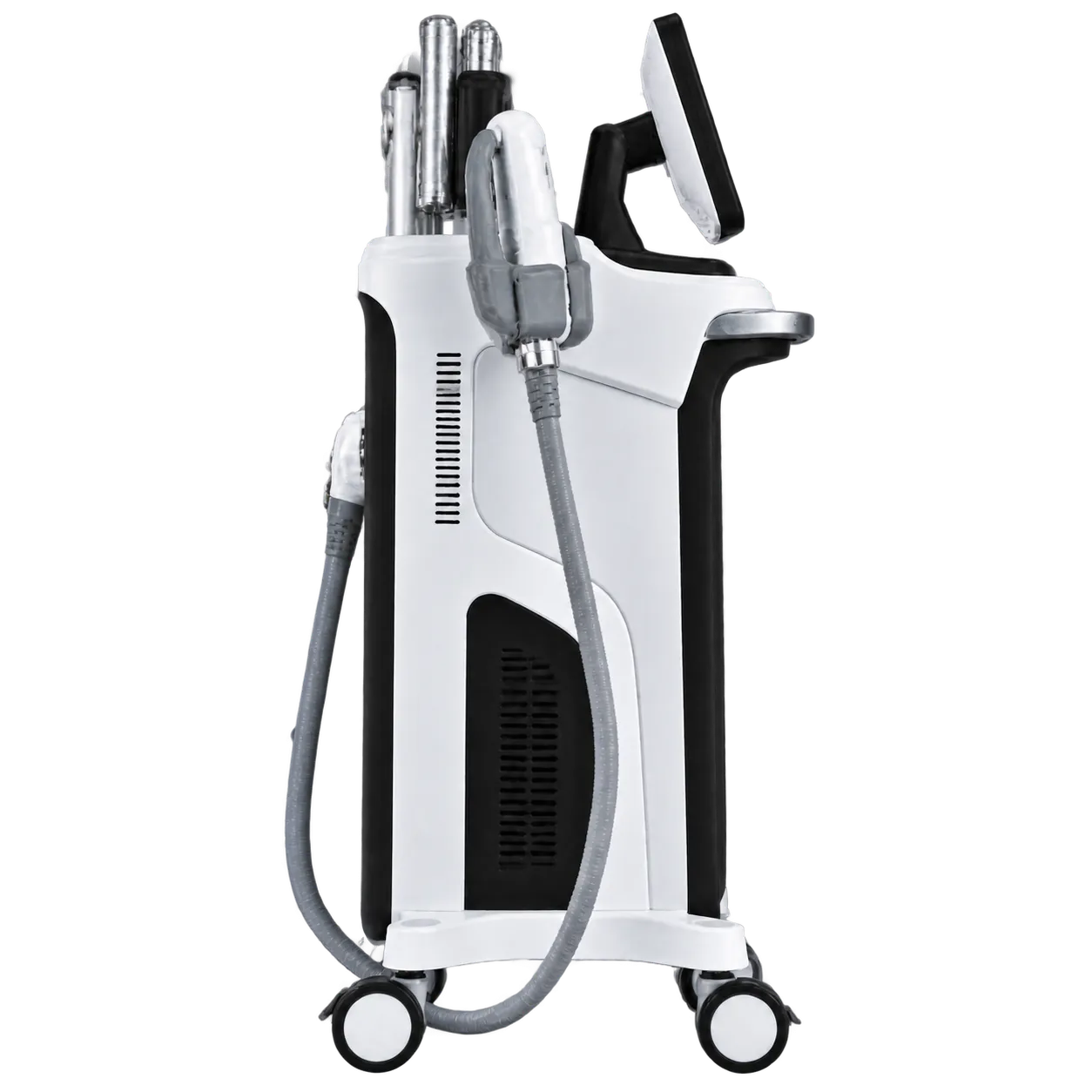
Trunk work belongs to the two large applicators. Hung from curved side arms, they can be strapped across the abdomen or over the buttocks and thighs, covering the core and lower-body areas that make up most body-contouring enquiries. The catalogue presets for buttock, abdomen and thigh line up with those areas so that a new operator can pick the matching programme without guesswork.
Arms and calves fall to the two docked handles. Upper-arm firming and calf shaping are steady requests in aesthetic clinics, and the family software lists both as treatment areas. Confirm the dimensions and output of the small handles before advertising limb treatments.
The tower suits practices that are growing a body contouring team, where new operators need a consistent starting point. Aesthetic clinics, cosmetic surgery units running non-surgical lists, physiotherapy-led body studios and multi-room salons with trained staff on every shift are the natural settings. Presets help keep treatment consistent between operators, provided the parameters behind them are documented and part of training.
The right client is near their target weight and wants firmer muscle with a modest change in the fat layer. Weight loss clients, people with electronic implants or nearby metalwork, and any plan to leave clients alone mid-programme all fall outside what this tower should be used for. Obligations follow it into the building: an exposure assessment under the 2016 electromagnetic fields regulations, electrical safety testing, operator training and competence records under PUWER, and a written screening procedure. The conformity documentation required for those inspection and procurement routes is issued by the manufacturer and provided by the seller.