

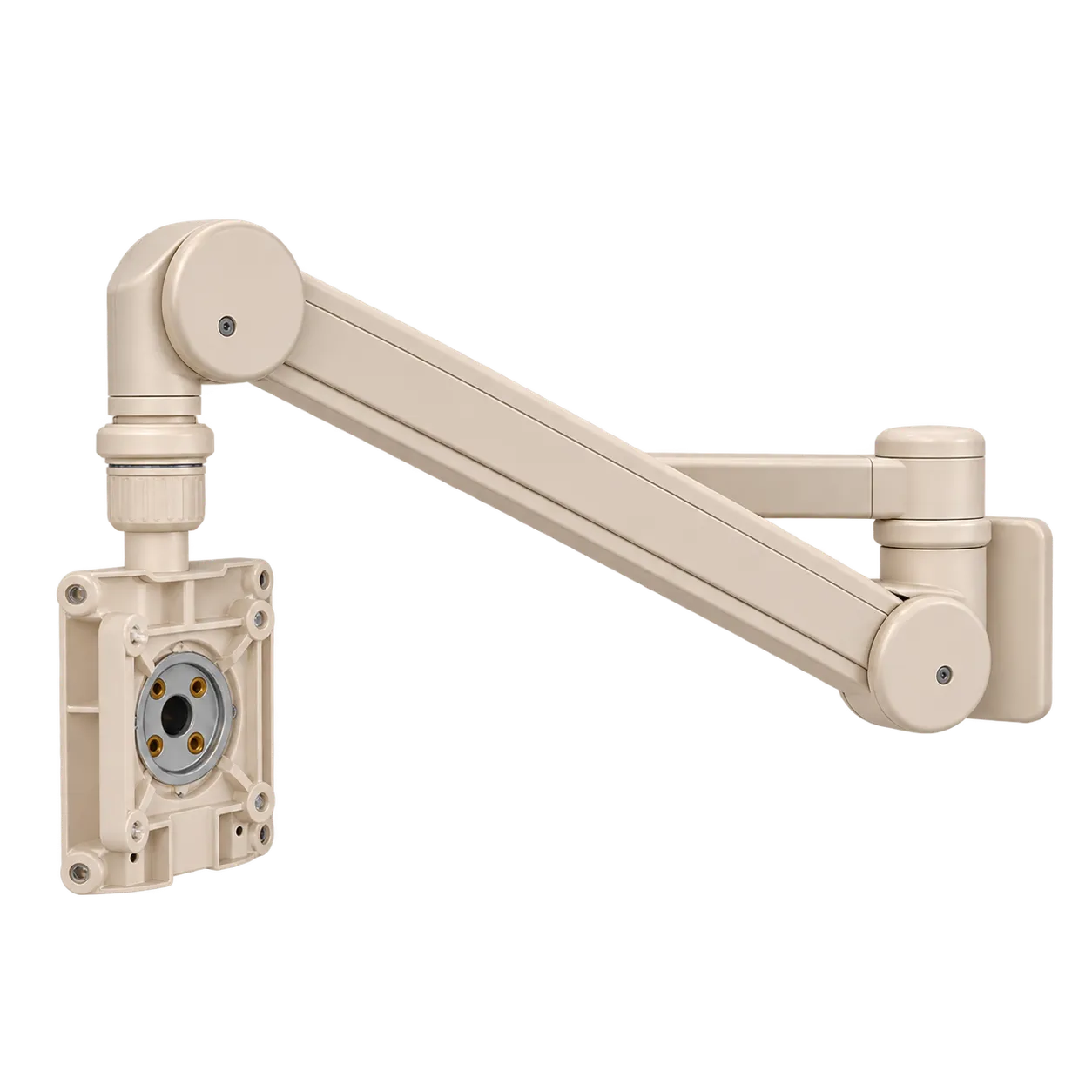

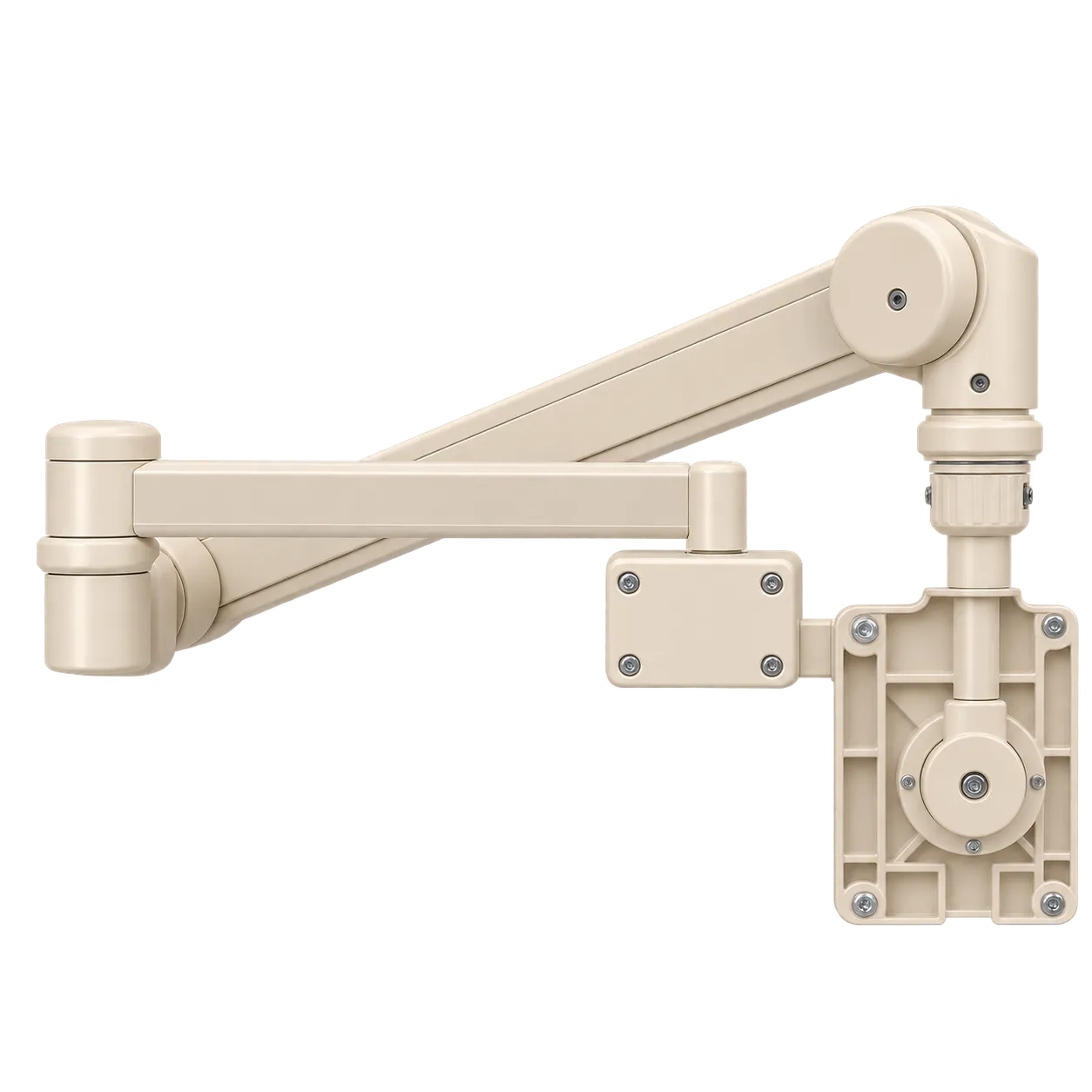
The SH-501 is built for reach. Twelve hundred millimetres take a screen from a wall to the far side of a bed, across a bay from a fixed point between two bed positions, or out over a trolley during a procedure, and 500 mm of vertical travel covers the range between a patient lying flat and a member of staff standing beside them. Observation displays, drug charts on a tablet, imaging review at the bedside and telemedicine consultations all need that combination of distance and adjustment.
Long reach is also what makes the installation demanding. The further the arm extends, the more the wall must hold, and the substrate must be established before anything is drilled. A solid wall in a purpose-built ward is one proposition; a partition in a converted building is another, and the sheet's inclusion of hollow wall among its named substrates should be treated as the start of a conversation with estates rather than the end of one.
Folding matters as much as reaching in a bay. A 1200 mm arm left extended is an obstruction at head height in a circulation route, and it needs to tuck back flat against the wall between uses, or it will be knocked. Mounting height should put the folded position clear of walking traffic and the extended position within the patient's comfortable viewing line, and those two constraints do not always resolve to the same figure.
Buying runs through the usual routes. NHS Supply Chain, trust framework agreements, Integrated Care Boards, private hospitals and clinics each apply their own standing financial instructions, and wall-fixed equipment normally clears estates and infection prevention rather than a clinical evidence panel. The manufacturer issues documentation for the load band and coating, and the seller provides it.