

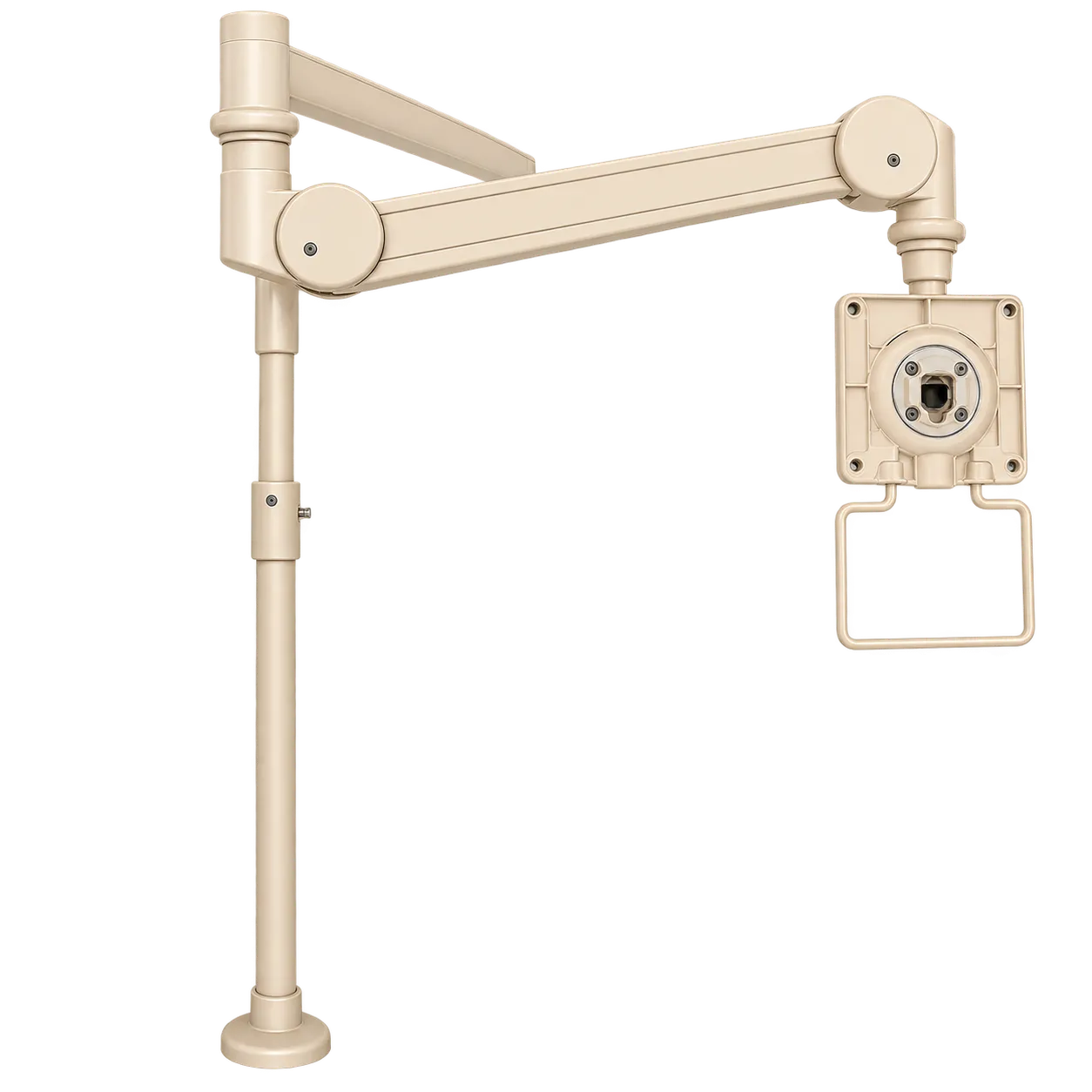


The SH-500-B solves a problem that appears wherever a screen must be read at the bedside. Observation displays, drug charts on a tablet, imaging review at the bay, telemedicine consultations, and patient entertainment all need a panel somewhere it can be seen from a bed, then moved out of the way when clinical access is needed. A wall-mounted arm keeps that panel off the floor, off a trolley and out of the working space, which is what wall mounting buys in a tight bay.
Reach and lift determine whether it works in a particular room. A 930 mm reach covers the distance from a wall to a bedside in most bay layouts, and 355 mm of vertical travel covers the difference between a seated visitor, a propped-up patient, and a staff member standing to read something. The figure that is not published is the mounting height, and that is set at installation rather than by the product, so the lifting range should be positioned around the intended eye lines rather than centred by default.
Installation is where the effort actually sits. The mount is a small purchase, but the fixing is a permanent alteration to the building fabric, requiring a substrate survey, an anchor specified for what is behind the plaster, estate sign-off,f and making good afterwards. Any data or power the screen needs has to arrive at the same point. Departments planning a rollout should price the installation in the bracket.
Buying runs through the usual routes. NHS Supply Chain, trust framework agreements, Integrated Care Boards, private hospitals and clinics each apply their own standing financial instructions, and wall-mounted equipment normally clears estates rather than a clinical evidence panel. The manufacturer issues documentation for the supplied load band, and the seller provides it.