
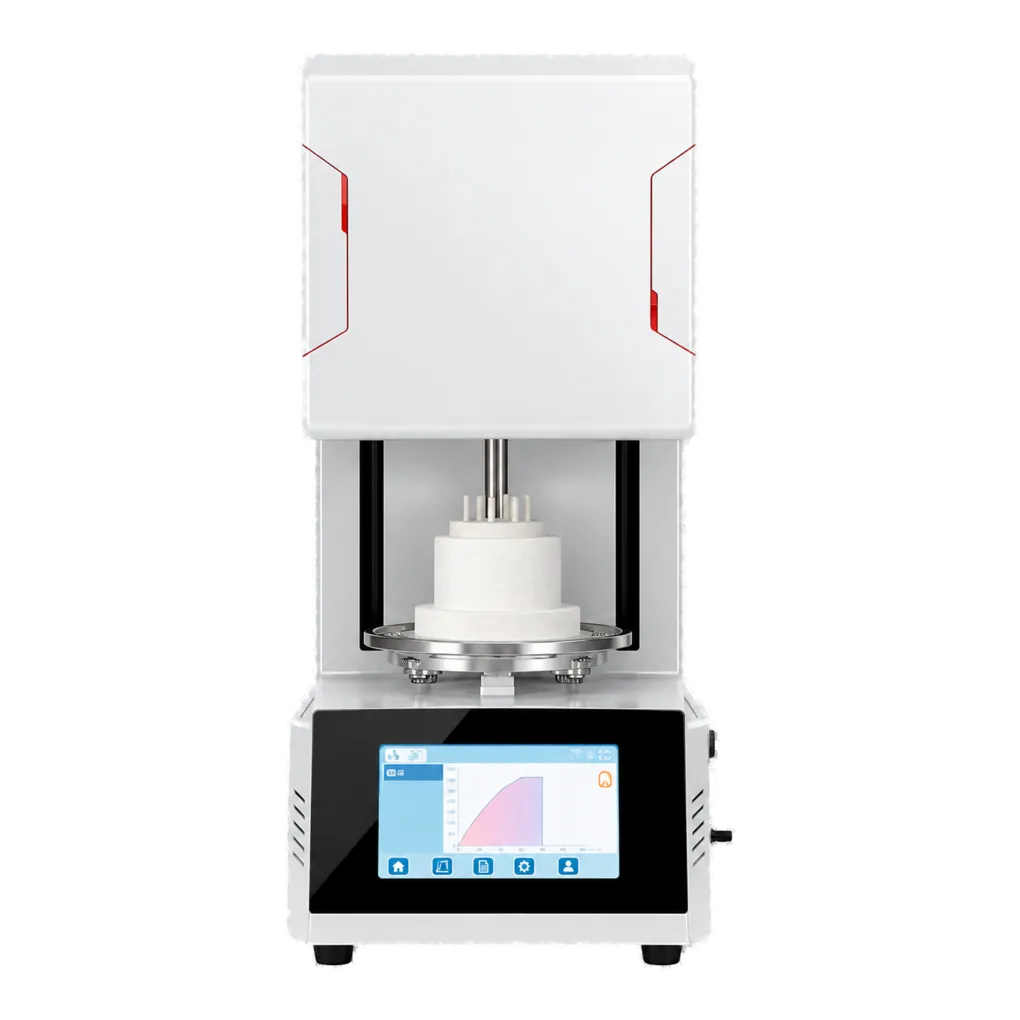
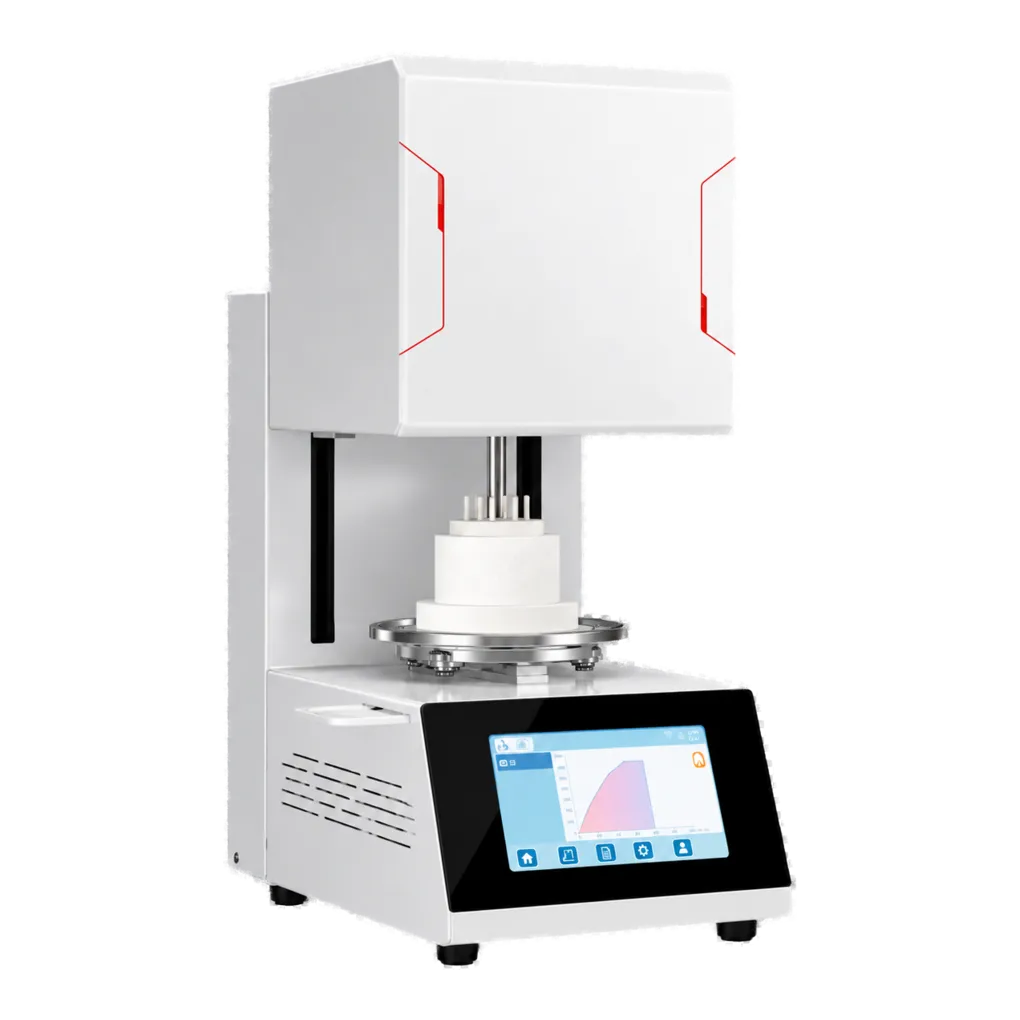
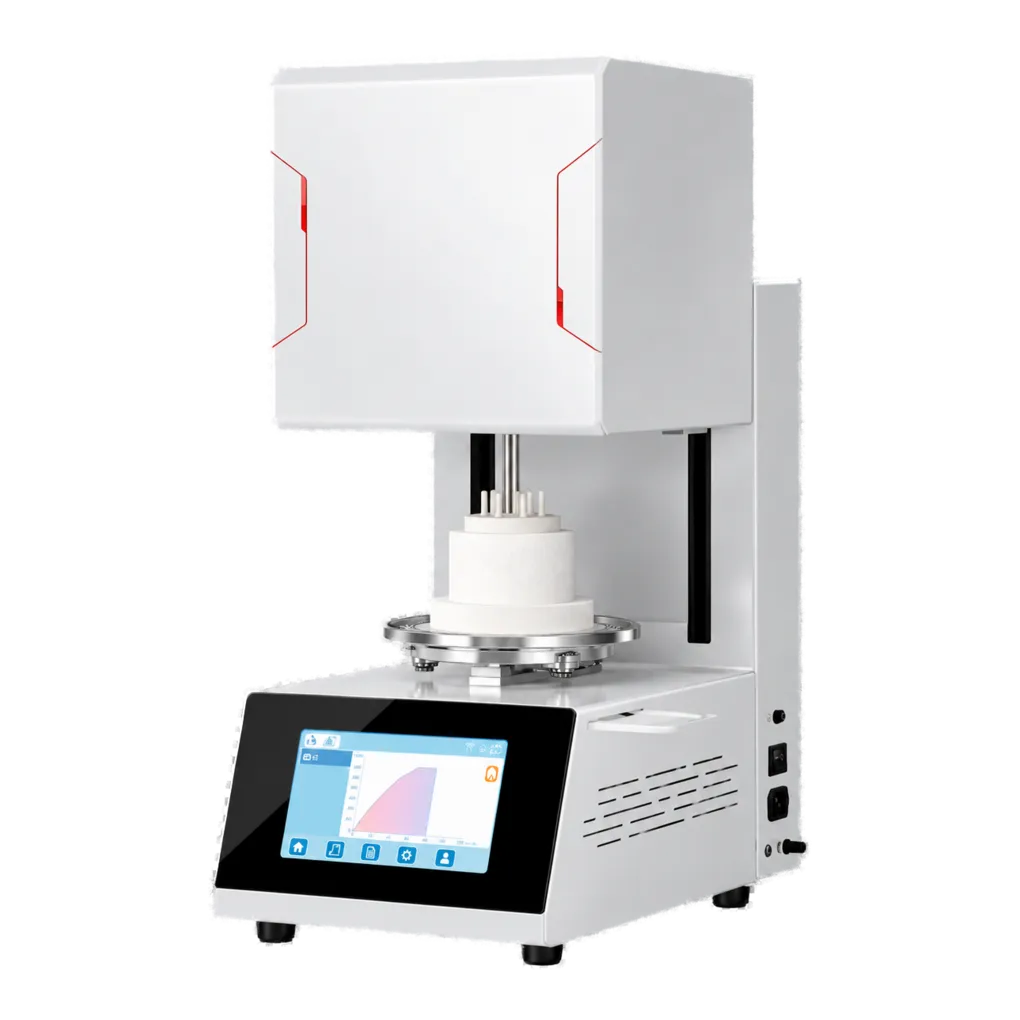
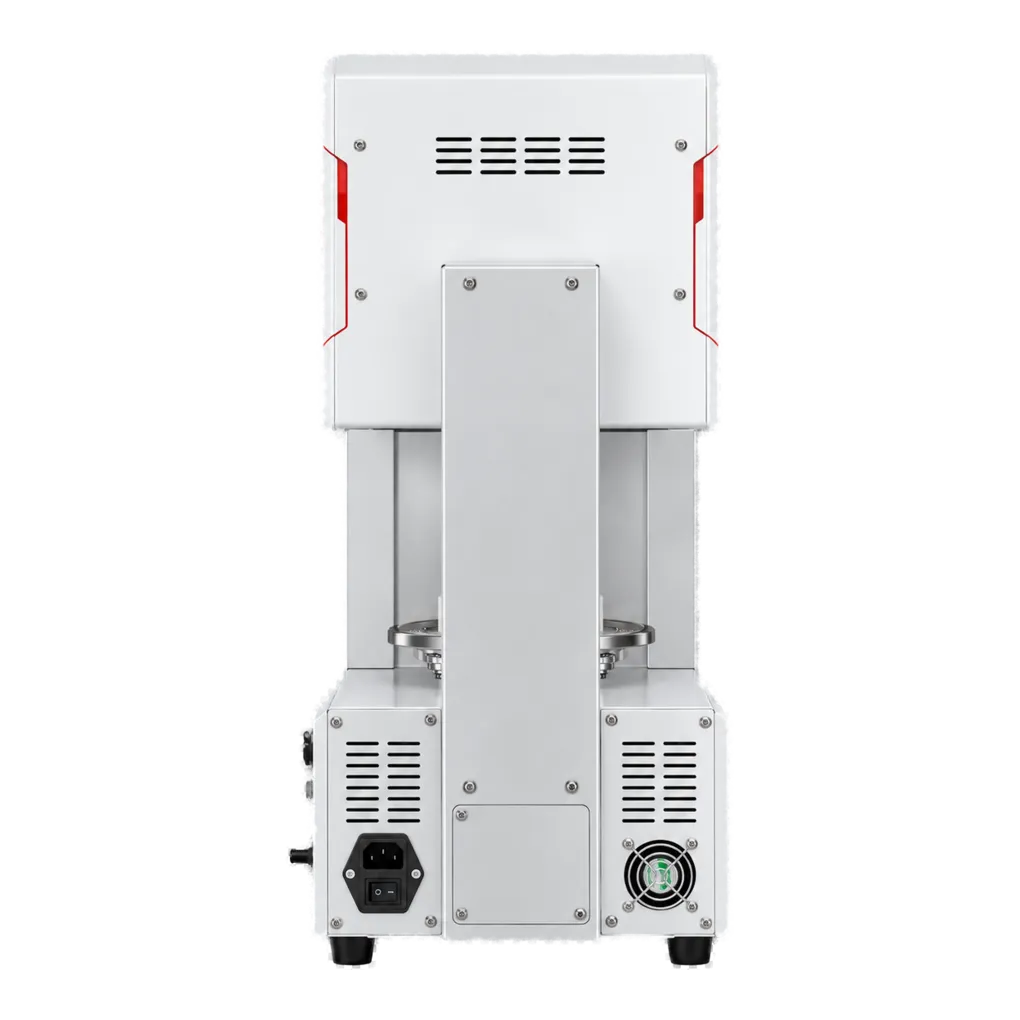
Porcelain firing sits between framework production and delivery in most UK laboratories, and the PF7 is specified for that step rather than the one before it. Layered veneering ceramic on zirconia or metal copings, glaze and stain firings, characterisation bakes, corrective additions and press ceramic cycles all fall within a 1200°C vacuum furnace's range.
Shade reproduction is what the specification bears on most directly. Firing temperature governs how a ceramic matures, and a chamber that holds within two degrees of setpoint regardless of room temperature produces consistent results across a working day. A furnace whose chamber drifts with ambient conditions produces restorations that differ subtly between a cool morning and a warm afternoon, which is the kind of variation that gets noticed at try-in rather than in the laboratory.
Vacuum is what makes layered work viable. Air trapped as porcelain matures becomes porosity, showing as opacity and appearing at the surface once a restoration is adjusted. Reliable evacuation and a properly sealed chamber are therefore not conveniences but the mechanism by which a layered restoration achieves its translucency and strength.
Firing records support the traceability a laboratory already maintains. Being able to retrieve which programme a batch ran turns a shade complaint from guesswork into an investigation, and sits naturally alongside batch records for the ceramic itself.
The scope boundary needs stating plainly for planning purposes. A laboratory milling zirconia still needs a sintering furnace, since densifying a milled coping happens well above this chamber's maximum. The PF7 handles everything after that point.
Laboratory obligations apply throughout: MHRA registration for manufacturers of custom-made devices, GDC registration for technicians, ceramic conformity documentation and instructions for use, and traceability from material batch through firing programme to finished device.